An Interview with Antione Fuqua
By Wilson Morales
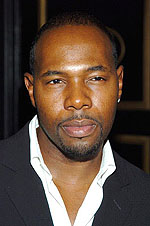
Just because one project dried up doesn't mean there aren't more. In the last
few weeks, it's been reported, first by the NY Post, that Fuqua was "unceremoniously
fired" from American Gangster. Others say that he left over "creative differences".
This is the film that would have reunited him with Denzel Washington. They
both worked together on "Training Day", which garnered Denzel his first
Best Actor Oscar. Universal Pictures decided last week to scrap the film
entirely sensing there wasn't enough time to get another director with production
ready to start. . Both Washington and Benecio Del Toro, who set to co-star
had a pay or play deals. In the meantime, prior to this latest development,
Fuqua had signed on with Paramount Pictures to direct Capone Rising, the
prequel to The Untouchables, which starred Sean Connery, Kevin Costner,
and Andy Garcia. The film will center on Connery's character, Jimmy Malone,
when he was a young corrupt cop and Al Capone was rising in the mob force.
While in New York to promote his next film, the documentary Lightning in
a Bottle, Fuqua gave blackfilm.com a little insight as how the business
works and what may have happened on American Gangster. According to the
publicist working on Lightning... and for legal reasons, Fuqua couldn't
elaborate on what he's no longer on that film. In the meantime, Fuqua has
a couple of projects ready to get going such as producing FAMILY REUNION
with his wife, actress Lela Rochon (Waiting for Exhale, Any Give Sunday)
and writer Darryl Quarles (Black Knight, Big Momma's House) for Warner Bros.
Fuqua is also developing Bloods for Castle Rock. Adapted from Wally Terry's
novel, the drama explores the Vietnam experience of black soldiers, who
died in record numbers during America's first fully integrated war.
Having two recent films (Tears of the Sun, King Arthur) that haven't performed successfully in terms of numbers, how does that affect your career in every different way?
Antoine Fuqua: It's a strange thing. "Tears of the Sun" had
a lot to say. It's a tough movie to make about the genocide in Africa,
and things like that. Nobody wants to hear the truth, and dealing with
Bruce (Willis) was difficult because that's part of the whole Hollywood
system. However it made a lot of money in Europe. King Arthur is going
to make over $400 million dollars total. It's already at $200 million
dollars now and it's making more money in Europe. So I don't know what
that says. I'm having success there, but here, I think people want to
see me do something like a Training Day again since I set that path for
myself; which I going to do, I just want to say the right thing. Films
are difficult and it's all about timing and quality. I wish it would had
made $200 million here. Studios are still calling me.
Do you think you make any changes to your style?
AF:  No.
I just got a call from Jerry Bruckheimer recently about working together
again. I was working on a film with Denzel Washington and Benecio Del
Toro called American Gangster from Universal (Pictures), and although
it's not going to happen now, it would have been a big movie. Sometimes
it's not necessary about the financing, but about the quality. That's
why I love the blues (in Lightning in a Bottle). It's the craft and art,
and not necessarily about the numbers and box-office, although Hollywood
does judge you on that. No.
I just got a call from Jerry Bruckheimer recently about working together
again. I was working on a film with Denzel Washington and Benecio Del
Toro called American Gangster from Universal (Pictures), and although
it's not going to happen now, it would have been a big movie. Sometimes
it's not necessary about the financing, but about the quality. That's
why I love the blues (in Lightning in a Bottle). It's the craft and art,
and not necessarily about the numbers and box-office, although Hollywood
does judge you on that.
Would you had made any changes to "Tears of the Sun"?
AF: Yeah, it would had been a different film. It would had
been about the people and their suffering. It would had been about man's
inhumanity to man and not heroism. That's really what it was all about.
There's a price to pay to make certain types of movies. If you try to
make a movies that's trying to say something, there's a chance that it
may not make $500 million dollars.
Would you had made any changes to "Tears of the Sun"?
AF: Yeah, it would had been a different film. It would had
been about the people and their suffering. It would had been about man's
inhumanity to man and not heroism. That's really what it was all about.
There's a price to pay to make c ertain
types of movies. If you try to make a movies that's trying to say something,
there's a chance that it may not make $500 million dollars. And then you
have deal with this system, when sometimes people live in this bubble
and then they don't want to hear it. They live in America and they don't
want hear what's happening in Africa. I have this saying, "What's more
important, truth or peace?" I choose truth, but there will never be peace
until the truth is known; and to try to do that, you will have difficulties.
When I did "King Arthur" I ran into difficulties.I found out that there
were black knights. Rome conquered Arabia, and so there were people of
dark skin and they were knights, but nobody would let me say that. There's
a price to pay when you try to do that. Even more than ever, now I will
fight harder to get the truth out. Once the truth is known, the real truth,
in cinema, in music, and everything else, then I think I will have more
success financially. That's what I experienced. I grew up with that guy.
That's why it hit. "Tears of the Sun" was a little bit of the truth. It
would have been more of the truth if more people probably would have saw
it than the studios gave it credit for. They assumed the audience didn't
want to see it so they marketed it as an action movie. It's all relative
where I'm going in my life and what I've learned from my past has given
me more clarity. ertain
types of movies. If you try to make a movies that's trying to say something,
there's a chance that it may not make $500 million dollars. And then you
have deal with this system, when sometimes people live in this bubble
and then they don't want to hear it. They live in America and they don't
want hear what's happening in Africa. I have this saying, "What's more
important, truth or peace?" I choose truth, but there will never be peace
until the truth is known; and to try to do that, you will have difficulties.
When I did "King Arthur" I ran into difficulties.I found out that there
were black knights. Rome conquered Arabia, and so there were people of
dark skin and they were knights, but nobody would let me say that. There's
a price to pay when you try to do that. Even more than ever, now I will
fight harder to get the truth out. Once the truth is known, the real truth,
in cinema, in music, and everything else, then I think I will have more
success financially. That's what I experienced. I grew up with that guy.
That's why it hit. "Tears of the Sun" was a little bit of the truth. It
would have been more of the truth if more people probably would have saw
it than the studios gave it credit for. They assumed the audience didn't
want to see it so they marketed it as an action movie. It's all relative
where I'm going in my life and what I've learned from my past has given
me more clarity.
As a director, you have your vision of what the film should
be about, but at the same time, when you take on the project, don't you
also have a sense of what the studio and prodcucer are looking for as
well? Do you go in there wondering how much control you will have to tell
the story you want to tell?
AF: It's with anything or any art form. You go in there as
an artist with you heart in the right place to just be honest. You go
in there hoping eve ryone
else is going to be honest. I'm just getting started, really; and what
I'm discovering is that not everyone is being honest. People lie straight
to your face and say, "We want to make a movie on Africa and on an important
story. We want to make a movie, which is the film I was just working on
about the drugs being brought in from Vietnam and America's involvement
with that, the corruption. And all of a sudden, when you are deep in it
and you are 3 weeks away from shooting, they want you to cut these things
out. Now you are in a tough spot because for the last six months as a
filmmaker, you dedicated your life to these stories. You've moved your
families. You've done everything as an artist believing in that system
that wow, maybe this time they are going to do it, and all of a sudden
you're in a situation where they want to pull the plug on you if you don't
do what they say. Then you have a choice to make. ryone
else is going to be honest. I'm just getting started, really; and what
I'm discovering is that not everyone is being honest. People lie straight
to your face and say, "We want to make a movie on Africa and on an important
story. We want to make a movie, which is the film I was just working on
about the drugs being brought in from Vietnam and America's involvement
with that, the corruption. And all of a sudden, when you are deep in it
and you are 3 weeks away from shooting, they want you to cut these things
out. Now you are in a tough spot because for the last six months as a
filmmaker, you dedicated your life to these stories. You've moved your
families. You've done everything as an artist believing in that system
that wow, maybe this time they are going to do it, and all of a sudden
you're in a situation where they want to pull the plug on you if you don't
do what they say. Then you have a choice to make.
Will you work again with Denzel Washington?
AF: Absolutely. Me and Denzel are great friends and we want to work together.
Do you think the system will change and will you keep hammering
away?
AF: I will keep hammering away and will try to fing other routes. I will find independent routes, and raise money.
Can you talk about some of upcoming projects?
AF: Well, "The Untouchables: Capone Rising" is more about
Al Capone's story and I can't co mment
too much on it because it's being written right now and we're still discovering
our direction as we go, but the story will be more about Al Capone than
Elliot Ness about his rise and fall. "Family Reunion" is something I'm
developing for my wife and it's not really about family reunion as much
as it is about human experience, people who come together, and go through
the changes they go through. It's about the growth. "Bloods" is about
the black experience in Vietnam; about the black men that died and fought
with with white men. They had a saying that goes, "Same mud, same blood". mment
too much on it because it's being written right now and we're still discovering
our direction as we go, but the story will be more about Al Capone than
Elliot Ness about his rise and fall. "Family Reunion" is something I'm
developing for my wife and it's not really about family reunion as much
as it is about human experience, people who come together, and go through
the changes they go through. It's about the growth. "Bloods" is about
the black experience in Vietnam; about the black men that died and fought
with with white men. They had a saying that goes, "Same mud, same blood".
|


