
|
|
About | Features | Reviews | Community | Screenings | Archives | Studios | Home |

March 2005
Guess Who: An Interview
with Judith Scott
|
| (March: Main Page * Features * Reviews * Screenings * Teen ) Current Issue * Archive |
|
By Wilson Morales
How did the role come for you? Judith Scott: Well, I have been friends with the director, Kevin (Rodney) Sullivan, for about 10 years. He directed me in a film up in Canada and he would occasionally bring me in over the years and this one was the one that fit. H JS: The original is a very dangerous film. It came out in the heated moments of black people getting emancipation and getting jobs and being seen and heard and here was this movie with this amazing and talented actor who was going to meet his white parents in-laws. It was a very powerful film. That movie is so uncomfortable because it's so smart and there so much weighting and observation that all of the actors do, but you can feel the tension of the relationship. That's the genius of that particular film. In our film, we just take it to the next level. We have contemporarized it. We've reversed the roles and we just put in two more cups of humor. I hear that you are from "Second City", the comedy group. Why play the straight role in this film? JS: I am from Second City, and that's who I am. I play the straight role. I was cool with that. What do you your role meant in the film? JS: I think Marilyn is meant to anchor the film to round out the family. To give a point a view that says, "Okay, we have this element, Ashton, coming into our home, but we have other things that are important, which is the renewing of our vows. So I keep this other agenda running so that's the thing that gets disrupted by the arrival of this young man. What about the relationship between your character and her
daughter. Do you think she accepted her decision to be with a white guy?
JS: I think she is a representative of the voice that says, "Hey, it's not about color anymore. It's 2005 and we have got to start healing that stuff and we have to celebrate people who are in love with each other." The most important element of this for her is the fact that her daughter is happy and she's in love. What she gets to witness when they come home is that they are working it out. Nobody is walking out on each other and when they do decide to break up, and Bernie comes back, yet he goes to fight on his behalf, it's because he can now see that they do really care for each other. That the relationship got strained to the last breaking point and they just walked away, and Bernie says, "I get it. They love each other. I'm going to bring them back." How do you think society will look at this film compared to when it originally came out? JS: I don't know. I think that's why we needed humor. We needed a lot more humor. I think as times goes on, the less you see people laughing in cultures, the more dangerous it's going to get. In totalitarian cultures, you don't see people laughing. They don't have comedies in their movies or in their television shows. I don't know how this movie is going to play out. I'm very anxious to find out. I think it's a worthy film and the effort that all of us made to tell a particular story about a particular family and this event is important. 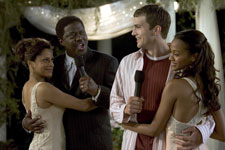
What sort of roles do you look for? JS: I look for roles that will pay me. I try to do roles that have a first and a last name. I find it very important to have a role that is something that is believable and that is critical to the story that is being told. Those things are important. I don't want to be "Clerk #1" or "Girl at the bar". What about the conventional wife role? JS: I don't think that Marilyn is the conventional wife role. She's got a great sense of humor. She's ferocious in the protection of her family and she's loyal and I think the way she's presented in this movie gives her a lot more range than you would see in a movie like "Meet the Fockers", which had Blythe Danner, who is a preeminent world class actress, but in that film, she's second fiddle all the way. I think Marilyn is not second fiddle. I think Marilyn is waiting for the moment to say her peace. 
How was working with Bernie Mac? JS: It was great. He's a good man. He's very genuine and he's a gentleman and he was very supportive of me and made me feel relaxed immediately. One of the things that stood out was the rapport between you and the other ladies in the second half of the film. Was that fun to shoot? JS: That was an amazing scene to do. We shot that scene overnight and those women delivered moment to moment until 5 o'clock in the morning. They were amazing and there's so much more to that scene. There was way more laughs and way more relationship stuff that there wasn't enough time to put in, but that was the crew right there. I see that you are doing "Flight Plan" with Jodie Foster next? JS: I a What's the film about? JS: It's a thriller. It's a Hitchcock thriller that takes place on a airplane. I won't say much more than that. You have to go see the movie. It's comes out in October. |
| (March: Main Page * Features * Reviews * Screenings * Teen ) Current Issue * Archive |
 |
|
Terms of Use
| Privacy
Policy Copyright © 1999-2005, BlackFilm.com
|

 ad
you seen the original and how do you think this film will compare to it?
ad
you seen the original and how do you think this film will compare to it?
 m
essentially and my cousin calls me this, "the head negress in charge".
I'm in first class and Jodie Foster, who's under duress, comes and tries
to crash into first class and I'm the woman who tells her, "Go sit your
ass down!" That was my role.
m
essentially and my cousin calls me this, "the head negress in charge".
I'm in first class and Jodie Foster, who's under duress, comes and tries
to crash into first class and I'm the woman who tells her, "Go sit your
ass down!" That was my role.