
|
|
About | Features | Reviews | Community | Screenings | Archives | Studios | Home |

October 2006
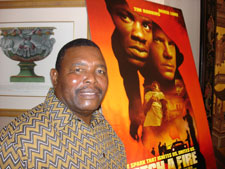
CATCH A FIRE: An Interview with Patrick Chamusso |
| (October: Main Page * Features * Reviews * Screenings * Teen ) Current Issue * Archive |
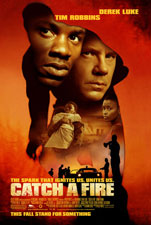
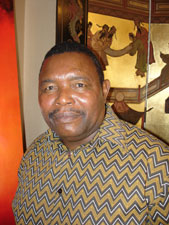
October 23, 2006 As in the case with “Hotel Rwanda”, where Don Cheadle played the true-life story of Paul Rusesabagina, Derek Luke is doing the same with freedom fighter Patrick Chamusso. Chamusso was a loving father and husband when his world turned ugly as the state police suspected him of being an anti-apartheid revolutionary soldier who was responsible for several raids. When his family was hurt in the process, while being innocent, Patrick took it upon himself to do something. Unfortunately, Patrick never accomplished some of his missions as he was caught, tried and sent to prison until apartheid and he was freed after 10 years. In speaking with blackfilm.com, Chamusso goes over Luke’s performance and reflects back to those days of revolt.
After all these years of thinking the movie would never come out, now that it is set to open, how do you feel? Patrick Chamusso: No, I never kept thinking about it, especially after the man who spoke with me about the film (Joe Slogan) died in 1995, I said ‘ah, forget about it”, everything is gone. The rest of the people are going to forget about me. What did you think of the movie when you saw it? PC: When I saw it, I didn’t enjoy the movie from the beginning. How accurate do you feel Derek Luke’s portrayal of you was? PC: When I was told that an actor was coming, I didn’t expect an actor like Derek Luke, I was expecting somebody like Denzel Washington and Cuba Gooding or maybe even Samuel L. Jackson – Big Name Actors – but according to my class (lower class), I said ok, he’s not a Big Name Actor, I don’t know him, but let me just meet him and then I met him, we spoke, I didn’t really like him at first but after 15 minutes, I knew the man was good. Because he asked a lot of questions and he wanted to learn more. The most thing I was worried about was the American Accent, I thought maybe he would never master the South African Accent, I was wrong there, I think they are right when they say “don’t judge a book by its cover”. And really, the man did it and spoke with me and everything. One of the themes in the film that I thought was most powerful was forgiveness, my question is was that Hollywood’s version of how you felt when you were released from prison, or were you genuinely angry for many years afterwards for being wrongfully incarcerated? PC: When I was in prison I was angry for about 2-3 years on the 10 years that I did in prison. I was sentenced to 24 years but I did 10 years. So, after I was locked in separate cells I was very angry. After 3 years I was sent to a community cell where a lot of people are there, those people were sentenced to life. I was sentenced to 30, 35, 40 years, so, I told myself no, it’s not good to be angry. Let me just get something here on Robben Island that will help rebuild Patrick. I got involved in political discussions on a daily basis. We came to conclusions that no, let us forgive these people because we made examples of Mozambique, Zimbabwe and those countries really are What impressed you most about the film? PC: I was impressed with how accurate the story was, it was shown mostly how it happened. And I’m very proud that the story is being told while I’m still around. Even though Tim did not enact the viciousness that was done, I think he did that so that the film would be able to be watched, it would be stomachable. Are you saying that Tim’s character was worst than depicted in the movie? PC: Yes, Tim reduced the major portions of the viciousness in the movie, not that much, but some. Why do you think your life was spared? They killed your best friend but they didn’t kill you, what do you contribute to that decision? PC: The reason they didn’t kill me is they wanted to Joe, they wanted me to cooperate with them, so that we could go back and catch the number one person they needed and I kept them busy, because I was also well-trained. But, I didn’t know where Joe lived or what car he drive, what directions he would take. I would give them info that wasn’t able to be substantiated. What kept you strong while you were in prison? PC: I think it was the struggle, because I knew that one day we would be free, even though it was hard, I knew one day we would be free. When you look back at what happened to you during your time in prison and other people like you, and you say that you have forgiven, is it hard for you to coexist with the Whites in South Africa or do you stay away from them, how do you handle it now? PC: I have more White friends than Black friends. Actually, where I am is a rural area, in some areas you still have racist people what I did is I built an orphanage there after I finished then I went to the church in town and then they were sold. I introduced myself and then I told them what I was doing and I asked them for their help to come and educate the children to help me to do that. For the first time they were real scared, that I was there to take them to the township, to the woods and maybe I’d kill them or whatever. They asked who I was and I told them I am Patrick and an exported prisoner, I was with Nelson Mandela and they said, oh, maybe he’s for real. They first sent old ladies. Even Vic Nos, I met him at the dam I could have done something but I said no. Am I correct that you said there are still neig PC: Yeah, people can say things but if you don’t react to them, they want you to react, then they find the excuse to fight you, but if you react negative to what they come with really they become your friends. Can you talk a bit about what you’re doing now with these children? PC: I have a website www.twosisters.org.za and an e-mail Patrick@twosisters.org.za , some of the most important necessities for the children are food and medicine for their treatments. People can assist me financially with enabling me to be able to feed them, to educate them, to get a bigger house to accommodate them because the house I have is too small for the number of children that I take in. You mentioned earlier that when the writer came to you, you were thinking maybe not now because people are more interested with Nelson Mandela and other bold-faced names – why do you think it’s important that your story be told given the fact that initially you were not at all political? PC: I want this story to be told so that people like me, the common man like me must know that everyone is important in the space of this universe. It’s not that only those with money are important. This film, they’re going to carry it with both hands. Because if a man down there where we’re not even counted and they see this film it will be very im
|
| (October: Main Page * Features * Reviews * Screenings * Teen ) Current Issue * Archive |
 |
|
Terms of Use
| Privacy
Policy Copyright © 1999-2006, BlackFilm.com
|
 CATCH A FIRE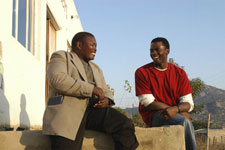
 not doing well because of their anger. They took from us, they took everything from the Whites who oppressed them. Why can’t we just forgive these people to show them that we’re not as vicious as they thought. We came to the decision that it’s good to forgive someone, if you forgive someone you will live in peace.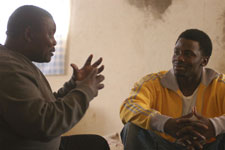
 hbors that will say racist remarks to you?
 portant to them. In the place that I live, there is not even any running water, no tap, so it’s down, very poor. The people, they are going to see that even a common man like me participated in the history, but nobody talks about this.