The Four Feathers
|
 |
| Distributor: |
Paramount Pictures |
| Director: |
Shekhar Kapur |
| Producers: |
Robert D. Jaffe, Stanley R. Jaffe, & Martz Katz |
| Screenplay: |
Michael Schiffer & Hossein Amini, based on the novel
by A.E. W Mason |
| Cinematography: |
Robert Richardson |
| Music: |
James Horner |
| Running Time: |
125 min |
| Cast: |
Heath Ledger, Wes Bentley, Kate Hudson, & Djimon Hounsou
|
Just like Shakespeare, some novels have been made into films several
times. There have numerous versions of “The Count of Monte Cristo”, “Tom
Sawyer” and even “Carmen Jones”. Now comes another 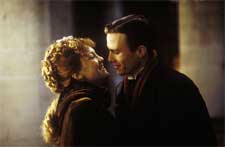 version
of A.E. W Mason’s novel, “The Four Feathers.” The difference that comes
out in this film is that it’s been politically corrected for today’s audience.
On the heels of his Oscar nominated film, Elizabeth, Director Shekhar
Kapur has captured the essence of the story but leaves questions unanswered.
While the 1939 version detailed the account of a coward looking to redeem
himself, Kapur has added friendship and betrayal to the mix, which leaves
the film with no meaning at its end. Nevertheless, the acting carries
the film as well as the cinematography. version
of A.E. W Mason’s novel, “The Four Feathers.” The difference that comes
out in this film is that it’s been politically corrected for today’s audience.
On the heels of his Oscar nominated film, Elizabeth, Director Shekhar
Kapur has captured the essence of the story but leaves questions unanswered.
While the 1939 version detailed the account of a coward looking to redeem
himself, Kapur has added friendship and betrayal to the mix, which leaves
the film with no meaning at its end. Nevertheless, the acting carries
the film as well as the cinematography.
We first see Harry Feversham (Ledger) 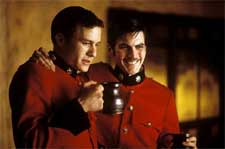 playing
rugby with his best friend Jack (Bentley). As they run to score the winning
goal, Harry’s girlfriend, Ethne (Hudson), sits in the stands. Harry, Jack,
along with Trench (Michael Sheen), Castleton (Kris Marshall), and Willoughby
(Rupert Penry-Jones), are all part of the army. Jack has always had thing
for Ethne but settled to just being her friend. Just as Harry proposes
to Ethne, he learns that his unit will be off to war in Africa against
the Muslins in Sudan. Never wanting to join the army in the first place,
Harry fears death and after a long hard night, he resigns his commission
without telling his friends. When Ethne won’t support his decision, she,
along with Trench, Castleton, and Willoughby send Harry four white feathers,
symbolizing cowardice. Only Jack stays loyal. Faced with disapproval from
his father, a general in the playing
rugby with his best friend Jack (Bentley). As they run to score the winning
goal, Harry’s girlfriend, Ethne (Hudson), sits in the stands. Harry, Jack,
along with Trench (Michael Sheen), Castleton (Kris Marshall), and Willoughby
(Rupert Penry-Jones), are all part of the army. Jack has always had thing
for Ethne but settled to just being her friend. Just as Harry proposes
to Ethne, he learns that his unit will be off to war in Africa against
the Muslins in Sudan. Never wanting to join the army in the first place,
Harry fears death and after a long hard night, he resigns his commission
without telling his friends. When Ethne won’t support his decision, she,
along with Trench, Castleton, and Willoughby send Harry four white feathers,
symbolizing cowardice. Only Jack stays loyal. Faced with disapproval from
his father, a general in the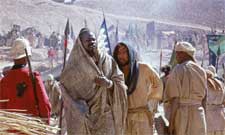 army, and the loss of respect from his fiancée and friends, Harry musters
whatever courage he has left to redeem himself. Using his financial means,
Harry goes to Sudan and disguises himself as a native to help his friends
who are in grave danger. With the help of an Arab tribesman (Hounsou),
Harry goes all out to gain the respect he lost even if it puts his life
in danger.
army, and the loss of respect from his fiancée and friends, Harry musters
whatever courage he has left to redeem himself. Using his financial means,
Harry goes to Sudan and disguises himself as a native to help his friends
who are in grave danger. With the help of an Arab tribesman (Hounsou),
Harry goes all out to gain the respect he lost even if it puts his life
in danger.
At first glance at the actors’ name, one might think that each one may
not carry his or her weight to play their part, but the acting is distinguished
throughout, with Ledger splendid in a commanding role. Hounsou, who’s
no stranger to playing the buddy/mentor role, is great as Abou. His guardian
angel serves as the light that carries Harry through his journey, and
Hounsou nearly steals the 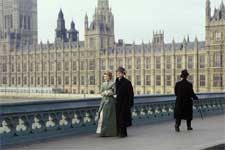 picture
with his wisdom and physical presence. Director Kapur has done a good
job in keeping the key elements of the story (heroism, and friendship)
but let a few mistakes fall through the cracks. There’s a lot said and
done off-screen that could have used in the film to spell out the quick
edits. In one scene, one man is wounded in the middle of the desert, and
in the next scene he’s back home tending his wounds. Aside from those
quibbles, the cinematography is stunning. From the elegant dance, to the
costumes, to the shot of the desert, the scenes are magnificent. In homage
to his last film, Shakur has place Queen Elizabeth in a scene. The highlight
of the cinematography is within the battle scene, as an overhead shot
of the four squares will be talked about. Much has been made about the
English and it politics during each version, but they don’t seem to matter
when the central focus is on one man’s quest to be a hero for once. “The
Four Feathers” is definitely worth seeing. picture
with his wisdom and physical presence. Director Kapur has done a good
job in keeping the key elements of the story (heroism, and friendship)
but let a few mistakes fall through the cracks. There’s a lot said and
done off-screen that could have used in the film to spell out the quick
edits. In one scene, one man is wounded in the middle of the desert, and
in the next scene he’s back home tending his wounds. Aside from those
quibbles, the cinematography is stunning. From the elegant dance, to the
costumes, to the shot of the desert, the scenes are magnificent. In homage
to his last film, Shakur has place Queen Elizabeth in a scene. The highlight
of the cinematography is within the battle scene, as an overhead shot
of the four squares will be talked about. Much has been made about the
English and it politics during each version, but they don’t seem to matter
when the central focus is on one man’s quest to be a hero for once. “The
Four Feathers” is definitely worth seeing.
|