
December 2002
Antwone Fisher : The Chosen One : An Interview with Derek Luke
|
December 2002
Antwone Fisher : The Chosen One : An Interview with Derek Luke |
| (Dec: Main Page * Features * Reviews * Screenings * Teen ) Current Issue * Archive |
|
Interviewed by Monikka Stallworth
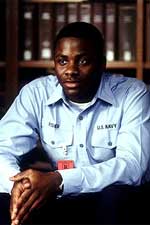 Antwone
Fisher : The Chosen One : An Interview with Derek Luke Antwone
Fisher : The Chosen One : An Interview with Derek LukeTrying to find a catchy way of combining the fact that Derek Luke spent five years working at the Sony gift shop with the fact that he is a "gifted" actor may seem like a simple enough task, but I’m stumped. "Hollywood’s newest find was discovered in of all places, the Sony Pictures gift shop and he’s truly a gift." See what I mean “ very contrived. And contrived is exactly what Derek Luke is not. He’s got to be one of the most present and sincere individuals I’ve ever had the opportunity to meet. He conjures thoughts of Donny Hathaway’s classic "To Be Young, Gifted and Black". A young man with big dreams and the fearless passion to move towards them - Derek Luke personifies that phrase. And I had the pleasure of chatting with him about his experience filming Antwone Fisher.
MS: Congratulations. DL: Thank you very much. MS: So you actually met Antwone Fisher while working at Sony Pictures, right? DL: Yes, I worked at the Sony Pictures gift shop for about 5 years and I probably met Antwone the 2nd or 3rd year into it and that’s how we became acquaintances, and then friends. MS: Didn’t Antwone work at Sony as security officer, too? DL: Yes he did, but that was about 13 years before I did. MS: It’s funny that you the two of you have Sony jobs in common. DL: Yeah, it is. (chuckle) MS: How much did you have to study the real Antwone Fisher to prepare for this role? DL: You mean him as a person? I didn’t. I didn’t study him at all. Antwone is a totally different person today. MS: Then, how were you able to connect with his experience? DL: I learned that his demeanor was a cover up and being from the hood, most of us have cover-ups, I believe that’s why we call it the hood. MS: What was it like growing up in the hood? DL: It was like sink or swim. When you don’t have people encouraging you in the direction that you want to go, you’re like I got to do something.
DL: I did, almost for the same reasons Antwone did, to escape. I said to myself, "if I end up being nothing," and it wasn’t a dis to the army, "but I’m gonna go into the military and tour the world or something, if I don’t make it through college, I gotta get out of here." It was the last thing I’d do, but at least I’d see the fruits of it and how it changed people’s lives. MS: So, this has been a whirlwind of big time opportunity for you, were you at all nervous during the shoot? DL: I was very nervous, much like I am right now. MS: You mean to tell me you were nervous in front of the camera? DL: Most of the time, yes, very nervous. MS: Well then hearing the Oscar buzz about your performance must really make you nervous? DL: Well, I’ve been hearing that from my mother all of my life. She’s been supporting me from day one and I’ve always been the number one actor to her, so it’s like refreshing when you hear it from the outside. But its been embedded since I was a kid from the inside for a long time. MS: Sorry about all of these "nervous" questions, but were you nervous working with Denzel? DL: I thought I’d be intimidated, but I also thought that I should be intimidated. I don’t know why I was so comfortable, that didn’t make sense, I just felt comfortable around him. MS: How about the scene when you had to yell at him? DL: Well, that day I wasn’t too comfortable.
DL: He told me to go for it and I think I had seen Training Day just before that, so I said, "really?" I knew where he was trying to direct me, so I had to just let go and those words just came out. I think that’s what’s scary about Antwone, sometimes as kids we keep things so deep-seated that when we’re asked to speak out freely, things just come out. MS: What were some of the other challenges that you experienced on the set? DL: My lines sometimes. MS: Like what? DL: Like my lines period. (laughter) A lot of the time, things would be outbursts because I would forget my lines. MS: So, have you had a chance to see the movie? DL: I saw it once. I was so nervous, my leg was literally jumping this high and the producer had to come and sit next to me and hold my leg, I’m serious. MS: How would you like moviegoers to feel after they walk out of the theater? DL: Mostly hope. MS: And what do you think Denzel saw in you that made you the one for the role? DL: I hope a little bit of him. I never said that before, but I hope that he saw a little bit of him. He would really have to answer that one. MS: Was there any pressure on the set with the real Antwone Fisher being there and all? DL: Not really. He came to my trailer sometimes and said "Derek you’re doing a great job." And I would just be silent. Sometimes, I’d just be tearful because you can’t imagine what this brother went through, you know.
DL: No, we didn’t have any, but that statement is so broad, cause again, the slave mentality represents in the white neighborhoods too. Most of my friends are from every where and most of us have stories about our pasts and we all found out we were living in fear. So that slave mentality represents shackles on everybody’s mind. MS: You’ve got another movie coming out soon, Biker Boys, can you tell me a little about that film? DL: Straight action, I’m teaming up with Lawrence Fishburne and many, many other awesome actors and its about how men come out of their clothes at night, meaning that most of the men are professionals and they rock bikes at night and they’re like really vicious. The hostility comes out on the bike, the way they ride, the so-called groups that they ride in are just an expression of who they are, during the day and I think its awesome, But then, its also a family action drama and has a lot of dignity to it. MS: Denzel Washigton, Lawrence Fishburne, what a way to start a career. DL: Straight blessing. MS: What do you envision for yourself now? DL: It’s more so what I envision for others – just about getting them out of the hood, I mean suburbia, I mean ghetto, just bringing people out of fear period. MS: How did you make the break from Jersey? DL: I ran. I left with 1000 dollars and I got on the plane to never return. MS: When was this? DL: 1995, 7 years ago. I came straight to LA. MS: I know a few guys from Jersey and they tend to travel in packs. Did you have to leave any folks behind? DL: I left everybody behind. There wasn’t a sole that I thought about. I didn’t tell most people that I was going because I felt like they would talk me out of it. I felt like the dream was calling me, so my heart responded. MS: When did you decide that you wanted to be an actor? DL: My mother said I was four years old.
DL: Washing dishes with my wife. No, things have changed; I’m here with you doing an interview, a life dream, people are stopping me in the street, seeing my Gap ads and everything and I’m getting calls about how people are proud of me - that feels good. MS: How long have you been married? DL: It’ll be four years this April and no kids. MS: How about some advice for aspiring actors? DL: Keep hope alive by staying in the box of belief. MS: I’ve never heard that. DL: Me either (laughing) |
| (Dec: Main Page * Features * Reviews * Screenings * Teen ) Current Issue * Archive |
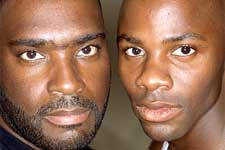 MS:
Did you ever consider joining the military like Antwone?
MS:
Did you ever consider joining the military like Antwone?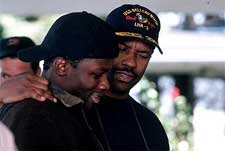 MS:
How’d that particular shooting day go?
MS:
How’d that particular shooting day go? MS:
In Antwone Fisher there’s a point when Denzel’s character sort of dissects
the mind state of the Tate family and it’s connection to the mind state
of a slave. I thought it was a really nice way to allow an audience, in
particular the black audience to reflect on themselves by sort of critiquing
the Tates. Did you guys ever have any discussions about this part of the
film?
MS:
In Antwone Fisher there’s a point when Denzel’s character sort of dissects
the mind state of the Tate family and it’s connection to the mind state
of a slave. I thought it was a really nice way to allow an audience, in
particular the black audience to reflect on themselves by sort of critiquing
the Tates. Did you guys ever have any discussions about this part of the
film? MS:
So, your life must be changing daily with each new opportunity. What’s
a typical day like for you now?
MS:
So, your life must be changing daily with each new opportunity. What’s
a typical day like for you now?