

Currently in limited release in New York and Los Angeles and opening everywhere on December 21 from Focus Features is Mary Queen of Scots, the upcoming historical drama starring Academy Award-nominated actresses Saoirse Ronan (Lady Bird) as Mary Stuart and Margot Robbie (I, Tonya) as Queen Elizabeth I.
Mary, Queen of Scots explores the turbulent life of the charismatic Mary Stuart. Queen of France at 16 and widowed at 18, Mary defies pressure to remarry. Instead, she returns to her native Scotland to reclaim her rightful throne. But Scotland and England fall under the rule of the compelling Elizabeth 1. Each young Queen beholds her “sister” in fear and fascination. Rivals in power and in love, and female regents in a masculine world, the two must decide how to play the game of marriage versus independence. Determined to rule as much more than a figurehead, Mary asserts her claim to the English throne, threatening Elizabeth’s sovereignty. Betrayal, rebellion, and conspiracies within each court imperil both thrones – and change the course of history.

The cast also includes Jack Lowden, Joe Alwyn, Martin Compston, Gemma Chan, Ismael Cordova, Ian Hart, Adrian Lester, James McArdle, Brendan Coyle. Also featuring in the cast are David Tennant and Guy Pearce.
Josie Rourke, artistic director of The Donmar Warehouse, makes her feature directorial debut on the movie.
Beau Willimon, an Academy Award nominee for The Ides of March and Emmy Award nominee for House of Cards, has written the screenplay adaptation. Mary, Queen of Scots is based on John Guy’s acclaimed biography My Heart is My Own: The Life of Mary Queen of Scots.
Blackfilm.com spoke exclusively with Willimon on his screenplay for the film.
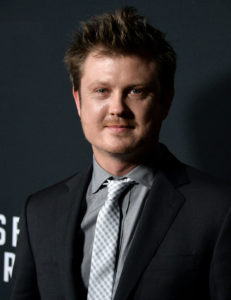
This is your first solo effort, no co-writers. How did this come about for you?
Beau Willimon: Josie Rourke, who directed the film, is someone that I met ages ago when she was running the Bush Theater in London. We both come from the theater world, and we became fast friends and promised one another that we would collaborate one day. I think we both thought that that would be on the stage.
Years past, and she had been tapped to direct this film that Saoirse had been wanting to do for quite some time, gave me a call and said, “Well, we have a chance to work together, but it’s in film instead of theater. How would you feel about writing Mary, Queen of Scots?” Being a huge fan of Josie and a equally huge fan of Saoirse and a history buff, it was a no-brainer for me. I was flattered to be asked, and said, “Yes,” enthusiastically, and we were off to the races.
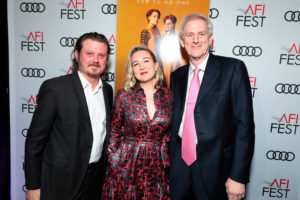
When I look at your background with The Ides of March and House of Cards, you have this thirst about doing projects that question the balance of power, which just falls right into this movie. Was it an easy yes, or was it a challenge knowing that you have to write the screenplay for it?
Beau Willimon: It’s always a challenge to write anything. No, I write about a lot of different projects. I guess I’m most known from the stuff that’s more political, whether it’s Ides of March or House of Cards. But, for me, the entry point isn’t necessarily the politics, but the human story we’re trying to tell.

With these two women, Mary and Elizabeth, that’s where I wanted to begin, which was these two young women who had an extraordinary amount of power on their shoulders who were facing formidable challenges not just from each other but from those within their own inner circles, and at the same time were young, were trying to figure everything out, were dealing with love and loss and trust and betrayal in ways that I think are accessible to all of us, and yet doing it with this extraordinarily high-stakes backdrop.

Whenever you’re doing historical drama there’s a lot of research involved, there’s acquainting yourself with the world that’s not immediately familiar to you. You know in this particular story that you are revisiting a story that has been told multiple times before. There’s a lot of intimidating things about it. How do I feel prepared to be completely immersed in this world to the extent that I can write about it, and also, a great responsibility to this true story that has shaped our history and culture in a way that feels not only responsible to that story, but also poignant and necessary for the here and now?

There’s a lot to contend with that was quite intimidating and challenging, but I was very lucky to have Josie as a collaborator. We had lots of long discussions about what we were setting out to do. I had a great historian to work with, John Guy. Then at a certain point you’ve just got to dive in, trust your instincts and start putting words on paper. My first draft of the screenplay was 180 pages long. I sort of took the approach of I’m going to put everything in there that my instincts draw me to, and then we will begin the process of winnowing it down, revising it, filtering it to its necessary essence; and that’s what we did.
How do you break it down from the book to make it viable for the screen? Were there any major changes? At the same time, did you and Josie go over which film version are most audiences aware of regarding both characters? Did you want to do anything different?
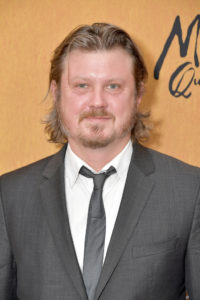
Beau Willimon: We absolutely want to do something different. There’s no point really in just telling the story the same way that it’s been told before because you’re not offering anything fresh. What our focus was from the very beginning was to explore the dynamic between these two women.
Often time in both history and fictional representations of Mary and Elizabeth, it’s been reduced to this sort of cat-fights between these two women. Mary has often been portrayed as reckless and over emotional, impulsive, whereas Elizabeth has been portrayed as cold and calculating and shrewd and heartless. What John Guy’s book did was challenge the stereotypes about these two women. He proposes that the history revealed a Mary who actually was quite politically savvy, very deliberate in her choices, really knew what she was doing and in many ways was a more competent ruler than Elizabeth was at that time. The Elizabeth of these early years of her reign was someone who actually was quite insecure and indecisive, who was grappling with whether she would ever be married or have a child and much more vulnerable than the Elizabeth that we tend to think of.
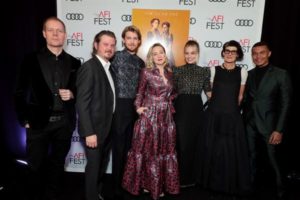
We really wanted to turn those stereotypes on their head, show these two very capable, exceptional, strong human beings and also have access to … in an intimate way … to their frailties and weaknesses; and in so doing, show a relationship between them where their instincts were to actually coexist in a peaceable way, not just to tear each other down. Ultimately, the political tectonics plates of the time forced them to become antagonists, but it’s not what they actually wanted. The real tragedy of the story was the fact that the politics of the time prevented them from doing what they most wanted to do, which was find a way to coexist together.
Along with Mary and Elizabeth, you have the male characters. How was it for you when you’re putting this stuff together? You’ve got the story of Mary and Elizabeth you’ve got to put down, but then you have to bring in the outside elements.
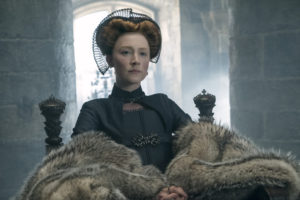
Beau Willimon: Yeah. Well, I think that’s a really insightful question. Part of that is the byproduct of the dynamic between these two women which was mostly through correspondence. They actually never met in person. All of their correspondence was either through letters or through emissaries.
One of the ways that you have to gauge the ways in which they’re affecting one another is how that’s rippling into their lives within arms reach, the people who surround them and how they’re reacting to the dance that Elizabeth and Mary are conducting. We wanted to show that both in a political way. With Elizabeth, it’s her council and Lord Dudley; and With Mary, it’s her half brother and the Scottish lord who were challenging her authority.
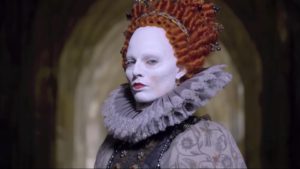
But we also wanted to show it in an intimate and emotional way, which is why we spent a fair amount of time focusing on their respective lovers. At that time, Elizabeth was deeply in love with Lord Dudley. She’s known as the “Virgin Queen.” She never married. She never had children. But that didn’t mean that she didn’t experience love. Trying to envision what that must have meant for her, I think humanizes her in a way that gives us new insight as to who she was and how she became the Elizabeth that we’ve all come to know.
When it comes to Mary, she was certainly capable of love and lust and all the things that normal humans are, but we also wanted to show a story where … how she’s sort of managing those emotions at the same time that she is using her union with Darnley for political advantage. How the private and the public, the political and the personal bleed into one another is crucial for telling the story.
You’ve been working on TV shows for a long time, but why so long between two films, in terms of getting back on the screen?

Beau Willimon: When you’re making television, you have scant time for anything else. I mean if you’re making a season of television, you’re making the equivalent of four or five feature films a year. That can be six, seven, eight hundred pages of text and then you have to film it all. It’s really difficult to carve out the time to write a film. Typically, when I could carve out time, I was working on a stage production, because the theater remains really important to me.
It just so happened that the timing was perfect for this. I had a bit of time before I started my new television show on Hulu called The First. Josie gave me a ring and finally I had some time to actually devote to writing a screenplay. It wasn’t necessarily a conscious choice like, “I’m not going to do film for a while,” it was just that I didn’t have time to.
Well, even though you still have The First on Hulu, do you have time now to do another film?
Beau Willimon: Well, I would love to. There’s a couple screenplays that I’ve been working on in fits and starts for a while now. We’ll see what comes of them, but right now my main focus on the film side is getting Mary, Queen of Scots out into the world.



Loading…