
Writer-Director Greg Carter Talks Lap DancePosted by Wilson Morales
December 11, 2014

Currently playing in NY, LA, Houston and also available on VOD is LAP DANCE, where a young woman has to choose between the love of her life and the lure of money that takes place against the backdrop of a gentleman’s club.
The film stars Carmen Electra, Ali Corbin, Robert Hoffman, Mariel Hemingway, Mariel Hemingway, Lynn Whitfield, Omari Hardwick, Carmen Electra, LisaRaye, Stacey Dash , Briana Evigan, Nia Peoples, Datari Turner, Omar Gooding, Keith Robinson, Lew Temple, Obba Babatunde, Quinton Aaron, K.D. Aubert, Christian Keyes, Wesley Jonathan, Terrell “T.O.” Owens, Ron Jeremy, and Dennis White.
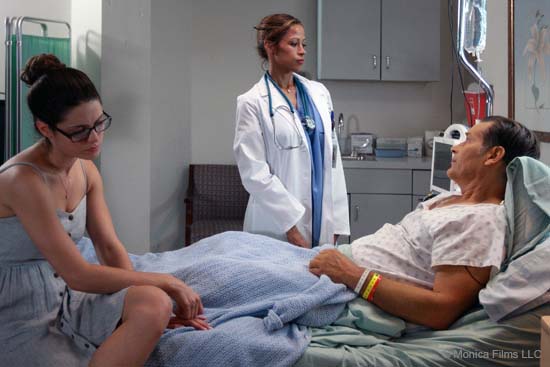
Kevin (Step Up 2′s Robert Hoffman), a promising screenwriter and Monica (Ali Cobrin), an aspiring actress are recent college graduates driving across country to Los Angeles where they plan to make a home and follow their Hollywood dreams together. The newly engaged couple’s plan is derailed when a pit stop in Houston reveals that Monica’s father (James Remar) has cancer. Taking on the financial burden of her father’s medical bills, their savings are soon depleted. Strapped for cash, the couple make a pact so Monica can take a high paying job as an exotic dancer in order to pay her cancer stricken father’s expenses. But can any relationship withstand the club’s seduction and temptations? Once the pact is broken, their lives are changed forever.

Dash will be playing a nurse in the film, while LisaRaye plays a stripper. K.D. Aubert plays a lesbian, whose partner is Carmen Electra.
Written and directed by Grey Carter, the film is based on his life experience he shared with his girlfriend Junie Hoang prior to their move to Los Angeles in 2005. Carter, a native Houstonian, has Produced and or Line Produced over 20 feature films and documentaries, 9 of which he has also directed and 6 he wrote.
This movie was previously titled ‘Monica’ but you changed it to ‘Lap Dance’. Can you talk about coming up with the concept. From what I understand, this is based on your life?
Greg Carter: That is correct. It is based on what happened with me and my girlfriend, Junie Hoang, before we moved to Los Angeles about in 2005. So it was very crazy. Very crazy time.

What made you decide to write a story about this?
GC: Well, you know, there were a lot of things that I went through as a writer but let me get back to that. A lot of things I went through as a [?] that just was when you are experiencing these things in the moment. And so I thought to myself, ‘Hey, whatever it’s worth, writing is at least in some way therapeutic.’ I said, ‘I’m gonna write and at least put how I feel into…out there in the world.’ So a lot of times when we were in the club my job was to make sure that…and we were definitely afraid that someone was going to see us or see her working a club and have a problem and spread that word out there.

My job was to kind of watch the door. And if anyone came into the club that we knew I would go and find Junie and tell her, ‘Hey, so and so is here. You gotta go back in the back. Or go somewhere where you can’t be seen until they leave or either we will leave.’ And I would spend great amounts of time just sitting at a table with nothing but my thoughts. Because one of the things that’s true, when I went to the club I wouldn’t drink. We were just there for business. That was all. To make the money that we needed. And while I was sitting there all this time I would be bored. And, of course, I would just start writing how I felt as I watched her do her thing. That became the genesis of the screenplay.

How much of the film is embellished to what actually happened?
GC: Well, I like to say that I changed the names to protect the innocent and the guilty. It’s pretty close. I changed some things just because I felt like I needed to. There was my need to compress time. Because this actually was spread out a lot more than it was. We both went to the same college. We both went to Texas A & M. In the screenplay, I changed the name to like Florida something. We both were from Houston. She was and so am I. The real Monica was in my early films. If you look at my IMDB you’ll see that she was in everything I pretty much have done. And so we…all this stuff was happening but we, you know, compared it to the stuff. For the most part, it’s all there. I mean some of it was done for dramatic purposes. But the story pretty much ended just the way it did. We got to California and that was pretty much it. And we made it to California together. And that was, like I said, in 2005. And never went back to the club or even thought about it since.
You’re a Black writer, Black director, and 90% of the cast is Black, but the leads are white. Why so?
GC: First of all, at one time I wanted to cast the character who is playing Monica as an Asian girl and the real Chicago was not Black. He was White. But the thing was is that I wanted it to have a multiracial feel. Part of my desire was and this was my discussion with the producers, I wanted the film to not feel like a Black film. I wanted to feel like it was a film that had Black people in it but that it could go out larger than that. Because I thought that the story that I’m trying to tell, which is really about love, and the power of love, is so much bigger than the color. I wanted that to be the case. But I also wanted to throw credence to the fact that I am a Black filmmaker. I wanted to have it to where I also touched base on a couple of different racial play as far as the way I cast it.
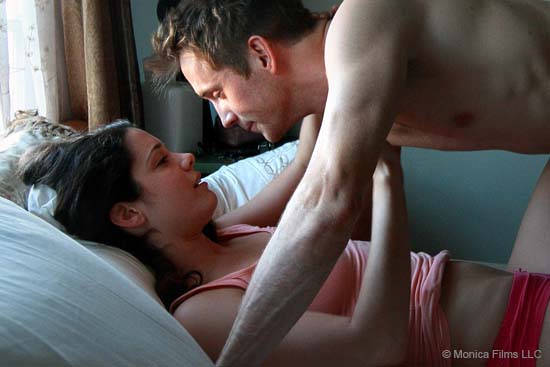
So it’s not by any coincidence that Kevin and Monica are White. But the people that they fall for in the club are Black. Because I think there’s a lot of different things that we, as Americans, are still dealing with the idea of this forbidden fruit was something that was…that I wanted to try to address and touch on. Because I thought there were some interesting thing about the animal magnetism of these very beautiful Black people who had their own complexities intermixed with these attractive young people who are coming into this situation. And what does that all mean? So by casting the way it did, we hit many subtle layers of what’s happening between the characters as they are on the journey.
Can you talk about casting Ali Cobrin and Robert Hoffman in the lead roles Datari Turner in a major supporting role? Also, why was Carmen Electra chosen to be on cover for the poster?

GC: Well, Datari was a producer on the film and he’s a very talented actor. Initially he was thinking that we were going to cast it maybe more the way I thought initially it was. Then, as we had the discussion he tipped his own hand to play the role of Chicago and he did a great job. He understood that he was going to be a villain but there was something that we cut in the script to where he was not and where you saw a lot more about the many dimensions of the Chicago character. He’s actually Dominican and he’s a big family man. He loves his family. There’s a scene we shot it but it didn’t actually make the cut, he actually has a conversation with his mother, he’s very close with her. I didn’t want your typical mustache twirling guy. Heavy. So I thought he brought a lot to that. Ali was an interesting choice because this is what I always felt. If you take up all the girls, and if you think about all the girls who were dancers in the club, starting with Ali, and if you actually end with let’s say, with Lynn Whitfield, and her character is not a dancer, she’s a house mom. All the girls are basically point on a continuum with the most neophyte being Monica and the most experienced being Lynn Whitfield’s character, Momma Pearl. My thought process was that the club and what we found, from my personal experience, when we were there and we met different girls who were there for different lengths of time, it slowly has a way of chipping away at you. I think we got out of it just in time because what happens is, as it is in the movie, there’s little things that you think you would never do that you end up doing. You pretend your fine, that you’re okay with it. That’s one the reasons we both came.

We’re both educated people coming from very strong backgrounds; but when you’re in that life and you’re surrounding by these things every day, it slowly has a way to chipping away at you. We were able to survive ourselves. So if you look at all the girls, if you have Ali on one end of the spectrum, a little bit further to the dark side would be Briana Evigan’s character. So you go a little bit further, you got someone like Jade Lee. A little bit further you get someone like Nia Peeples’ Kelly. A little bit further you get somewhere like Lisa Raye’s character, Sugar. And all the way over you get someone like Lynn Whitfield’s character. If you can follow my drift. All these women had various ways of dealing with being there. The Sugar character was actually based off someone that I had met and she actually had five kids, not three. One draft of the script she just showed pictures of the kids. I thought it was important that you see that she was a mother dealing with whatever and she took it as very much of a business. Ali was perfect because she was fresh, never been in anything. Well she’s been in a couple big movies but she’s a fresh face. But she’s technically the youngest person in the entire cast.

You have an enormous amount of people that the Black community is aware of. Obviously, from Stacey to Lisa Raye, to Omari Hardwick. A lot of them are in small cameo roles. How did you go about getting this cast in this movie?
GC: Yeah, well, one of the things I wanted to do was to counterbalance the fact that you had Whites in lead roles, sp it was not a coincidence that I wanted all the doctors to be Black. I wanted to come out and show that for every person that was Black in the club I wanted to have like someone who was Black who was not in the club, doing something professional or doing something different. When Omari read the script and also, Stacey, Datari did read his and got people saying, ‘You really gotta stop and read this cause you’re gonna love it.’ And they were very receptive to the material. So I was lucky in that way. I also had an advocate like Datari fighting to get a really good cast in it. Once they read it, they liked the material.

As a director and producer, how was it trying to sell this movie and market this? As it is now, it’s not being released in so many theaters.
GC: Yeah. Well, the problem is that if this was a all Black movie then we probably would’ve got to sell to a Black network. We would’ve probably toned down some of the sexuality in the version that they would have read and it would have been easy. As a mainstream film with White actors you get into a little different situation because then you’re talking about a mainstream film that’s supposedly up against other White independent films, Sundance and Berlin and that kind of thing. It wasn’t that it wasn’t a good movie. It was just that how do you program a movie that has such a sexual intent and then, at the same time, it’s not quite the Black film, not quite a White film. It’s kind of salt and pepper. We had already premiered at the American Black Festival and they want premieres. So we didn’t get the advantage of going to other festivals like a Sundance because a lot of those festivals want to be the premiere festival.

The other thing is that I think that when we were showing the film to a lot of the distributors they really liked it. They just didn’t really quite know how to sell it. So fortunately for us, Phase 4 saw the film at Cannes and they really liked it. They were like, ‘We’re gonna get it.’ And then Phase 4 got bought by eOne. And then eOne was going to release it but they didn’t quite know what to do. So they turned around and said, ‘Okay, well let’s just pump up, it’s Carmen Electra’s movie and do it. Because what you really had with this film, the way I describe it to people, it’s kinda like ‘The Notebook’ in a strip club; and that’s a harder sell. So what’s easier to sell is the sexuality of it. So they just played it with Carmen, who I love. That’s my girl. She brought so much to the film. But that’s one of the things that then puts you in another conundrum because you gotta talk to the other actors who put in great work and tell them that, yes, this is the movie poster that the distributor came up with and they’re not on it. Their name’s not even on the front. So, I don’t fault anyone. I think there were probably many different ways to go with the selling of the movie. Like I said, I went with an ingénue to play Monica. Had there been what somebody would consider someone who is done a whole bunch of other stuff before, yeah, maybe it would’ve worked. But then that would’ve changed the dynamic and the casting the way I just described it to you. So I feel happy that we were able to open theatrically in four cities. And that it’s doing well. That it’s getting a lot of bumps and people seem to really enjoy the movie.
It’s a tough sell. I get what you’re trying to do on a national scale. But when you have this much talent in this movie that most people are aware of and some of them are currently on TV, ‘Single Ladies’ and ‘Being Mary Jane.’ When the distributor doesn’t have any photos promoting them it’s tough trying to sell this to the Black community with Carmen Electra on your cover and you’re not making mention, at least on the synopsis, of who the other people are and what the roles are that they’re playing.

GC: Well, let me just say this. I agree with you. One thing I learned is that I always think of my experiences are good or bad. They’re just learning. Something you learn from. I learned so much about marketing of a movie. I always knew about this. But I got to learn a lot about how distributors think about your movie when they’re going to market it. In a way, I was kind of taken out of the process but then brought back in once the movie had been picked up to talk about what I thought. When the script was out and actors were signed up it was called ‘Monica,’ and it was on the cover of every script because it was based on a true story. They signed onto it because of that. Then it became ‘Lap Dance’. They were already like, ‘Uh, “Lap Dance”, really?’ But they understood because, you know, you’re trying to do a film and eyeballs want to go and see what is this all about. But when you look at the movie, if you’re thinking you’re going to call it ‘Lap Dance’, you’re going to go in there and see a bunch of lap dances, you don’t see lap dancing, like you said, until about thirty minutes into the movie. It is a romantic drama like I was saying earlier. So it’s not even where I would say, maybe this is the type of film that had we been able to go into a Sundance situation it would have been…it would have had that kind of buzz and you wouldn’t have had to do all these clever things to try to let people know that the film’s out there.

Because I think when you watch the film you really like it. But you have to figure out a way to make them watch it. Nine months ago there was a Blockbuster. Not anymore. So that just simply means that names and artwork are even now so more important than ever before because we could go to a VOD or if you talk about Netflix, there are literally eighty thousand titles on there. How do you get someone to sift through eighty thousand pieces of artwork and pick something you’re going to watch? At least in Blockbuster you could just walk down a aisle, see what peaks your interest and you pick it up. There’s only probably about maybe fifteen thousand titles in a Blockbuster. You don’t have them anymore. Now they go to a Netflix or whatever. So you almost need the theatrical just to create enough separation from that noise. The background noise of what’s out there so your film will be able for people to look for it. So it’s different dynamics in the post Blockbuster era. The theatrical release is now so much more important. With this title you could just take the approach of just dumping it and putting Carmen on the cover and you could probably get your VOD hits that you need to get your money back. I think in a lot of different ways you want to try to figure out what’s the best way to market a movie that you know is good. I think it’d be different if the movie was terrible. Then you’re trying to do something but everyone who was watching it enjoyed it. And, of course, it’s very personal cause it’s my life story, me and Junie’s life story, on the screen. But I can understand why the marketing plan and how things worked the way they did. Cause like you said, when you first heard about this movie it was called ‘Monica’. Then it became ‘Lap Dance’. Then it became…then the artwork, reflected different angles of it. So I guess that’s the nature of the beast in the post Blockbuster era.

What’s next for you?
GC:I seem to have a predication toward true stories. I’m working on a film called ‘Steppin’. It’s actually based on a true story. It’s about the first all White sorority. I’m just talking to some people about potentially maybe doing a follow up to “Lap Dance” because the story even gets more funny. I’ve got a script called ‘Sugar’ which is a follow up to ‘Monica’ and what happened when I actually got to LA. It got even more bizarre, trust me. I’ve also been thinking about doing a biopic on Paul Robeson.
Here’s a clip Theybf.com posted from the film.