
Exclusive: Guillermo del Toro Talks Crimson PeakPosted by Wilson Morales
October 15, 2015
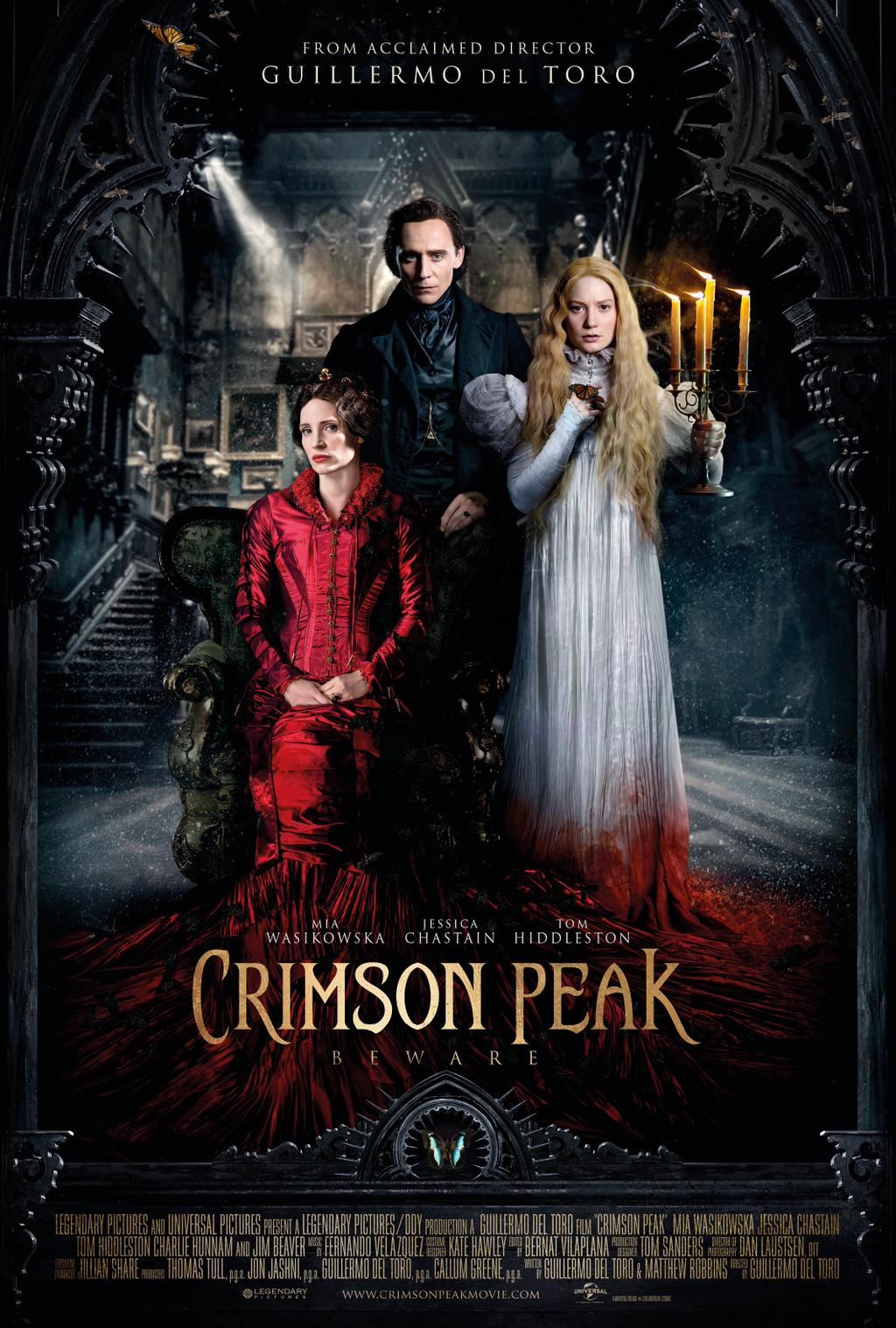
Coming out this week is Guillermo del Toro’s haunting gothic horror story Crimson Peak, starring Jessica Chastain, Tom Hiddleston, Charlie Hunnam, and Mia Wasikowska.
Written by del Toro and Matthew Robbins, the story is set in the aftermath of a family tragedy, an aspiring author is torn between love for her childhood friend and the temptation of a mysterious outsider. Trying to escape the ghosts of her past, she is swept away to a house that breathes, bleeds…and remembers.
Blackfilm.com recently spoke with del Toro about the making of the film, getting his projects off the ground and reading what fans to say.
What comes first in your mind the story or the visual effects?

Guillermo del Toro: They usually, the visuals and the effects come after the story. The first thing I’m attracted to is the little story, the little tale. Crimson was like that. I thought it would be a great, a great idea to do a grand Gothic romance in the style of the old Hollywood films almost.
What was the challenge of not making this something we’ve seen before?
Guillermo del Toro: It is not a horror film. It’s a genre that’s been absent from the screens in this form for at least thirty, forty years. I wanted to present you with something, the best way I can say it is a genre so old that it felt new. Do it in a new way. Do it very vibrant, central, technicolor almost and with a modern sense of violence and sex and gender politics and stuff like that.
Do you have a feeling that your fans will know the difference between romantic Gothic and the usually horror films we have seen as of late?

Guillermo del Toro: What we thought, even all the way to the editing room, we were debating exactly when to reveal to the audience that Tom and Jessica have an agenda. I really decided early on that we needed to know that Edith was in over her head. I think it was important for me because I think that then, when you know that the guys are up to no good, you can actually see them change in the course of the movie, whereas if you save it for a big surprise in the middle or the end of the movie, then you have no room to see them change. I was more interested in the characters than in the plot.

With this house, how much thought process is going into make it so Gothic, so scary?
Guillermo del Toro: I didn’t want to make it to the point that it didn’t get recognizable as a real building. The house was very much based on photography or illustration of the time. We actually, every time somebody came with a detail or a design, I used to tell them, “Show me your reference,” because I didn’t want them to just be whimsical and crazy. I said, “Show me the reference this comes from.” Everybody approved it and we said, “Okay, you can put it in.” Then we did a model, a CAD. We kept changing it. Every time it was, well fifty percent of it needed to be beautiful, but fifty percent of it was, is it telling the story we need to tell? Is it telling us what type of characters they are? Same with the wardrobe. Is this wardrobe beautiful? Yes. Now is it telling us who they are? Yes. A movie can be beautiful and have content and that’s what I call light protein, instead of light candy.

You’ve worked with Jessica before. Can you talk about working with her and what makes her right for the part, as well as Tom and Mia?
Guillermo del Toro: I think Jessica’s a power house. She’s never done a character like this and she very, very consciously chose it to test her limits. I had faith in her and they said let’s go for it. I think in a beautiful way, she kind of sank into the character, she fell in love with Lucille and went in a very deep and gloomy period shooting the movie. I knew she was doing it out of pure love for the character. I helped her through, but it was a rough shoot for her.
And Tom?

Guillermo del Toro: Tom brings vulnerability and humanity to whatever he does. It can be trying to destroy the cosmos in Thor, or it can be a very dark character in Crimson Peak. You understand his humanity. Mia brings intelligence and strengths that are completely those of a modern woman, but at the same time she embodies the period perfectly.
Why is it with some of your films, they’re stand alone films and the other films, they’re in a way, can be set up to have follow ups?
Guillermo del Toro: I think that each movie belongs to, like the same way that you have in your library. You can have a comic book and then next to it, three shelves later you have a novel. It’s the same way that I approach the fun of making movies. I want to be free to do a comic book and I want to be free to do a novel. I think that’s maybe disconcerting to some, but that’s what makes my life interesting.
With the stuff you’ve done, there are still some projects that can’t you get off the ground?

Guillermo del Toro: A lot. Let me put it very simply. I’ve done nine movies, and I have written twenty-three screenplays. Three of those are The Hobbits. I still have eleven, eleven screen plays unmade that I could never get off the ground.
When you’re writing the screenplays, are you writing with the thought process as “Okay, I’m writing this, I’m not thinking about how much it’s going to cost or what it’s going to take.” Or do you think about, “Oh, maybe I can get this off the ground.”
Guillermo del Toro: No. I never think like that. I write, I always say, “Write in complete freedom, then as you direct, hate the writer and say why did you get me into this problem. Then when you’re editing, hate the director.” Don’t remember that, oh what a great movement, what a great camera move, what a great, how expensive was the set. Forget all that.
 When you think about whether it’s Hellboy or Pacific, is it a budget thing that can’t get it off the ground? Is it a budget issue that’s the main concern with a lot of studios?
Guillermo del Toro: Both and neither. We decided to re-tackle the movie once we have a real budget and a real screenplay everybody signed off on. We were moving too fast. We said, let’s do that. I’ll make a little movie in between. I’ll go and take a break and make a little movie that I control everything and is easy to make in a way. Then if the studio likes the budget, likes the visuals and likes the screenplay they can then say okay. The second movie on Pacific Rim needs to be made for a number that makes sense to the project, meaning we can make it bigger than the first one for less money because we learned a lot. What to do, what not to do, how to do it. I think that the studio is waiting for a battle plan and a screenplay. Once we do that they may still say no or they may say yes, but I don’t think it’s cancelled. On the other hand, Hellboy 3 has no pulse.

Why is it one studio can say, “Okay, we’re going to do three Lord of the Rings back to back to back, which is rare. They have that budget in place. Or is it like at the time you’re making these movies you don’t know where it’s going to go. If it does successfully, when you think about it.
Guillermo del Toro: I tell you, the beauty of Lord of the Rings, they were done at a certain period where it was a different industry. It was an industry driven by more mavericks and by people that had the final say. Now it’s an industry that relies mostly on committees. There’s no one, almost in many a studio, there’s almost no one with a single hand, green light power. You have to sit on the table and discuss it with marketing, international, domestic, production. Everybody, all the people need to say, “Go. Go. Go. Go. Go.” Then you get your go. It’s a more complex process now. In many ways a much more conservative one.
When you did Pacific Rim you had Idris in there. How did you come to cast him in a big role?
Guillermo del Toro: I just simply loved him in The Wire, and I then simply loved him as Luther. I thought without any doubt in my mind, this is a leading man. He can actually play the leader of the free world in Pacific Rim. I thought it was great for him to have a role that normally would have gone to a Caucasian guy. I thought that was really boring. I thought, isn’t it beautiful to have Idris have adopted this little Japanese girl and have this fatherly love for her. I thought that was infinitely more interesting to me than going the other route.

When is the next Spanish language film?
Guillermo del Toro: I don’t know. Those happen when they happen. I think that in a strange way Crimson is very similar to those, bigger in scale, but actually has the same adult ambition of those movies. I know I want to do a small one next, so it will be in English, but it’ll be freaky and odd and quirky and strange.
Do you pay attention to what the fans write about you?

Guillermo del Toro: Well, I think that, to a point I think it’s important to hear what they say. At the same time you have to be careful. Websites, like people, have personalities and I think it’s important to determine which websites have your ear. Not every website has your ear. You need to say, this website, that website, really get me and when that people is almost like family. When those people say, “He should try this. He should try that. There’s a property he should tackle.” You can listen, but Nora Ephron said once, “I never take notes from people that don’t like my script.” It’s important that if you take notes from people that like what you do and know what you do, then yes. Yes I do listen. I don’t listen indistinctly.
Official Trailer