
CCH Pounder talks Home Again and Sons of AnarchyPosted by Wilson Morales
November 14, 2013

Currently out on home video is Sudz Sutherland‘s drama Home Again, which stars Tatyana Ali, Lyriq Bent, Stephan James, Richard Chevolleau, C.C.H. Pounder, and Fefe Dobson.
The film centers on three adults raised as outsiders from childhood and deported from Canada, the U.S. and London, England to Jamaica, where they were born.
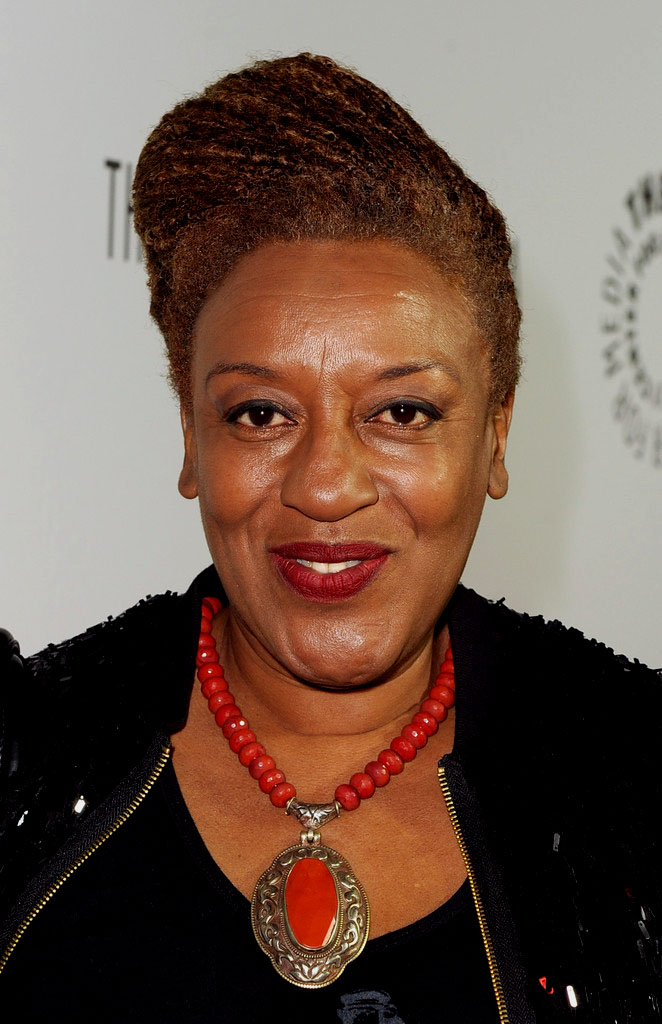
For Pounder, who plays a mother to the one of the main characters, the film personally hits home for her. While she’s currently seen as District Attorney Tyne Patterson on FX’s Sons of Anarchy and has a vast of credits on TV and films, including James Cameron’s blockbuster film, ‘Avatar,’ what people don’t know is that it took more than five years for the Georgetown, Guyana native to get her immigration papers settled after she left her country.
In speaking with Blackfilm.com, Pounder talks about her character in ‘Home Again,’ and why she chose to take a small part in it.
How would you describe your character, Dulsay Mooreland?
CCH Pounder: One of the things I really cared about her is that when you immigrate to a country, and she’s not a usual person in the sense that when you get there, you hit the ground running. You look for work, you look for housing and you have young children with you. The papers take so long to process. I think my papers took seven years in my real life. So, it takes about seven to ten years to get the paperwork done and approved, but after awhile you just forget and you go about life until something happens. That is the carelessness of Dulay. She’s a hard working woman and her son is a teenager and going through adolescence, getting a little wild and smoking some pot and goes on a joyride in a friend’s car. When they get into a small accident, his friends a get slap on the wrist, but he gets deported.
Having gone through the ordeal of getting papers to get into the states, was that one of the reasons you did the film?
Pounder: I’m interested in highlighting films from the Caribbean in general. That’s where my interest lies. The fact that I’m an immigrant and that I can relate and that I know plenty of people with and without papers, yes, it was one of the reasons.

How was working with Sudz on this film? What did you pick up from him that you hadn’t experience from other directors?
Pounder: Sudz is already an established director and directors choose people for particular reasons. I know I was chosen because of my name and could help out the film. I also know I was chosen because a lot of the people he has to work with may not have worked in front of the camera before and he wanted actors with different accents and have a sense of the Caribbean world, whether they grew in it or not. My part was quick in terms of the amount of days to shoot the film. I was the veteran actor on the set.
Were you seen as the symbol of accomplishment or the voice of reason; someone who’s been around long enough to know how to behave on a set?

Pounder: Yes, there’s a bit of that. There’s a bit of adulation moments. When they see me on the set, they are seeing someone who’s a survivor and encouraging young actors who are beginning their journey and can say to themselves, “Ok. This is doable. There’s a dinosaur right here, but she’s still around! It can be done.” I think it’s sort of sweet, actually.

In most of the roles you’ve played, on films and TV, you’re seen as an authority figure. Is that what comes to you or is that what you choose to play?
Pounder: They always say, “Be careful what you ask for.” When I started out, I played victims all the time. I was constantly abused, beaten, downtrodden, and crying all the time. The way people treated you in the street, you realize that the message you were sending was Gospel and you were a good enough actress to be believable. People thought, in the streets, the characters I played were real life because some of the characters I played are people that they know in the real world and that’s how it is down there; wherever down there was. I decided to change that. I said to my agent that I want role of authority; people managing their lines and going about their business and who happen to be black. It took about a year for people to realize that I was good enough to stop playing these victim roles and I had the opportunity, after I thought I was running out of money, to get a role on L.A Law. It was the role of a judge and that’s how it started, in a nutshell. It’s important to show people that a nation is built up of everything; not just the downtrodden, but the ones climbing up, the ones up top, and I wanted to be that woman. That’s how I got all those roles and when you’re good at it, you keep getting them over and over again. If fact, you almost become an actor activist. Now, you get to this fabulous age where, “I don’t care what kind of role it is. I want to play such and such just for the artist in me.” That’s just begun again where I feel the freedom to be an artist alone but I tell you I’m an artist with a conscious. Unless I’m blue and have a tail and have wild eyes like in ‘Avatar,’ it’s going to been hard to play a character where your self-esteem falls apart.

Speaking of ‘Avatar,’ are you expected to come back to the sequel?
Pounder: I do expect to come back. I did survive that explosion.
Are you enjoying your time on ‘Sons of Anarchy’?
Pounder: That was an unexpected thing. That was supposed to be a four episode arc to help another actor move on and get out the episodes and I don’t know how things stacked up, but I ended up being there for the entire season. There are friends from ‘The Shield’ and it’s good to hang out with friends.