
Director Ty Hodges Talks A Girl Like GracePosted by Wilson Morales
July 8, 2015

Recently making its World Premiere at the Los Angeles Film Festival is the indie film ‘A Girl Like Grace,’ which was directed Ty Hodges and starring Ryan Destiny, Meagan Good, Garcelle Beauvais, Raven-Symone, Romeo Miller, Blair Redford, Marcus Lyle Brown, Leticia Jimenez and Paige Hurd.
A Girl Like Grace, follows seventeen-year-old “Grace” (Ryan Destiny), who grows up in a dysfunctional home raised by her single mother “Lisa” (Garcelle Beauvais). Entering her senior year of high school, Grace fights for acceptance in the world while being bullied at school by “Mary” (Raven Symone). Grace looks for guidance from her best friend “Andrea” (Paige Hurd) and becomes heavily influenced by Andrea’s older sister “Share” (Meagan Good). Grace spirals into a dark world of sex, rebellion and her idea of womanhood. Faced with life’s cruelty, Grace must find a way to make peace with herself and claim her own beauty in this gritty yet relatable coming-of-age story.

For Hodges, who’s also an actor with TV and film projects that include Disney’s Even Stevens, The United States of Leland, Material Girls, and Dance Fu, he’s becoming a director on the rise with indies such as Miles From Home, Video Girl, and You, Me, and the Circus. In fact, the Washington, District of Columbia native has another directed film currently playing in select theaters with Charlie, Trevor And A Girl Savannah.
Blackfilm.com recently spoke with Hodges on putting ‘A Girl Like Grace’ together after the death of his closest friend, actor Lee Thompson Young.

Can you talk about putting together A Girl Like Grace?
Ty Hodges: The film was brought to us by a new writer by the name of Jacquin Deleon. I had done a film called Video Girl and he was a fan of it and so he reached out to one of our producers Carnetta Jones and they brought it to me. At the time I was like, “I’ll read it.” I was doing a movie called ‘Charlie, Trevor And A Girl Savannah’. My focus was on that film and when I read it, I was like, “No one was talking about this journey of becoming a woman. No one is talking about the idea of sexuality in the world where a woman is exploited to take what the world gives them. They have to fight to be beautiful, and to be perceived as a woman. That’s a journey.”

So, when I read it, I was, “I get what this story is, but if you just give it to me, I will keep the foundation of what you set.” Growing up, I always had this cheerleader champion and genuine ability to encourage women to own their power. I was discovering through Jacquin’s script. I had a food truck at the time and so I was writing it while I was in my food truck and in the industry of culinary, you meet people in a pure, intimate alignment. They’re hungry and they want to buy food and I was meeting so many people while I was writing the script. As I was having conversations with young and older women and I would find the spark of connection.
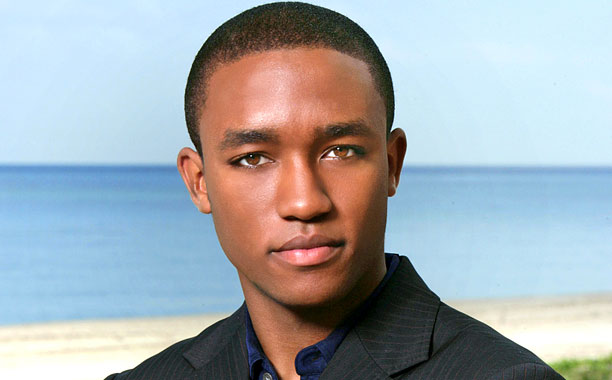
Also at the time, my closest friend, who I considered like my brother and he’s also an actor, committed suicide. We grew up together on Disney Channel. When that happened, I never would thought that he would do that. That was Lee Thompson Young, who was on TNT’s Rizzoli & Isles. Rest his soul. He went to USC and he was a filmmaker. So I had to do it for us. He went to school for this and I didn’t. I was just an actor that had a voice. My filmmaking came from a place of necessity. When that happened with Lee and he was successful, I had to figure where did things go wrong for him. That was an element that I put in the script. What happens when your best friend takes their own life and you have to go out in the world not being attached to that? I’m in the movie and I play the guy who is the girls’ best friend. Through my life, I want to create films that are an experience.
Can you talk about Ryan Destiny as your lead?

TH: I never forget when we auditioned every girl in Hollywood and there were different names that were going to play Grace but Leah was just on it. We were a week out of production and I’m in the city location scouting and we don’t have our Grace. We had every part cast but Grace. I’m freaking out and looking at tapes and at the hotel and our casting director Leah Daniels-Butler called me. She’s cast all of her brother’s movies, the great and wonderful Lee Daniels. She calls me and tells me she wants me to look at another tape and says, “I found your Grace!” She was so confident. Once I saw the tape, I was amazed by this raw, beautiful talent that was so mature. The character Grace is mature. In the beginning of the film, she didn’t have a sex, a gender. She’s so removed from classified as a girl. So, I saw Ryan Destiny in this tape and was like, “It’s her!” Leah is amazing. She found Lee’s Precious (Gabourey Sidibe). I had to create a campaign around Ryan because there were other names that made sense on paper and I was like, “Guys, honestly, this girl is the girl.” They were convinced and Ryan Destiny is a good vessel for the world and her generation and I’m just thankful that she’s in this film.

What were some of the challenges you face as you were directing new talent as well as weaving in so many issues in the film?
TH: I think about humility and not knowing. When you discover things when you’re a teen even when you don’t know it, it’s like finding an island and seeing coconuts here and bananas over there. Working with Datari (Turner) and Meagan (Good) on ‘Video Girl,’ that was my second film after ‘Miles From Home.’ When they approached me to do the film, and I grew up with Meagan, I was like, “Cool,” and that was a journey for me. None of us had the intentions of being a producer. Datari is a model, Meagan is an actress and I’m an actor, so when ‘A Girl Like Grace’ came and having newcomers, I had to remind myself that we have jobs and they have titles. We’re a team and everyone has their position like a sport and I looked at it from that perspective. I can’t see egos. It’s about knowing people’s strengths and I’ve learned to respect that and highlight them.
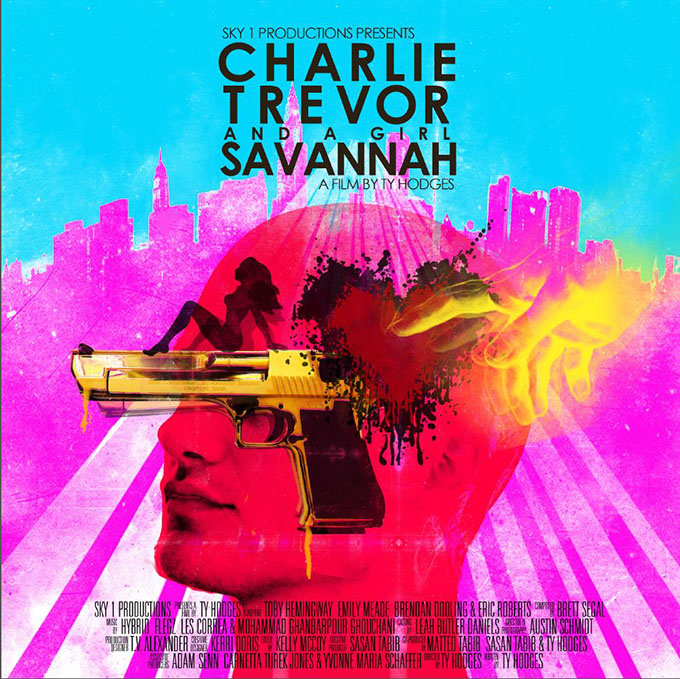
Can you talk about your other film, ‘Charlie, Trevor And A Girl Savannah’ and being a director who is able to get project done because that’s no easy feat?
TH: Yes. It’s not easy. One of the things that’s good and not good when owning a business is that I try not to be so strategic. I had to learn what it means and the impact it has. Being strategic has value. ‘Charlie, Trevor’ was a film where I just wanted to do it. I’ve done projects on micro-budget levels and this film has a diverse cast. It’s got a complete film of color. I want to be limitless to the human being. This business at times can be structured with race, being, career, and stereotype. I feel like we’re growing as a society to let people be different. Their differences make the world different. That’s a beautiful. I didn’t even know these two films would be shown around the same time. I did this film in New York and was editing it and afterwards went into ‘A Girl Like Grace.’ My though process was to just do it and see where it goes. The real gem is to reveal to people that you can actually do it. My whole thing is to create experiment through experimental films.