
DOC NYC 2018 Exclusive: Director Nicolas Davies Talks ‘Rudeboy: The Story Of Trojan Records’Posted by Wilson Morales
November 20, 2018
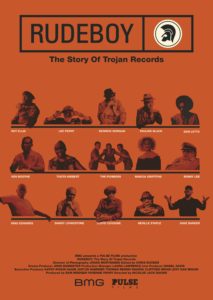
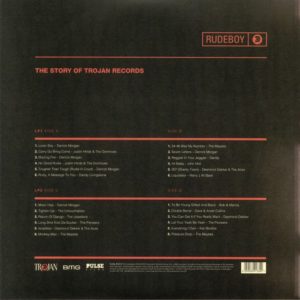
Recently played at DOC NYC 2018, after its World Premiere at the 62nd BFI London Film Festival, was RUDEBOY: THE STORY OF TROJAN RECORDS, which is celebrating its 50th Anniversary.
Financed and executive produced by BMG, the Pulse Films production, RUDEBOY: THE STORY OF TROJAN RECORDS documents the origins and the ongoing love affair between Jamaican and British Youth culture – all told through the prism of one the most iconic record labels in history, Trojan Records.
Directed by Nicolas Jack Davies, RUDEBOY: THE STORY OF TROJAN RECORDS charts the rise and impact of the legendary reggae, ska and rock steady label and its influence on music and subculture in Britain from the early ‘60s through to the late ‘70s. Defining a movement that brought cultures together through the power of music, the birth and journey of Trojan Records, and its wider impact on society, feels as vital as ever 50 years later.
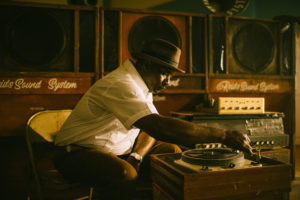
Named after the flatbed truck that revered producer Duke Reid used to transport his soundsystem around Jamaica, Trojan was launched in 1968 by London based, Jamaican expats Lee Gopthal and Chris Blackwell. Growing rapidly during its’ early years – due in no small part to the development of the skinhead working class youth movement that embraced Jamaican music as part and parcel of its culture – the Trojan bandwagon quickly rolled into the 1970’s, with the likes of Desmond Dekker and The Maytals flying high in the UK Pop Charts.
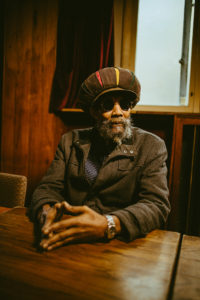
This important story is effortlessly brought to life by director Nicolas Jack Davies with fascinating archive footage, alongside freshly shot drama and new interviews with legendary artists including Lee ‘Scratch’ Perry, Toots Hibbert, Ken Boothe, Neville Staple, Marcia Griffiths, Dave Barker, Dandy Livingstone, Lloyd Coxsone, Pauline Black, Derrick Morgan and many more.
Blackfilm.com recently spoke with Davies regarding the making of the film.

With this movie, what was the inspiration and attraction to putting together this project?
Nicolas Davies: Initially it started because 2018 marks 50 years since Trojan formed. To drive people towards a film like this, sometimes I think it’s a good way of starting. For me it felt like the music hasn’t been lately appreciated enough for what it is musically, but also what it is culturally and socially. Earlier on just thought one way of maybe getting the story, to be excited about it was to kind of bring context to that music and really tell a story that’s about the movement of people and immigration to the UK and the mixing of cultures true to music and the effect that had on our country.
That should be celebrated, and maybe those things aren’t that celebrated because we tend to have a negative view of immigration and that kind of stuff in modern news cycles. It was kind of a mix of everything. A bit of the anniversary, a bit of the music, shine a light on people that maybe really haven’t been featured in a film or documentary like this before where as other genres have done quite a few of them. There’s a few bits like that, but personally to me it’s music that I knew so well growing up and the bizarre thing about reggae I think is that a lot of Brits like British music because it’s so ingrained in our culture. That’s fascinating in itself because it obviously came over, well not really it’s reggae, but its not rock study, it came over from the Caribbeans. It just felt like a very rich story to tell that maybe we could bring update to this sort of modern world in hopes that it might be on the music as well.
When you do a documentary you never know when you’re going to end it. How much footage were you able to get and how long was the editing process?
Nicolas Davies: Right. There’s three strategies obviously, the most important one being the interviews. So we did all the interviews in the time of last winter, early winter and then this is not a lot of archives they have themselves. The idea was to try and recreate some of their memories which is what we did. So three weeks of interviews, a week or so in Jamaica, a couple weeks in the UK, and then there was a gap while we edited that together just to build the story or loosely build the story. Which we then could go out and shoot the reenactments or the studio stuff that we could get to work so the stories were being told. We shot all of that in eight days, five days in the UK and three days in Jamaica, and about two months after the interviews are finished. Then we spent another six or seven weeks cutting it all together. It probably took editing wise, about nearly close to 20 weeks I would say. We probably got shooting a bit before that, so it’s about six months start to finish.

There’s not a lot on the cutting room floor really. We tried to get everything in. I think we’re being quite ambitious is what we’re trying to do. Once you build the principals of the film, how we were telling the story, we didn’t want to make it sort of talking head. We got it straight from the UK, talking head is where you play around the house of the important people in the film, just chatting and giving their opinion. We wanted it to be, with this person we’re gonna do this bit, next person doing the next bit and together they all come together to tell you it. It was a real story which means certain things we left behind that didn’t fit because it didn’t abide by that bit of the storytelling.
Why the reenactments of stories?

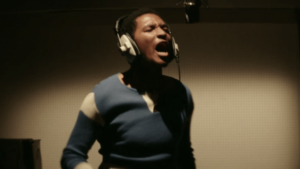
Nicolas Davies: Because there’s very little archive of the things they’re talking about and practically none of the artists themselves, until they get to the era of getting on the TV and a bit of that. There’s many archives of the times with news footage and certainly a lot of the things like the house parties they had in London because the Jamaicans couldn’t go to clubs or bars because they weren’t allowed to. That stuff, there’s some pictures of it, but there’s no video archive of it or a film archive of it. We sort of took license to just invent it and be free to create a sort of visual experience, kind of not exact but to create the feeling of what they were saying. I think the fans will say that’s exactly what happened; it was just a visual experience to what they are saying, because what they are saying is the factual part of it to whoever is speaking at that time. So that’s why, it’s all because we didn’t have it that we had to invent, create a solution to it.
Was that a challenge, was there anybody that said no? Sometimes when you do a music documentary there’s always a lot of back fourth regarding music and rights.

Nicolas Davies: Tell me about it. The artist that we couldn’t get in it or that we talked to for ages about it because he had a relationship with Trojan that he’s very a bit negative about. Not to do with any of the key players, but just his experience of it, Jimmy Cliff. Jimmy wanted to do it, didn’t want to do it, his musics in it, but his relationship with that period of his work is not great, and all with Trojan as far as I’m aware. It’s a shame we couldn’t get him in but practically obviously everyone else is in it and the music for it. Licensing songs is a nightmare if you sat there. So many people watch and they go “I love” and usually they’ll say they like it. They’ll say “I really loved the film, but I love that song, why is it not in there?” You’re kind of like “Well because that would’ve cost us 70,000 pounds.” That’s a big decision to play that song, because the rights and the bases, who first names it and etcetera etcetera.
That part of the actual storytelling is a real pain in the ass, because you can’t say that in the movie, you can’t put strap line up. Well, you could do it, but it would probably be distracting saying “really sorry we can’t play this. I want to but it’s gonna cost too much money”. Previews don’t give you that break so it is tricky. The difference between this and a lot of music docs I’ve made before is that, that scene and those artists are not very exclusive.

They’re quite inclusive as a thing, so they’re quite accessible. You can find someone that will get you an introduction with them, they’ll even talk to you about their work. It’s not like trying to to get ahold of some of the rockstars of the equivalent era. There’s not loads of machinations between them and you. I think that accessibility I was quite shocked really. I’ve been asked if they didn’t make fortunes or they didn’t. They’re still in it for the love of it I think. That was quite interesting, sort of finding that out. It wasn’t like you were going to see ID lounges to find them. They allowed you to come into their house or a bar around the corner.
What are you looking for audiences to get out of this when they’re watching this documentary?
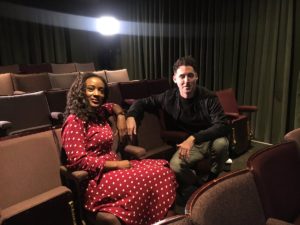
Nicolas Davies: I will say two things. I think recognizing the brilliance of that music is a very pure joyful music, an innocent music in a way. It’s just excellent song writing, groove or you can dance so you can play the music out of it for sure. I think the other thing is the positivity of the context of it. You won’t be able to take a positive story about immigration. What happens when people mix together, I think in 2018 that’s probably the most important thing anyone could say, certainly from what I see in the world. Without sounding too romantic about it, I think you want people to go “look this was a needy story, there are definitely ups and downs but I think a positive came out of it along side this brilliant music.” Most documentaries like this are most music films at the heart of it. It’s about how Britain loved music and the power of it, and it’s ingrained in all of us, most of us. I think that’s take out for me.
Where are we with the film? Is it still traveling the festival circuit or is it playing theaters or BBC sometime soon?
Nicolas Davies: The festival thing is taken off a lot more than I think we realized. So that delayed a lot of the other distribution elements, but it’s very exciting to me. To talk to people like yourself and travel around these brilliant festivals, share and screen this amazing film. This part of it, seeing how people react to it, I think changes what people might want to do with it in the end of the reach it can get to. I think in the new year there will be a decision on what route to go with, that is straight to it. A streaming service or a small cinematic run. It’s definitely got that coming, I don’t think we know enough yet from seeing how it pans out from these early reactions to it. Watch its pace a little bit.