
Exclusive: TIFF 2013 Chiwetel Ejiofor talks 12 Years a Slaveby Wilson Morales
September 9, 2013
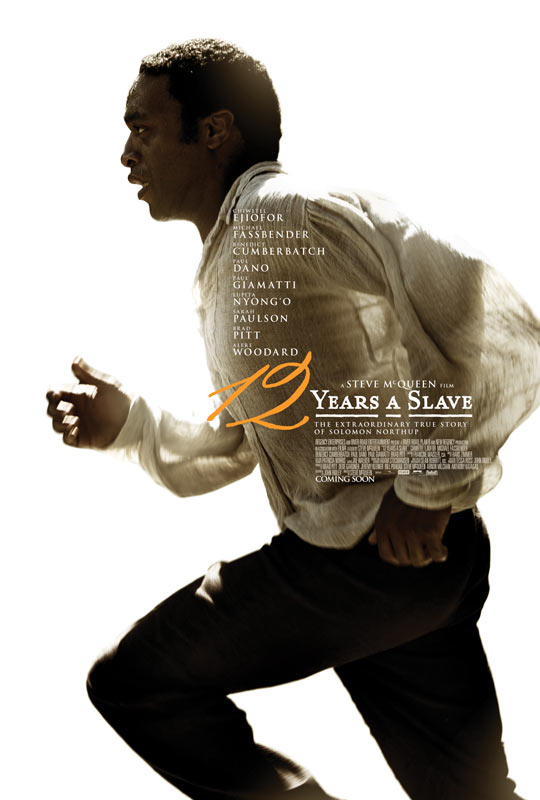
Playing at the Toronto Film Festival is the most anticipated films of the year, Steve McQueen’s 12 Years a Slave. From it’s showings at Telluride, Toronto and New York Film Festivals, the response has been overwhelming positive. Early indicators have positioned this film as the film to beat at next year’s Academy Awards.
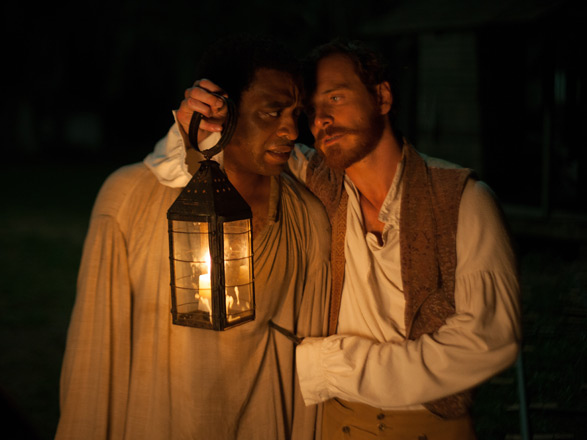
“12 Years a Slave” is based on an incredible true story of one man’s fight for survival and freedom. In the pre-Civil War United States, Solomon Northup (Chiwetel Ejiofor), a free black man from upstate New York, is abducted and sold into slavery. Facing cruelty (personified by a malevolent slave owner, portrayed by Michael Fassbender), as well as unexpected kindnesses, Solomon struggles not only to stay alive, but to retain his dignity.
For Ejiofor, whose previous films include Dirty Pretty Things, Four Brothers, Kinky Boots, Inside Man, Chidren of Men, and Salt, this role is his finest to date. Not only is he representing history, but the British actor also had to lead the charge as the center of the film.

In speaking exclusively with Blackfilm.com, Ejiofor talks about getting into character and what people will learn from watching this film.
What drew you to this role and how did you get into character?
Chiwetel Ejiofor: I thought the script was amazing, the story was extraordinary. When I read it at first I was very drawn to it, but I suppose I saw it in a slightly different way than the story that it is. I saw it as the story of a kind of everyman who could then represent everybody within the context of the slave experience. He was taken, kidnapped, made into a slave, then from inside he could tell the story. I felt the weight of telling not only the story of Solomon Northup but then the story of the slave experience from inside of it and using that to tell the overall story of what happened at that time. I didn’t know whether or not I was the person to tell that story. It’s funny, as an actor you’re always looking for the great script, the great part, then sometimes it happens and you suddenly think, “Can I do that? Is that me?” I think I made a kind of mistake when I went to the biography I realized the requirement wasn’t to tell the story of slavery at all. That was part of the story but not my requirment, my part was to play Solomon Northup. I think when I read the autobiography again and really recognized him and his voice, his interesting way of looking at the world, that sort of extraordinary, humble, poetic quality that I felt was what I had to try to find. If I can find that person then the rest will take care of itself.
You’ve done “Dirty Pretty Things,” “Inside Man,” and other various films, but how physically demanding was this role compared to other films you had done?
EJIOFOR: It obliterated the other films that I’d made in terms of its physical requirement. I knew it would, and a part of feeling pain, feeling hurt, without it being too much to the point where you can’t continue. There was a part of feeling pain and feeling physically exhausted that was an important part of playing this character. There was a week on the Ford plantation, and that week was just crazy in terms of what needed to be achieved. There was the hacking down of the trees for the timber, then building the makeshift raft that Solomon sails down the river with. Then we went into the carpentry work on the Ford plantation, then the fight with John Tibeats, then into the hanging sequence. It was all within the same week. By the end of that week we were doing the last scenes with Ford on that Saturday night, and I couldn’t move off the floor, Solomon’s on the floor in the hallway of Ford’s house trying to convince him to help him. They were changing camera setups and I was just lying on the floor. People would have to step over me to put the lights up. My chair was in the other room or something and I was just like, “I am going to stay here because I am just physically drained from this week we’ve had.” That sense gave me an insight… that was one week! One week of stepping into this man’s shoes, let alone 12 years, let alone the people who spent a lifetime. It gave me a tiny insight into what that experience is and as an actor that’s the most valuable thing you can have, to feel you are connecting, even in the tiniest way, into what others have experienced.

As the center of this movie, how you feel when you’re leading the scene and all rest on your shoulders?
EJIOFOR: It’s a great privilege and a great responsibility to play someone like Solomon in this kind of context, with all these extraordinary performers around you. You hope that you have the wherewithal, the tools to bring that to bear. You rely on all the work you’ve done, your life, your experiences as an actor and a person sometime. You’ve led companies in theaters and in films, and all that experience comes to bear on a project with this kind of breadth. There are very few parts out there that have the full breadth of something like this.
Everybody stands out in this movie, but was there one scene that stood out for you that you couldn’t shake off?
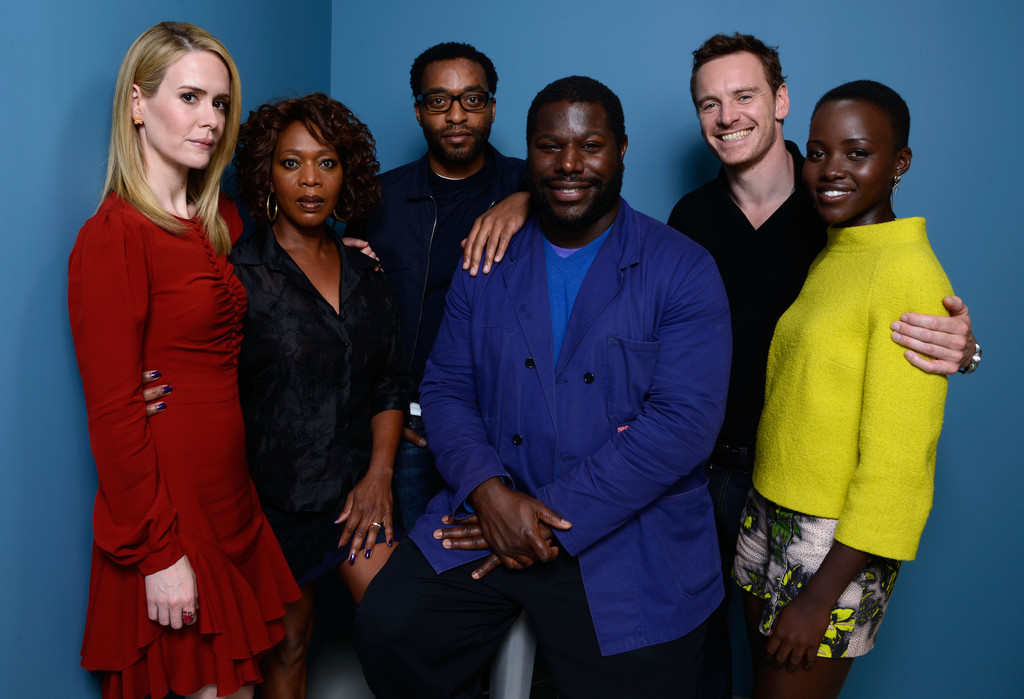
 EJIOFOR: Yeah, the scene with Patsey at the end of the film. With Lupita Nyong’o being absolutely extraordinary as Patsey, a real discovery, who we will undoubtedly see in more projects. Michael and myself and Sarah Paulson were all just right in the midst of the storm and trying to tell this story of what happened to these people, and the fact that it really did happen, this day did come. We had a responsibility to try and push to tell that as fully as we possibly could.
Did you ever see “Roots”?
EJIOFOR: Of course.
For those not old enough to have seen that series, this movie will give them a new perspective. There hasn’t been a story of a free American man made into a slave and people don’t know this aspect that he was one of many.
 EJIOFOR: Many many, and children were taken as well. Snatched off the streets in the north.
For those that think this film might be too much or heavy for them, what do you say to convince them otherwise?
EJIOFOR: I’d say that it’s a powerful story about love and our spirit, human resolve, the capability to survive intact through anything, and a man’s love for his family and his need to go home. It’s a story about human respect and dignity, and the levels for which we are prepared to go in order to maintain that sense of ourselves. There’s so much to be gained from the film. Obviously if you’re telling the story of slavery there are going to be moments that are uncomfortable, but they don’t compare with the moments that are beautiful, that are poetic, the representation of an extraordinary man in an extraordinary circumstance who manages to find a kind of victory over this extraordinary system.