
Exclusive: Director Nosipho Dumisa Talks South African Thriller ‘Number 37’Posted by Wilson Morales
November 6, 2018

Currently playing in select theaters throughout November and On Demand November 20 from Dark Star Pictures is the South African award-winning Hitchockian suspense thriller Number 37, written and directed by Nosipho Dumisa.
The film stars Irshaad Ally, Monique Rockman, Ephraim Gordon, David Manuel, Sandy Schultz, Deon Lotz, Danny Ross, Amrain Essop, Elton Landrew, Jeff Moss.
Paying homage to the Hitchcock classic Rear Window, Number 37 tells the story of Randall, a low level criminal recently crippled in an illicit deal gone wrong. Wheelchair-bound and cooped up in his apartment in a rough Cape Town neighbourhood, Randall is heavily indebted to a sociopathic loan shark named Emmie. With no way of paying the money back, he despairs for himself and his devoted girlfriend, Pam as Emmie violently demonstrates what will happen if Randall doesn’t settle his debt before the end of the week. The Gift of a pair of binoculars presents him with an opportunity to get his hands on the money he so desperately needs – but at great risk.

Nosipho Dumisa is a South African Director who wrote and directed Number 37 as her first feature film. She has directed and produced many hours of television and co-directed the multiple award-winning Short Film Nommer 37.
In speaking exclusively with Blackfilm.com, Dumisa talks about this making this film and putting together her cast.
This movie was initially a short film, and you turned it into a feature. Where did the inspiration come to do an adaptation of “Rear Window”?
Nosipho Dumisa: You know, the idea to do an adaptation of “Rear Window” really came as a necessity, but also because it was just a film that I’ve loved for so long. There was, like you mentioned, there was a short film that we remade, and really the short film itself came as a result of being asked to submit an idea for a short film competition.
We had about a day to submit. We’d been at the company, Gambit Films, which is the company that made the film. We’d been knocking on a few doors, trying to get our name out there, trying to get some work for a while, and with a day to submit an idea, we just remembered “Rear Window” is just a film that we’ve always loved, and in the area called the Cape Flats in Cape Town, there are these blocks of buildings that exist that are essentially like the set that Alfred Hitchcock had to create for “Rear Window.”
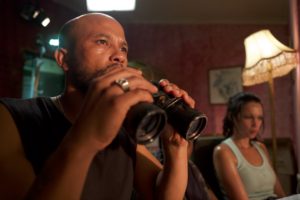
We’ve got it in real life here in Cape Town, and what’s so powerful about it for me is that its significance politically and historically for the country. These are blocks that were built during the time of apartheid where people of color where forcibly removed from their homes in and around the root of the city of Cape Town, and moved into these areas. If you’re standing inside them, these blocks are incredibly tall, and there’s a sense of claustrophobia in them because they were built in such a way that you wouldn’t be able to really see the rest of the city once you’re inside. And what was added on to that was that you would have to have, they called them “dompases”, which were, kind of, permits that would allow you to move around the city at specific times, so you couldn’t move freely.

What’s happened is this class of a community live in these places, and a lot of people haven’t really been able to move out them since then. So for me, I always thought, if you’re going to tell stories in this world, this is such a rich environment to tell stories, ’cause it’s both visually so poetic in telling the story of the past but, as well as how things have not changed now, but at the same time being able to do that within the constraints of the genre, and being able to use a structure of a form that people have loved for decades.
Did you know the short was going to be a feature film, or was that a challenge to produce it into a feature film?
Nosipho Dumisa: The intention has always been to make this a feature film. I’d actually been working previously on a political thriller that I was writing with the intention of developing it as my first feature film. But when I co-wrote and co-directed the short, I knew as I was making that film that this would end up being the feature film that I wanted to make. But as the concept itself, it had always been with the intention of using the short film as proof of context for a feature film.

When did you decide to do it on your own as opposed to the short, which you, as you mention, co-directed and co-wrote?
Nosipho Dumisa: At the end of the day what it came down to was that I really felt like I had an idea of what I could bring to the story. The film is about a man who is trapped within this world, but is also living on the outskirts of it, forced to, kind of, observe it from the outside. I’m not originally from Cape Town, I’m not originally from the Cape Flats at all, and I think I always found this emotional connection with Randal in that I always felt like, as much as he was looking into the world, I was getting a look into the world and trying to understand it and remove its different layers. And I also knew that in order to be able to really truly bring some of the things, and some of the themes that are important to me, if it’s about treatment of women in this world and how women view themselves, but also creating a male lead who isn’t this macho strong man, but is an incredibly vulnerable man. I think for me it made sense to, kind of, really just go for it on my own.

Having said that, the nature of the company that I work with and that we founded, Gambit Films, is that we work together so beautifully. So even though I went to here, and wrote up this on my own, the feature film on my own and directed the feature film on my own, it was such a great supportive energy in the rest of the team, and Travis Taute, who actually co-directed the short film with me, is one of the Executive Producers on the feature film because he’s a good friend of mine, and he’s from this world and they understand this world so well.
Can you talk about the cast and bringing them on for this film?
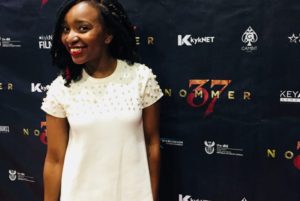
Nosipho Dumisa: Yeah. This is an incredible eclectic mix of experience and veteran actors, and some who really aren’t. And I always knew that whoever I was going to cast in this film, I wanted to cast people who were going to feel truly authentic to the world. Like I spoke about the world, the Cape Flats have a very specific dialect of Afrikaans that is used, and even culturally the way that people interact with each other, it’s such unique space, I wanted to always be able to pull from people who knew the world intimately; who’d grown up in it within one way or another.
So I did my own casting completely, and one of the key things I wanted to know, who were the people, before they even performed or auditioned, I wanted to know who are they, where they’re from or what are they about, and what did they believe about this world that they’re in, what did they believe about these characters.

Irshaad Ally, who plays Randal Hendricks, is an incredible actor. He’d actually auditioned initially for the role of lawyer, who seems to be the criminal who’s living across the way. When he came in, he didn’t, he’d already done that kind of role that was similar before, and he wasn’t really interested. So he said, “Listen, I’ll do this audition for you, but won’t you let me audition for Randal as well, and here’s my backstory to this. My brother-in-law is actually someone who is a paraplegic, and who wants this world and understand it.” He worked so hard for that short film. We were asking to re-audition for the feature film again. And came back, worked even harder, and by that time he was amazing, worked even harder at it and proved himself again and again and again until there was no question in my mind that he absolutely was Randal Hendricks.

Monique Rockman, who plays the role of Pam, this is her debut feature film. And again, it was a matter of just numerous auditions. She came in at the last minute, and she was the last character that was actually cast, because of the schedule conflicts with another actress. I was looking for someone, and remembered her from an audition she’d done for a much smaller role in the film, and as soon as she stepped in, I just knew that this was Pam. There’s a vulnerability and strength that she encompasses as a person that I think was absolutely going to be key to the role of Pam.
I could go on and on about the cast, they were absolutely phenomenal.
With the movie traveling through the festival circuit ,how has that helped you out as a filmmaker? As you’re going out and meeting people, hopefully lining up friendships, so that way maybe you can get people to fund your next project. Has it been that the case so far?

Nosipho Dumisa: It’s been far more than what I would’ve possibly expected, to be honest. I think, on a personal level as a director, it’s been so incredibly, such an open industry, and so welcoming to this film, but then to me as well, and to the voice, and to what it is that I have to say. Which is to speak about all the various ways in which there are people, there are groups of people who are left on the outskirts, and the injustices of the world. So it’s been such a privilege to be able to share the film, watch audiences, find different things that they connect to in the story. Then also to make new connections, meet other filmmakers, meet financiers, and people who are willing to open up their minds, and their pockets, to telling more stories like this.
What’s a good reason for people to check out “Number 37?”
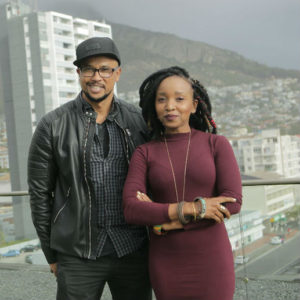
Nosipho Dumisa: I think, especially for audiences in the States, it’s one of those stories for me, that because of genre and it’s a thriller, it’s for the pure entertainment factor. It’s one of those films that’s, kind of, edge on your seats, and whatever you think you’re walking into, it’s different, by the time you leave you’ll realize you had no idea what to expect. So from the entertainment factor, it’s all there.
But I think it’s also one of those really awesome films that introduce you to a new world you haven’t seen before, and yet feels familiar. You know, for me, I’ve always said that “Number 37” as a story, as a structure, could take place in the States, it could take place in the favelas of Brazil, it could take place anywhere in the world, and anyone who understands what it means to have a dream, but know that your dream is almost impossible for you, and having to, kind of, find a way to make it happen no matter what. Anyone who understands that, can relate with this film.