
Exclusive: Ruth Negga On Playing Mildred Loving in ‘Loving’Posted by Wilson Morales
November 7, 2016
 Currently in theaters is the race drama film “Loving,” written & directed by Jeff Nichols, and starring Ruth Negga and Joel Edgerton as Mildred and Richard Loving, the couple behind the seminal 1967 civil rights case Loving vs. Virginia.
The film, which premiered at the 2016 Cannes International Film Festival, co-stars Michael Shannon, Nick Kroll, Terri Abney, Marton Csokas, Jon Bass, Alano Miller, Chris Greene, Christopher Mann, Winter-Lee Holland, Will Dalton, and Bill Camp.
Ged Doherty & Colin Firth Sarah Green, Buirski and Big Beach’s Marc Turtletaub & Peter Saraf produced the film, which was is inspired by the documentary The Loving Story.

Richard and Mildred Loving, an interracial couple, were married in June 1958. As a result, authorities broke into their home, arrested them, and they were sentenced to a year in the state penitentiary. This sentence was suspended on the condition that they be exiled from the state of Virginia. Unbowed, the couple spent the next nine years fighting to get home, together.
Negga, who once played singer Shirley Bassey in a BBC biopic and has appeared in ABC’s Agents of S.H.I.E.L.D, AMC’s Preacher, All Is By My Side, and Warcraft, talked with Blackfilm,com on her playing Mildred Loving.

Can you talk about inhabiting the role of Mildred Loving and the research you did prior to shooting?
Ruth Negga: I auditioned for the role two years before we started shooting but I didn’t know I had the role until a year before we started shooting. I tried to not to obsessed so much about her, but I couldn’t help it because I found this couple so compelling. I watched Mildred’s role in the Civil Right struggle and movement and plenty of tapes.
Where you able to get any more information from Peggy Loving, the Loving’s daughter?
RN: I really didn’t want to pry to be honest. If she needed to tell me something that would help me, she would. I don’t think you need to every deep information to portray someone. I think you need to portray an accurate portrayal, an honest portrayal and an authentic portrayal, but I don’t think you need to pry into their business. I really do believe that. I didn’t want to put that pressure on Peggy. She did offer a few things that were personal to her which were very helpful.
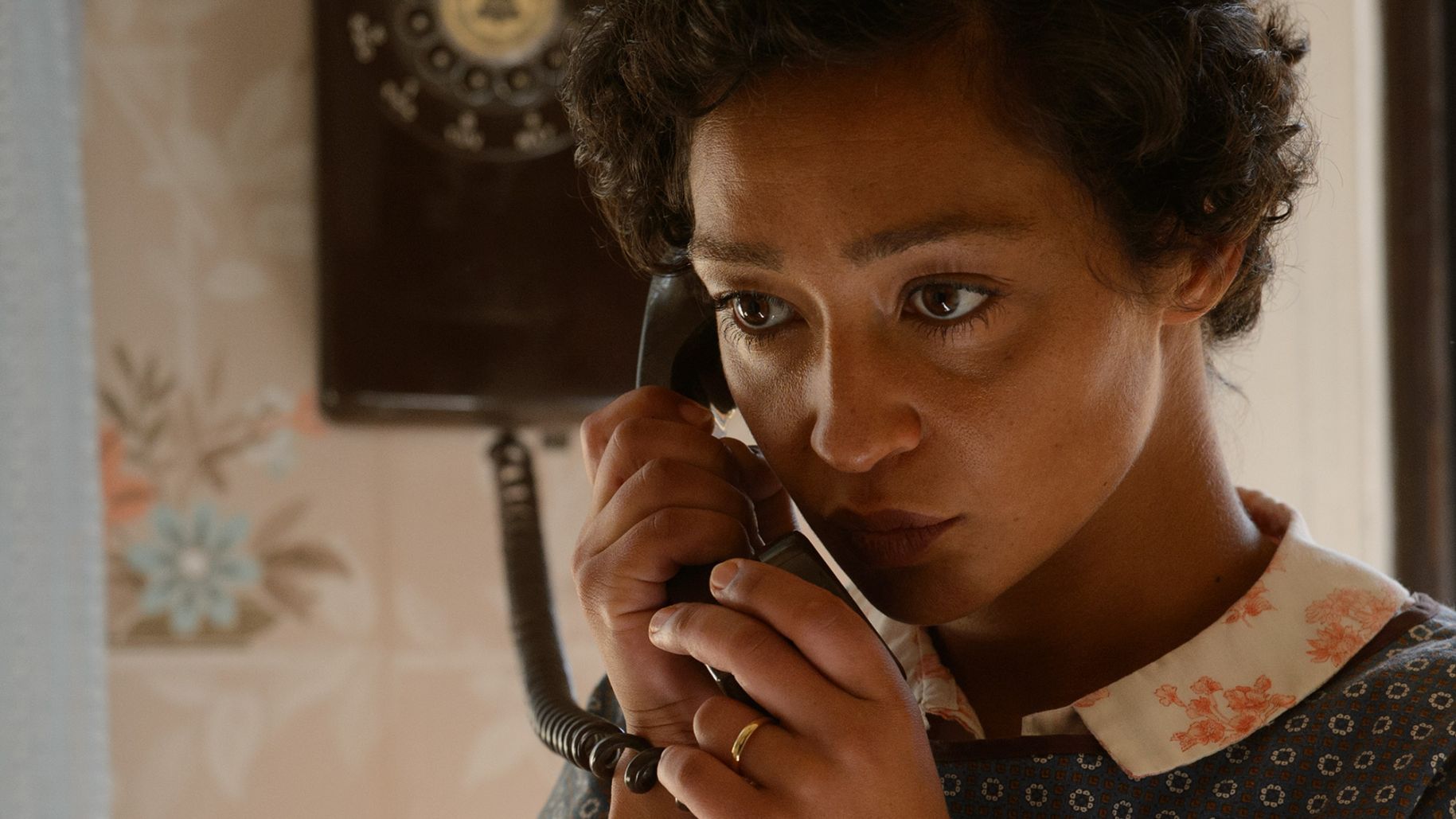
Was there more to the character that you want to add outside of what was on the page?
RN: I didn’t think it was necessary because as an actor I don’t it was needed to make your mark. I don’t believe in that. I think it creates an excess and probably seems vulgar to me. Everything that was authentic was referenced. Everything that we needed to tell this story was referenced by Jeff. We were very careful about moving into any sort of floweriness melodrama. The Lovings were a very non-melodramatic quiet couple. We tried to maneuver our performance in respect to that.

Can you talk about working with Joel and establishing a chemistry so that it felt authentic on-screen?
RN: We both made a commitment to this couple. We wanted to reflect their relationship as honestly as possible. I don’t believe in labored chemistry but I do believe in doing our job so that the other actors can do their jobs because acting is not done in isolation. It’s an ensemble piece of work. If you want to be true to the character, you let the magic come out. You let something special happen and often times it does.

From All Is By My Side to Agents of S.H.I.E.L.D., Preacher, and Warcraft, what goes into taking these roles?
RN: It’s me trying to get a job. I’ve never been able to pick and choose my roles. The only thing I’m able to do is say no. I know very actors who are able to choose their roles. What I can do is say no and lobby for other roles and audition for them. I’ve been lucky enough to get the projects that I wanted to work on. I think it’s a misconception that most actors are able to request their roles and they get it.
Having played Mildred Loving, Shirley Bassey and other real life individuals, is it more challenging in portraying them than fictional characters?
RN: It’s challenging as a human being because I don’t want to disrespect them but it’s no different in portraying the roles, fictional or not because you come to the work with the same depth. You still want to do a good job. The difference is that there’s a responsibility to make sure you are respectful to the real life person you are playing.
Trailer