
Exclusive: The Black List Founder Franklin Leonard Celebrates Publication’s 10th AnniversaryPosted by Wilson Morales
December 16, 2014

With the recent release of the 2014 The Black List, Blackfilm.com exclusive caught up with its co-creator Franklin Leonard as the annual survey celebrates its 10th Anniversary.
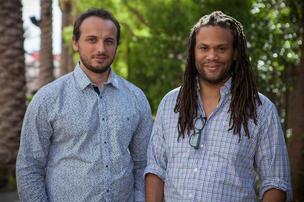
The yearly publication of the entertainment industry’s unproduced screenplays. Founded in 2004 by Leonard and Dino Sijamić, The Black List has quickly become a staple in the entertainment industry and has grown into a strong, online network of filmmakers. Although not all screenplays are created equal, the list has held more than a few diamonds in the rough, leading to the discovery of favorites such as AMERICAN HUSTLE, THE KING’S SPEECH, SLUMDOG MILLIONAIRE, INGLORIOUS BASTARDS, and ARGO. To date, over 250 Black List scripts have been produced as feature films, the best being honored with 37 Oscar wins and over 200 Academy Award nominations including Best Picture and Best Screenplay.
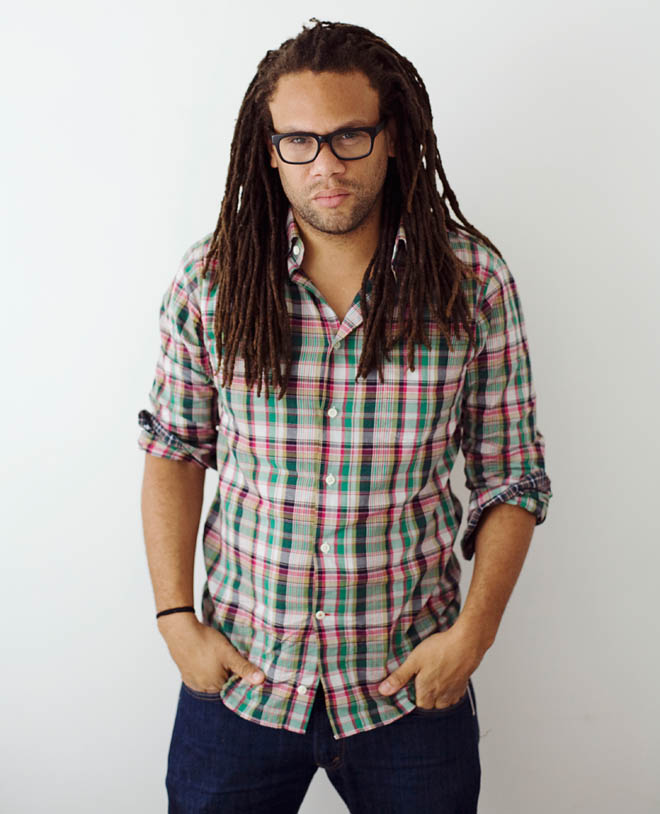
Over the past ten years, Franklin has dedicated himself to creating a unique company that supports writers and filmmakers with an unconventional vision of cooperation between data and art. His vision for The Black List is for the company to elevate the culture of narrative storytelling by connecting filmmakers in a creative network. From this vision, he has worked to build a content company that creates and distributes exceptional narrative work from and to the entire world while remaining true to the artists.
A Harvard graduate, Leonard has had numerous jobs at one point went on to become one of the youngest executives at Universal Pictures, serving as Director of Development and Production. He also served as Vice President of Creative Affairs at Will Smith‘s production company, Overbrook Entertainment.

What started out as a simple survey has now expanded into a global network of screenwriters and industry professionals. Launched in 2012, The Black List website allows screenwriters to upload their screenplays, view stats on the popularity of their stories, and connect with potential producers. Currently, the Black List has over 50 active readers evaluating hundreds of scripts. One of the more popular scripts from The Black List is the upcoming film THE IMITATION GAME, which has won audience awards at numerous film festivals and has begun to garner Oscar attention.
According to Wikipedia, besides his full-time work on The Black List, Leonard is currently an adviser to BoomGen Studios and Plympton,a literary studio that specializes in serialized fiction, and BoomGen Studios, where he assisted in developing the transmedia graphic novel 1001
Ten years later the Black List is still going and going strong. Did you ever think it would come this far?
Franklin Leonard: Well, it wasn’t that I didn’t think we’d come this far. It was just that it never occurred to me that it was something that I would even think in terms of going this far. When we launched it, it was really just me trying to find some good scripts to read in order to do my job better.

How did it grow from this concept to what it is now? Do you have an office and a team of people?
FL: Yeah, well, we don’t have an office yet. We all actually work from home. I like to joke that our office is a cloud. I did the first list, which came out in 2005. It sort of became a thing, surprisingly fast. I went on vacation for two weeks at the end of the year, came back and checked my email and it had been forwarded back to me several dozen times. I was convinced that I was going to be fired from my job. So I actually decided that I was never going to do it again. Then six months later I got a phone call from an agent, who at the time was with William Morris, saying, ‘Hey, I’ve got this new client. I think you’re really going to like the script. And don’t tell anybody but I have it on really good authority it’ll be on next year’s Black List in the number one spot.’ Which was hilarious because honestly I was pretty sure I wasn’t going to do it again. And, B, it’s a survey. So how can you ever have it on really good authority that anything’s going to be in the number one spot? But that was when I decided to do it again because I realized it had value outside of me just finding good scripts to read. By the second year it sort of became a thing. Then when ‘Juno’ and ‘Lars and the Real Girl’ were nominated for Best Original Screenplay I think that increased interest on it again because those had been the number two and three scripts on the first list. And then really from then it’s been about stewarding this thing that I created accidentally and allowing it to continue to be a tide that reads all votes in the industry, but especially the votes of writers, especially the votes of good writers.
Does it ever become challenging?
FL: I think the most challenging thing is trying to find ways in which we can really be a net positive for all parties in the industry. I think it’s balancing, essentially a lot of competing forces, and how do you create an institution that could really benefit everyone? I think it’s more challenging conceptually in balancing those forces than it necessarily has been in executing any of them. I think if anything, the one thing that this experience has taught me, thus far, that I’m really happy about, is that it shows that the industry is very much interested in good writing. I think it’s very easy to sort of tar Hollywood with, you know, we’re very cynically trying to make garbage — sequels, prequels, remakes, etc. I think the Black List, in many ways, shows that not only does the industry have really good taste when they take economics out of the equation. But that they do value high quality writing.
Why did it take so long for someone like you to create something like this. Was there anything prior to it?
FL: Yeah. I don’t know that I have the answer. I can only speak for why I did create it, which was desperation. I think on some level I really value efficiency above most other corporate values. I was looking for what is the most efficient way for me to identify the best things that I can read; because I don’t want to read mediocre scripts for the rest of my life. That was how the Black List was born.
Was there any particular script over the years besides ‘Juno’ that you’re most proud of? That, ‘We got this early before anyone had paid attention to it, and look how far it’s gone’?
FL: I’m always reluctant to over claim, ‘Hey, because of the Black List that script got made.’ I can only really speak to the scripts that I remember reading before they were on the list and then they got on the list and they ended up being made or having great success. But the extent to which we’re responsible for that success, I think is sort of fundamentally unknowable. But I know that, for me, ‘The King’s Speech’ was always a script that felt very special to me; and I think, largely, because I had grown up with a stutter. So it definitely affected me.
There’s one film that’s coming out that David Oyelowo has been talking about. As he is promoting his movie, ‘Selma’, he says, ‘This film was initially on the Black List.’
FL: It was and I’ve seen Ava and David’s work in the film. I think it’s absolutely extraordinary.
It’s amazing when people hear about it and they’re like, ‘Okay, what’s the Black List?’ What is advice do you have for anybody who’s now hearing about it to, ‘How do I get on it?’
FL: There’s two parts to that answer, honestly. The first is that the annual Black List is very simply survey of the Hollywood executive floor about what they read in the few years that hasn’t been made yet that they love. So it’s the most liked unproduced screenplay list. And, typically, in order to make that list your script needs to circulate somewhat widely within the Hollywood executive floor. So that can be accomplished in a number of ways. The most obvious of which is if you’re represented by a major agent or manager who can get your work in the hands of those people.
The second part of it is that two years ago we launched a website that allows on earth who has written an English language screenplay to upload their script to the site for a small fee, twenty five dollars a month, have their script evaluated by a team of readers that I’ve hired. And if the script is good we then tell the entire industry, ‘Hey, there’s a great script that’s available to read.’ Then we sort of step aside. I like to joke that the site sort of functions as eHarmony for people who write movies and people who make movies; and just like eHarmony’s never going to try to claim ten percent of your marriage, we’re never going to try to claim ten percent of your sale or movie. I think that that’s been a real success. We launched in October of 2012. There was one writer that first year that made the annual list after getting signed by CAA. There were five writers on last year’s list who have been discovered via the website. I can safely that there will be a few writers that were discovered via the website who be on this year’s list, as well. So I think the short answer is, write a brilliant screenplay, get it into Hollywood hands. The slightly longer answer is you can get it into Hollywood hands via our website that sort of functions in the same ethos as the annual list does.

Now race and color has nothing to do with it but you happen to be an African American who created something called the Black List. Where did the title initially come from? When people think of the Black List they’re probably thinking of the TV show.
FL: We predate the TV show. The name The Black List has a dual reference. The first is a tribute to the writers who were part of the Hollywood Black List during the McCarthy era. I’m pretty progressive politically and the idea that any writer would effectively lose their profession because of their political beliefs I find problematic, to say the least. The other reference is a conscious racial one. I grew up as a Black kid in West Central Georgia. I remember being in English class in middle school and reading about color symbolism. I don’t think there was any racial animosity from the teacher but, historically in a literary sense, Black represents bad, evil, unclean, etc.. White represents good, noble, honorable, etc. I remember, as a kid, thinking, ‘I don’t like where that goes.’ I think as a kid I told myself that one day I’m going to write a novel that inverts that paradigm. Obviously I have not done that. But I do look for ways to subtlety invert that color dynamic whenever possible. So the idea of creating the Black List that everyone’s wanting to be on, where the modifier Black suggested something good was definitely my subtle and not so subtle intent. The fact that it’s become what it has, I think holds extra meaning for me because of the name.

You’ve created something that’s taken on a life on its own. Is this something that you love to do day by day and don’t want to move on? Is there something else you’d like to do?
FL: Honestly, this definitely have the overwhelming feeling of being a mission for me more than it does a job. I think as a consequence, I don’t really give much thought to the other things that I would want to be doing professionally right now. But I also sort of take things day by day. If other opportunities were to present themselves, I’d certainly consider them. But, no, I think we’re onto something very special with this and I’d like to see where we can take it. Yeah, there’s other things I’d love to do. I’d love to direct a documentary about Mario Balotelli in time.
What’s the end goal? You have the Black List. But what else? For anyone who reads your profile on Wikipedia, they’ll read that you do more than this. You teach here, you’re an advisor there. What’s more from you that we can expect? Do you plan to write anything?
FL: I’m actually not a writer, professionally. I definitely write and I have a healthy ego about my own writing. I’ve never written a screenplay. I used to write a weekly column for my hometown newspaper in Columbus, Georgia years ago. But, no, I think for the foreseeable future, The Black List, and I mean all of its multitude of iterations is what I’m going to do. What form that takes remains an open question; and suffice it to say we’re very ambitious about what The Black List can accomplish. Not quite willing to say exactly what that means but in 2015 there will be pretty good evidence of it. But for right now, this is my life work and I’m very happy about that.