
Exclusive: Walton Goggins Talks ‘The Hateful Eight’Posted by Wilson Morales
December 21, 2015
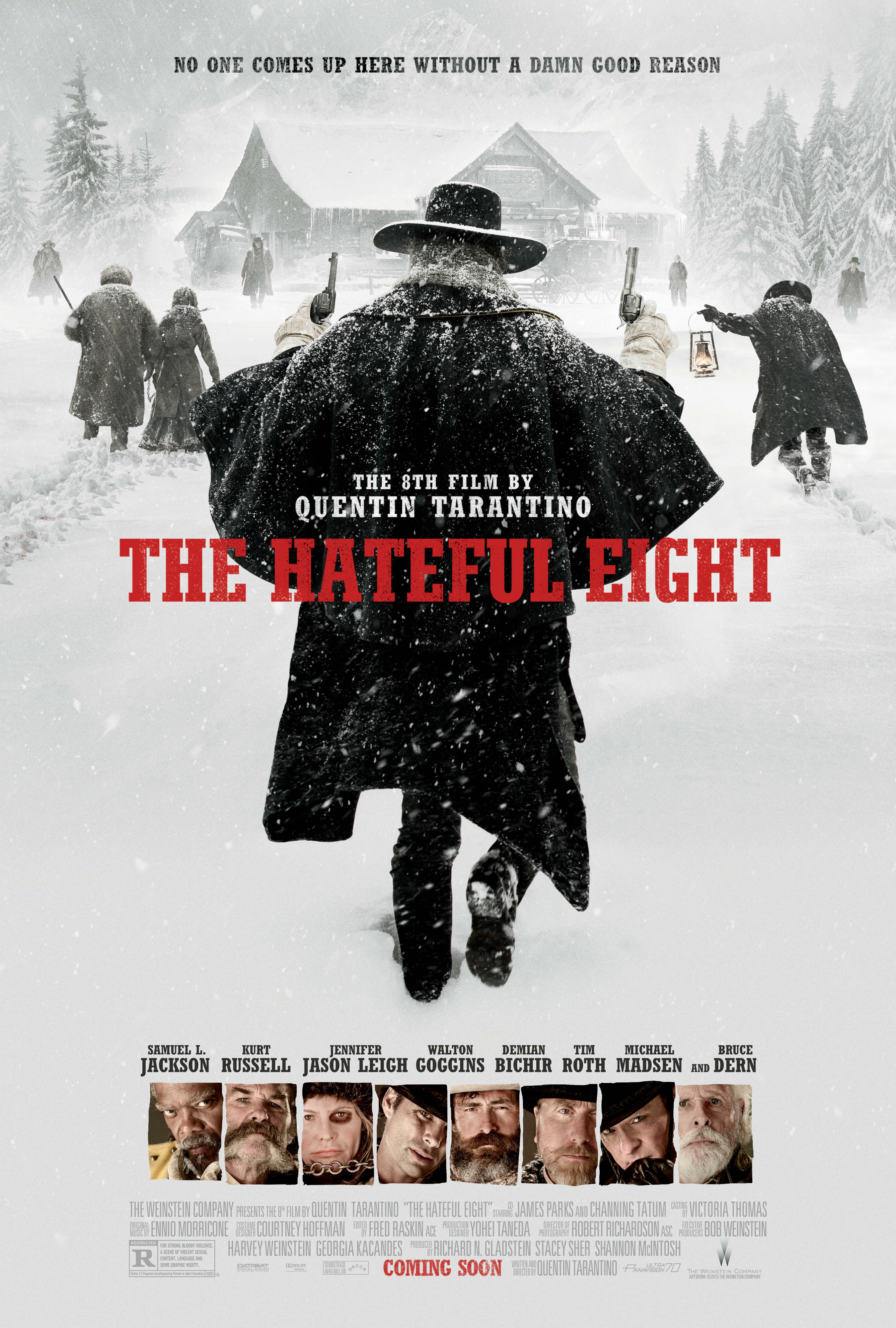
Coming out before the year ends is Academy Award winning writer/director Quentin Tarantino’s latest film The Hateful Eight, which hits theaters on December 25th exclusively in 70mm and then will get a nationwide release on January 8th.
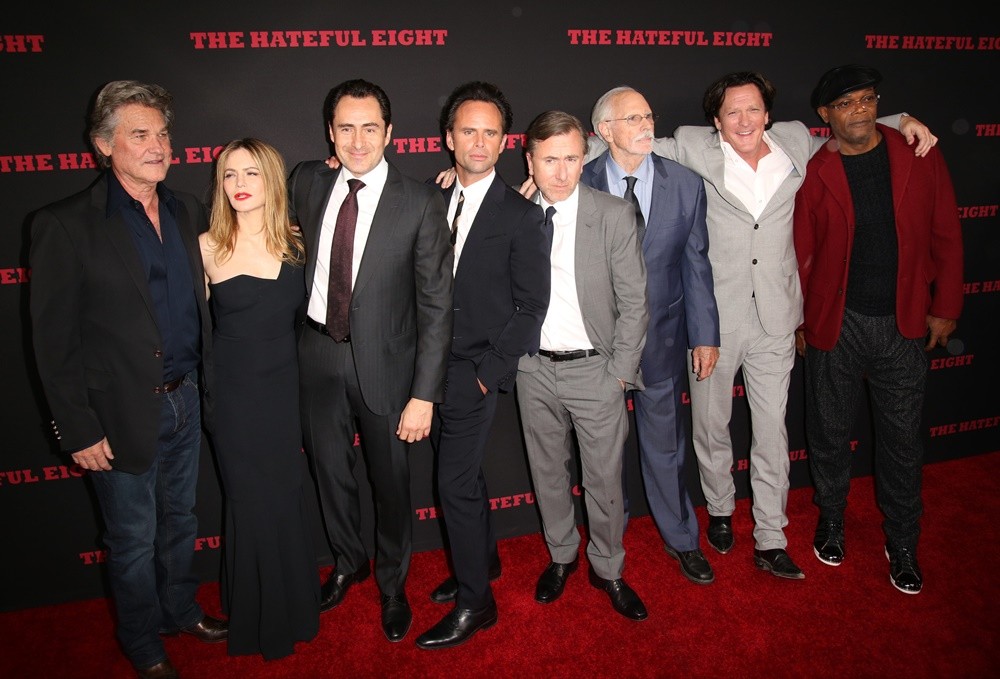
The all-star cast includes Samuel L. Jackson, Kurt Russell, Jennifer Jason Leigh, Walton Goggins, Demian Bichir, Tim Roth, Michael Madsen, Bruce Dern and Channing Tatum.
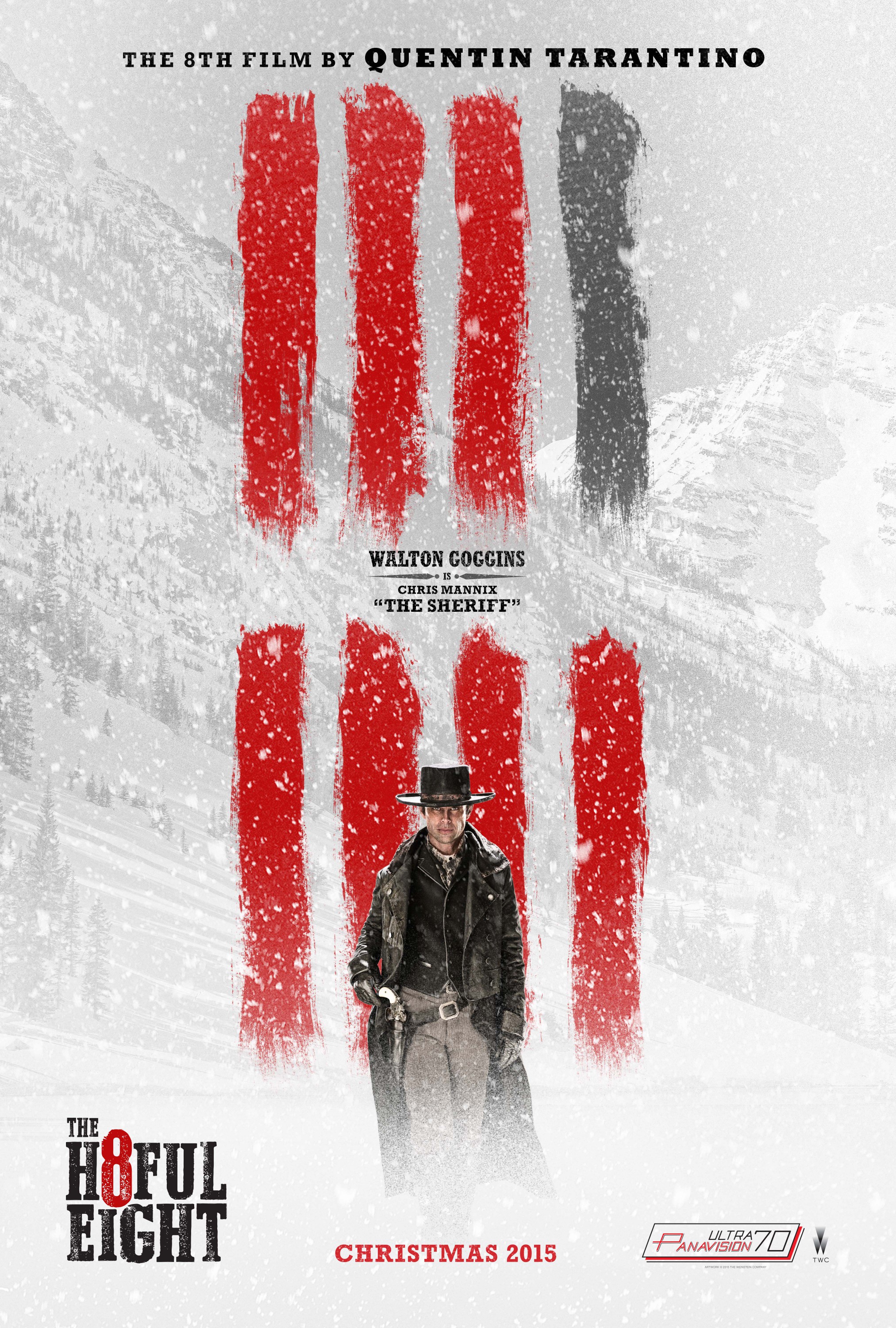
In The Hateful Eight, set six or eight or twelve years after the Civil War, a stagecoach hurtles through the wintry Wyoming landscape. The passengers, bounty hunter John Ruth (Russell) and his fugitive Daisy Domergue (Leigh), race towards the town of Red Rock where Ruth, known in these parts as “The Hangman,” will bring Domergue to justice. Along the road, they encounter two strangers: Major Marquis Warren (Jackson), a black former union soldier turned infamous bounty hunter, and Chris Mannix (Goggins), a southern renegade who claims to be the town’s new Sheriff.
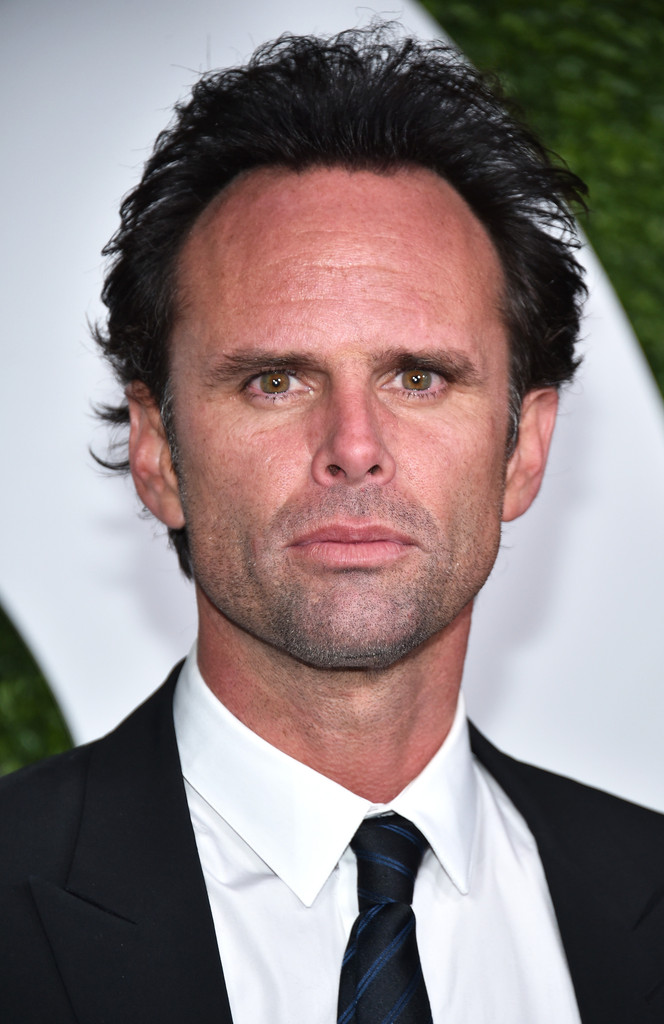 Losing their lead on the blizzard, Ruth, Domergue, Warren and Mannix seek refuge at Minnie’s Haberdashery, a stagecoach stopover on a mountain pass. When they arrive at Minnie’s, they are greeted not by the proprietor but by four unfamiliar faces. Bob (Bichir), who’s taking care of Minnie’s while she’s visiting her mother, is holed up with Oswaldo Mobray (Roth), the hangman of Red Rock, cow-puncher Joe Gage (Madsen), and Confederate General Sanford Smithers (Dern). As the storm overtakes the mountainside stopover, our eight travelers come to learn they may not make it to Red Rock after all…
For Goggins, this is his second collaboration with Tarantino, having appeared in Django Unchained. In playing Chris Mannix, the Alabama native is adding another memorable character to list of impressive roles he’s had on the big and small screen. Best known for TV role as Detective Shane Vendrell in the FX series The Shield, Goggins followed that with a fabulous turn as Boyd Crowder in FX’s series Justified. FX loves him so much, he came back and guest-starred as transgender prostitute Venus Van Damme in their other series Sons of Anarchy.

Besides acting, Goggins also works behind the scenes as well. Along with actor Ray McKinnon, the duo won an Academy Award for Best Live Action Short Film in 2001 for their short The Accountant.
In speaking exclusively with Blackfilm.com, Goggins talks about his character, working with the cast and watching Tarantino create another epic, especially when shot in 70MM.
How would you best describe the character?
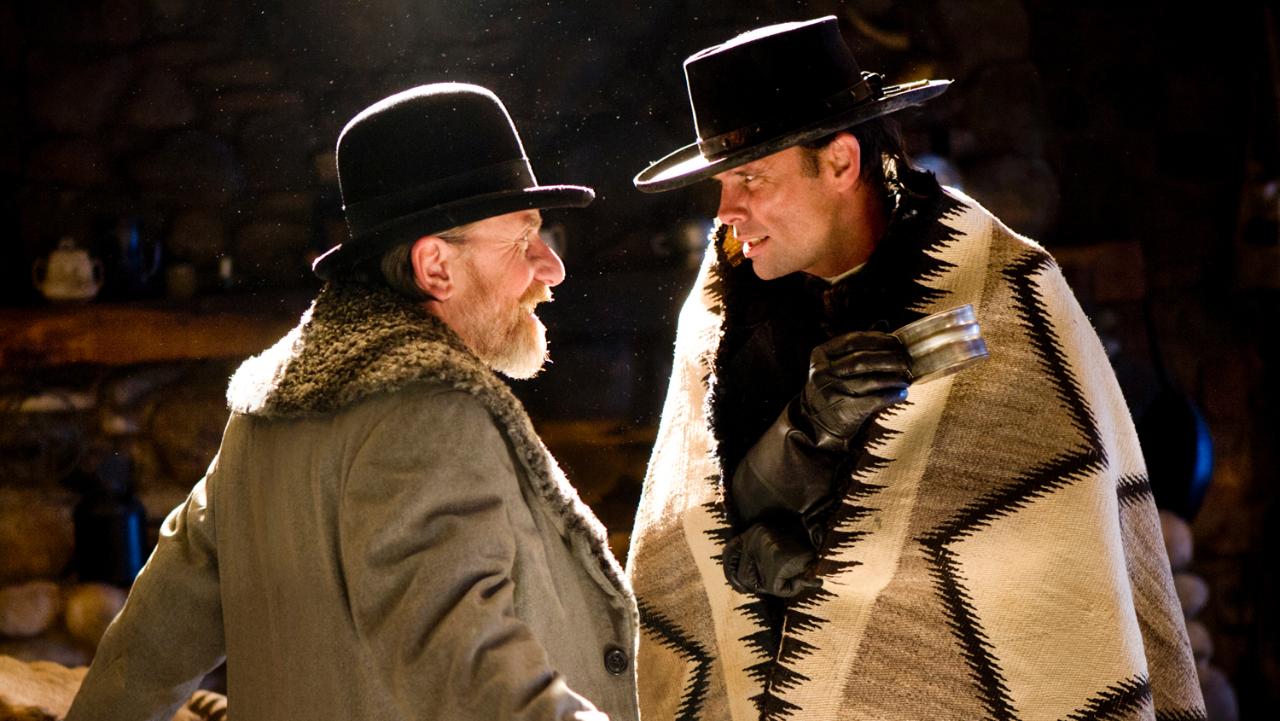
Walton Goggins: He’s a agitator. He’s a rabble-rouser, and a bit of a blow hard. You think that he comes off strong when you first meet him and you quickly realize that you could knock him over with a feather; that he is a man in an arrested state of development. He’s never had an original thought and he’s just regurgitating a world view that has been spoon-fed him by his family and his milieu. I don’t believe he’s ever had a conversation with an African-American. Over the course of this movie something happens and he reverts to being a little boy, a lost little boy and then is given the opportunity to finally become a man and to have his own independent thought and vision of the world or opinion about the world and it’s an unbelievable arc, man. I couldn’t believe it when I read it on the page. It’s that rich and it’s that funny and it’s that deep and it’s that dark.
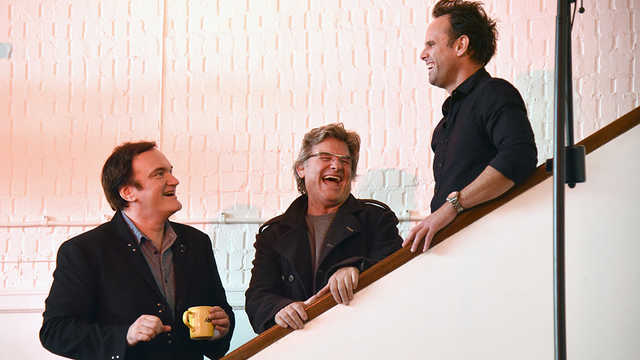
This is your second rodeo with Quentin, but besides just working with him, what was more of an attraction to doing this? Was it working with him? Was it the role? What was the main attraction?
WG: Him. It starts with Quentin Tarantino. That is the largest magnet in the room. Whenever you get the call from the man, then that’s exactly where you’re going to be whenever he’s shooting his movie. It’s not a right, it’s a real privilege to get that invitation. It’s a very select group of people that afford it, the opportunity to collaborate with Quentin. I don’t care if I have one leg and walk into a room or had nothing. If I was just sitting on a couch, I’m going to be there for him. On top of that, this story and then this character, but probably more important than both of those is this cast, this group of people. When you hear actors say they’re like family, no, we really are. We’ve really become very, very close over the process of making this movie, and to get to experience this with icons took some getting used to out of the gate, but it’s incredible.
I remember when we first did the table read. They had already been rehearsing for a day, and I was coming in another city. I showed up and walked into the room. Before I walked into the room I had to pause outside the door and just kind of steady myself because I knew on the other side of that door was Kurt Russel who I didn’t know, Tim Roth who I didn’t know, Michael Madsen, Bruce Dern, and all the rest of them, who I didn’t know. The only person I did know was Quentin and Jackson, so I took a deep breath and I walked in and I saw my seat. I sat down. Quentin said, “Ah, there you are. Okay. We’ve already been going for a day. Now it’s your turn. You’re up, Goggins. Let’s go. We’re starting with your chapter.”
I also remember exhaling and Sam just leaned over and he whispered in my ear. He said, “You got this. You got it baby.” Then we started. The first words that came out of my mouth. It’s like “Ah!” I remember what it’s like to taste the best wine ever made, or to have the best food. These are Quentin’s words and this is his imagination and then we were off to the races.

Is there a difference in his directing having worked with him twice?
WG: No. I think he’s been the same since the beginning, according to Tim and Micheal and Sam, but maybe with Django there is no greater leader, cheerleader, lover of actors or guide, if you will, than Quentin. His enthusiasm for making movies is infectious and it affects everyone down the line to craft service. They all and we all feel like we’re there and in service of story. Quentin reminds us of the power of story on a day to day basis by moment to moment basis, by the films that he references, by his expansive knowledge of cinema and the only thing that I would say is because Django was so big. When I say visually what I mean is in the different locations where we were filming, and there were so many people and it was overwhelming for all of us. It must’ve been overwhelming at least at a point for Quentin.
To have eight actors in a room, in one room, I think it may have allowed him to just get very, very zen and allow his imagination to just be focused on this one room and to get intimate with it in a way and to photograph it in a way, that he must’ve felt at the very beginning with us poor dogs. He is a man in his power right now and storyteller, and it’s just without any effort that he goes through the day. It’s just a beautiful thing to watch.
Having been on The Shield, having been on Justified and then being in these last two Tarantino films, which get you a lot of high profile, but this particular film is being shot in 70mm. What does that say for you as an actor knowing that you’ve been blessed having to be in good positions and still continue to get work, good work?
WG: How do you even answer that question? You start off in this business, or at least I started off, with nothing, absolutely nothing, and if you get the opportunity you go to work and the only thing you can control is your contribution to the story. My acting teacher when I first started said, “Okay, here’s the thing. You don’t have the looks so you damn well better have the talent, and that means that you need to work harder than everyone in the room.” I just live every day trying to do the best job that I possibly can.

What I mean by that is no judgement about right or wrong, but just try to live in truth and authenticity and honesty and give my director everything that he needs and be ready and willing to do whatever he asks and then if you keep walking down that righteous road and it isn’t about ego but it’s about participating in story, then all of a sudden you may look up and find that you’re in a Quentin Tarantino sylvan plateau.
I think that’s just how it works. You can’t architect a life. You can’t architect a career. You make decisions and if you are afforded an opportunity to do so, but for the most part, it’s just following your gut or your inner voice, and just make sure that the inner voice you’re listening to is one that isn’t coming from your ego, but coming from the higher side of your desire to be a storyteller.
What is it that you want to do, if you’re in a position to do it, whether it’s something that’s being offered or it’s something you’d like to do?
WG: I have made four movies with a partner of mine, Ray McKinnon. It’s been a few years, but I really want to get back in that business. It’s something I thoroughly, thoroughly enjoy. There are things that I’m really interested in. I’m looking forward to that. I don’t know. Maybe it’s the difference between waiting to go to college until you’re twenty-four, twenty-five or something like that, that you absorb the information and what is being taught to you in a different way. It becomes a part of your DNA rather than a regurgitation or an exercise in memory.
I feel like I things that I want to say and thankfully I think I’ve arrived at a place where there’s some people that want to listen. I’ve always been a person who has lived on faith. I don’t know what roads will present themselves, but I know that they will be presented and I know that I’ll walk down the right road even if for some reason turns out to be the wrong road, that will ultimately lead to a right road. It is what it is.
Trailer
Trailer 2
TV Spot
Featurette
Clip – Got Room For One More?
Clip – The Hangman
Clip – In Cahoots
Clip – You All Saved Me
Clip – General Smithers
Clip – Everybody’s Got a Mother
Clip – My Life’s Story
Clip