Guillermo del Toro Talks ‘Don’t Be Afraid of the Dark’By Max Evry

Genre favorite Guillermo del Toro is more than a master director (“Pan’s Labyrinth,” “Hellboy”), he’s also a major supporter of new talent. He’s produced films such as “The Orphanage” and “Splice” in order to give filmmakers a boost and launch them onto the scene. Now he’s doing the same for Troy Nixey as the noted comic book artist makes his directorial debut with “Don’t Be Afraid of the Dark.”
From a script co-written by del Toro and based on a 1973 TV movie, the horror film involves a family renovating a creepy Victorian mansion only to discover tiny little creatures with a taste for children’s teeth are really running the show. Del Toro, who is currently in production on the big budget tentpole monster movie “Pacific Rim,” sat down with us in New York to discuss “Don’t Be Afraid of the Dark.”
I understand this was basically you were inspired or this is a remake of an actual TV movie from the ’70s that isn’t very good?
GUILLERMO DEL TORO: Well I wouldn’t say that. I actually think it was very, very good in 1973. It had sort of a cult status through the years. It was really one of the scariest TV movies ever made. I would say people seeing it now out of context can say that it has aged, but back in the day it was really, really scary for many reasons, including the fact that it happened to people in our times. It was not the story of Victorian characters going into a gothic castle, it was suburban. It happened to people that had jobs, that had to commute, so that was very, very fresh back then. And it made such an impression to me that I sought the rights in the ’90s and wrote this movie with Matthew Robbins 13 years ago. It has some of the same plot devices, but it’s an entirely new story.

The original one was a woman; there wasn’t a child. Why did you think that was important?
GDT: First of all because the function of the character was truly that no one believed her, but the tragedy in the ’73 movie is that it was Kim Darby as an adult and she really was almost morbidly submissive. She was passive and she was really almost like a battered character, and I wanted to create a movie that had very strong female roles for both the leads. It was a story where the male character was kind of useless. The male character was kind of so self-absorbed that only the adult woman started to listen to the child, and I thought it was interesting that as the character of Kim says, it doesn’t matter if it’s real; it’s real to her, and starts listening to the kid. That’s the big twist. The original was definitely just a horror movie straight on and we tried to make it a really dark fairytale element into it.
It’s also so interesting because she begins the movie fearful that’s she’s going to be the unloved stepmother but she becomes more of a parent to Sally than her actual parent.
GDT: But the curious thing is it has to be very clear that what was attractive to me was that she already had a mother who by the description and little interactions is a terrible mother. But what they find is each other. They find each other not as mother and daughter, which is the role Kim as afraid of entering into because we hint at her having a terrible childhood too, but they find each other as women, as two women that completely had to make each other strong because the guy around which all their lives kind of circles around is frankly an absent minded, self-centered little prick.

When you were young what used to scare you in the dark, if anything? Did you go back to that when you were doing this?
GDT: Yes, I have many times, mostly dreams, so I used to see things in the dark in a dream where I dreamt I was in the space I was so it seemed real. So I was very afraid of the dark as a child. And because my brothers and I saw the movie together we made it a point to scare each other by saying “Sally,” and then they would run away. Neither of us was named Sally; it didn’t make it any less scary. But I was very afraid as a child.
You mentioned that you got inspiration from a book for the creatures that they were in a neutral world.
GDT: It’s not one book. The studies of folklore in Judeo-Christian mythology say that when God and the Devil waged battle the fairy folk declared themselves neutral. They didn’t care which one won, and therefore they were cast down under the earth to live under the earth. In traditional folklore they are not necessarily considered beneficial. They are considered creatures that can bring great gifts and goods, or they can be absolutely terrible. Kidnap babies, kidnap people, they can kidnap an eight year old and return them 15 years later the same age with the parents aged. Remember Rip Van Winkle that disappeared for many years? They are known to really be very tricky, very morally allusive characters.

And they also manage to figure out electricity.
GDT: What they do is they just fry themselves. That was in the original movie and I adored it because it shows they are so smart. They are tacticians. In order to bring down a six foot tall guy they use the wires, they use a little hook to turn off the light, they know he’s using that little box to operate the car door and they hide it. I think what is very scary about these little things is not only that they are unstoppable and determined, but they’re smart. They’re not just little rats. They communicate, they talk, they are quite evil, and that was very important to me.
Can you talk about their design a little more and where that came in the process? Did you know exactly what you wanted them to look like before filming began and did you relay that to your cast so they could picture the right things?
 GDT: When Troy came aboard on the movie we agreed very quickly. I said, “I really want to honor the design of the original creatures, and the original creatures now they seem really kind of silly.” They were like teddy bears with masks on and claws. But the idea for some reason that made sense when I was a kid. And Lovecraft has a great story, “Dreams and the Witch House,” that has a character that has the body of a rat and the face of a man, and we wanted to make them vermin like and their bodies twisted, bodies with hair. When we designed creatures we tried to tell the story in how they are designed. We wanted their bones twisted to show the lack of calcium and the lack of sunlight. We created them to be like humanoid sort of vermin, and that would communicate immediately they were cave dwellers. They were really resilient, nasty, and when you see them you have no doubt that they are very fierce little creatures. I think that’s the important thing; design them with a concept of what they do in mind.
At one point you brought two of the designers into your house to work on the designs, and that suggests that you wanted to put them in a place where the atmosphere of your fantasy man cave would sort of seep into them in terms of kinds of designs that they were doing.
GDT: We came in and Chet came up with good ideas, Keith came up with others. We designed the creatures in three-and-a-half days. Really quick because we were linear, and Troy did one design that was key, we said “Let’s run with that.” I think Chet was very useful for the face of the fairies, and really at the end of the day it was a combination, but the lead in the design of the creatures was without a doubt Troy.

How did you shoot that scene where Katie’s sucked in falling down that shaft?
GDT: We created a rubber sort of cover for the ash pit because you cannot have her hitting and iron full force. But we were talking and like three days before we shot it I went to Katie and said “Can I break your leg?” because I really wanted something that woke up the audience and went “Ugh!” in part because that shock makes the immediate getting her in more surprising because you’re still recuperating from the breaking of the leg and then that comes. She did her own stunts on wire, so she was pulled by a group of very burly Australians through the wire into the pit.
The ending has such an amazing nod to the audience that suggests if there were a sequel someone might be back in a very different form. Can you talk about that without giving anything away?
GDT: That came from one of the characters in the original had that ending in ’73. What is great is that even though we are in a horror movie it’s very rare that a distributor and a studio would allow for what happens in the last five minutes of the movie to happen, and it’s a big shock to the audience to see that. And I think we were lucky enough to be A) with the right studio and B) in a transition between one studio and the other and we were able to keep all that. But normally that takes the audience entirely by surprise when that happens.
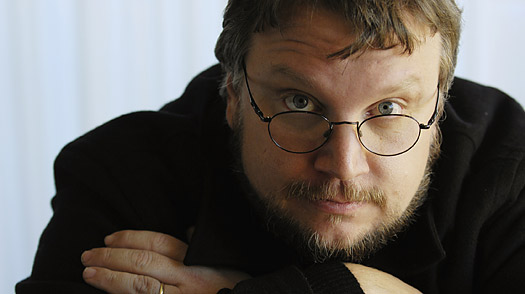
I understand that you had this with Harvey Weinstein and he wanted all these changes and you said “I’m out of here.”
GDT: Yeah I left and then 10 years later I got it back, that’s the thing. I had a meeting with Bob, not Harvey, with Bob, and we got the notes back and I said farewell and then 10 years later when they left Disney I went did they by any chance leave behind that screenplay? What is great is the screenplay we shot is the draft we abandoned before it was developed to the ground. But they went through many, many permutations. They had the creatures flying, they impregnated women, they kidnapped them, they were six feet tall, they were vampires. Every permutation I’ve heard is weird. They went into completely different directions and we went back to what I wanted from the start.
“Don’t Be Afraid of the Dark” opens everywhere August 26th.