
LAFF 2016: Director Qasim Basir Talks ‘Destined’Posted by Wilson Morales
June 7, 2016

Currently playing at the Los Angeles Film Festival is ‘Destined,’ written and directed by Qasim Basir and starring Cory Hardrict, Jesse Metcalfe, Hill Harper, Margot Bingham, Zulay Henao, Mo Mcrae, Jason Dohring, La La Anthony, Paula Devicq, James McCaffrey, and Rob Christopher Riley.
“Destined” tells the parallel stories of Sheed and Rasheed, portrayed by the same actor (Cory Hardrict). A pivotal moment in a 13-year-old’s life splits off into two possible outcomes: in one, he becomes an up-and-coming architect being used by cynical real estate developers to gentrify and destroy his old neighborhood, and in the other he becomes a powerful drug lord who rules his surroundings but may regret what he’s built.
For Basir, this is first feature since his 2010 film, ‘Mooz-lum,’ which centered on an African American Muslim family whose lives are changed by the September 11 attacks and their aftermath.
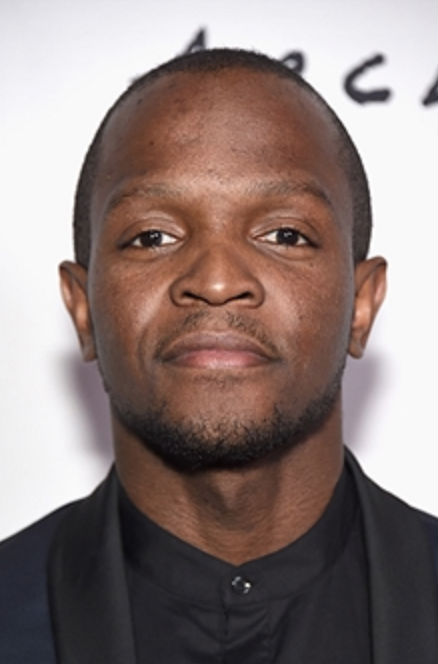
Blackfilm.com recently spoke with Basir about his second feature and casting Hardrict to play two roles.
How did the story come about?
Qasim Basir: I have seen a lot and been around a lot of environments and two in particular, Detroit and Ann Arbor, Michigan where I spent a part of my youth. In Detroit, I went to public school there and in my neighborhood, the guys who lived there, when I saw them after I came back to visit from college, some of them weren’t doing too well. Some of them weren’t here anymore. My dad worked in a prison and he would call me and say, “Remember so and so? Well, he’s here now.” I would always think to myself and say, “What if I would have went there in the middle of my high school years? What if I would have been around these guys? Would I had got into their lifestyle?” I don’t know. I remember wanting to run with the boys. Maybe I would have been a gangster? I don’t know. I always thought it would be cool to explore that idea. What if? With Rasheed, played by Cory Hardrict, I wanted to explore how drastically different his life could be if it went a different path.

With Rasheed and Sheed, the environment is within a life of crime as well as community gentrification. Were both aspects part of your life or was it something you injected into the story?
QB: That’s happening in Detroit right now. For me, when I went to Detroit to shoot the movie around the end of 2014 to start prepping the film and I started noticing the tremendous difference in Detroit. I noticed that this gentrification was happening. I was like, “Wow! This is something I need to put in the film.” I didn’t write in there initially, but I wanted this to reflect what’s happening today. I made sure I put that in the story as well. It’s not happening to me, but it’s happening in that city.
 What made Cory Hardrict stand out for the lead role?
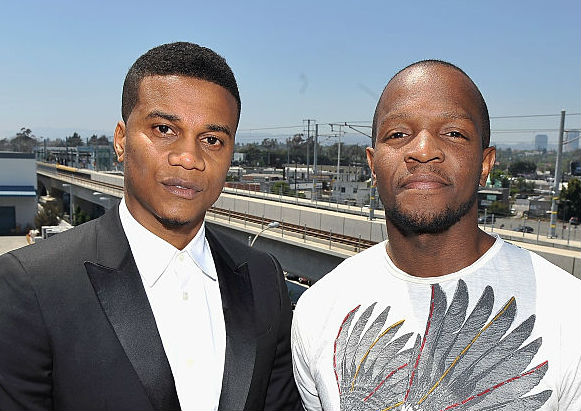
QB: That role is a tough role to play. I think a lot of guys can one or the other. I don’t know many that can do both. Cory had initially been attached to play a smaller role and throughout the process of casting, auditioning, meetings and all that stuff, we ended up looking around and I thought about changing things up in the screenplay, and thought if we make Cory the lead and make his mom white, that would be cool. I spoke with (producer) Tommy Oliver, who was instrumental in raising the money for the film, and we both agreed that Cory is a great actor and I knew that he could pull this off. I went to his house, talked with him and was convinced that he was the guy for this role. Cory is one of the realest actors out there who wants to tell the truth, which is a big reason we went with him.
This is your first film since Mooz-lum came out in 2010. What’s more challenging? Putting together the next story or getting the financing?
QB: The financing. No one really teaches you about that part. You do a film and have decent success and here’s what happens on the downswing. No one prepares you for the next step. You just have to navigate your way through it. I was in New York for the first part of my career and wasn’t deep in the business. I didn’t really know a lot of steps you should take and having the next thing ready and all these things that people generally know at this stage. I waited a bit long than I should have. As I mentioned before, the financing. You get folks that say that they are interested but then all of a sudden they disappear. It’s a weird dynamic.
With Cory playing two roles in two different lifestyles, was shooting that many scenes difficult at times?

QB: Going to Detroit and shooting this was very taxing and difficult. We shot it like two films. We did Sheed’s story first, followed by Rasheed’s. I wanted Cory to stay in character when we shot Sheed’s story and then come back and play Rasheed. Both characters are different but have the same soul. The same goes for Jesse Metcalfe’s characters, one as the cop and the other as an real estate executive. Their looks are different as well, from hairstyles and the beards. The shoot itself was difficult. It was one of the coldest winters in Detroit. The days were long and there were a lot of locations and we did it in the dead of winter. It was snowing. One night it was -8 degrees outside but we got it done.
What’s next after this?
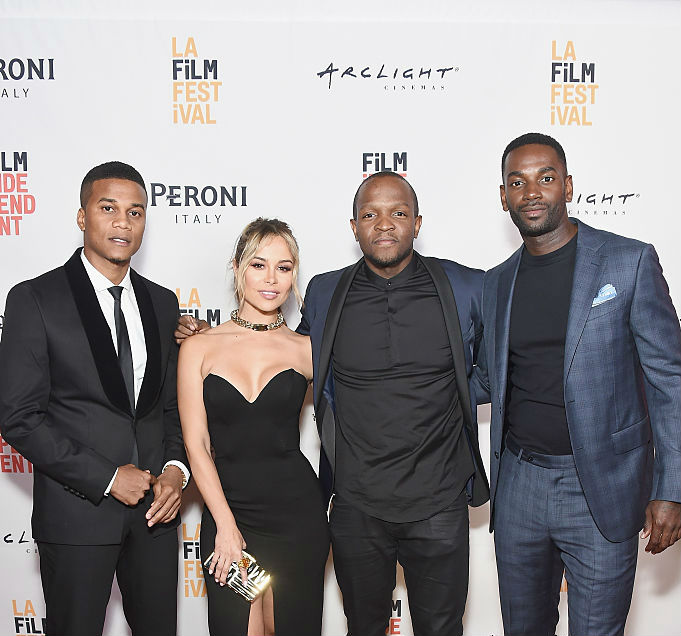
QB: We’re currently at the LA Film Festival and then we’re headed for the 20th Anniversary of ABFF. There are a few more festivals on the horizons. We are hoping to have the film open by the fall but we haven’t thought that far yet. That’s a conversation we have to have with our distributor, but that’s the plan.