
Louis CK & Kevin Hart Are Animated in The Secret Life of Pets by Brad Balfour
July 6, 2016

Comedians Louis CK and Kevin Hart are formidable presences, especially with their voices — which really makes the animated feature The Secret Life of Pets a rollicking comedy and the raucous charmer of the summer so far.
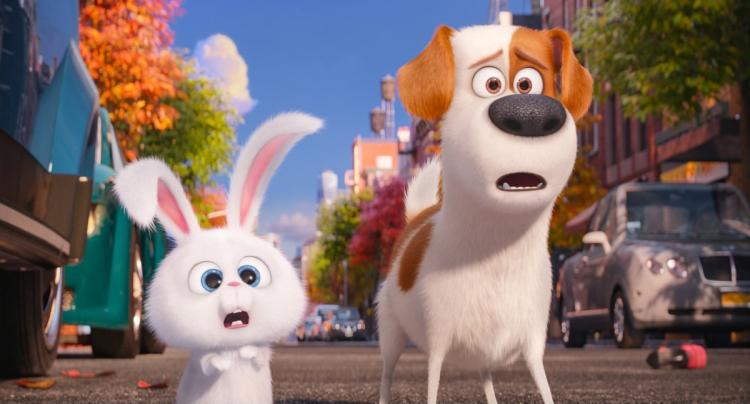
After all, a talking terrier and animated bunny can corral even the hardest of hearts, especially when the bunny is leading an underground revolutionary force while the beagle is busting his buddy out of the animal jail (that is, an animal control mobile pound). Produced by Chris Meledandri and directed by Chris Renaud with Yarrow Cheney, this digital extravaganza poses a worthy challenge to their Despicable Me films (and its spin-off Minions) for the most whacked out comedy.

Individually, Louis CK and Kevin Hart would be enough to propel this production but when together, they really drive the story forward. Max, the Jack Russell (CK), is fun-loving but possessive of his owner — and always a little frantic and anxious until she comes home each day. When big Duke (Eric Stonestreet) is brought home, Max’s sedate world is shaken up. Hiss idyllic life is shared with the other pets who live in or near his Manhattan building, among them the rolly-polly kitty Chloe (Lake Bell), the hyperactive pug Mel (Bobby Moynihan), floppy daschund Buddy (Hannibal Buress), and parakeet Sweet Pea (Tara Strong).
Unfortunately, thanks to an errant dog walker and a rambunctious blowout between the two, Max and Duke land among a gang of abandoned pets led by Snowball (Hart), the seemingly villainous white rabbit — driven mad when his magician master abandoned him. So he went crazy and formed from a pack of other abandoned pets, an underground army bent on revenge against humankind. Mayhem ensues until, finally, all find each other, their owners and the comforts of home — or at least, a secure sewer system.
Both comics have been on a roll lately.
For the Philly-born Hart, his performance in Central Intelligence with Dwayne Johnson is only the latest of many cinematic successes in which he’s been paired with perfect foils. Witness the string of box office hits he’s had since 2012 — Get Hard, About Last Night, Ride Along, Grudge Match, and Think Like a Man. The 36-year-old’s forays into New England’s stand up comedy clubs scene years before honed his quick wit and manic behavior so he could attain such heights.

On the other hand, Louis Székely (aka C.K.) has made his mark on the humor scene in a more traditional fashion — first as a writer for comedians David Letterman, Conan O’Brien, and Chris Rock and then, by leaping into directing, first surreal shorts and then two un-noticed features — 2001’s Pootie Tang and 1998’s Tomorrow Night. But a move to TV, first by starring in the short-lived HBO sitcom Lucky Louie, led to his 2010 acclaimed semi-autobiographical FX dramedy which he created, starred in, wrote, directed, produced, and edited. Most recently, CK has created and starred in a self produced web series Horace and Pete that he even distributes himself to great success.
At an exclusive press conference held out at New Jersey’s liberty State Park, among the woods and animals, the two held court on the virtues of their animal selves. With his manic energy bursting out, Hart animated (so to speak) the conversation while CK offered more tempered but equally insightful comments.

What was your reaction when you got the role, especially a character with two sides?
Kevin Hart: A very good question. That was a double banger. You know, I was excited. This is my first animation film. Nothing gets you more excited than seeing your character, since your character has two sides. They showed me a picture of the bunny when he was very nice and adorable, and then they flipped the page and he was grabbing his ears and stuff, and his eyes were angry.
They said, “Kevin, we want you to bring your personality to this bunny. Give us the cute, cuddly side but at the same time make it believable that this guy can start a revolution and have people follow him.” I jumped at the opportunity.
And Louis, how did you get in the head of the dog? How did you see the world? How did you provide the input from a dog’s perspective?

Louis: This movie always made sense to me, that’s why I decided to do it. A dog living in New York City — I live in New York, and you have this tension between your little home, everybody’s home in New York is small and intimate, and the giant city, the chaos of the city.
I always understood Max. Also, dogs are very transparent. They’re easy to read, so I get dogs. Every time we’d be doing a scene and the dog is desperate for the woman to come home, I get it. I totally get it.
In a way, when you play another species you can more easily get rid of parts of yourself. Dogs don’t have a timeline in their heads, they don’t have any confidence in the future. They just believe that whatever they’re feeling is what they’ll always feel. I try to remember that.
One of the things that’s great about this film and its characters, particularly your two — is that, on the one hand, they seem confident, at the same time, there’s a certain inner neediness that you guys are successful in expressing. Which is something you also express in your other work. How do you tap into that inner neediness?
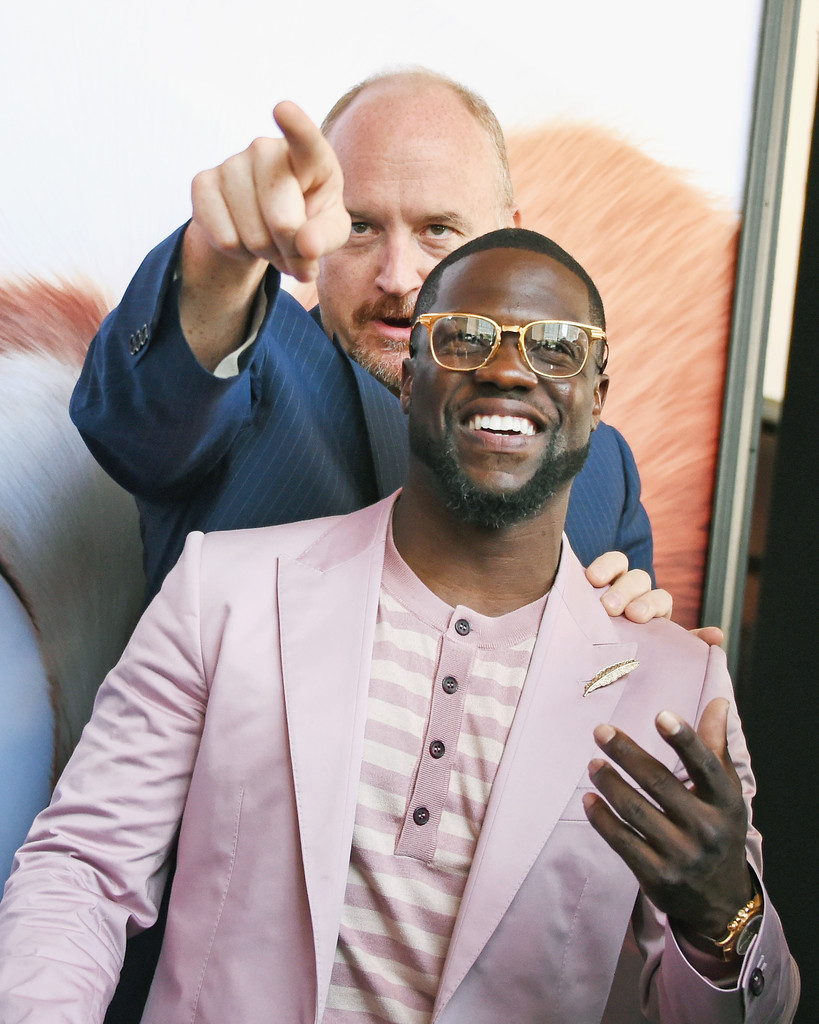
Louis: These are domestic creatures, too, so they’re really dependent on people. And so they really need someone, to feel ok. You can give a dog all his treats and toys and a bag of food, and he’s not happy unless you’re there. You take a dog out of that, and he’s going to be very upset. That’s easy to relate to, I think.
Even with each other, the [concept] in this movie is that they go and try to form their own sense of family. [Kevin]’s a rejected animal, who’s been flushed down the toilet.
Kevin: Well… He wasn’t flushed down, he was just left behind…
Louis: I think the rabbit is pretty literally flushed down the toilet.
Kevin: I mean, we all end up in the sewer but he wasn’t technically flushed.
Louis: I totally thought that he was flushed down the toilet.

Kevin: The thing about my character is that he’s very insecure. If you guys don’t pick up anything else from Snowball… upon [sic] him setting the tone and being a leader, [is that] there’s also a strong sense of doubt in everything he does. With every order that he gives, there’s a question behind it of, “Was that too much? Do you guys get why I said that? You guys heard [me]? Everybody’s following me, you guys get why? Raise your hands. All right, never mind, put it down, maybe that’s too much.”
It’s always a lot, and that’s one of the main things that the director [Renaud] talked about. You wanted to ground the guy, and if he just has one note, that one note isn’t that good. It’s not fun to track. But being that he’s all over the place and kind of a mess, when he comes full circle you get why he comes full circle.
Ultimately, he wants the same thing that Max and Duke want, which is love. They want that attention, the security that comes with having an owner. [Snowball] don’t have that, which is what put me in the room that I’m in. But I wasn’t flushed down the toilet.

As performing artists, and fathers yourselves, what’s the worst and best thing about being an artist and parent as well? Has it changed over the years since you’re so successful now?
Kevin: I think the one amazing thing about being an artist or an entertainer is providing for your family. As a man, you want to be able to give the security to your woman and to your kids, and build a foundation. That’s the plus.
But the gift is a curse. The curse is that we have to work: we’re traveling people. Our job doesn’t keep us stable. We’re gone [a lot], and sometimes being gone is tough [especially] when you’re close to your kids, as Louis and myself [are]. I think it’s a balance that you have to find, and when you find it you run like a well-tuned engine.
There are no bumps along the road, because your kids now have an understanding of what their father does and why he does it at the capacity that he does it at. An understanding comes along the way. As a father, you have to make sure that your kids understand that, you have to make sure that you’re instilling those positive images in their head of what Daddy does, and why he’s doing what he’s doing.

Louis: I have sort of the reverse, which is that… I mean Kevin’s 36, he’s a young dad. I’m 48, and my daughter is 14. I find that I can spend more time with my kids, because I have a little more control. If you work in a factory, you can’t go to the factory boss like, “I want to go with my kids to the park or something.”
You know, fuck you, go to work. So I have a little more control over my life in that sense. Also, it’s a nice model for your kids that you can do something you love and make a living off of it. It’s not realistic, that’s why I get worried sometimes. I always tell my kids, “This isn’t normal. You may have to do something that’s not your favorite thing, and still make a living.”
I think the most important thing you can give your kids is an education on how to take care of yourself. It’s a challenge actually, as this show business dad, to model normal taking-care-of-yourself behavior, even though what you’re really doing is making stupid movies and standing on your head and making people laugh, and getting a disproportionate amount of money compared to your actual contribution.

How does it feel different to make an animated project for kids and families now, what does that feel like?
Louis: It’s nice to make something your kids can watch, that’s a nice thing. My kids can’t see anything I make, except for this.
Kevin: I’m the opposite.
Louis: However long this movie is, it’s the only thing they can watch.
Kevin: I let my kids watch everything I do. “You go to school and you recite Daddy’s lines to your friends.” No, no, I’m joking. It is good. You want to have material that your kids can watch, can watch with you and laugh. I guess they can say, “That’s my dad.”
The other things that I do, I can’t let them watch them at this age. There’s some things that they’ve watched — just because you’re their dad — you want to be able to say they saw it with you. But for the most part, animation is the right way to go and I’m glad that I was able to squeeze one in before they get too old.
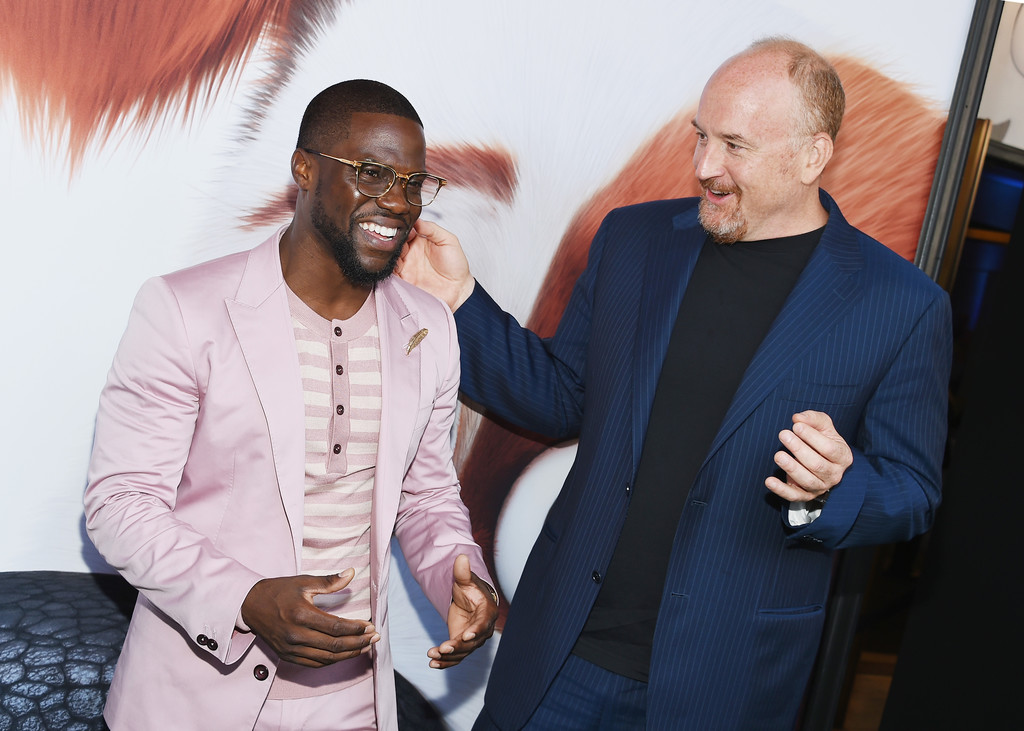
In a recent article a writer wrote that Hollywood is hiding the biggest black actors behind animation and a lot of makeup. Do you feel that Hollywood is really doing that, or that all opportunities are great?
Kevin: I think people will look for any excuse to play the race card in Hollywood. In this day and age, it is what it is. You want it to be more diversified, you want to see more diversity, but a lot of people draw attention to it by talking about it. If you just work and progress, you eventually put yourself into a position where you can help the problem by bringing more people into the business. When you draw negative attention, you’re only going to get a negative response. I don’t believe in adding to it.
I bust my ass and do what I’m supposed to. I’ve been promoting movies internationally now for the last four years. They said movies don’t transfer to black actors internationally. I don’t feed into that. I do what I do. If other people did the same, you’d look up and see more multicultural films being received by so many more people.
I would just say, instead of looking for a reason to say, “Look at that,” look at the people who are in those positions and applaud them. Applaud those actors that are in those animated movies, regardless of color of skin. They’re working, and creating opportunities for others.