
Maggie Hadleigh-West Talks Player Hating: A Love Storyby Wilson Morales
April 3, 2012

Coming out this week in limited release is a documentary that focuses on the trials and tribulations of a young rapper looking to market his music through the streets while growing up in a tough neighborhood.
Directed by Maggie Hadleigh-West, ‘Player Hating: A Love Story,’ delves deeply and intimately into the lives of young “thugs” and takes the audience into an underground world of poverty, gangs, violence and music that certainly they have an inkling of, but few rarely see in this manner—unless they live it.

Thirty minutes from downtown Manhattan lies a forgotten community—Crown Heights, Brooklyn —where death and destruction are as constant as breathing. Half-a-Mill is a 26 year old hip hop artist from the Albany Housing Projects in Crown Heights. Building 193. Raised by his grandparents, Half grew up, Jason Wardlaw, in a two-bedroom apartment with eight to ten other relatives. By the time he was seven, Half was sharing a gun with his brother, ‘cause he was sick of people putting their guns in his face in the elevator of his building, and not being able to do anything about it. Half ’s been running with the same ten guys since he was real little, and they’re his crew, the Godfia Criminals. But he’s the one with real musical talent. He’s the one that will take all of them out of the projects. And that is the heart of this story.

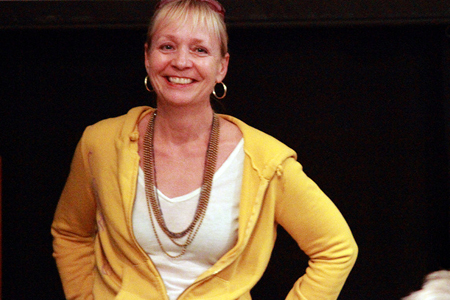
In speaking with Blackfilm.com, Maggie Hadleigh-West talks about why she decided to focus on this project and what she wants people to get from seeing the film.
What was the attraction to working on this project?
Maggie Hadleigh-West: Well, I was aware there were issues going on in poor black neighborhoods that I was being given this information about; that people were dying actually. I was listening to the lyrics of hip hop music and listening to the story. I actually was looking for a young hip hop artist that had been signed by a record label. I was looking for someone who had grown up in that environment and Half-a-Mill was the eighth person I found.

When you told him that you wanted to film his story, how receptive was he initially?
Maggie Hadleigh-West: He’s a very smart person and he knew that it was advantageous of him to be the main character of the movie, but at the same token, I’m a white chick and he didn’t know me. We made a simple agreement and I told him that I will always tell him the truth and in exchange, I wanted access to his life as he would give me. It was a little bit of touch and go here and there but after a while you get to understand that someone is not trying to exploit you. I did care and we got to be friends. We had been working together a lot and eventually he trusted me. At one he told a friend of mine that we mutually exploited each other.
With some of his friends leading shady lives, were they as receptive as Half-a-Mill was in terms of being on camera?
Maggie Hadleigh-West: Some of them were reluctant and others were willing to let me to talk to them. Sure, some of their lives may not have been glamorous but they were real. I think they trusted that I wasn’t judging them. They let me in.
How long ago did you start shooting this film? I thought I saw someone with a boom box.
Maggie Hadleigh-West: Yes, you did. I started shooting the film in 2000. It took about 10 years to get it completed. I had about 120 hours of footage but it’s a money thing. I didn’t have any financial support and it’s extremely expensive to make a movie. I spent an enormous amount of time trying to raise money.

What’s the sell to the film?
Maggie Hadleigh-West: The way I sell it is by saying that it’s an intimate portrait of thug life and an intimate story of project life. I often say it’s about murder and mayhem and about all of these amazing young men that are losing their lives. Unfortunately as we know, young black men haven’t stopped being killed or killing each other, which I believe is a function of institutional racism. So, the most important thing to me is that, in some ways, I don’t care how people get into the theater. I just care that they get in the theater. I don’t care what the pitch is to get them there. I know that once they are there, they will care about the people. Once they care about the people, then they will care about the fact that people are losing their lives and that people are living very differently in this country. Once that’s established, they will understand that Half and his friends are all individuals and also metaphors for other young black men in similar circumstances.
What’s next for you?
Maggie Hadleigh-West: That’s a good question. I’m undecided. I have a number of projects that I care about that includes racism about classes of it. I have another project about blowing up a pharmaceutical firm that’s ruining the lives of women, but this movie is the best thing I’ve ever done and I need to make sure it fits in the world. I’m not going to make an unfunded movie ever again. It’s just too hard.
Player Hating: A Love Story will open in New York City on April 6, 2012 at Quad Theater, on West 13th Street.