
Mahershala Ali Talks About Smart Peopleby Brad Balfour
February 11, 2016
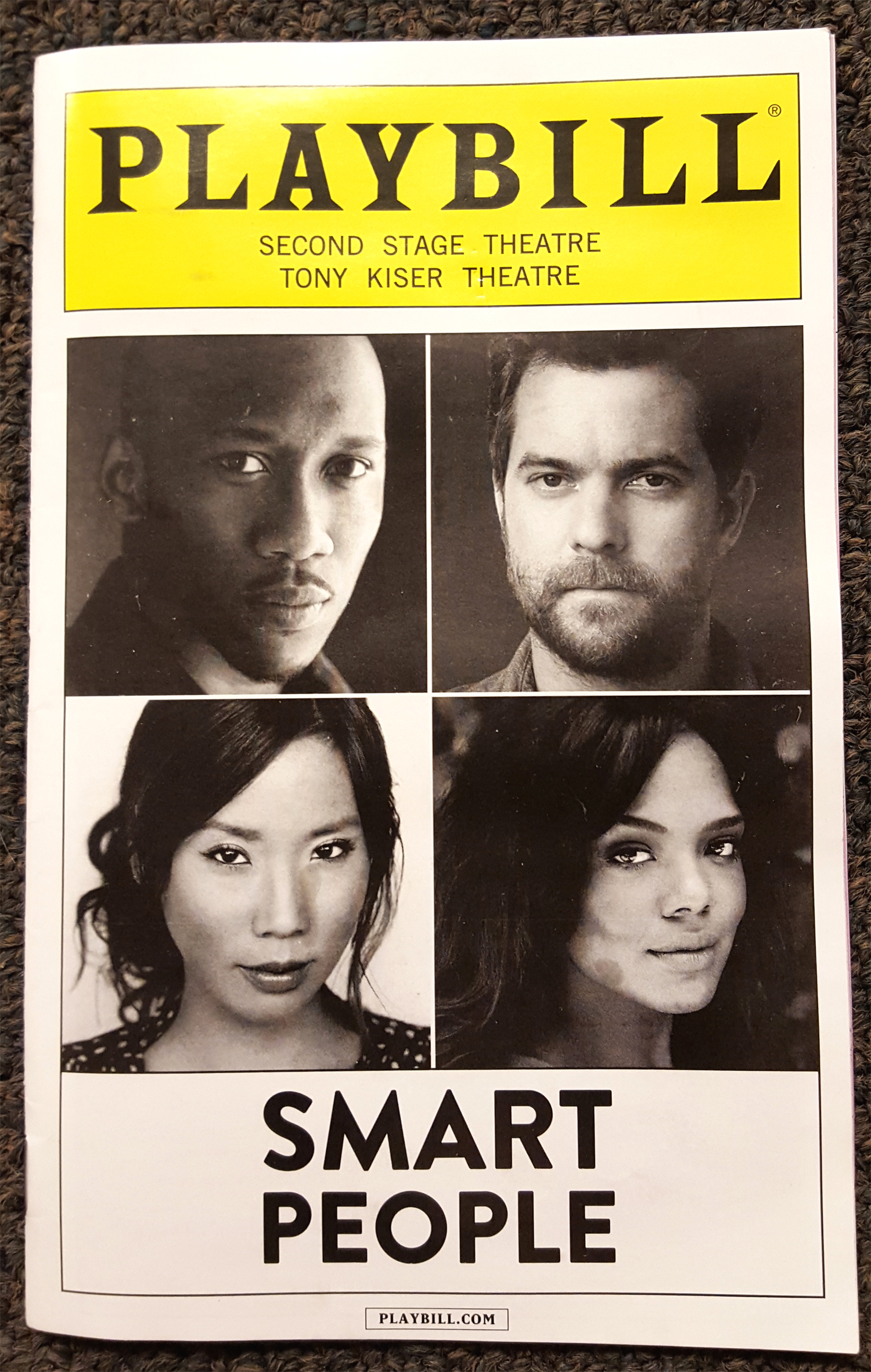
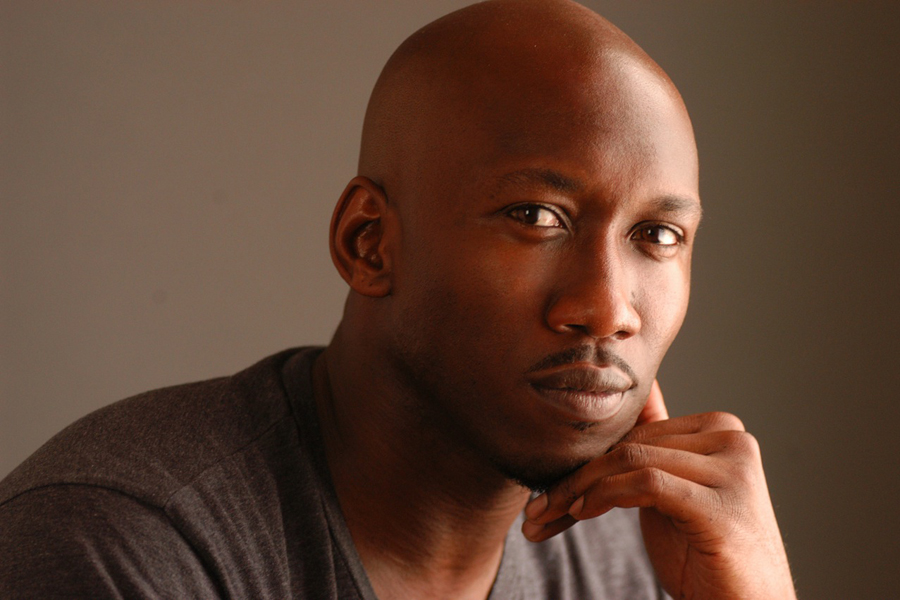
After seeing actor Mahershala Ali playing his character Jackson in Lydia R. Diamond’s latest play, Smart People — with his huge chip on shoulder and a seriously abrasive manner — it seemed like some of Cornell “Cottonmouth” Stokes, the villainous character he plays in Marvel’s Netflix series Luke Cage rubbed off.
Of course that’s really a testament to vet actors skills because in person, he’s a really gracious guy quick to answer serious questions with a deliberation and determination — a far cry from either character.
When Ali joined the cast of noted playwright Lydia R. Diamond’s off-Broadway production, Smart People, he added another feather in his cap having tackled both The Hunger Games – Mockingjay 1 & 2 and House of Cards.

Directed by Kenny Leon, Smart People began its Off-Broadway run, with previews finishing and the play finally opening its limited run.
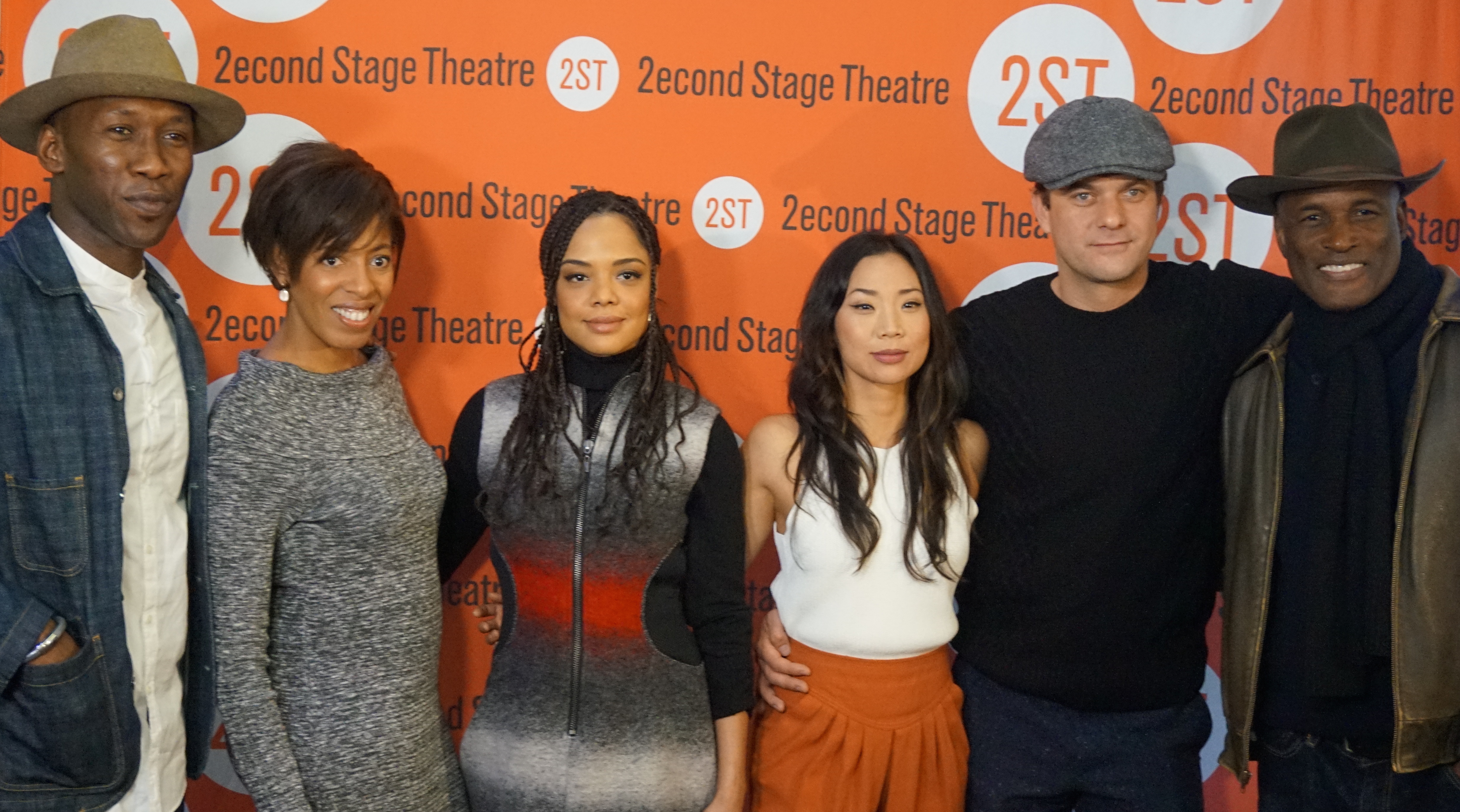
The Smart People cast — Anne Son, Joshua Jackson, Tessa Thompson and Ali — had been assembled to talk with press just before previews began. Blackfilm.com ran part of the conversation with Ali when he discussed his role in Luke Cage and his take on the recent Oscars controversy. What follows is his thought on the play and its powerful impact.
What was it like working with such an accomplished director as Kenny Leon?
Mahershala Ali: Kenny’s been really wonderful, he’s so honest and upfront — he doesn’t pull any punches but it’s never [negative]. He’s always constructive but he’s straight up; he definitely expects you to carry the weight and discover [your character]. He’s a wonderful collaborator and terrific director and its’ been a joy and wonderful working with him.
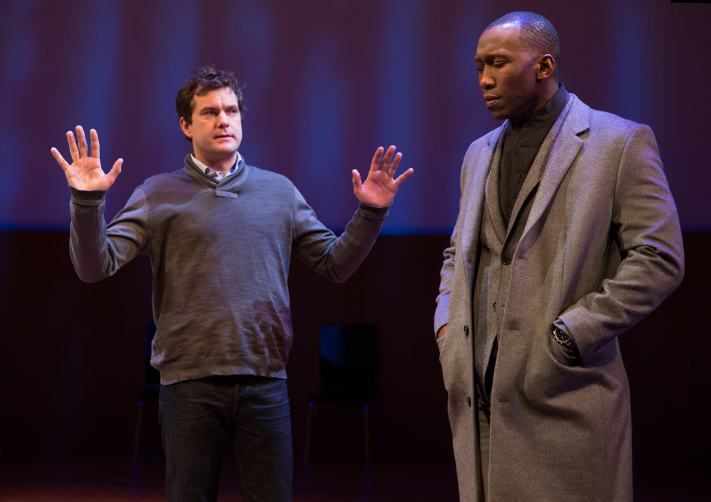 You done television and films how and why did you chose to do this theatrical production?
MA: I appreciate the challenge. This stands out for me. The material is so strong and rich — it was impossible to say no to having the opportunity to play this character I think its been very challenging.
We are thrown back to Obama’s first election… It was such tense time in our society and yet such exciting as well; what do you remember?
MA: Exactly that, a mix of emotions, a lot of hope but it also brought up so many issues that were happening — and still happening — my grandfather supported Hillary. Funny, in the play it’s full of so many different perspectives and point of views, so i really appreciated that time. We haven’t really had a time like that.

What kind of conversations does your character Jackson having during this time period?
MA: On a very personal level, Jackson is just dealing with being viewed as insubordinate and it has more to do with being a black man in a world where he is very much an outlier, somewhat outside of what would be his norm and so therefore is being misunderstood. And perhaps someone who looks like Jackson, [it’s tough] having to… biting their tongue, often enough, [to be] fitting in and riding the wave until they get what they want.

Jackson isn’t someone [who has it] in him to bite his tongue. He is going to speak up and so he is quickly viewed as the angry black man and in some ways he is but it’s a very complicated time to excel with everything that he’s done.
Now he’s at a point where no matter how great he is at a point, he has reached a ceiling and a gatekeeper has to let him in if they so choose to let him in. And I think that is what’s frustrating so I think that is a lot of what Jackson is dealing with — and he and Brian [Joshua Jackson] talk about that.

What kind of emotional journey did you take on to do this play?
MA: I’m still very much experiencing it. I’m trying to learn and ask questions and dealing with this character everyday — his history and dealing with society where we are now but also where we were eight years ago.
Jackson is outlier in own community. [He has to exceed] expectation [and excel] academic ally in studying to be a neurosurgeon. That makes him an outlier in the Boston medical world [and his own as well]. With combination those two things, he doesn’t necessarily have anyone that he can necessarily relate to and in that way, it’s challenging being on that island for that character. It actually ends up making Jackson’s relationship with Joshua’s character that much deeper and more important because in some ways because— of Brian’s own trajectory — they can relate to in a way that in their own homes and own areas where they’re from, that other people can’t relate to them.
He studying to be surgeon; he is in his residency right now — he intended to be a brain surgeon. But he’s having a bit of trouble with that because of race, politics, and the dynamic of that world. And him being a black man in Boston so he’s seen it through a black person’s minds.
Of his relationship with Joshua’s character — Brian who is also somewhat of an older guy but also a black sheep in his family — the two of them come together and they have an extraordinary friendship because they’re both sort of oddities.
Do you think the premise of the show is now more relevant than the time when it was set?
 MA: It’s relevant in part because it would take several more years or decades to be able to have this conversation about race that is honest — so in that way it is even more relevant.
You can tear off all those layers and you’re back towards the center of talking about it as opposed to having to be very conscious and not knowing if it’s ok to talk about it in the world we are living in as real human beings. In this world that [Lydia] has made, the conversations that they have cut to the chase and, in that way, you get to hear things within its two hour and forty-five minute mark stuuf that cuts the chase —where we have to think of it…