
Rise of the Planet of the ApesAn Interview with James Franco
by Wilson Morales
August 4, 2011

Coming out this week is the latest take on the ‘Planet of the Apes‘ franchise that has been around for nearly 45 years. With ‘Rise of the Planet of the Apes,’ the Oscar-winning visual effects team that brought to life the worlds of ‘Avatar’ and ‘Lord of the Rings’ is breaking new ground, creating a CGI ape that delivers a dramatic performance of unprecedented emotion and intelligence, and epic battles on which rest the upended destinies of man and primate.
Directed by Rupert Wyatt, the film stars James Franco, Freida Pinto, John Lithgow, Brian Cox, Tom Felton, David Oyelowo, and Andy Serkis as Caesar the apes at the center of attention.
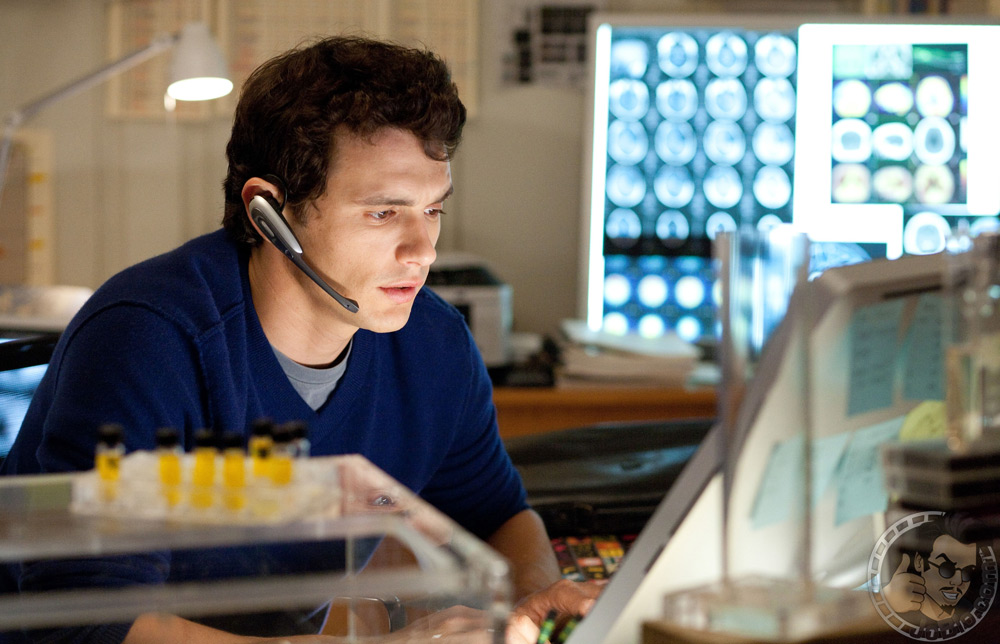
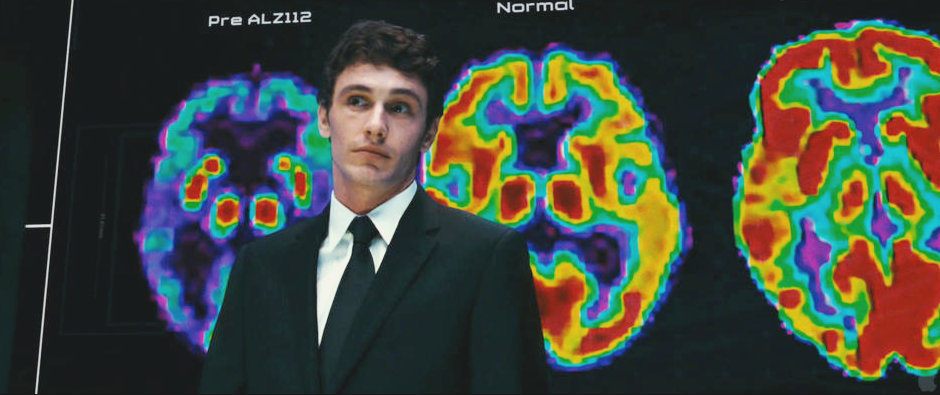
Franco, who received an Oscar nomination for his role in ‘127 Hours,’ starred in the comedy film ‘Your Highness‘ and hosted the 2010 Academy Awards, plays Will Rodman, a scientist who working on a cure for Alzheimer’s Disease by performing tests on apes and his ailing father. When he takes in a infant ape named Caesar, he doesn’t realize how far his research has gone until Caesar shows signs of intelligence.

At a recent press conference in New York City to promote the film, Franco talked about his reasons for taking on the film and working with new digital technology that surpasses his previous work on big budgeted films.
What was the attraction in doing this movie?
James Franco: I’m an actor that envisions the poster before the movie or with my face on it. I was given the script by Rupert (Wyatt) and before I read it, I thought about the idea. Once I saw their idea compared to the other apes films, it was a very grounded take on it. When I met with Rupert, he told me that the apes would be captured this motion capture technology and that WETA would be doing it and that it would be with a lot of the crew from ‘Lord of the Rings.’ I just thought that this would be the way to do it. I really and honestly didn’t think about being upstage by apes. I just thought it would be an interesting movie and a great thing to be a part of.
A lot has changed since you’ve done big budgeted films like the ‘Spider-Man’ films with visual effects. How have you changed when you look at dailies and your approach to acting? If you had a direct a visual effects movie, what would you do?
James Franco: The technology has advanced to a place where we could do a movie like this. I don’t think I acted in front of a blue screen once prior to this, and if I did, it was probably way in the background. The actual sets allowed Andy (Serkis) to act in the sets. so in a sense, it brought us back to good old fashioned movie making. But the difference is that you have these computer generated creatures with great actors underneath them. I’ve been studying digital media at the Rhode Island school of design and that has changed my whole perception into this line of work. I embraced it and it was one of the reasons I wanted to do this. It was a chance to have a different type of acting experience, and maybe when I started ‘Spider-Man 1’ back in the day, I was one of those actors who thought that I was part of this big thing and that we would acting to nothing, tennis balls, or this kind of thing. But now, here we are ten years later, and I get to make a movie opposite a chimpanzee but underneath, there is an incredible actor and he’s incredible to work with.
 Can you talk about the mythology of the apes and why the franchise is still around?
James Franco: There’s a book by Michael Cunningham called ‘Specimen Days’ and it’s a three section thing where the first one is where the character is in the 1850s and dealing with Walt Whitman and by the third section, they are in the future with these androids. What it shows is that up until this point, we as humans define ourselves as superior to animals because our intelligence. But now, as our technology grows and we have thinking machines and I guess in the future, machines that can interact with us or whatever, we start to define ourselves as humans based on our feelings as opposed to machines. With this story, you get a weird combination of what we would consider our animal side, the apes and how it has leaped over. This movie and all the other movies define who we are as humans by the way we treat animals and other equally intelligent species or cultures. With the previous films, all the apes were around for a number of years and their cultures were fully developed. Those were much more about culture clash. This film is an origin story and the tension is about animals and humans, but it’s still about who are we and and how do we treat the other; whatever that may be.
When do you expect to return as Franco on ‘General Hospital?’
James Franco: I’m shooting ‘Oz: The Great and Powerful,’ but I’m will try to shoot a couple of episode.
With so much that you have done in the last few years, what’s still left on your bucket list?
James Franco: I’m happy. I don’t look at my life and say, “I’ve always wanted to do that.” I’m very fortunate. I’ve opportunities to do everything I’ve wanted so it’s kind of gravy. That’s one of the reasons I’m teaching. I’m trying to give back to other people. I’m trying people opportunities that I was given. The class that I will be teaching at NYU is not only a class, it’s a production class that will result in a feature film that the students will be able to make together. I guess that is what I’d like to do now. To continue to be creative but in a way I can give back in some or another.