
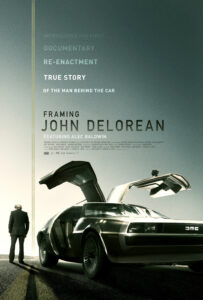
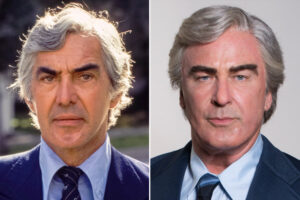
Alec Baldwin portrays flamboyant carmaker John DeLorean in the hybrid documentary Framing John DeLorean. Directors Don Argott and Sheena M. Joyce use news and FBI footage to show how DeLorean was able to build an empire after the debut of the famous DeLorean car in 1981. His career and personal life were later left in shambles after poor business decisions and an infamous FBI drug bust. The DeLorean car will forever be referred to as Marty McFly’s time machine in the successful Back To The Future series. Alec Baldwin told The Hollywood Reporter that he once got a phone call from John DeLorean in 2004. Baldwin claims the automaker wanted him to depict him on the silver screen. It took fifteen years for Alec Baldwin to play DeLorean in re-enactments of key scenes of his life in this latest film from the directors of The Art of The Steal. Framing John DeLorean premiered on April 30 with a small procession of DeLorean cars parked outside the movie theater and afterparty.

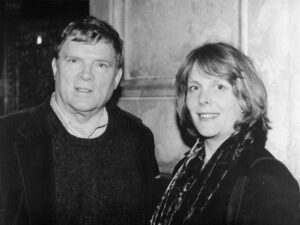
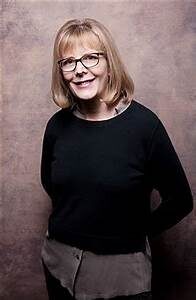
BlackFilm talked to Oscar nominated documentary filmmaker Chris Hegedus (The War Room) to learn more about the complex innovator who is portrayed in the film.
How were you and D.A. Pennebaker introduced to John DeLorean?
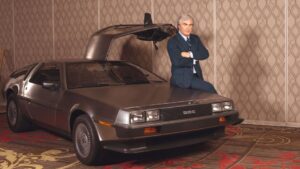
Chris Hegedus: We were introduced to John through a man who had worked with Robert Kennedy. And he was a pr person I think for Robert Kennedy. He thought of John as being a visionary. Which I think a lot of people did at the time. So we were looking for a subject that was about Northern Ireland. Just because we heard there was funding for a film. We did it on Northern Ireland and we were introduced.
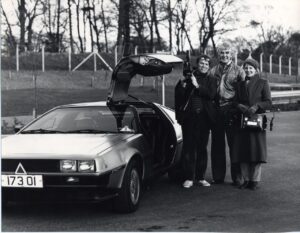
It is shown in the movie that John had set up a factory in Ireland. He was being supported by the government over there. When you were filming at what point did you start filming him, while he was in production on the DeLorean? What was that process like?
Chris Hegedus: We first came to see John when they were breaking ground and first starting to build the factory. We had been over there to Edinburgh film festival with some films. Then we decided to cross over and go see him in the factory…and talk to a few people there. Then we followed him until the first cars were released to the United States. Unfortunately, right after our film went on the air. A huge scandal broke out about John kind of hiding finances in Swiss Bank accounts. Not the cocaine scandal. That came later.

When I attended the Q&A for the film. Someone asked the directors about Sammy Davis Jr. and that being omitted from the film. It turns out that there were some major investors like Sammy Davis Jr. and Johnny Carson. Johnny Carson gave John DeLorean over half a million dollars. Sammy Davis Jr. gave him over 100,000 dollars. I believe it was at least $150,000 to try to help save the company. But they were both defrauded of that money. Was the scandal related to that?
Chris Hegedus: As far as I know they gave money to invest in the company in the beginning. A lot of different people did. It was a visionary idea that John had. It was very sexy. It was going to be a sports car, which was visionary. It was stainless steel and wouldn’t rust. I think a lot of people were interested. John had been hanging around in Hollywood. So a lot of people knew of him as this golden boy at GM who became a very young vice president. Who was behind the muscle car. So he got a lot of different investors. Unfortunately like what happens at all startups that fail. They lost their money.
You and your husband D.A. Pennebaker are acclaimed documentary filmmakers. What were of the insights that you were able to uncover while making the documentary on John DeLorean?
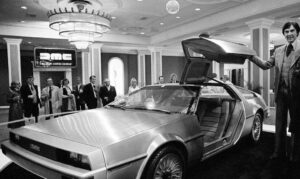
Chris Hegedus: I don’t know. It was just a fascinating time. As a lot of films are it is one of the privileges in making a documentary. It’s that you drop into these worlds that you know nothing about. And you get a very inside view of them. It’s hard to understand. Creating a motor company was a very complex thing. Obviously we only saw small parts of it…different parts of it. But it was a very interesting time. It was a time when Opec was forcing its muscle. When America had just had a huge gas crisis with lines at gas stations and whatnot. Building a car company at this moment was an interesting choice for them to do. The whole situation in Belfast was very volatile at the time. One of the wonderful things that the factory started to do and would have done was to create an atmosphere for possible peace in Northern Ireland.
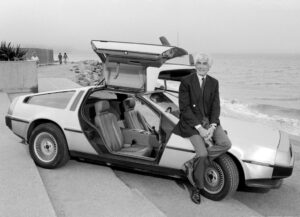
Soon after it happened he had Protestants and Catholics working at the factory. They were entering in separate entrances, but they were working together. They were paid well and made a product that they were very proud of. So for me it was very sad to have the company fall apart. Even on that basis.
You had interaction with John DeLorean. Do believe that the film was an accurate portrayal of his character?
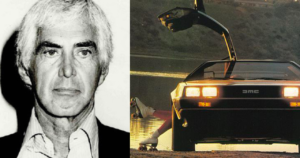 Chris Hegedus: I do. I liked that the film showed the complicated person that he was. Certainly in the business world, John DeLorean is not the first person to stash money away in Swiss Bank accounts, in fear of a company or his baby going under. I think the different sides of John in that he is kind of a wunderkind and at the same time he might be somewhat of a con man–were interesting. I thought they were able to portray the different sides of a person who was a complicated person. John certainly was, but a very talented one.
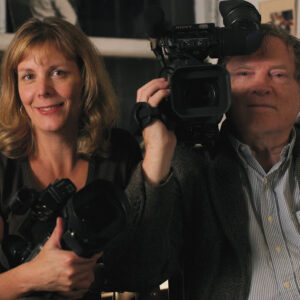
What was the name of the documentary that you and D.A. Pennebaker made? What was interesting was the film was a documentary. But your film was incorporated into the storyline of the film. Your film was within the Framing John DeLorean film. So it was interesting to learn more about John DeLorean through the documentary you were filming. Can you talk about your film that both of you made? And how that was incorporated into the Framing John DeLorean project?
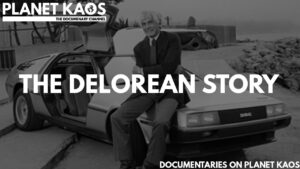
Chris Hegedus: Our film was called DeLorean. We made two versions. We made a version for English television and a shorter version for an American PBS show. At that time any distribution for documentaries that were independent were very limited. Mostly to PBS in this country. I think Don and Sheena and Tamir used our film basically as archival footage for themselves in the film. Their story just centered a small part of the actual building of the car. The story in Belfast that we filmed at the time.
What other impacts did John DeLorean’s factory have over in Ireland?

Chris Hegedus: It was enormous. They were starting to attract other companies. John was an inventor. He held at least a 100… I think. patents on different things. One of the companies that they had lured over was the first company that I ever saw that had a keychain device. Key device where you could unlock your door from outside. There would have been a lot more industry. I think lured into the Belfast area, which would have been even more helpful to it at the time. But it was a scary time. It was scary to film. To go around with a camera was frightening sometimes on the street. Because it kind of looked like a gun. The whole city of Belfast was under siege. You had to go through metal detectors everywhere. There were tanks going down the street. Penne and I got called in by the IRA headquarters to come in and talk to them about what we were doing. And basically that was frightening in itself because we had to go through a bombed out empty building to get to this guy. Who was like out of a movie. He was sitting at a desk in the middle of a vacant brownstone type of building.
Did you need additional security while you were filming the documentary?
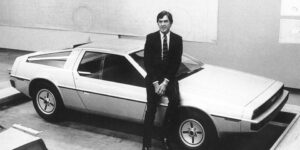
Chris Hegedus: I’m sure we could have but we didn’t have any. We were just ourselves. We started out at this famous hotel the Europa where a lot of journalists stayed. We left some of our equipment there so we didn’t have to carry it back to New York. When we came back the hotel had a bombing at it. So our equipment was gone. They had many different bomb scares at that hotel. Even though it was like one of the better places that one could stay. So after that we moved out of the city. And stayed at a bed and breakfast at a farm, outside of the factory.
Did you stay in touch with John DeLorean over the years after he had his FBI cocaine scandal? He was trying to make a comeback but eventually became a recluse. Did you have any interaction with him at that point in his career?

Chris Hegedus: We only had a little bit of interaction with him. He came to our office at one point afterwards. He wanted to look at some of the outtake footage. Because he thought there was some kind of conspiracy and some of the British intelligence MI5 were posted at the autoshow in Geneva. He was there with Colin Chapman who was the head of Lotus cars. They were building the cars in the beginning. He came to look at footage in our office. But we didn’t have a lot of contact with him afterwards.
Do you know what year that was? Was that still in the 80’s?
Chris Hegedus: Yeah, It was in the 80’s. It was probably sometime after he got off from the drug bust. I’ll tell you one of the funniest things that happened to us. We kind of set him up in a room. We shot on film. So we set him up in a room with a machine so he could kind of go through footage. Our associate David was kind of helping him out. He turns to him and says. “Do you guys have any coke around here?” So David comes running out of the room and says… “He asked me for coke!”
It turns out he wanted a Coca-Cola.
That is funny.

Chris Hegedus: He was pretty preoccupied afterwards. We didn’t really have a super close relationship with John DeLorean. He was a private person. I would say he was a little bit weary of what we were doing, so he always seemed like a person who was guarded. I don’t want to say he had something to hide, but he wasn’t going to say everything in front of us. Although he did have a relationship with us. We definitely hung out with him. We drove the car and went all sorts of places with him. But he was a business executive.
What was it like for you to drive in the DeLorean like those early models of the DeLorean?
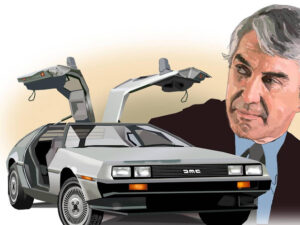
Chris Hegedus: The early models of the DeLorean are pretty much like the DeLorean now. Because they never kind of got beyond the early models of the DeLorean. Which is always fascinating. It always looks the same, because it hasn’t rusted at all like all of the cars you saw in front of the theater that night. The earliest one that actually D.A. Pennebaker was driving in and filming from. And I was driving behind him trying to keep up was during a pr exhibition that they had. They had a famous racecar driver called Sterling Moss, who was driving the car. It took me like 10 seconds to lose him on the road. Because he was driving so fast. In that car they didn’t even have a passenger seat. I remember sitting on the floor doing it. There were a couple of test cars that we were in they had a racetrack test course right outside the factory.
They showed in the film that there was a possibility for John DeLorean to be able to save his company if he had held out for two years until the Back To The Future film came out. Do you believe that is accurate? That the popularity of the film and the DeLorean as a time machine in the film could have saved the company?

Chris Hegedus: I don’t know. It was a very complicated situation. A lot of it had to do with the government changing in Great Britain from being a Labour government. Which were interested in helping Northern Ireland and the political problems that were happening there. And then switching in the middle of making his factory around the time the cars were coming out the Margaret Thatcher. Who really didn’t care about Northern Ireland and really didn’t want to spend any more money up there. It was a complicated thing, to make in this kind of record time, that they were able to manufacture the car. So it’s not surprising he would have money problems. There was a financial crash happening. There were any things. Yeah, if he could have survived that long and Back To The Future came out. It probably would have pushed sales. It definitely would have kept the company in the public eye. I know John had hoped to make a car for the public after that, more of a Sedan car that would be stainless steel and last. That would have been a cool thing to have happened.
There was a running joke in the film about how many different John DeLorean projects that Hollywood has over the years tried to get greenlit. But they haven’t been able to successfully reach the screen. What was the reception to your film when it came out? Has there been renewed interest in your film since the John DeLorean documentary is coming out? There is also a George Clooney project that he is supposed to be directing that is greenlit. Had there been additional interest in your film?
Chris Hegedus: I think that was a little bit misleading. There have been plenty of biopics on John DeLorean at all sorts of stations. Not necessarily that were that good. In the years after his coke bust. But I think like with a lot of projects. There was interest to do a feature film and they didn’t get off the ground for a long time. Our film was a television program basically. It wasn’t a feature film of any type. How was it received? I think historically at the point that it came out. It had mild interest. But there was no scandal at that point. We just kind of missed the boat. It’s sad because we were warned about it. But there was no way we could act on it. Because they wouldn’t tell us what was going on. That was really coming from the guy that got us in to the project in the first place.
He knew that something was going to happen. Not the coke bust. But in terms of finances for the company. I think historically, that is the thing about documentaries. It’s that they have a long life to them and a changing life as things happen. You can see that in films like when we did the War Room. Bill Clinton’s election we have a whole part of the film that is about Jennifer Flowers. Clinton is denying ever having an affair with Jennifer Flowers. Later, during the Monica Lewinsky thing it came out. So, these films are very fluid as history and facts change and evolve. Definitely I think our DeLorean film is interesting in that way. Because it is a very unique record of this person who is a fascinating American personality. Very few people have tried to start an automobile company. He definitely has a story that is right out of Hollywood.
In Framing John DeLorean, Alec Baldwin portrays John DeLorean in the film. It is a hybrid documentary. Alec Baldwin portrays DeLorean in re-enactments. How did you feel about his portrayal in the film. Do you feel like it reflected the personality of John DeLorean? The larger than life personality that he was supposed to have had when you interacted with him? Does Alec Baldwin’s performance mirror how you knew John DeLorean to behave?
Credit: Nicole Rivelli
Chris Hegedus: It’s had to say. It’s an acting device. For me it’s more interesting for me to see him try to portray John DeLorean. I don’t think it really matters if he nailed it or not to me. I think it’s entertaining and it gives a sense of John and his glamour. His attitude and I think as interesting was that the directors decided to break the fourth wall. Have Alec just be talking to us or them about his role. And his personal feelings about John and how he is going to develop the character.
I think that they did a very good job in trying to get behind John’s motives and complicated personality. His dream. I don’t know there is always something different between knowing a person. And seeing someone make a film about them. Condense their whole life into a 90 minute film. I think they did a very good job.
Framing John DeLorean will be released by IFC/Sundance Selects in theaters on June 7.


Loading…