
Under Liesl Tommy’s Direction, Eclipsed Heads To Broadwayby Brad Balfour
March 3, 2016
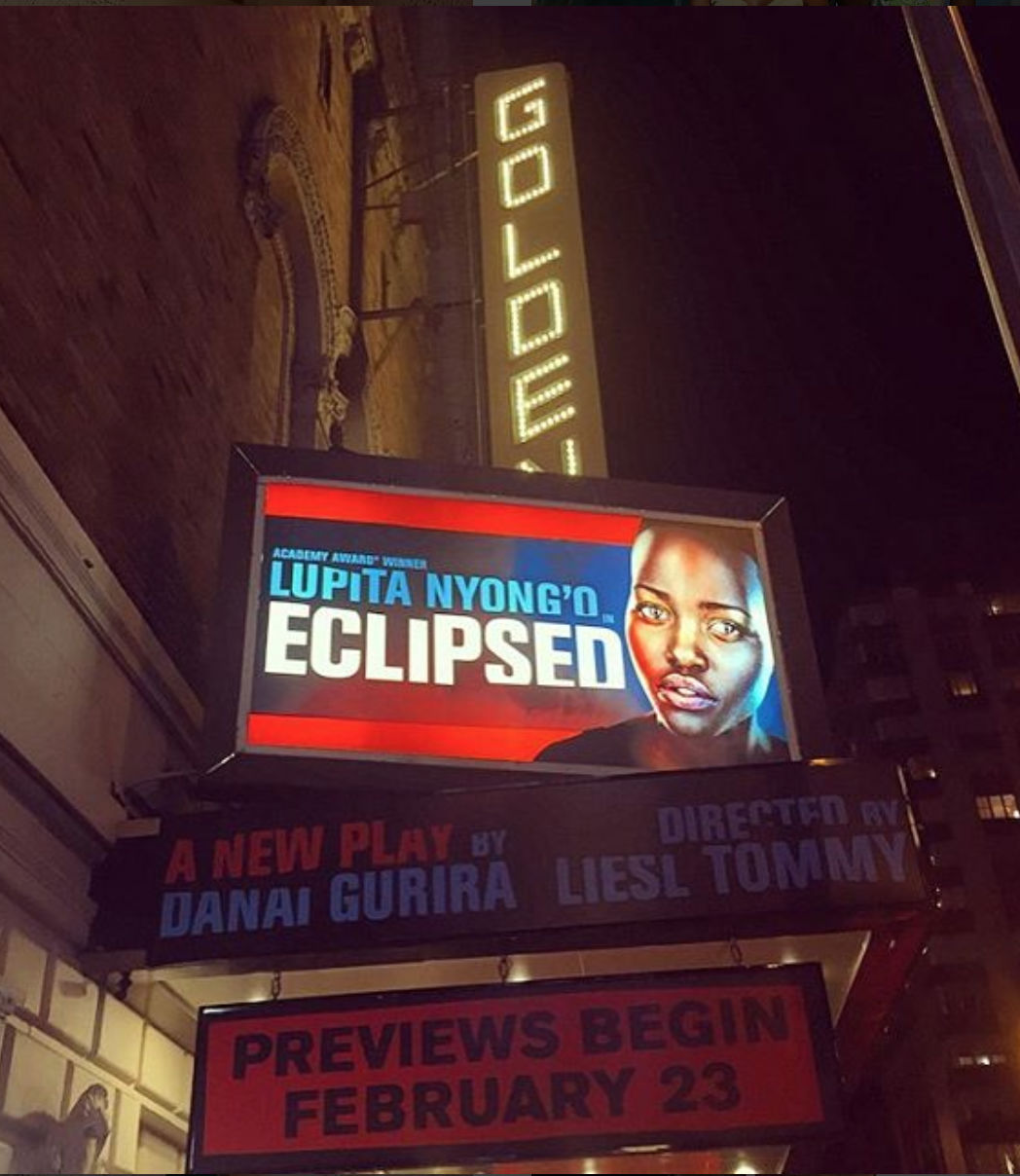
 In 2015, Oscar winning actress Lupita Nyong’o starred in playwright/actress Danai Gurira‘s 2009 play Eclipsed winning critical acclaim and solid audiences. When it was announced the play would move from Off-Broadway’s The Public Theater to Broadway’s The John Golden Theatre, director Liesl Tommy faced a challenge to maintain both the intimacy and grit of the original version in a much larger space.
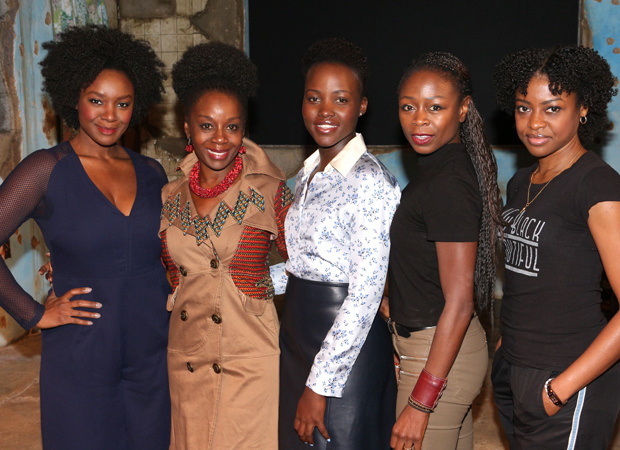
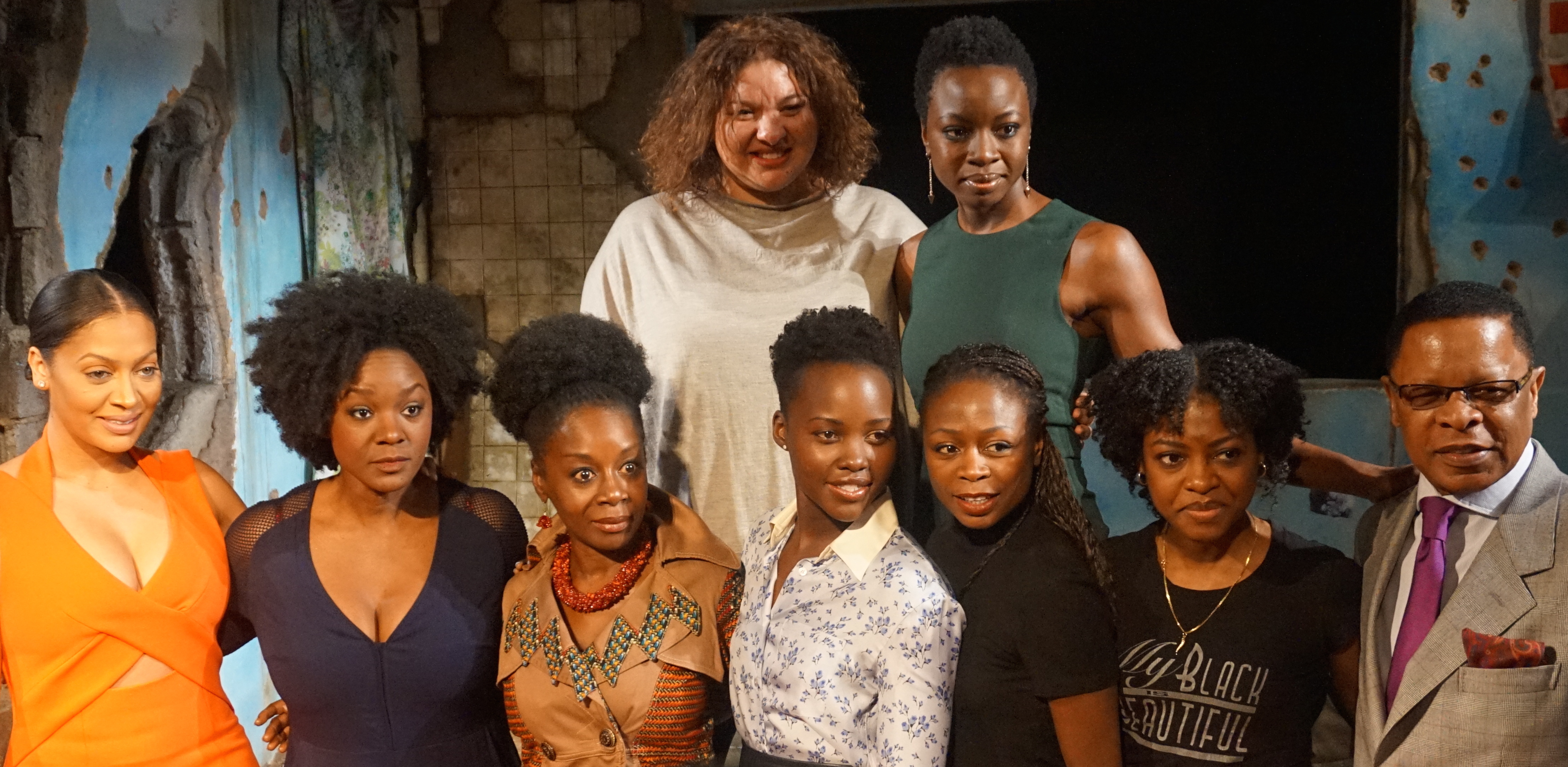
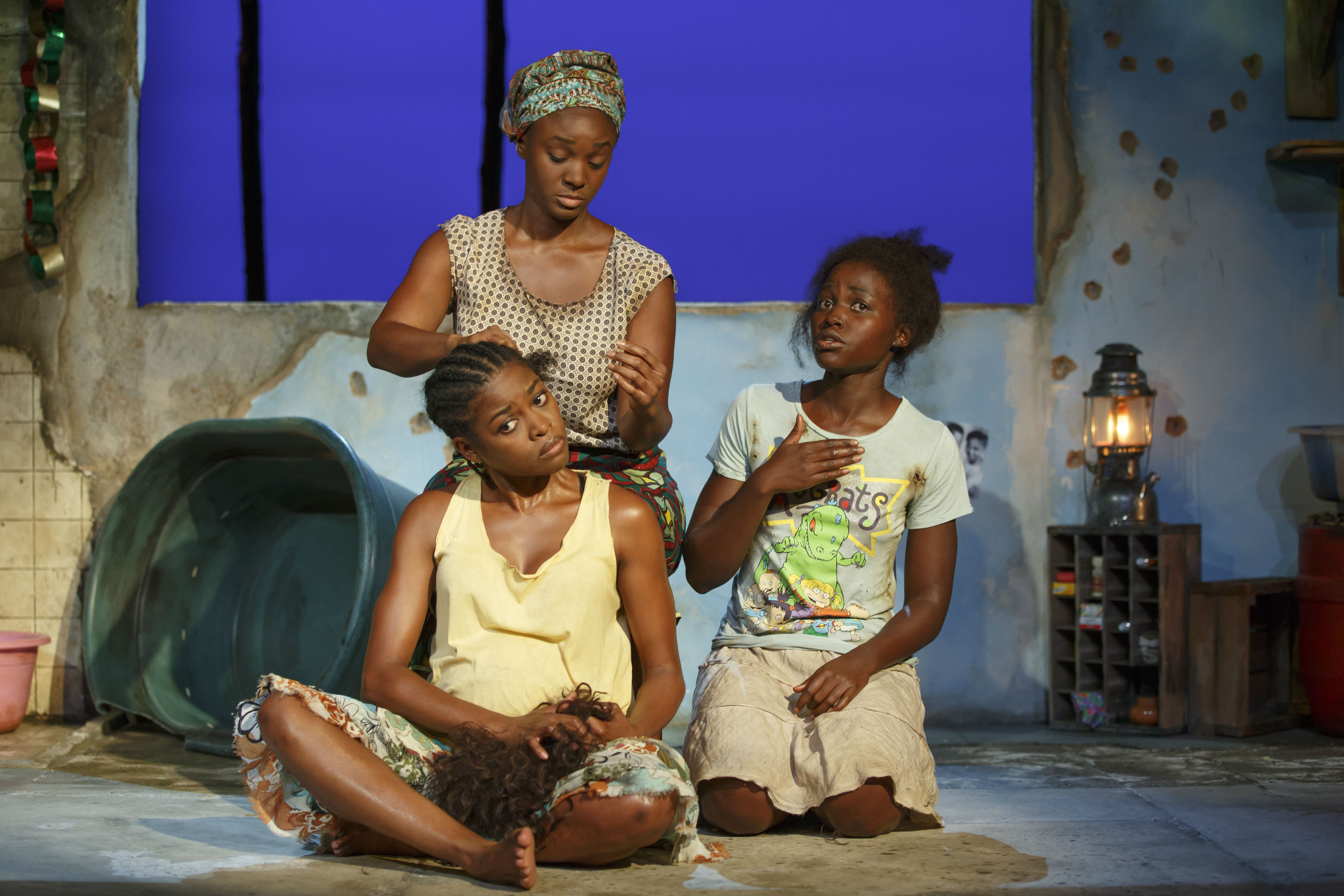
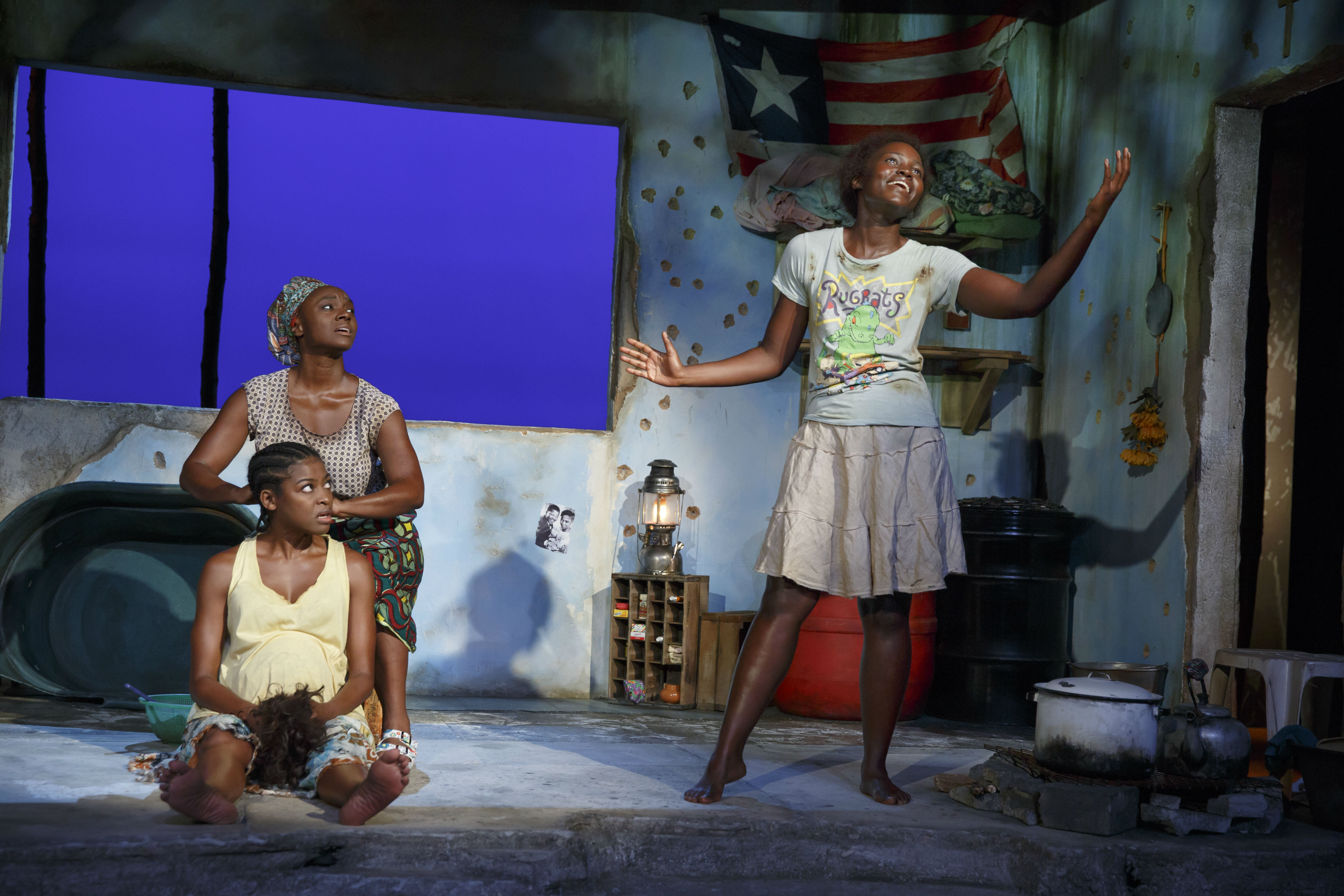
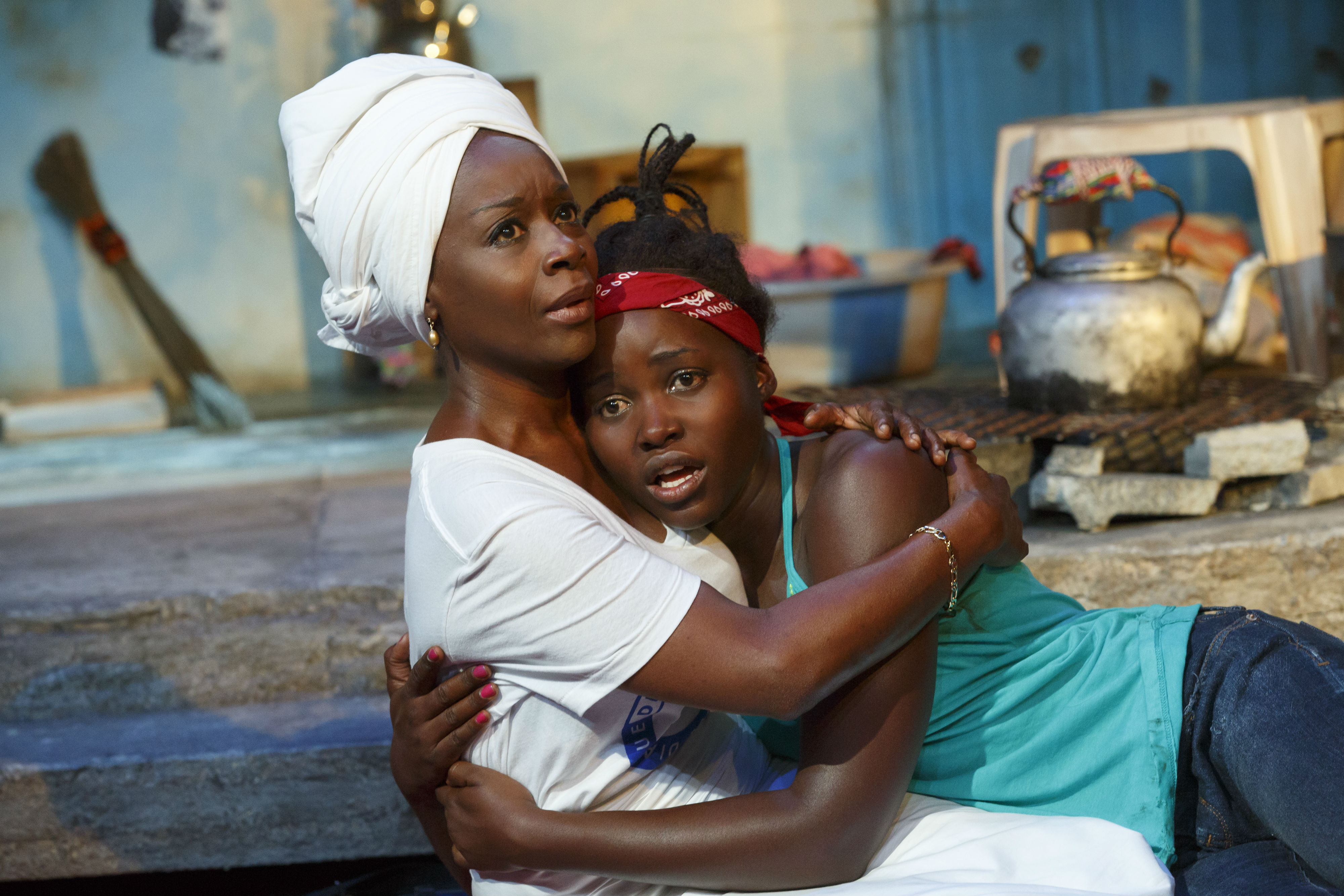
The play was inspired by a photograph Gurira had seen of female fighters and their tale of survival. Set in war-torn Liberia, it focuses on three women living as sex slaves to a rebel commander amid the chaos of the Liberian Civil War. These captive wives [played by Saycon Sengbloh, Zainab Jah, and Pascale Armand] band together to form a fragile community — until its balance is upset by the arrival of a new girl (Nyong’o).
Eclipsed unveils women who must develop their own means of survival under desperate conditions; this play offers portraits of women who test their own strength in a hostile world — not of their own making — where they must fashion their own psychic tools to cope.
Called a “revolutionary” presence on the American theatre scene, Tommy had previously directed Appropriate at the Signature Theatre Off-Broadway and Dallas Theater Center’s production of Les Misérables. In 1995, she had auditioned for a role in the Huntington Theatre Company’s production of A Raisin in the Sun. 17 years later, she directed the classic. Tommy has also helmed a version of Lynn Nottage’s Ruined (2011) and August Wilson’s Ma Rainey’s Black Bottom (2012).
Born under apartheid in Cape Town, South Africa, Tommy lived in a colored township outside of the city until she was 15 years old when her family moved to Newton, Massachusetts. Early on, she explored the classics on her dad’s bookshelf and began reading dramatic scenes from Who’s Afraid of Virginia Woolf and The Glass Menagerie. Active in high school theater, she then studied acting at a London conservatory and in a joint program at Brown University and Trinity Repertory Company. While there, Tommy slowly made the transition to directing both new plays and classics.
Her collaborator Danai has roots in Zimbabwe (formerly Rhodesia) but was born in Grinnell, Iowa; as a pre-schooler, her family returned to Harare after the country had gained independence. Afterward, she returned to the United States to study at Macalester College, graduating with a Bachelor of Arts in psychology. Her experience of growing up in Zimbabwe and then returning hereto have had a major influence on her perspective and ultimately, this production.
How did the production of Eclipsed transitioned from off Broadway to this theater? What was expected or wasn’t? What did you learn and not learn?
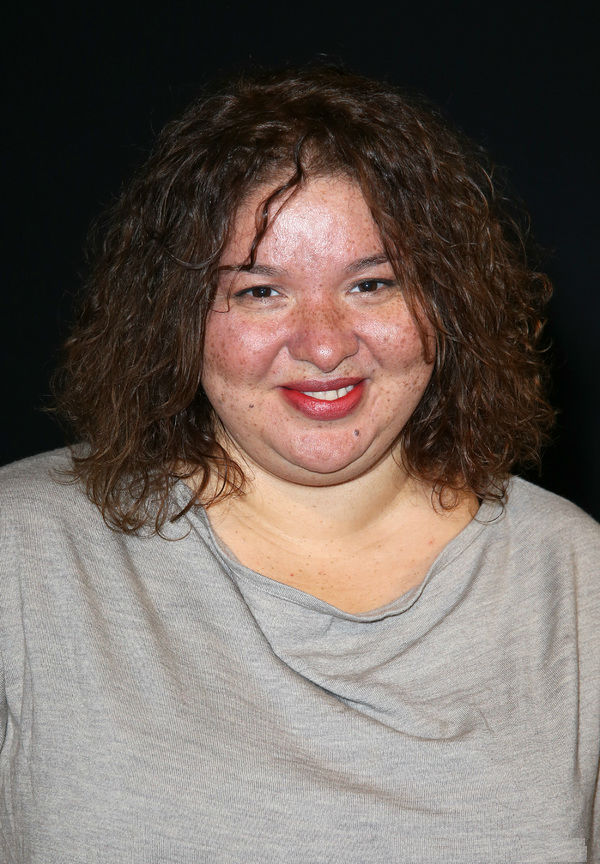
Liesl Tommy: I’m just going to figure out how to be honest without being too honest… Well obviously it is incredibly thrilling for us to be moving from The Public to Broadway, to The Golden Theatre. For a lot of us it is our Broadway debut and there’s really just no words to describe the excitement. For a show like this, a show that people are kind of viewing as the underdog because it’s not the normal Broadway fare, to land here is its just overwhelming.
But one of the things that I felt strongly about going into it, was making sure, in terms of the design, and in terms of every single thing that this Broadway audience is going to look at, no one would ever go, “Why is this show on Broadway?” This show belongs on Broadway from its sound design to the lighting to the performances. It’s going to feel like the right show for this theater.
What changed? Did you get new people who knew the theater better or…?
LT: No, I kept the actors exactly the same because I felt that the integrity of the show would be maintained that way. And I felt so strongly about those actresses and this thing that we built together; the only thing that we really had to do was figure out how to put our world of Liberia in an 800 seat theater when, before, we had it in a 150 seat theater. So it’s about keeping that intimacy, keeping the audience feeling super-connected to it, but also opening it up to [fit] the size of this Broadway house…
You and Danai have worked together before but how was it working with an essentially all women production in many ways — not just in terms of the actors…
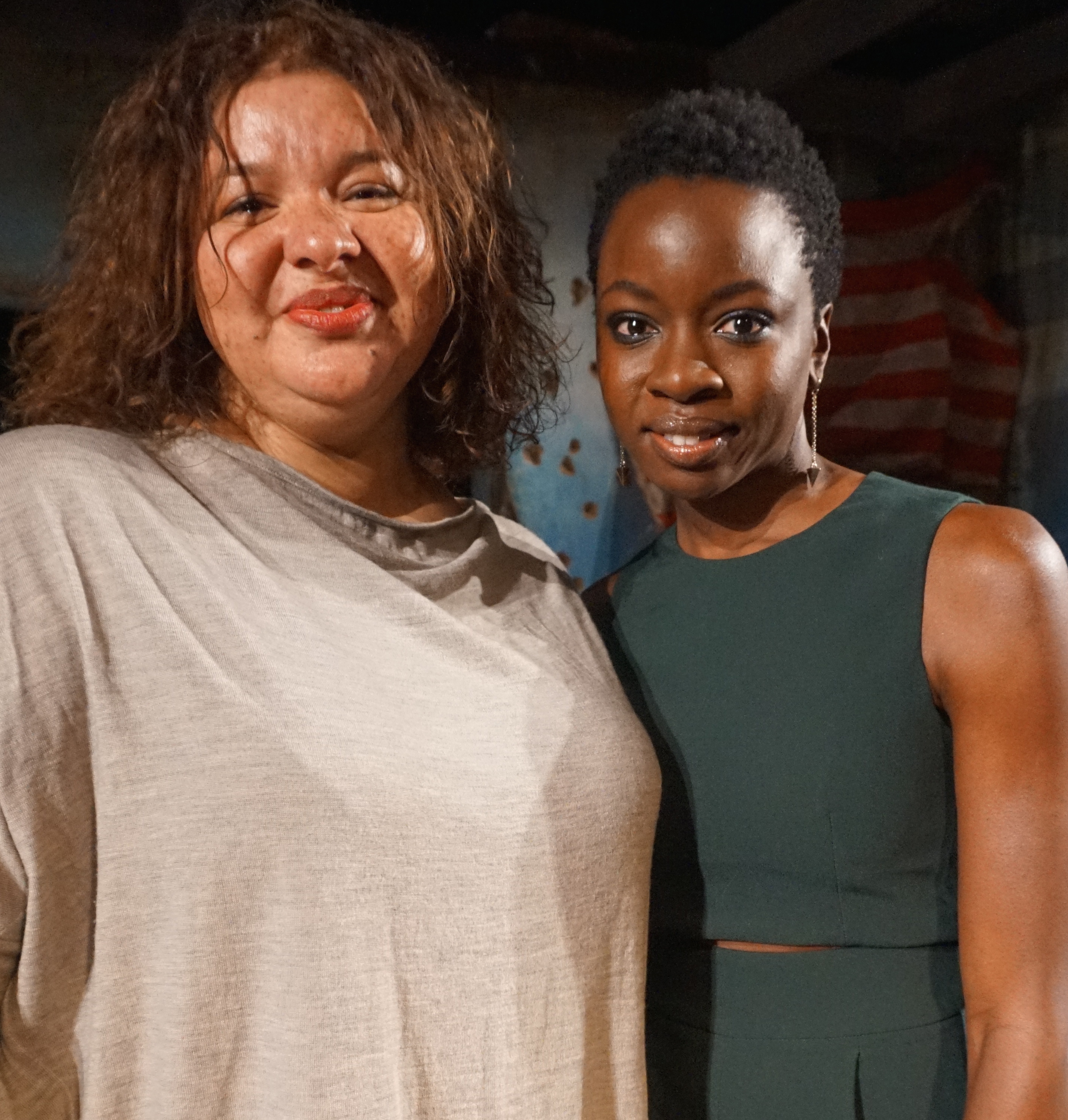
LT: Danai and I have been working on this play for about six years. We started off work shopping it and we did productions in various cities and a few years ago we really, really hoped that it would come to New York. But there just wasn’t an interest at that time in the show. And we knew that people thought of Africa as this thing that had nothing to do with American lives.
So we just said to each other, “We’re going to keep the faith and believe that it’s going to land in New York at some stage.” Now it’s surpassed our dreams. And since Danai and I are both from Southern Africa…
You’re from South Africa, I figured so with a name like Liesl…
LT: From Cape Town. Have you ever been?
No but oddly enough I have a good friend who lives in Cape Town on a street with my last name on it.
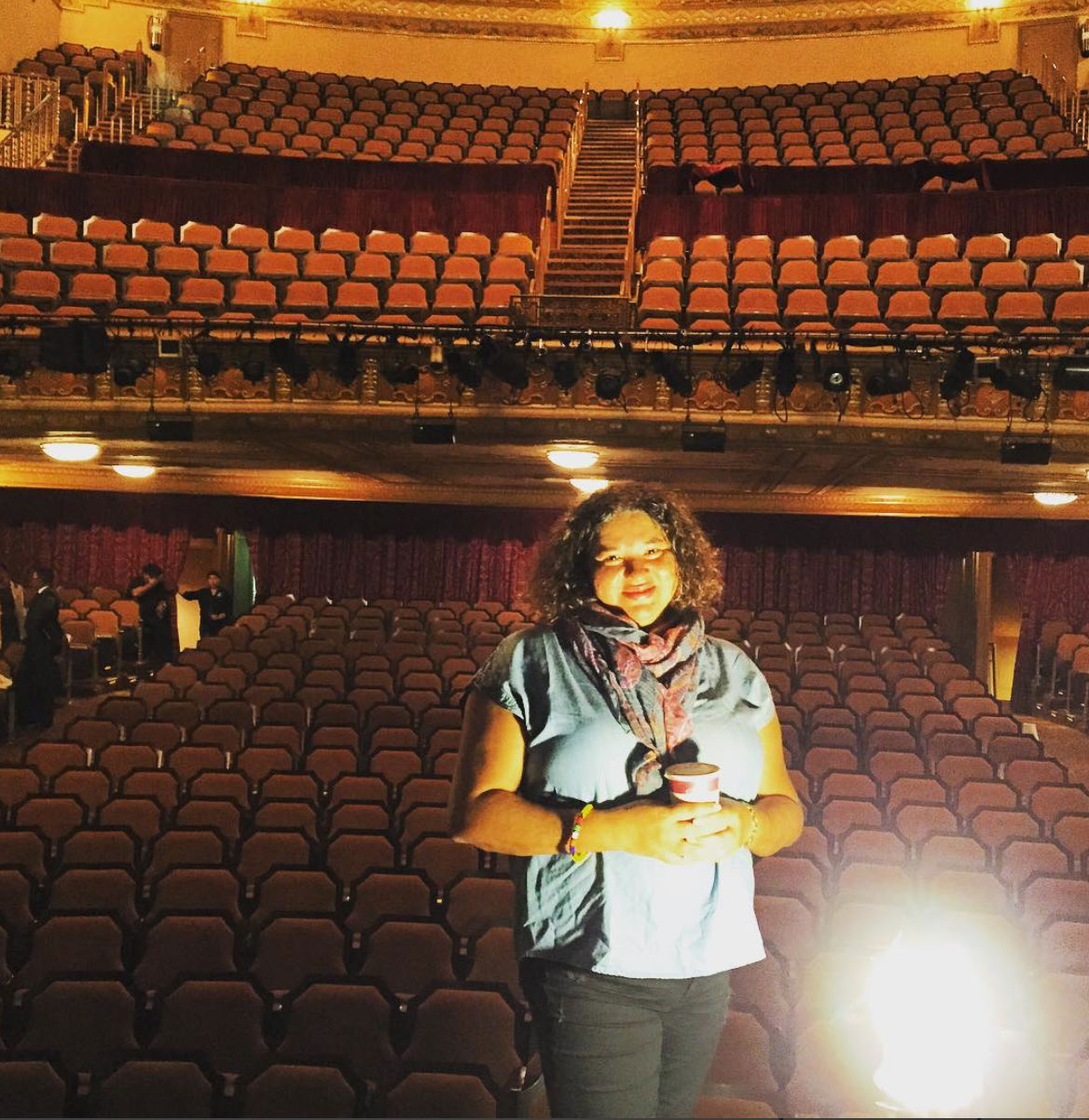
LT: Danai and I are from the same [region in Africa]… We have a short hand that has allowed us to go deeper and deeper and deeper into the development of the script and into the performances. Because at times, you just sort of know what is happening in the others’ head and that is a gift.
And just having all these women who care passionately about these stories has felt, in a way, effortless, and, in another way, heart-wrenching because they are willing to give everything to tell the stories of these women [and what they went through].
The women that you’re depicting in this play, have you spoken to some of them or met with any of them?
LT: Yes. The research that Danai has done… She went to Liberia, and spoke to enormous numbers of women there. And I’ve done my own traveling in east Africa and central Africa for various projects that are similar in theme. So I’ve encountered a lot of women who have lived through such astounding circumstances.
There must be huge challenges to get an American audience at all interested in Africa let alone such specifics as the Second Liberian Civil War. Although I think it’s changed since then…?
LT: It hasn’t actually. The response to the play has just been overwhelmingly positive. People have just said over and over again that they are so connected to the story and to the circumstances. And I think we are just in a world where it’s not as far away as we think it is anymore.
And how has the whole Oscar diversity controversy — especially since a film like Beasts of No Nation which set in Africa during a brutal civil war didn’t get any nominations even though it was a serious contender — been in the conversation among all of you?
LT: Well I feel like we have advocated for diversity in storytelling for all of us, every single one of us, from the very beginning. And we are just those kind of performers and artists…
So you know, what all of us believe is that so far Broadway has been very welcoming and that the film industry has to catch up. That’s the end of that.