
Viva Riva!An Interview with Director Djo Tunda wa Munga
By Wilson Morales
June 9, 2011
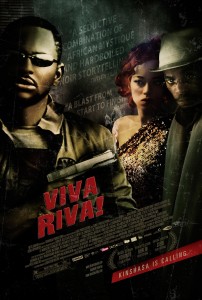
Coming out this week is ‘Viva Riva!,’ an exciting new thriller from the Democratic Republic of Congo (formerly Zaire) and winner of six of African Movie Academy Awards and the recent recipient of the 2011 MTV Movie Award for best African film.
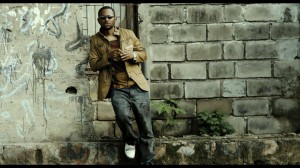
Directed by Djo Tunda wa Munga, the film tells the tale of of Riva (Patsha Bay), a small time operator who has just returned to his hometown of Kinshasa, Congo after a decade away, with a major score: a fortune in hijacked gasoline. Wads of cash in hand and out for a good time, Riva is soon entranced by beautiful nightclub denizen Nora (gorgeous Paris-based actress Manie Malone in her screen debut), the kept woman of a local gangster. Into the mix comes an Angolan crime lord Cesar (Hoji Fortuna) relentlessly seeking the return of his stolen shipment of gasoline.
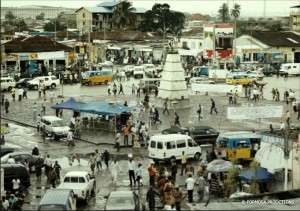
For Munga, not only does ‘Riva’ mark his film debut, but it’s also the first film to be released in theaters in North America. The 38 year-old filmmaker shot on location in Kinshasa using different languages. With no movie theaters on site, it was the first movie to be filmed in over 20 years.
In speaking with Blackfilm.com, Munga gave some insight about the film and working with the actors involved to add authenticity to the story.

One of the reasons for the film’s universal appeal is that it’s also a gangster film. Do you agree?
Djo Tunda wa Munga: Yes. It’s a film noir with the hero, the femme fatale, the money, and the villain. All of that is tied together. It’s an African film with social elements where people can also talk it about today and its reality.
Some are calling the film ‘Scarface’ Meets ‘Robin Hood.’
Djo Tunda wa Munga: That’s funny. I heard something similar like ‘Scarface’ meets ‘Reservoir Dogs!’ Either way, it’s an interesting concept.
How was filming in Congo?
Djo Tunda wa Munga: Filming in Congo was exciting, but also difficult and complicated than I expected. Because there is no film industry in the country, I brought over an international crew but also included some people from Congo as assistants. The people there were warm and receptive but also alarmed at some of the crimes that didn’t know existed in their country. At the same time, everyone cooperated with the filming and once you have them on board, shooting went smoothly.
What challenges did you face in shooting the film?
Djo Tunda wa Munga: No. We didn’t have any censorship. We weren’t trying to push the limit as far as some scenes, but we wanted to be smart about it. I wanted to bring an intelligent message and wanted to talk about the corruption. I didn’t want to make a Hollywood film where people shoot at each other. It had to be more than that. Canal Plus, the production company, gave us a lot of room to work with, without any distraction.
How many languages did you use in the film?
Djo Tunda wa Munga: We had four language. We had Lingala, which is the main language. We had French, which is the language used when talking to foreigners. We also had some Portuguese.
Most of the characters were colorful with some arc to their background. Were you cognizant to make not them be too over the top?
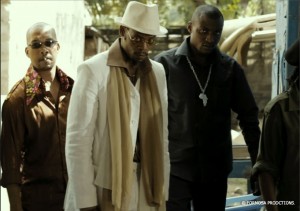
Djo Tunda wa Munga: I wanted all of the characters to have some background, like the actress who played the Commander. I had her go through some training and spend time with the Army and women soldiers. I wanted her to discuss with me what she saw and experienced so we could add that element to her character. Even Manie learned Lingala, learned to dance, and spent time with the women of Congo. For every character, from Riva to Cesar, I wanted each to bring something different so that you get a sense of their background and their motives for their actions.

Can you talk about casting Manie Malone?
Djo Tunda wa Munga: I couldn’t find the right actress from Kinshasa, and my casting director, who’s French, found her in Paris. She’s the film fatale. She didn’t say much, but her expressions tell more about her background and desires. Her look at life presented a different angle to the film.
You must be thrilled with the accolades the film has received. It helps tremendously with the marketing of the film.
Djo Tunda wa Munga: Immensely! We won the six African Movie Awards, which is the equivalent of the Oscars. Having these recognitions goes a long way especially we are prepared to take the film to the states and everywhere around the world.
What’s next?
Djo Tunda wa Munga: I’m working on a Congo-China project, which will be a thriller about Chinese communist actors coming into Kinshasa.