
Whitney Houston’s Final Film Interview for ‘Sparkle’By Elle Castro
February 12, 2012

International Pop icon Whitney Houston was found dead at the Beverly Hilton Hotel in Los Angeles on Saturday February 11, 2012. The untimely incident occurred just hours before her friend and mentor Clive Davis’s annual pre-Grammy event, where Houston was scheduled to perform. Houston was 48 years old.
Over the past year Houston dedicated her time working closely with film producer Debra Martin Chase on the Sony Screen Gems’ remake of the 1976 classic film, “Sparkle.” Not only did the singer serve as an executive producer on the project, but also stars in it and recorded material for the soundtrack. While Houston acted alongside singer Brandy in the 1997 TV adaptation of “Cinderella,” this film marks as Houston’s cinematic return since the release of “The Preacher’s Wife” (1996).
The New Jersey native made her film debut nearly twenty years ago in the 1992 drama “The Bodyguard” opposite Kevin Costner. The soundtrack for the film, on which Houston recorded, is still considered to be one of the top-selling releases of all time.
The updated rendition of “Sparkle” tells the story of three African-American sisters who band together to pursue their musical endeavors in Detroit during the late 1960s. Directed by Salim Akil, the film stars American Idol’s Jordin Sparks, Derek Luke, Omar Hardwick, Tika Sumpter, Carmen Ejogo, Mike Epps and Cee-Lo Green. Houston plays “Emma,” mother of the three sisters.

BlackFilm.com recently sat down with Houston to talk about her character and close involvement in the production of the film. We also caught up with Debra Martin Chase to discuss the differences between the two versions of the film and the overall universal appeal of the remake.
BlackFilm.com: What made you want to bring this project back to life again? What was it about “Sparkle” that excited you?
Whitney Houston: As a young girl back in the ‘70s, you know with all the Black exploitation [in films]… This was a positive reinforcement for young African-American women who are becoming young women and ultimately into full women. Anybody who wanted to pursue their dream or their desire to go and present their gifts… I just never let go of it. It just appealed to me. I would go to the matinee show every Saturday morning for like three or four months, and I just never ever let go of it.

BlackFilm.com: How does it feel to be back in front of the cameras after so many years?
Whitney Houston: Now that I’m older and more seasoned in this particular form of entertainment I have some experiences with life and things like that, and you become more seasoned and mature and it coincides with my life as a mother, cause I don’t have three daughters but I have one daughter who adds up to three for me as far as I’m concerned; I’m comfortable with it because I’m an on-hands mother and I’m a disciplinarian mother and I don’t make idle threats. Basically, it’s a good position for me to be in because I feel close to all three of them as my daughters. I’m very comfortable with it at this point.
BlackFilm.com: On the original your character “Effie” didn’t have a major vocal role, will you have more of a developed role in this rendition? Also, will you be contributing to the soundtrack for the film?
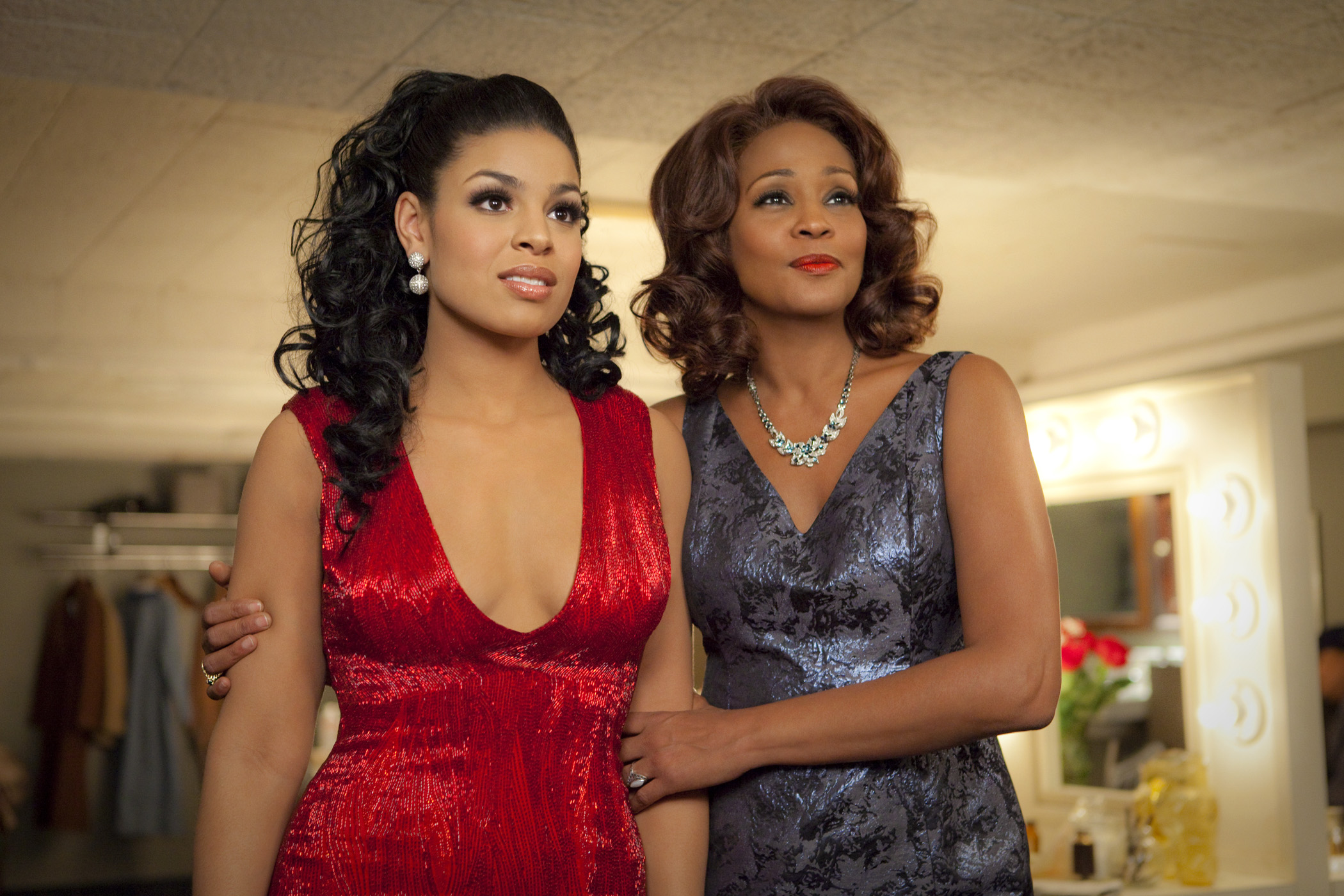 Whitney Houston: I am contributing to the soundtrack. Robert Kelly is doing the soundtrack; and Jordin [Sparks] has some great material on there. We’re compiling the material as we speak. My name isn’t ‘Effie’ in this version. I didn’t want it to be ‘Effie’ I wanted it to be another name, so I chose my name and they accepted it and we all agreed that it was good. What you will find in this version is that we have a foundation; we start in church, which was different from the original version. We had no ideas where the girls came from, if their mother could sing or anything so we kind of twisted it a little bit. We know that the girls have foundation and where they came from, and it starts off singing gospel.
Debra Martin Chase: The story in general has been updated. I mean it’s 1968 Detroit, I mean we’re true to the period but we’ve used some modern and timeless themes. Her character is much more complex; much more multi-dimensional… I mean ‘Effie’ was working for the white folks, I mean her character has her own history and it has evolved to a certain point in her life; and her relationship with her daughters have been influenced by her life experiences—good and bad.
BlackFilm.com: Hollywood seems to be taking on a lot of remakes over the last couple of years, and this is the first African American type cast movie. Do you think this will open the door for more remakes of our classic cinema that we had in the 60s and 70s? Also, I see you said that with the original you went back to the movies weekend after weekend to see it, do you see this version having the same affect on this younger generation?
Whitney Houston: The glam part of this movie is that you will be able to go with your children, mothers and fathers will be able to go to the movies with your children to see this movie. It is a family movie. It’s inspiring; it’s encouraging… you will see the ups and downs. We’re not trying to set precedence’s for other Black movies, we just want to make it available for families. That’s our goal—families can go back to the movies again together.
Debra Martin Chase: We certainly hope that this opens the doors for more great… I mean this is a huge little movie. We’ve got great drama, great characters. Ruth Carter is killing it with the wardrobe. Salim [Akil] has great vision and we’re going for it. What ‘s unfair for Black movies is that each one has such huge burdens and we feel that responsibility. We feel that is we don’t live up to the hype, and we don’t perform its going to be much harder for other movies to come behind us. But we’re embracing it. Everybody is giving 200%.

BlackFilm.com: Why was it important to film in Detroit and not choose another city as the backdrop?
Debra Martin Chase: The original movie was actually set in the 1950s and so we wanted to keep it period because there’s an innocence to the time’s pass, and when you think about what was the most important period for Black music you think about the ‘60s and you think about Motown. So this was creatively the choice that was the most exciting. It was one of those decisions where the creative and the business side came together beautifully.
BlackFilm.com: Do you feel pressure to do well with this movie, since this is like your comeback?
Whitney Houston: I don’t think of it as a comeback. I don’t think of it as a pressure. I think of it as a gift God gave me to contribute to a cast of people who are working as hard — if not harder — than I… I have three jobs; I am an executive producer, soundtrack and actress. It’s in my family, bloodline. I can’t help it. It is something that God just said ‘this is what you do.’ It’s in me… It’s not a comeback. It’s innate. It’s natural.
BlackFilm.com: How are you balancing everything, being here in Detroit, and family?
Whitney Houston: I have priorities. Maintain my daughter is my first. She also has it in her blood too. So now she’s doing her acting classes, and her vocal coaching and I keep her busy with that and she’s pretty happy. I have to make sure I’m there for here, well she’s 18 now growing up to be a woman. I also have a son now, my godson and he’s 22 and he’s a well-balanced young man. That I take care of first, and now I’m comfortable with keeping my focus on what I have to do here. It’s like pre-production, you never know what happens in between but you just be ready for whatever it brings and you try to balance it and make the proper decisions, and be prayerful about it. You got to be sure that you’re confirmed with what that inner spirit says and you just do the best that you can.
BlackFilm.com: Can you talk about working with R. Kelly on the soundtrack in developing what’s going to be the material? What the songs were of that era? What do you bring out of each other when you get in the studio?
 Whitney Houston: I call him Robert; let’s get that straight [laughing]. He wrote a song for me about 12 or 13 years ago that he’s been trying to get to me for years, which was called ‘I Look To You.’ I finally got the song. I heard it back then, and we kind of passed on it but he still kept on it. The timing was correct for that particular song in my life at the time. I traveled up and down that Chicago highway a few times to his house. He is a kind of musician the kind of person whom you can stand up and say ‘This is how I feel,’ and he’ll write a song about it in five minutes. He’s that incredible. I have to give him props where props are due. And if anybody knows anything about anointing, he has anointing on him that’s powerful. I’ve witnessed it myself. And we’ve had our share of words… he’s like a brother to me. We talk about life and things that happen in life, and our triumphs and our survival of it. That makes a good song for anybody to sing or anybody to write. I’m extremely proud and I’m very grateful that he’s a part of this project.
BlackFilm.com: Looking back on the first time that you experienced Sparkle, I’m sure that there were themes that resonated with you. Can you describe what those were? Also with the remake, is there anything theme that sticks with you now?
 Whitney Houston: Not to say that it wouldn’t have been a huge picture with Aaliyah, but it now has a real international flavor. It’s crossing boundaries and barriers. It is presenting African-Americans in a beautiful light. Everybody on camera is just beautiful, and we’re smart and we’re educated and we’re dealing with our time of civil unrest. It was in the year that Dr. King was assassinated and we have drama– all of that feeling was in there and raising children at that time as a single parent at that time must have been…Phew, truly it has it’s tasks. However, that’s why we put church in it, because it’s a foundation. In my life I know — and anybody who was raised in the church or the gospel or the Word will understand what I’m talking about — that’s exciting to add new stuff in, that’s what makes international… everybody be able to feel it. The songs, the music and the joy is just spectacular.

Debra Martin Chase: When we first talked about remaking ‘Sparkle’ years ago we both relayed it to young girls of color finding their dreams and pursuing their dreams. Unfortunately, here we are 40 years later and how many movies are there about young women of color pursuing their dreams. So in that sense, it’s a timeless story, and hopefully it will capture and have the same effect on new audiences the way it did on us many years ago. This is very much a movie about a Black family, but the themes are for everybody. The hope is that with the cast of such as Jordin [Sparks], Whitney and Derek Luke who are perceived to be great actors who happen to be people of color but that the movie and obviously music have a universal appeal. The hope is that the movie will transcend and appeal to everybody.
BlackFilm.com: Could you talk about the tone of the film? Have there been any compromises that you’ve had to make with the studio? Or any changes that they’ve suggested that has maybe changes the process from its inception?
Debra Martin Chase: It’s going to be PG-13. We want this to be very much a family movie, but there are issues of drug abuse—and we dealt with them in a classy manner so that we’re not throwing them in your face.
Whitney Houston: We’re not exploiting anything, and we’re not telling people what to do or how to do. Where just trying to give an example of what love can be and how strong it can be.
“Sparkle” is set to hit theaters on August 17 2012.
Here’s an interview she did with Entertainment Tonight! as well.