
Will Gluck Talks About Directing ‘Annie’Posted by Wilson Morales
December 17, 2014

Coming out this week is the musical film Annie, which stars Quvenzhané Wallis, Cameron Diaz, Jamie Foxx, Rose Byrne, Adewale Akinnuoye-Agbaje, David Zayas, Dorian Missick, Stephanie Kurtzuba and Bobby Cannavale.
Directed by Will Gluck, the producers of the film include James Lassiter, Will Smith and Caleb Smith.
Academy Award nominee Quvenzhané Wallis (Beasts of the Southern Wild) stars as Annie, a young, happy foster kid who’s also tough enough to make her way on the streets of New York in 2014.
Originally left by her parents as a baby with the promise that they’d be back for her someday, it’s been a hard knock life ever since with her mean foster mom Miss Hannigan (Cameron Diaz). But everything’s about to change when the hard-nosed tycoon and New York mayoral candidate Will Stacks (Jamie Foxx) – advised by his brilliant VP, Grace (Rose Byrne) and his shrewd and scheming campaign advisor, Guy (Bobby Cannavale) – makes a thinly-veiled campaign move and takes her in. Stacks believes he’s her guardian angel, but Annie’s self-assured nature and bright, sun-will-come-out-tomorrow outlook on life just might mean it’s the other way around.

Blackfilm.com recently with Gluck, who previously directed “Friends With Benefits,” about working on a famed musical and casting the leads.
What was the most challenging thing putting this together? Writing and adapting a story that a lot of people know? Or the music?
Will Gluck: I think the most challenging thing was making sure all the elements of the original ‘Annie’ that we all love stay in the movie. Cause we change it so much that I didn’t want to run away from what we all loved about ‘Annie’. So we had to keep the bones of ‘Annie’. The story about optimism and hope and inspiration and finding a family and finding your place in life. And, also, with the music. Because the bones of the music that Charles Strouse and Martin Charnin wrote were so good, too. Making sure that even thought we wanted to change it a bit and add stuff, we didn’t lose the magic of that. So it’s a kind of a balancing act about keeping what was fantastic about it and then changing it a little bit to make it our own.
Did you always know you wanted to change it? As opposed to, ‘Let me talk to these guys and let me just tell them I’m going to adapt it so that today’s audience gets it?’

Gluck: When I came onboard I said, ‘The only way I would want to do this movie, you don’t have to choose me to do this, is if I can do it this way.’ And this is the only what that I could…me as a filmmaker, could connect to this story. Not that it’s right or wrong, it’s just the only way I would want to do it.
How much fun was it, or was it challenging shooting in New York?
Gluck: Well, I’m from New York. I’ve shot once before here for a shorter period of time. I love shooting in New York. I love the energy of New York. I love shooting parts of New York that you don’t usually see in movies. Most of the times when you see New York movies they’re 30 Rock. They’re the Brooklyn Bridge. They’re the Empire State Building. Growing up in New York you never go to those places unless your friends are in town. So I like shooting the New York that I know I grew up in. And I love the electricity of shooting in the city that you find so many things on camera that you couldn’t write, you couldn’t conceive of, you get to a location and something crazy’s there. ‘Well let’s shoot it over here. This is much cooler.’ And that’s the electricity that you don’t find in a sound stage, you don’t find in Toronto for New York. You only find it here.
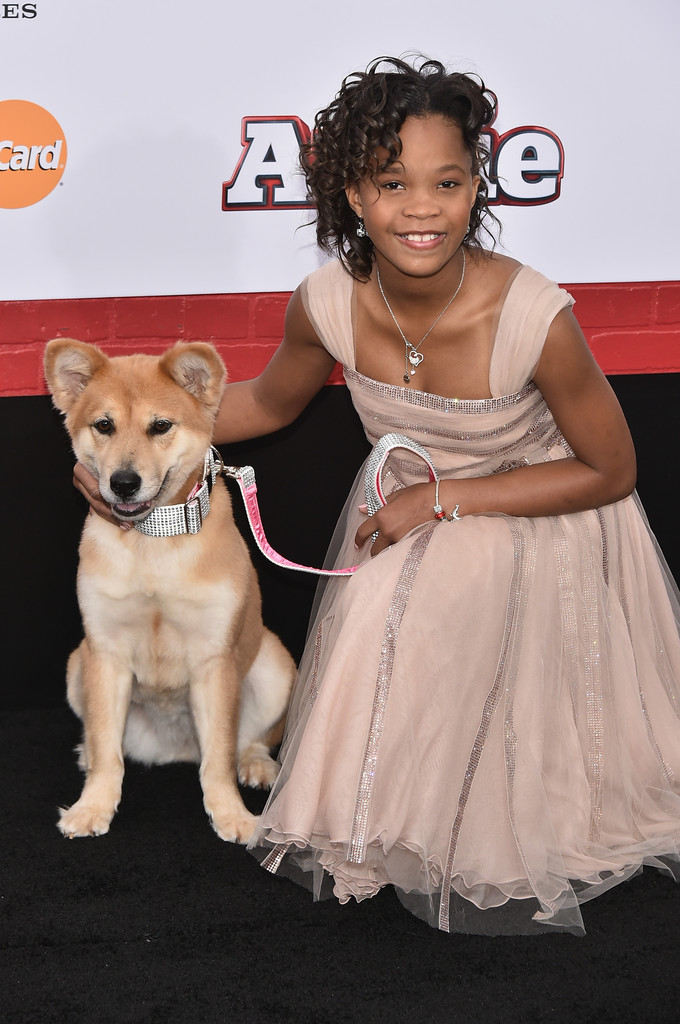
Then there’s your lead, Quvenzhane. Can you talk about getting her to be transformed into Annie?
Gluck: Yes. I mean ‘Beasts of the Southern Wild’ she did literally half her life ago, which was interesting if you think about it that way. The good thing about Quvenzhane and the reason why I decided to cast her is because she’s a real kid and she can act and sing and dance. You find all these actors, the kids that can sing to the back of the house but they kind of lose their real kidness. I love that Quvenzhane’s a real kid. So when people ask the question, ‘Was their weight on her shoulders playing Annie?’ She was ten. She didn’t know what weight on her shoulders were. I mean how would she know. She was a ten year old. She was playing. She was having fun with the camera and Jamie and Bobby and Rose and me. People were asking her all the time, ‘What did it feel like for you to be taking on this iconic character?’ And I always ask that question. My daughter’s the same age as Quvenzhane. If I asked her, ‘What does it feel like taking on the responsibility of the oldest daughter?’ She would look at me and say, ‘What are you talking about? I’m just a kid.’ And that appears on the screen that she’s just a kid, which I love about her.
 I’m assuming she wasn’t aware of ‘Annie’ to a full extent.
Gluck: She was aware of ‘Annie’ the same way I think a nine year old, at that moment, was. I think she saw it a couple times. She heard that we were looking for kids. We were auditioning kids. Then she saw it a hundred times. Then she came in. I think she was aware of it as much as most kids were.
What about Jamie? What did you want him to bring to this role that others remember that character?

Gluck: First of all, I knew Jamie could sing and dance. There’s no question about that. Jamie has a tough role because he pretty much has to be the biggest transformation. He has to be a real jerk for the first half of the movie; and he has to be a real jerk to a kid, which is hard. It takes a special actor to become a real jerk to a kid and not you wanting to hate him. He does that really well in the beginning. Then when he has a transformation you and it’s hard for actors to be a real jerk and then twenty minutes later in the movie be soft. So Jamie had that great way of slowly letting this girl into her heart and still not losing his swag the whole time. You can’t soften him up to be like a Pillsbury Dough Boy at the end because he still is this ruthless billionaire. He played that part so well. And, above all, he’s just funny. He is funny. He’s funny when he’s a jerk. He’s funny when he’s sweet. He’s funny when he’s everywhere.
This film is a first for you compared to the other films you have done.
Gluck: I always, for some reason, every time I make a movie, everyone’s expectations are low every time. And every time they come out of the movie they’re like, ‘Wow, it’s actually pretty good.’ So I tend to take and for some reason, and it’s not by design, I tend to take on projects that have an expectation that people think is going to be different than they really are. Which I like to do. And to that point, I like casting people that you don’t expect them to be. From all my movies I’ve cast actors, Patricia Clarkson, Stanley Tucci, all these people. Thomas Haden Church. You don’t expect them to do this and then they do that. I like seeing something different on the screen. I think we see so much of the same things over and over again. Which is why I tend to do different movies. I did a high school movie. I did an R-rated sex comedy. I did this musical. I like doing different things. I don’t want to be the guy that where, Hollywood, like life, if you’re good at something, they just want you to keep doing it. I really want to keep trying stuff until they don’t let me try anymore.
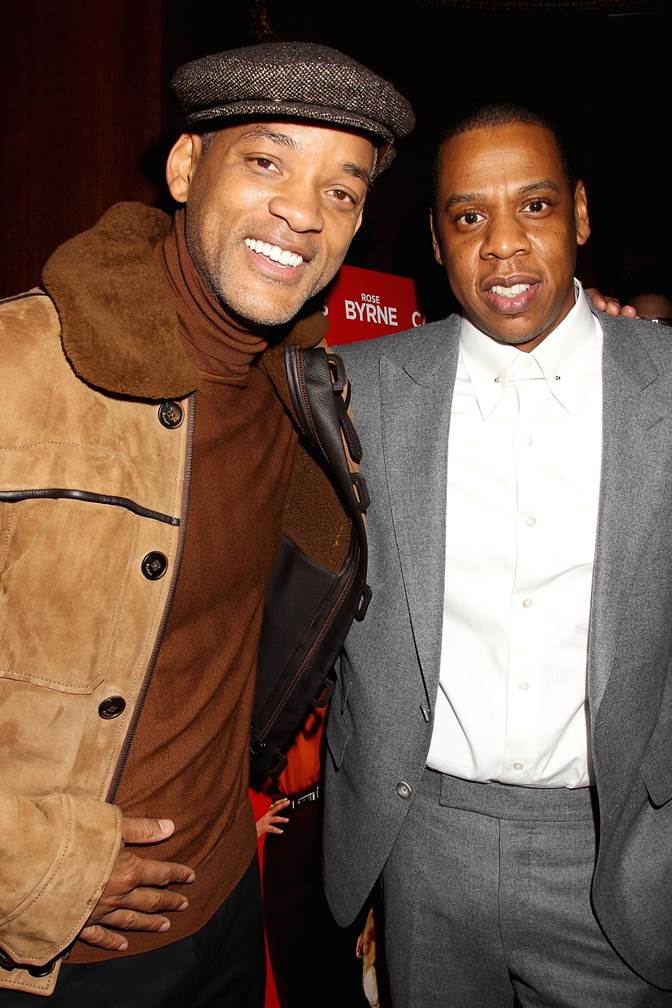
A lot of names like Sia and Jay-Z are in here. How much involvement did you have with them in bringing on music as well as adapting or reinventing some of the music we already know about?
Gluck: I was heavily involved in everything. We got Sia because of Jay-Z’s involvement. He basically opened the doors. And Will’s involvement, opened the doors for the music business for us. That was the greatest key he could ever give us. So I met a lot of songwriters. Met Sia. Instantly fell in love with each other. I convinced her to write one song for the movie. The first song she wrote was ‘This City’s Yours’, that Jamie Foxx sings. Then I said, ‘This is too good. You gotta do some more.’ Then I convinced her to do another song, and I wrote all the new songs. I wrote what the song should be, the basic idea of it, the feeling of it. Then I said, ‘Please write another song.’ She did. And I said, ‘That’s enough. You have to do every single song in the movie.’ And she goes, ‘I don’t wanna do this,’ along with Greg Kurstin, who’s a big pop producer who’s never done movies before, as well. ‘You have to do all the music for the movie.’ I convinced them both. Because of that, all three of us, did everything for the whole movie, which is why I feel there’s a kind of a wholeness to the movie. It doesn’t sound all chip choppy. It’s all kind of together. That’s because of Sia and Greg Kurstin and how the sound was all theirs. And Greg Kurstin, if you look at his credits, he’s like a gigantic music producer and songwriter. He composed the music. You don’t usually get that. So, I love those guys.

Was there one particular song from the stage production that you had to say to yourself, ‘This is going to stay in. This is the one everybody knows. We can’t change it. We can’t modify it. We gotta keep it in there?’
Gluck: Yeah. I did a lot of that from the gut. I mean it’s ‘Hard Knock’. It’s ‘Tomorrow’. But the one song that, to me, signals to the audience that, ‘This is your “Annie”. Don’t worry about it. It’s your “Annie”.’ Is at the very beginning when she sings ‘Maybe’. ‘Maybe’ in the foster kids room. We didn’t change it that much. Greg did change the beat a little bit and a little bit of the melody. But the lyrics are the same. The song is the same. That’s the moment in the theatre when I see all the parents who have seen ‘Annie’ growing up, they take a deep sigh of relief and, ‘Oh, this is “Annie”. It’s “Annie”. It’s just a little bit different. But this is our “Annie”.’ That’s the touchstone in the movie. Then we go onto ‘Hard Knock’ and all the other stuff. But ‘Maybe’ is the one that signals, it’s ‘Annie’.
What did you get out of this when you finished production? Once you saw it, once you saw the final edit, as a director, this is new for you. What did you get out of this walking away?
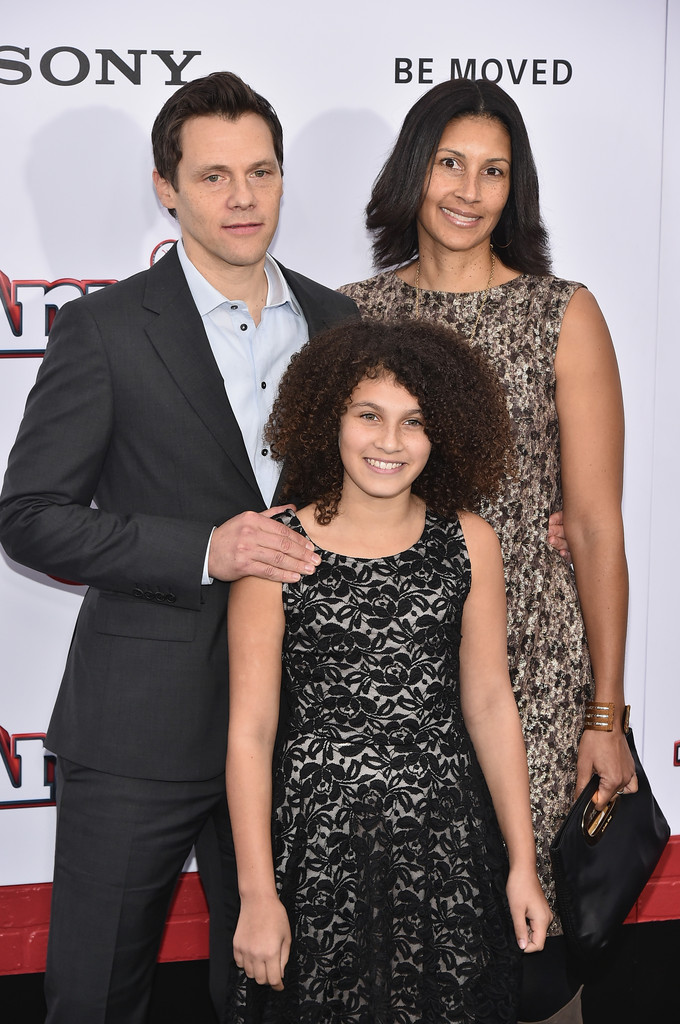
Gluck: The reason why I made this movie, to answer your earlier question, is because my daughters. My daughter is the exact age of Annie. I always wanted to do a movie, not for my kids, because I think you should be home for your kids. I want to do a movie with my kids. And by that I mean every step of the way my two daughters, they helped me read the script, they were on set the whole time, they helped with the music, ‘We like that’. And more importantly they brought their friends and they watched so many edits of it. They were in the editing room. When I say I do it with my kids, there’s no more honest a critic than your ten year old daughter and her friends. If they say something isn’t good, if they say something is good, it’s real. They don’t care what you think about them. That is the most honest critique I could have. So as I walk away from this movie, I feel proud that we made a movie that’s inspirational, it’s optimistic. You cannot leave, no matter how grumpy a person you are, you cannot leave this theatre without having fun and feeling good about yourself. That will carry on.
Which of the scenes were you looking more forward to shooting?

Gluck: I love Bobby Cannavale. I love Rose Byrne. I love Jamie Foxx. I love the scenes when the adults were doing their thing because that was my time to kind of go a little more into my comfort zone with the comedy and the thing. Bobby Cannavale, Rose Byrne, and Jamie Foxx are incredible actors. They’re light on their feet. They can adapt. I love those scenes. Then when you added Quvenzhane into the mix it was fun seeing the adults deal with the kids. Any time we had the adults and then Quvenzhane would come in, I loved those scenes.
What do you want to do next?
Gluck: Nothing. I don’t want to do something the same. The two things I’m developing right now are action movies with comedy in them. But they’re more action than comedy. And they’re about real things. That’s what I want to do next. I mean I always think that if you see me directing like a teen romantic comedy again that means I failed a couple times.

No comedy? Or do you say to yourself like, ‘I have to be smiling?’
Gluck: I always put some comedy in stuff, but I want to do more dramatic things, with comedy. I think you can do dramatic stuff with comedy, you know. Some of the best dramatic movies have elements of comedy in them. So my next thing is going to be dramatic with elements of comedy.
What are you hoping the parents and the kids take from seeing ‘Annie?’
Gluck: I want to two things. I want them to feel happy and feel great about it. Especially around the Christmas season. I want them to realize two things. No matter what you do…what you think how…no matter what position you are in life, it could get better if you want it to get better. That’s not socioeconomic. I’m talking about just where you are in life. And, more importantly, your family is probably the people who you came to the movie with. Might not necessarily be your parents. Might be your friends. Might be your grandparents. Might be your aunts. Could be your parents. But that’s who your family is.