Zookeeper Press Conferenceby Brad Balfour
July 6, 2011
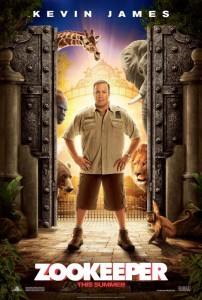
The press conference for The Zookeeper was something like an incredible simulation of the basic concept of this film — that of zoo animals (a monkey, giraffe, a lion couple, elephant, two bears, a wolf pack and few others) — who gather around gabbing, giving love advice to their beloved zookeeper, Griffin Keyes (Kevin James). In this case, key cast members, the humans in this romantic triangle — James, Leslie Bibb and Rosario Dawson — plus director Frank Coraci and producer Todd Garner provided a gab fest for a pack of journos who kicked them off with a few questions.
Then this crew on stage ran with it — like the animals making suggestions to a lovelorn Griffin who had been so dejected when he was mercilessly dumped by Stephanie (Leslie Bibb) years ago, that when he sees he again (she will be at his brother’s upcoming wedding) he is a mess. The animals reveal that they can talk and start giving him tips so he can recover. The only problem is they are animals and don’t approach romance like humans; for example, if a grimace or tongue lick doesn’t work, then throw poop, as the monkey recommends.
As we see in the film, humans have to learn what they really feel on their own, and though James’ character does win Steph momentarily, once he leaves the zoo he realizes his heart is with the animals — and zoo vet Kate, played by Rosario Dawson.
Known for some pretty physical comedy, James joins forces with producer Adam Sandler and Todd Garner to make a film that has gross moments but are softened enough to be appealing to both adults and kids. A former stand-up comic, the 46-year-old New York native started doing television after appearing on Everybody Love Raymond until he was given his own series, The King of Queens. Once that was canceled he has gone to feature films including the hit, Paul Blart: Mall Cop.
This film is rich in physical comedy– so how was it to pull off the physical stuff?
Kevin James: I’ve always loved physical comedy and putting something physical in all movies that I do. I love Jackie Gleeson; anybody who was kind of big and can move I like a lot.
But these guys were great with the physical comedy as well, and I was surprised and a little pissed off, I’ve got to be honest. When you bring in such great actresses you know you’re getting that, but when they’re funnier than you that annoys you a little.
Leslie Bibb: And agile.
KJ: Yes, very agile. Bendy…
LB: That was a job requirement.
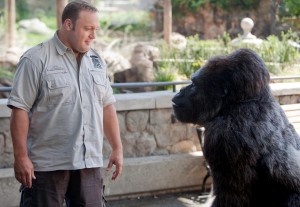
In the production notes it explained that the visual effects coordinator wanted to push the gorilla technology envelope. In what ways does pushing this envelope impact on the acting and directing in that environment?
Frank Coraci: We tried to [metamorphose] a human into a gorilla and that didn’t work. We just wanted to have a gorilla that looked real, since all the other animals in the movie were real.
We looked at all the gorillas that had been built for prior movies and wanted to have control over making Bernie’s personality and how he looked. We decided to create a new gorilla for our movie with the latest technology so he looked real.
It was fun because we got to create a personality for Bernie from scratch. We were talking about the character and first were going for an old, crabby guy, then we said no, he had to be sweeter. It was just fun to really create a character from scratch and did whatever we wanted.
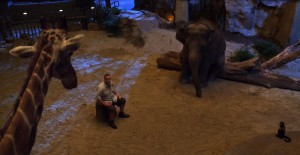
KJ: It was fine actually. We had two guys actually in the suit because one guy’s legs were really long. He was probably the better actor I would say, but we couldn’t use him any time on the move because he was like seven feet nine I think, and gorillas don’t have long legs, apparently. I didn’t know this; I thought everything was equal.
We had to switch them up, but they were great. Comedically, they were awesome acting together with me and their movements and stuff like that, and it was great to play off of them.
Todd Garner: What cracked us up was the puppeteers would act off of Kevin so you’d get different performances every time off of the gorilla, which sounds crazy. But it was fun to see them being able to improv with Kevin based on his acting performance.
KJ: And the movements and the face of this gorilla, it’s so insane what they can do with him. It’s literally like I’ve gotten more emotion [from him] rather than with some other actors I’ve worked with.
Was it easier to work with the animatronic gorilla than it was with the little dots that were supposed to be the other animals?
KJ: At least there’s something there where it’s not just a tennis ball or something, so that was good.
FC: You couldn’t sit next to a live gorilla, so part of the choice was an actor he could sit across and respond to.
What about the voices from all those stars? Did you get to hear the voices in your head because those voices really helped pull off the talking animals bit.
LB: They’re amazing, right?
I hope you heard them while you were interacting with them because they were hilarious.
KJ: Absolutely. And the benefit of that also is we also knew who we were getting, and then once we shot the animals we knew. That’s why we wanted the animals to be as natural as possible, so that if they did a funny movement we could add the dialog later, which was great.
But we knew pretty early on who we had, and it was based on I guess a good script. They enjoyed the script and they felt like it was going to be a good movie and they were excited to jump on board. It makes it so much better, as in writing for any character, when you know who’s playing that part.
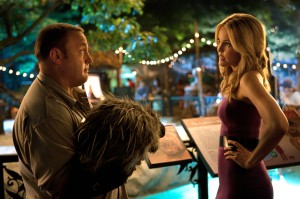
You could at least figure out the animals, but what about you two — as a romantic construct? When did you finally realize you were going to connect?
KJ: In the movie or in real life? I haven’t left my family yet, so please keep that on the QT. It’s one of those things that I think it’s through the journey of the movie that you realize you know what, I’m around the person that I need to be with, and she’s making me a better person and not changing me.
LB: Wait a second.
KJ: A little bit, just a little bit.
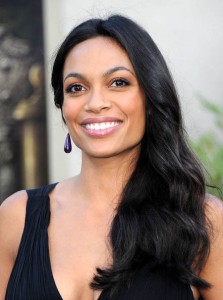
Rosario, your thoughts on that?
RD: It was such a wonderful process playing the wing woman. And going back to a little bit earlier, also saying we had the table read and we had everything already recorded as well from all the voices of everyone.
So they had gotten everyone into the booths to record them so that when we read at the table, which I just expected was just going to be thrown over, we got to hear Cher and Sylvester [Stallone] from the very beginning, so that once we went into the movie even though they were there you had a sense of the personality of what we were actually creating.
It was funny and great and strong. There was so much going into it, and then as the process was sort of unveiling it was wonderful to find these moments that we always kept very sincere and really sweet. We never did some overt sexual or sensual thing where we kind of looked at each other longingly and then went, “No, but we’re on a different path.”
We never made it like that because I don’t think real life is like that. Most times when you actually have that moment that’s when you make a change, so to put it in any earlier in the film would be like they were denying themselves something, and I really think that’s not what it was.
It was just all of us enjoying each other and slowly coming to a realization that once that happened you could make big, bold moves like climbing a bridge.
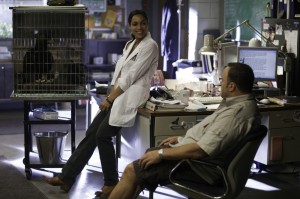
KJ: And it’s earned.
RD: It’s earned. You get there. It’s kind of amazing.
What were your thoughts in writing the idea of taking directions from an animal?
KJ: We thought animals act on complete instinct. In some ways it works, it’s a lot better and we need to actually go back to that and act more on your instincts. But a lot of that you can see it can go a little bit off, like marking your territory is not necessary — maybe.
It’s like that balance was just a fun world to be in, where animals don’t play games, they don’t pretend to be something they’re not. They just go out and do it and that’s it and just make it happen or it doesn’t happen or get killed or eaten or do whatever. Whatever happens happens and it’s completely natural, and that’s the way we do it now. That’s the way I’m operating my life from now on.
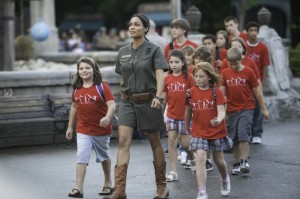
You’re throwing poop now?
KJ: I throw poop everywhere I go now.
A lot of the humor is derived from how human-like the animals are. I was wondering if any of you could share a story about any pet you’ve had and those human-like things that you saw them do.
LB: My dog is upstairs right now.
KJ: Yeah Bibb takes her dog everywhere.
LB: I’m like a weirdo. She’s not a lapdog; she’s a German Shepherd, so she’s kind of big. What does Sadie do?
RD: She climbs trees.
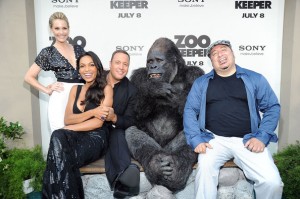
LB: Oh my god, we got her to climb a tree. On this movie we had a really good time. I think also you can see it on the screen, like we all really enjoyed each other and peed our pants everyday a little bit from laughing at one another.
I found this apartment and I was like, “Ro, there’s an empty apartment upstairs. I’ll be like Harry Potter in the cupboard under the stair. You get it.”
So we lived on top of each other, and across from our apartment was this beautiful park in Boston. And [my dog] Sadie is obsessed with squirrels. She can’t get one, but we taught her how to climb a tree. She’s a German Shepherd so climbing trees is not in her repertoire. Barking, protecting you is.
RD: Photo shoots. Dress up.
LB: She loves a photo shoot. We dress her up, I would dress her up and we’d have these setups.
RD: Wigs, jewelry.
LB: We literally did that. I know we sound like jackasses, but we really did.
RD: I made her a scarf.
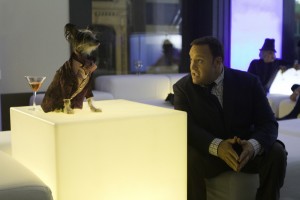
LB: Ro and I would do photo shoots with Sadie.
RD: I don’t even think I made you a scarf; I made your dog a scarf.
LB: Yeah, I anthropomorphize my dog.
TG: Frank’s dog sits in first class.
FC: Since the movie I get to get a little pass that says he’s a movie dog, so he sits in first class. He knows he’s there, so we behave. Kind of a little guy.
As concepts go this one’s pretty out there. What inspired it and what it’s like filming the sheet-dancing scene.
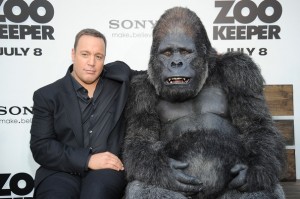 KJ: Well both of these go back to Todd Garner, our producer. Todd came to me with the idea and I was immediately not into doing an animal movie. It just felt kind of goofy to me to do it, and then as I started thinking about it more.
If we got a great story that you didn’t need animals and these animals are just like buddies that you put in later and add to the film. I started getting more and more interested in it.
I wanted them to be like just your buddies butt they just happened to be bears and lions and like that. So I went a little too far. I wanted flies on them. I wanted them all really dirty looking and mangy, but they steered me away from that.
That was basically it, that’s what we wanted to do. We wanted it to be a funny, funny movie for everybody, honestly, where you can feel comfortable bringing your kids. I’ve gone to movies with my kids and I’m just bored out of my skull sometimes because there’s just no comedy or anything for adults, so I wanted something where it just had comedy for everybody.
There are parts of this movie where there are no animals, obviously, where we go out and we’re in the real world and it’s moving fast, and that’s when I started getting really excited about it. And the silk dancing thing was another idea of Todd’s. We’ve done a lot of physical stuff in our movies and are always looking for opportunity. We went to this wedding and were thinking what can we do that hasn’t been done or feels unique?
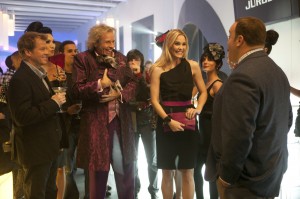
TG: It was actually worse than that. He was like “I’m not dancing. I’m not doing it, so you need to figure it out.”
KJ: We have dancing in there, but it was going to be originally me and my rival in a sock hop or something and I was like, “What are you kidding me? Like the Fonz?”
TG: So we sat in the hotel room and just beat around ideas, and everything I pitched was just tackier and tackier. “It worked in ‘It’s a Wonderful Life.’ We could do something like that,” and he’s just go, “You’re so tacky.” And then finally I had seen, it’s going to sound terrible, but at a Paula Abdul concert like 20 years ago she did this.
KJ: Sure, it was 20 years ago.
TG: Alright it was four years ago.
KJ: Todd camps out outside her house.
TG: She did this thing with the aerial straps, and I was talking about it and then we went online.
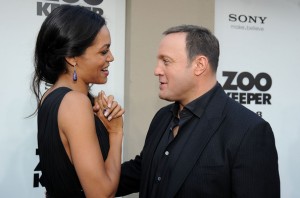
KJ: We just started laughing. We saw them in Cirque du Soleil, and it would just be ridiculous if they were just hanging there. It was really romantic too, so it was a thing that starts off sweet. Any time I do that sweet stuff I always feel uncomfortable in the moment so I have to make it ridiculous afterwards.
We then make it spin out of control and get a little nutty with it. But it was a fun, unique way to show us connecting, show Leslie noticing that you know what, maybe I don’t need her at this moment and I’m having fun without her. So it was pretty cool.
Rosario, were those scenes for you?
 RD: I was so glad to make it as ridiculous as possible, because Leslie and Joe were working on this dance and we would go to rehearsals and watch them do this dance, and it was just getting better and better and better.
They were doing their rehearsal, all of a sudden it would just be there’s flying, there are all these incredibly structured moves, like really powerful stuff, and then we were like okay what are we doing? The better and better they got the more and more we were like well we could also do this thing where I could spin you around and you could fall over this way.
It just made us go the exact opposite way. There’s one that’s my favorite where you’re like, “Get on my back!” and I try to throw up and it’s just like hulky, and awkward, and just awful. It was just wonderful, and to have an opportunity to do that type of physical comedy in this and just be as ridiculous as possible in a great dress and high heels and just go forget it was just amazing. And I didn’t cut you. I was very proud of that.
LB: It’s an important scene because I don’t know if it was ever as obvious in the script of this moment where you see these two people, the right person for you, and you notice each other.
KJ: Yes, that’s the moment where you say, “They belong together.”
FC: It’s the first moment you genuinely have fun together.
KJ: What was so great was how willing they were to just go for things. Both ladies were just incredible with the comedy, and you work your ass off with Joe on that dance, which it worked out great. It was amazing how hard they worked. They worked for a long time on it.
TG: And we would say to Leslie, “The double can do it.”
LB: But I said, “No.”
TG: The double stood there on the sidelines.
KJ: On the other side with us getting physical we were just pushing those silks all around. Remember the one where you did a double flip and came back through? It’s in the movie.
RD: I loved that. That was awesome.
KJ: That one worked well.
RD: My favorite that’s in there is just the fact that when I put it up over your arms and I pull it up over your shoulder, which every single time for people who have seen the clips in different shows they all laugh at that bit and I was like “I did that.”
I remember I discovered that because I had to spin you right afterwards and we were like “Oh, we could do it like this.” It was just very satisfying, that whole sequence.
Rosario, how did you like being in a comedy for a change?
RD: It’s so funny because there have been just a tiny few that I’ve done. “Men in Black 2” obviously was a very, very long time ago, and “Clerks 2” is obviously very genre specific, so to do something like this was just really exciting and challenging and scary and fun all the way through.
I learned things like when you work on a set with a bunch of comedians that they’re going to come in prepared with 25 jokes per line. Which I didn’t know that first day going in, so I’m just saying my one joke over and over and over again trying to sell it really hard.
By the end of it everyone’s just like eh. And then they’ve got another joke that’s making you, as Leslie said, pee your pants or like snot come out of your nose. So I remember having to think about that and going I don’t know that I’m a funny person but I have to really try.
KJ: Then you jumped in. Remember you started jumping in?
RD: Yeah, man, I was testing out jokes, and then it was like that thick skin that you have to build up where people are like meh. And you’re like “But I thought that one was funny,” and they’re like “Meh.”
Then you push something else and people will be busting. It was so fun. It was just such a different process than anything I’ve ever worked on before. Improv on a comedy means something completely different than improv anywhere else, and it’s so amazing to be this many years into my career and feeling like it was a completely fresh and new experience. Just so exciting.
LB: I want to say something about improv too, is that I think sometimes I think it’s a testament to you, Kevin, and I’m not blowing smoke up your tuchus, you really nurtured us to really be so funny.
Sometimes girls in comedies don’t get to be funny, and all three of these guys were like, “No, go, go, go for it.” It’s really nice and kind and shows in the movie. It was a really wonderful set.
KJ: The key to it is just making everyone feel comfortable. And by the way, if the camera guy comes up with the best joke it’s in the movie, that’s the way we are. Everybody was pitching in and felt comfortable doing it.
TG: It’s hard to shoot a comedy because you’re there for 15 or 16 hours and it has to be funny, and around the 11th hour nothing is funny anymore. So you always try to keep the energy going and try to come up with new ways to make things funny, otherwise it’s just a long day.
KJ: It’s not even like when I did the TV show where you get that immediate reaction, you know if something works or it doesn’t work right away, you can change it. You don’t know on a film set because they can’t laugh. You just start doubting yourself.
RD: Oh my god, insecurity up the wazoo.
LB: I’m sorry no, I feel like if I was in a scene with you and you laughed and something I did I was like, “Yes!” If I can make you laugh or one of these guys walk up and they high five you. There’s nothing worse when you walk off and nobody high fives you. You’re like okay, we’re moving on. It’s nice. You do get a sense. You’re my audience.
KJ: You guys are more than I ever could ask for, honestly. They crushed it.
What was the writing process like?
 KJ: That’s a place where I want to live, I really do, because I have kids and I want to be able to bring them to movies. Look, I love dirty stuff too. Going to see a funny dirty movie can be fine if it is what it is.
LB: Like a porno? A funny dirty movie?
KJ: Exactly. You know what I’m talking about. And it’s a tough world to live in because you don’t want to be where you’re too kiddie for me. So I try to bump it up where everybody can enjoy it, and the more you do that you weaken the pool a little bit. It’s harder to grab more people that way, but that’s the trick of it.
TG: When we were in the room we would try to just pretend that it wasn’t a gorilla — this is going to sound ridiculous — or it wasn’t a lion. You just tried to say “Okay, if Nick Nolte [Bernie the Gorilla], Sly Stallone [Joe the Lion], Cher [Janet the lioness], Adam Sandler [Donald the monkey] and Maya Rudolph [Mollie the giraffe] was your group of friends that you hung out with at work what would they talk about? How would you interact?
KJ: Forget that they’re a gorilla…. Or whatever.
TG: Try to forget that. And we tried that as best we could until you see it, and then you start to go oh, when the monkey does the thing with licking his armpit that could be funny, and we added that later. But we really tried to just make it a comedy where it was a workplace comedy with real characters.
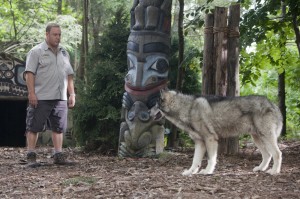
This of course is a composite the way this was put together. How close did you actually get to any of these animals? And what was it like to direct that nutty little monkey.
FC: He was a little born scene stealer. Kevin was pretty brave. Obviously, the bears and the lions you couldn’t put anybody next to.
KJ: Although they were on set with us.
FC: They were there right near us. Kevin was brave enough to get in with the wolf and massage the wolf.
KJ: Oh I didn’t like that at all.
FC: You wouldn’t know he didn’t like it. He seemed like he liked it.
KJ: I did not like it at all.
FC: The elephant and those animals were really great, and so I admire him for being brave enough because I actually wouldn’t go near the wolf.
TG: The scariest was the lion because you would hear way far away “The lion’s moving. Clear the set.”
It’s like Hannibal Lecter coming in. The ramp would go down and you’d watch him go in, and then by the end they would just bring him right up and there was just a little wiring and they said, “Don’t worry about that.”
You’re four feet from the lion like “Remember the beginning? We were all worried with the radio?”
FC: Eventually the wire wasn’t even up a few times.
LB: Where did you go with the bears? Were you in there with the bears?
KJ: The bears were close to us and all I would do is plan my escape route. I know I’m faster, and know the cameraman’s a smoker. So I push him into that guy; I’m out the door this way. I’m already back in my trailer watching “Sports Center.”
That’s the way I would plan it. It was scary at times, but the lion was the one that was the most. The bears were big and huge and goofy; that lion came on set, boy. And when it was done working it was done, that was it.
FC: Getting the animal’s attention was a big part of directing them. It was like look right, look left. It would be about food first with the lion. Then he would get full and he’d almost be done, so one of the things they said, “Allright, we still need to get his attention.”
They’d come out with a crazy mask and it would get his attention. Then it was like “Allright, bring out the horse,” and they would literally bring out a beautiful black stallion 60 feet away; the lion would suddenly perk up. So we resorted to bringING out the horse. I don’t think he wanted to eat the horse.
KJ: Then they would walk me around after a while. The horse wasn’t working anymore so I was out there.
TG: It is a testament to Frank because we shot for six weeks of nights.
KJ: I was shooting Grownups.
FC: And I was shooting the animals.
TG: It was just six weeks of nights just shooting this movie six times because you’d bring out the lion and you’d shoot all the scenes with the lion, then you’d bring out the lioness. For six weeks it was just the patience.
KJ: I’ve got to applaud you for that. That was awesome. That’s a lot of craziness.
FC: We tried to get a lot of that stuff done. Then when Kevin was there there’d be the monkey and the elephant there. We didn’t have to slow the process of the comedy down. When he got there he was comfortable and we could not wait an hour between every line that Kevin would say.
When we’re seeing the monkey walking and opening doors, we’re seeing a monkey?
FC: Yeah, there’s no CG. They would train him to be able to do that. Her actually.
LB: Her name is Crystal.
FC: Everybody fell in love with her. But the thing we would do is there was a whole area where all the animals were, and we would go back there and say, “Let’s see what they can do” and see what their abilities are.
So we did a little bit of meeting halfway with the animals and finding out what they could do and then building it around that. When we realized she could open a lock we did that, and the hands up. We found ways together to do stuff, but everyone fell in love with her and everyone wanted to bring her home.
LB: She wears pants.
RD: My favorite was the thumbs, because a monkey can’t actually do that with their thumbs so they built fake thumbs that she grips. So she held onto it like that so it looked like she was going like this. Killed me. Still kills me. She was walking around holding fake thumbs. It was so cute.
LB: I like when you make out with the giraffe. In that scene when you did it he really did make out with it.
FC: That was an accident though.
KJ: That was an outtake actually. We didn’t mean for that to happen, but yes I’ve had giraffe tongue on my tongue.
Kevin and Frank, what was your game plan — you were going to work with unpredictable animals?
KJ: I like that. I wanted that. That’s why we didn’t want any CG animals. Because the more unpredictable, whatever they would do as long as we’re rolling on them. They were pretty tame and great. It was a great environment.
We weren’t asking them to do crazy things or anything like that. We didn’t want it to be jokey where the elephant does a funny move and stands on his hands. We just wanted it natural, but if they did a move, like the bear dropped to his back and just started scratching I wanted to write to that, and we did, we put that in the movie.
TG: Also “One more look.” When Sandler goes, “One more look,” Crystal just did that.
KJ: Yeah, they keep doing that so you just write to it, and that really was the best for me.
You weren’t nervous going in?
TG: I was nervous as a producer because these movies can go horribly off the rails. There have been animal movies that have really gone wrong budget-wise and time-wise. After the six weeks the studio was like, “You’re there.”
I’m like, “Okay, now we just have to work with Kevin and animals.” It was a lot of nights and it rained a lot in Boston. The game plan was always just plow through, and it just worked great. The animals were amazing and it all came together well.
FC: The movie probably took two years all in, so it did make it a very extended movie to make because of all the layers of stuff that we had to do to make it.
Why did you pick the Franklin Park Zoo?
FC: We love shooting in Boston and it really had the essence of Boston and was a gorgeous zoo. And we actually were helping the zoo, we felt good, because it was nice that going there and money we spent there went towards the zoo, so it felt good. It was nice visiting. We spent a lot of time behind the scenes with real zookeepers and realizing how it’s such a thankless job.
They work really hard for not a lot of money and they just love the animals, so we actually visited them, saw that, and I thought whatever we can do to help these people out.
It just felt very traditional Boston, the architecture that was already there. Obviously we built a lot of those enclosures. We had fun building the dream zoo in their zoo, and it felt right. And my name is Frank.
Leslie, your character in some ways was really a weirdo.
LB: Oh yeah, she’s out of her mind.
Lady: I was wondering if that was in the script or if you brought that in.
KJ: That’s all Bibb.
RD: That’s all Bibb.
KJ: You can’t write that stuff.
TG: You can’t contain the weirdness.
LB: You can’t. It was hard. We all talked about you dumping him in the craziest way at the beginning of the movie and how do you win back the audience? If they don’t buy you two being together then there’s really sort of no movie. You have to be like, “Yeah, you go after her. That’ll be good,” and then she’s all wrong. So these guys were great.
They let me be goofy and funny, because I thought if you make her funny and sort of neurotic you’ll laugh at her and you’ll forgive some of her idiosyncrasies. Yeah, she was fun. She’s out of her mind, but I love in the moment when great things would happen. I sort of like those offbeat weirdoes.
KJ: I’ve got to give you props here too because when we were writing this, it is imperative because she dumps me in the worst way possible in the beginning, but you still have to like her when she comes back.
You have to still root for us to be together, otherwise the movie’s over the whole way through. She’s got to come back and be sweet enough that you go, “Oh, this could work out.” Then you see the turn again.
It was really delicate and she nailed it — that was the hard part. If you hated her right out of the gate, which you do, and you never bought her back at all, the movie’s over. It’s really done. Then it’s annoying. It’s like, “Allright get rid of her, you know she’s not the one.” So that was the tricky thing, and she crushed that.
LB: I also think you have to make her not just a total a-hole. She’s a jackass, but if she is, then she has to have some sort of [quality] that’s still goofy about her, [even likable]. So it was fun.
For those of you who have kids, did they come visit on the set and what were their experiences like?
TG: Kevin and I always bring our kids to all the sets as much as we possibly can. It’s great to see them laugh. By the way, they’re also our biggest critics too because sometimes they don’t laugh and then you have to really think on your feet.
KJ: We were thinking of using one of the trailers for my kids, who are a little young. At the time they were like four and three or whatever, but they literally stared at it like this [gives a blank stare]. So I called Todd in a panic, “We’ve got to change. This is nothing [for the kids].” Usually [my kids will] laugh at anything, and here, I’m in it, falling all over the place and they were just like [blank].
FC: Anybody that had kids in town got to do the whole circuit of the animals.
KJ: I remember the one day that my kids were going home is the one day we showed them the lions. That’s all they do — lock on the kids and they just look.
TG: We brought my son and the lioness was following him. The trainers go, “It’s his tennis shoes,” and I was like allright. The next time he came back with Kevin. Kevin goes, “What do I do if that lion gets out?” and the trainer goes, “Just stay away from the kid.” I’m like, “Oh great. This is good.”
LB: It’s insane. Ro and I were visiting the animals and somebody brought their kids on set. First of all, when that lion locks on you, he’ll just turn and you’re like “Oh my god.”
RD: “I’m food.”
LB: When those kids came in they just started to prance, and the woman said, “Stay away from the kids or anybody with crutches.”
I was like, “What! How do they know a crutch?” and she was like, “They’re weak. So the animals go right for it.” It’s so weird; they know the weak and little babies. So don’t get attached to your kid around a lion.
TG: The rest of the time they were there and were fine. Everybody came out okay.
What does a zookeeper and the film itself, teach us about love?
KJ: It’s really about, and I can’t speak for everybody else, but I’ve tried in the past being someone I’m not in some way to impress somebody and try to be who I think they want me to be, and ultimately it ends up being a mistake.
When you find out who you really are and when you find someone who loves you for that that’s when it works the best for me. It’s about be yourself.
LB: That’s a good one.
KJ: And if that doesn’t work throw poop at them.
RD: It’s so beautiful that the different animals that we were working with we would talk about what their different behaviors were like, and like eagles would mate for life and always come back to the same nest.
You’d learn all these different things and so all the different animals would give you different advice based off of the type of personalities that they were and the types of animals that they were.
I think there was a really interesting discovery of just going we’re just animals like them, because a lot of the advice that they would give us is in keeping with what we would do. But then on top of that it’s just recognizing the animal that you are and going okay, I don’t need to try to be an eagle or try to be any of these different things.
Let me just be the person that I am, and I am going to be someone who’s going to stink like a zoo all day, I love working with animals, it’s a pretty thankless job and I smell like animal all day long, so I’m going to be with this woman who also represents that and not have to change that about myself because it’s actually what I love.
Go and follow your heart. That’s what sort of the message is, it’s beautiful, you have to discover that, and it’s fun to discover it with all these crazy little weird animals.
You’ve all touched on this — but what was the most rewarding part about making this film and what was the most difficult part?
FC: The most rewarding part is happening now when we see people see the movie. For me I was at a screening and kids were laughing and parents were laughing and teenagers were laughing, and that’s what we aspire to do and that felt great. That everybody can go together to the movies and everybody thinks it’s cool is a great feeling.
TG: For me, Kevin and I always were like we’re the aspirin in the applesauce, and so this idea first was hatched because my son, who’s now 10, was I think eight at the time and starting to like girls and not wanting his pants to be above his knees and it had to be a certain length and he had to wear a certain kind of shoe.
I was watching this going, “No, my son is starting to get into that thing where nothing’s good enough, he’s insecure and panicked.” And I took my two kids to the zoo and there were these animals just lying there, and I thought, “That’s so cool. They could just be themselves.”
The message for Kevin and me when we started this process was how do we tell kids that? How do you tell kids that it’s cool to just be yourself? You don’t have to put on airs; you don’t fall in with the wrong crowd?
So we would try to find these little ways to slip in the messages about just be yourself, [especially] with the ridiculous effort that Kevin goes through to become this kind of alpha male. So coming back, seeing the movie, my son who is now 10, he was watching the commercial and goes, “Oh that’s so funny. He should just not do that,” and I was like, “Ah, I did it.”
The most rewarding thing is slipping that message in there through comedy and through a shared experience with the audience so that those messages get through without me having to tell him. It’s cool for parents to be able to do that.
KJ: For me the most rewarding thing about making this movie was all that that they just talked about, but also when you’re on the set and you’re having a great time and you create a great environment and everybody’s honestly having fun, it’s usually a vibe I get.
I’ve been on ones where it’s not as great and the end result isn’t as fun. It’s just a feeling, it’s just a feeling that it feels good, it feels right, it feels like you’re having fun, and when you see it and you play it for audiences, and we’ve sat in the back and watched a lot of them, because we really do work hard on them, it is just so rewarding to see people just laughing with everybody from six to 60 to whatever. That was really it.
It’s a hard thing to do to get a movie made where everybody can go, everybody can feel comfortable, yet you’re not boring people. You’ve got to keep it moving, keep it fun for everybody and put something in it for everybody.
without a doubt this one feels like we’ve accomplished it, so I’m very proud of it and these people. Everybody worked so hard, and everybody on the set [was great]. Usually there’s one pain in the ass on the set or somebody like that; but there was nobody [like that this time]. Everybody was just great.
LB: We sound corny, like a Hallmark card, but when I saw the movie at a screening here and it was so funny. I saw it with my boyfriend and publicist and they were laughing. That’s something incredible that we get to do as artists is bring joy to people.
I’m so proud of this movie, and we had so much fun filming it, but the greatest thing was to sit there and watch it. I texted everybody here, I was so excited and proud, like a geek I was that proud.
And it has the best end credits ever of any movie. The music is amazing. I just like making people laugh, and that joy is incredible.
The hardest part was shooting nights especially for Kevin who was working so much and has kids, and for you who has kids, so these guys would go home and their kids are like “Daddy!” and they’re like “I’ve got to go to sleep.”
I think that was maybe the hardest part, but it was still kind of… Ro and I played a lot of games in the trailer. We played board games.