
Exclusive: John Boyega Talks Pacific Rim: UprisingPosted by Mike Sargent
March 19 2018

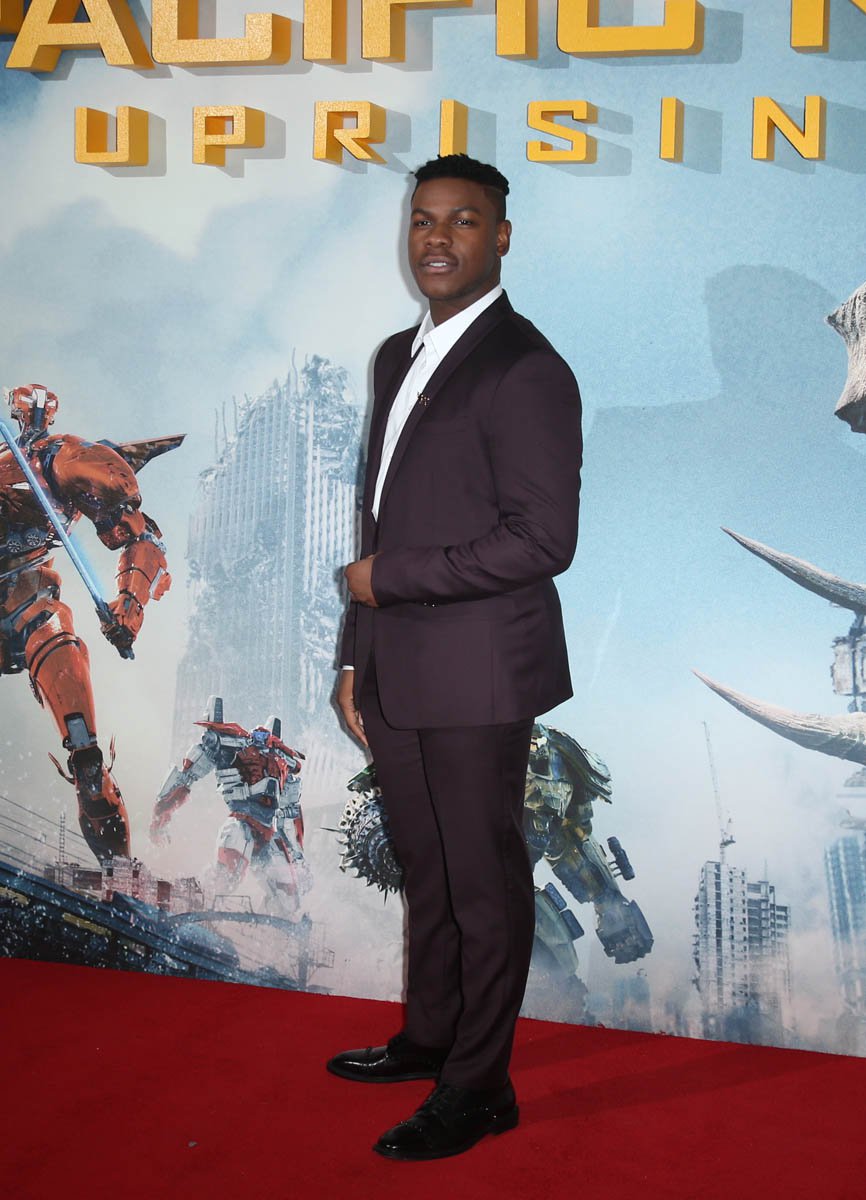
Coming out this week from Legendary Pictures and Universal is Pacific Rim Uprising, the sequel based on the 2013 Guillermo del Toro-directed blockbuster Pacific Rim.
Directed by Steven S. DeKnight (Marvel’s Daredevil), Pacific Rim Uprising stars John Boyega, Scott Eastwood, Charlie Day, Rinko Kikuchi, Jing Tian, Wesley Wong, Lily Ji, Lan Yingying, Qian Yongchen, Zhang Jin, and newcomers Cailee Spaeny and Chen Zitong.
The globe-spanning conflict between otherworldly monsters of mass destruction and the human-piloted super-machines built to vanquish them was only a prelude to the all-out assault on humanity in Pacific Rim Uprising.

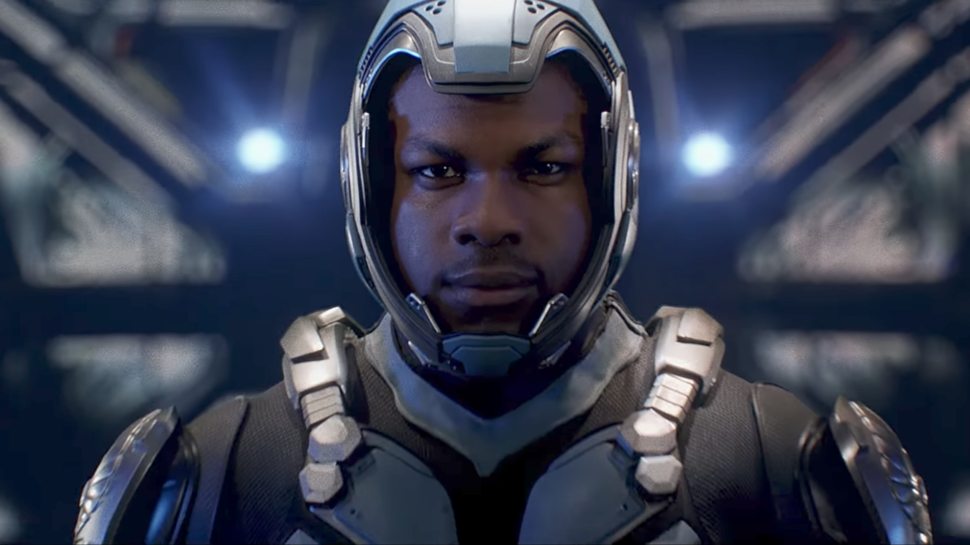
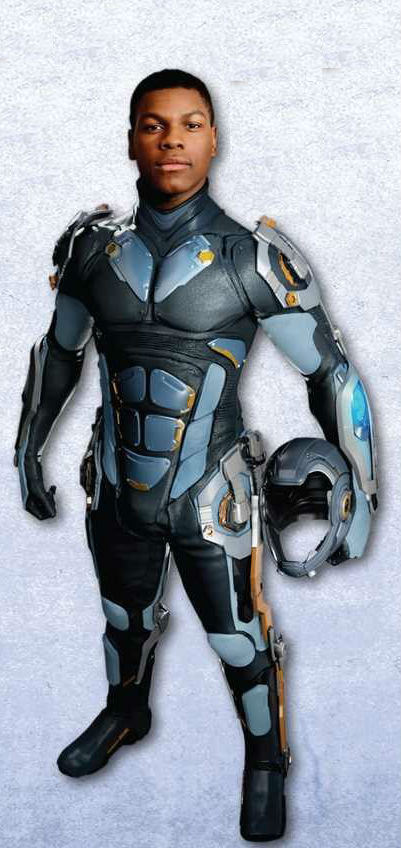
John Boyega stars as the rebellious , a once-promising Jaeger pilot whose legendary father (played by Idris Elba in the original film) gave his life to secure humanity’s victory against the monstrous “Kaiju.” Jake has since abandoned his training only to become caught up in a criminal underworld. But when an even more unstoppable threat is unleashed to tear through our cities and bring the world to its knees, he is given one last chance to live up to his father’s legacy by his estranged sister, Mako Mori (Rinko Kikuchi)—who is leading a brave new generation of pilots that have grown up in the shadow of war. As they seek justice for the fallen, their only hope is to unite together in a global uprising against the forces of extinction.
Jake is joined by gifted rival pilot Lambert (Scott Eastwood) and 15-year-old Jaeger hacker Amara (newcomer Cailee Spaeny), as the heroes of the PPDC become the only family he has left. Rising up to become the most powerful defense force to ever walk the earth, they will set course for a spectacular all-new adventure on a towering scale

American audiences were first introduced to John Boyega when the trailer for Star Wars: The Force Awakens hit the Internet and big screens as a storm trooper who takes off his helmet and was a black man. True cinephiles have been keeping with him since he did low budget British cult sci-fi comedy Attack The Block at only 18 years old. Now at 25 with two Star Wars films under his belt and a dramatic turn last year in Katherine Bigelow’s Detroit, Boyega has graduated from powerful ensemble actor to leading man in Pacific Rim Uprising, the sequel to Oscar winning director Guillermo Del Toro’s Pacific Rim.
Blackfilm.com got a chance to talk to him about the new film, filling Idris Elba’s shoes, his relationship with Daniel Kahluuya, Star Wars IX, and of course Black Panther.
When did you first know you wanted to be a story teller? When did you first know that this is what you wanted to be a part of your life?
John Boyega: I would say definitely around the age of 10 to 11. I was in primary school and I got involved in a lot of the acting classes, got involved in a lot of the creative process that they would have, the riffing English classes as well. I just knew I liked telling stories to make people laugh, and I was just like, “Okay, cool. I can’t win playing football, so I might as well do this.”
Mike Sargent: You’ve done a number of Hollywood films but this is a film that YOU really pretty much carry the film, and you get to do it in your own accent. How different was that for you? I spoke to another actor recently, who’s Australian, who actually did a film where he used his Australian accent, and he said he felt almost naked because doing an American accent is sort of an artifice that helps you get into character. A, did you feel that, a little naked being yourself, and B, how did you feel carrying the film on your shoulders?

John Boyega:I mean the funny thing is, is that Jake’s accent is actually edited a tad. Jake doesn’t actually speak the way I would speak, if I was back home, and his tone and accent is slightly more RP, knowing that we have a world-wide audience, I can’t do a thick accent, the way my one originally is. So it wasn’t as much of a change as I thought it would be, given also that the lines are also very Jake specific, and not catered to what I would normally say. But with that being said, it was good to at least portray the kind of same energy that you know Idris had in the same film. It was much more like an exciting thing for me. You know I take each role as a role. I don’t feel more exposed or less exposed. The only way I would be exposed is if it was a documentary about my life. But each role comes with a commitment, and I was down with it.
Mike Sargent: Did you feel any pressure coming in behind Idris Elba and being in a film where you are pretty much are the star?
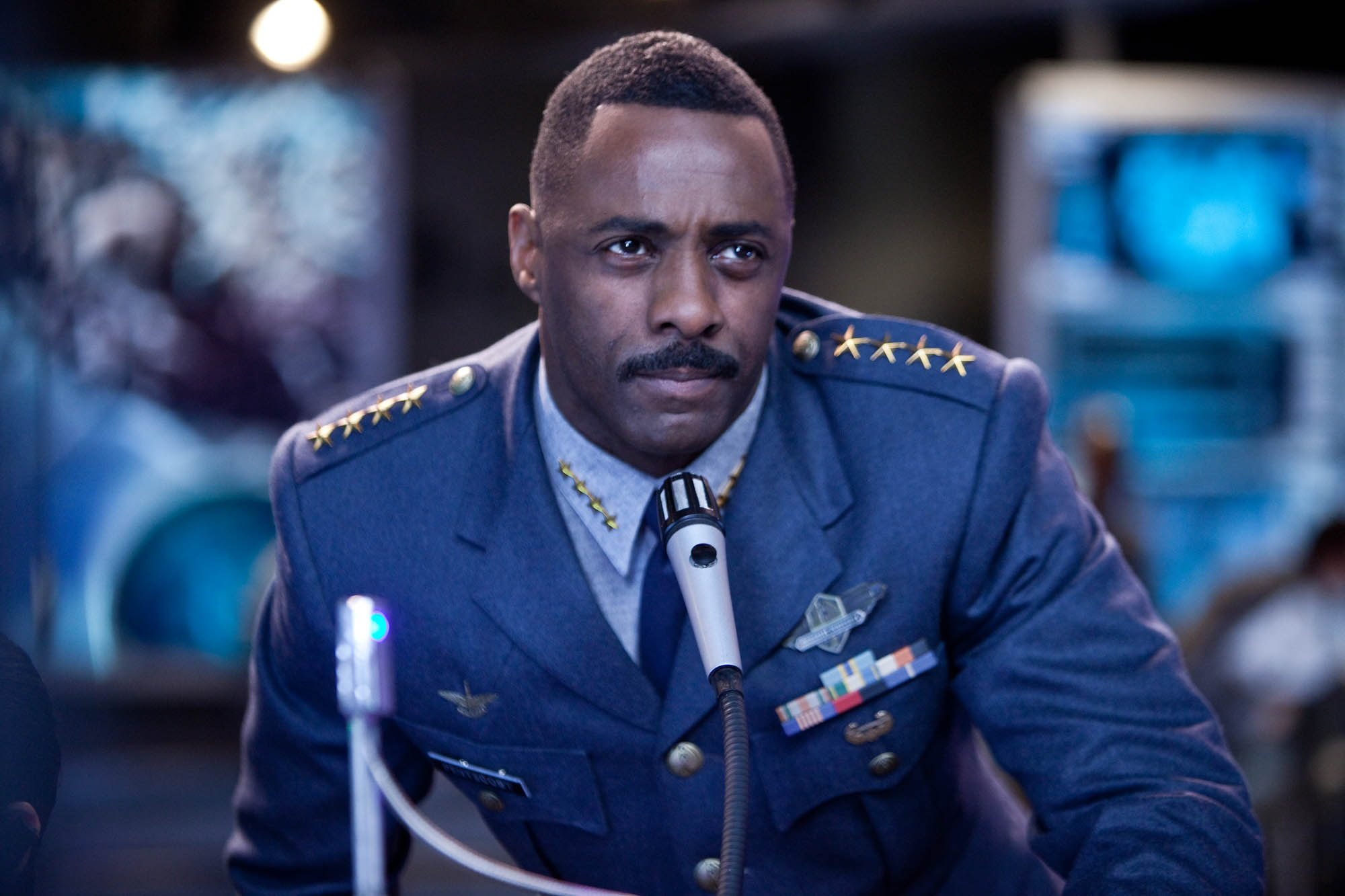
John Boyega: No, I’m not, not at all. I just saw it as a great opportunity, to be able to step into the boots of a character and Idris has done such a frickin’ phenomenal job on it, in the first one, and for a lot of people that mention Pacific Rim, they will mention Idris. ‘Cause he was like for me, the most dynamic interesting character in that. Then to follow in his footsteps, and to do a role that you have to embody some of that Elba charisma, was something that I didn’t feel worth of. I felt like, damn, like this is Drift. But you find that Jake is his own man at the same time, but you know still can look at him and go, “Man you’re a Pentecost man, whether you like it or not.”
Mike Sargent: At this point you’ve done some of the biggest films there are with Star Wars and this film. Are you interested in doing smaller films or smaller roles, and how would you, in an ideal career path, like to balance doing these big Hollywood tent poles versus doing things that might have a little more personal meaning to you?

John Boyega: I mean so far we’ve been balancing it quite well. I started off in Star Wars 8, and then from Star Wars 8 I went on to Detroit, and then from Detroit I went back onto Pacific Rim, and then from Pacific Rim I went to do a play. So in between these big monster movies, or whether it’s Star Wars or whatever I implement obviously a much more intimate style of storytelling, which better suits me. You know especially for the dramatic tales or more emotionally scarring tales that you would have to tell, and I think that’s something that’s been implemented in my career from the beginning. You know, do one for … They normally say, do one for them and then you get to do one for yourself. But I love the big films as much as anything. So I’m doing the big films for me as well, you know, so it’s all part of the same system to me.
Mike Sargent: Well, speaking of big films, when do you start or have you already started filming or doing any rehearsal for the next Star Wars?

John Boyega: I know nothing about Star Wars. The last I heard was we’re going to be shooting in July, and that’s from a video on YouTube. It’s almost like finding out you’re pregnant and you’re finding out online bro.
Considering your part of what is considered a new wave of diversity, especially in science fiction films, how do you feel being part of that and I know you’ve worked with Daniel Kaluuya, at least you did voice work on Watership Down together, have you seen Black Panther? What do you think of that?
John Boyega: Hell yeah, I’ve seen Black Panther, I was at their London Premiere with my African attire. Wakanda Forever Bro! There is no way I’m telling my child, “Oh, I couldn’t make it to that screening.” Oh hell no. I’m all up in that.
Mike Sargent: Did you get to actually work with Daniel Kaluuya?
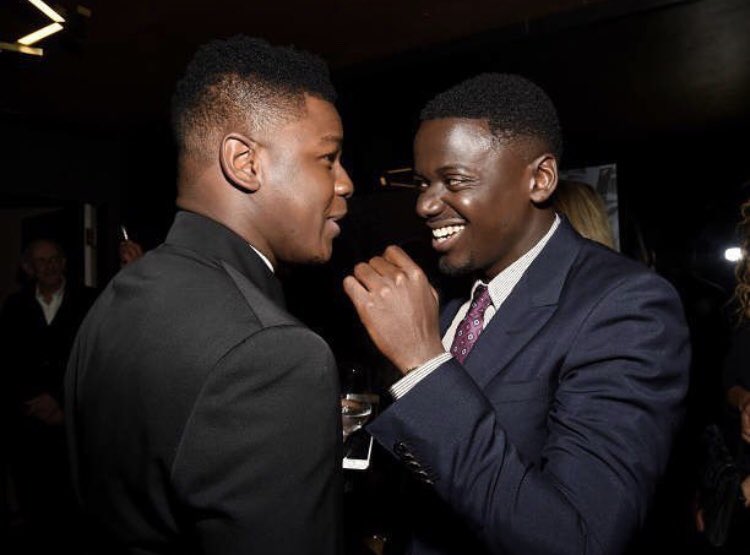
John Boyega: No, no, no. We didn’t ever get to do any scenes and record with each other. We’ve never worked with each other, but we’ve always come across each other, as we’ve grown up in London. Him being part of the same, well part of the same theater scene and upcoming actor scene as well. Yeah, you know just going on to your first question. It feels good to be a part of this movement, but it’s good to also note that the movement is full of talented people, and something now I’ve been most excited about is that they’re not doing what they do to most minority actors, you know where their can only be one. We are now getting access slowly into the buffet that the white people have been enjoying for a long, long time. So the transition for me has been fantastic.
Mike Sargent: That also right now puts you in a great position to weld maybe a little bit more power and help change the dynamic of film. You’re listed as a producer on Pacific Rim Uprising. How did that come about and what goals do you have in that area?
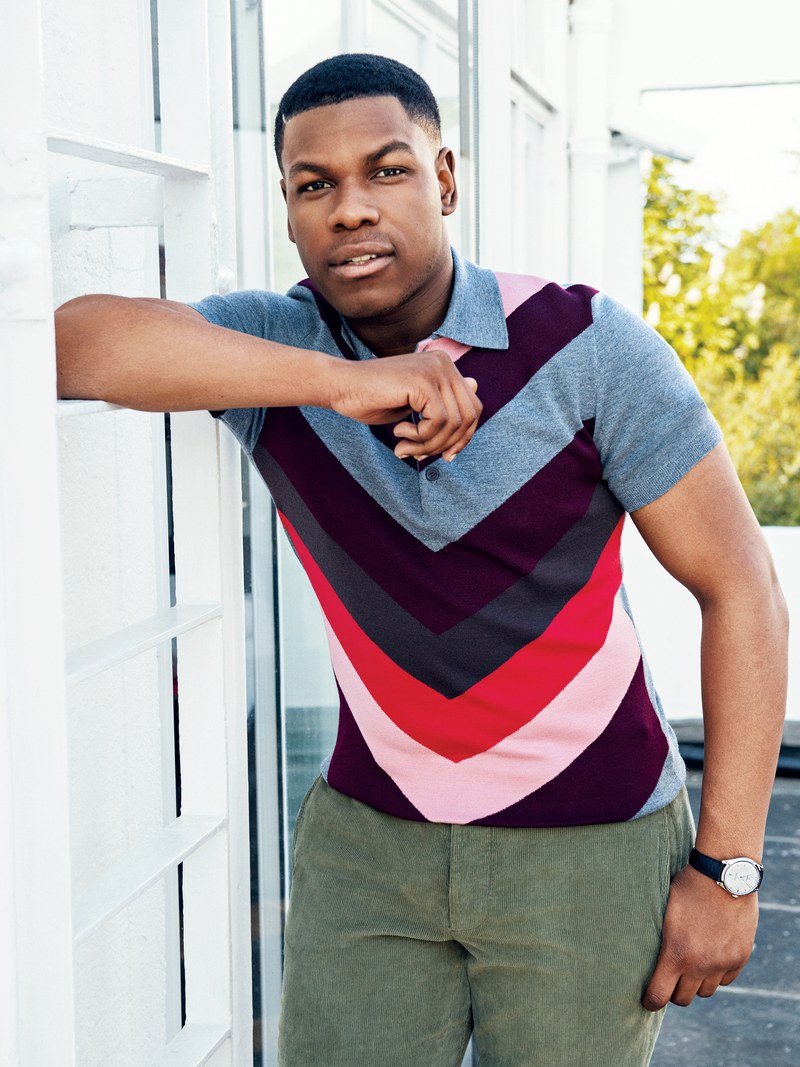
John Boyega: Well, I founded my company Upper Room Entertainment in 2015, after I earned my check with Star Wars, I reinvested most of it back into setting up this company, and figure out a 10 year plan, God willing given the days, and came to LA to have meets. It was very important to me. I’ve always said that, “Wait a second,” as I stood on various sets coning through the industry, hearing various complaints that we had, I was like, “Okay, cool, I need to be a part of this change and I need to actively not just complain about it, or actively not just talk about it, I need to be doing something.” You know prayers without works are dead.
So I just thought that this was a good enough opportunity to also gain traction and to gain some creative import behind the scenes, as well as in front of the camera. Then to help influence them, because I still have my ears to the ground. Do you understand? I still have access to people, and I don’t know if a lot of these people that are in powerful positions in Hollywood still have access to people, in order to get the most nuanced and the most interesting stories. So that’s another thing that I just thought that would be used to my benefit, if I just got involved from now. When I started it up, Pacific Rim came about and I was just like, “Wow, okay cool, you know this is possible and this can happen.” It was great work and I enjoyed it.
Mike Sargent: One of the things that stood out about your work here in this, is that you come across very charming and even in some of your other work you have great comic timing. You’re a pretty funny guy besides all the dramatic work that you can do. Is that something you want to do more of?
John Boyega: Oh yeah definitely, definitely. I was actually in talks for a comedy before, but I couldn’t do it due to the timing. I didn’t have enough time to do it. But you know that’s something that I’d definitely want to explore. It’s a side of myself that I love and I enjoy it. I like to laugh, I love a good laugh. I have funny people around me, like my parents are hilarious, so it’s just a part of me. I’d definitely love to explore that a bit more.
Mike Sargent: What advice do you give you actors, young filmmakers who are coming up now as you’re at the crest of this change in the industry? What have you seen that you could maybe impart upon them?
John Boyega: I think for me the biggest thing is the path that we’re all leading towards, it has it’s obstacles and it has it’s problems. It’s like Daniel Kaluuya. Daniel Kaluuya saw me when we were at the Black Panther Premiere after party in London. He dragged me to the side and he just said, “Are you okay?” You know it was as simple as, “Are you okay? No, but for real. How is everything? Are you okay?” That’s something that for me is quite important. Sometimes people don’t need someone giving them advice, they need a good listener. You know?
That’s something that I’ve always seen as being very fundamentally important. But also is understanding that, regardless of what position you’re in, you know whether you’re an upcoming actor, someone who’s just got into the industry it’s art, it’s entertainment. I can learn from you and you can learn from me, and your path in entertainment and the way you get there won’t be the same as everybody else. You’ll have your own experiences. Things that are hard for me might be easier for you. So try not to impart any of my weaknesses and copy and paste them onto somebody, but at the same time just let them know what I’ve been through and they take from it what they will.
Mike Sargent: That’s very good advice. Going forward, if you were going to look back, hopefully on your career, let’s say 25, 30 years from now, what do you hope they might say about, “You know John Boyega, he did this kind of work. He was this kind of artist.”
John Boyega: I definitely hope that they say … Well you know I’ve done a lot of roles that were vastly different. I’ve come up in a time in theater where, you know to be unrecognizable in a role, to change your accent, change your body language, to be somebody other than what you are is the pinnacle and the most energetic stage of an actor’s career. When you can do that in an instant, and that’s something that I’ve always, always really enjoyed. Even in my training, as I go to acting classes now, you know is something that I try to fixate on. Make me better at transforming into another person. So I hope that you know, obviously the audience recognized that, if you put Finn and Jake in one room, you won’t see the same character, and that in itself should show the kind of commitment I have for this.
Can you give me like top three favorite films of all time?
John Boyega: Oh okay, okay. Scarface. Coming to America with Eddie Murphy, and damn, Ava DuVernay’s Selma. Ava DuVernay’s Selma, yeah. It’s a beautiful film, a beautiful, beautiful film.