
An ‘Epic’ Tour of Blue Sky StudiosBy Max Evry

Sequestered among the rolling green hills of Greenwich, Connecticut is a nondescript office complex where numerous animals and creatures roam wild… on computer screens. It’s the home of Blue Sky Studios, the animation outfit that gave the world “Ice Age,” “Rio,” and this year’s microscopic adventure “Epic,” which lands on Blu-ray/DVD today.
To celebrate the occasion, Blue Sky’s founder and lead creative force Chris Wedge took us on a personalized tour of their colorful facility to give us an idea of how his vision for a world of tiny forest defenders called Leafmen came into being, and how much he enjoys being nestled in Connecticut, thousands of miles away from his corporate masters at Fox.
“It’s very difficult for the executives to get here,” Wedge laughs. “They really don’t like it!”
“Epic” is the third film Wedge has personally directed after the groundbreaking original “Ice Age” and “Robots.” He holds an overall creative control of all the movies in the Blue Sky pipeline, similar to John Lasseter at Pixar or Jeffrey Katzenberg at Dreamworks Animation, but “Epic” was clearly a labor of love for him. He spent years developing the project, based on William Joyce’s children’s book “The Leaf Men and the Brave Good Bugs,” almost taking it to Pixar at one point until Fox relented, allowing him to make his passion project. Although it fared decently at the worldwide box office it was not the blockbuster “Despicable Me 2” or “Monsters University” were.

We began our tour with a look at storyboards, the first step in mapping out this “Epic” journey from page to screen.
“The movies always start with an idea, a script and a story,” Wedge remarked as he led us past coffee lounges and air hockey tables. “While we’re writing the script we’re also designing, and as soon as we have some ideas we send that to the story department: People that can draw very well, and also tell stories really well. They give us the first look at the movie the way it’s gonna look on the screen.”
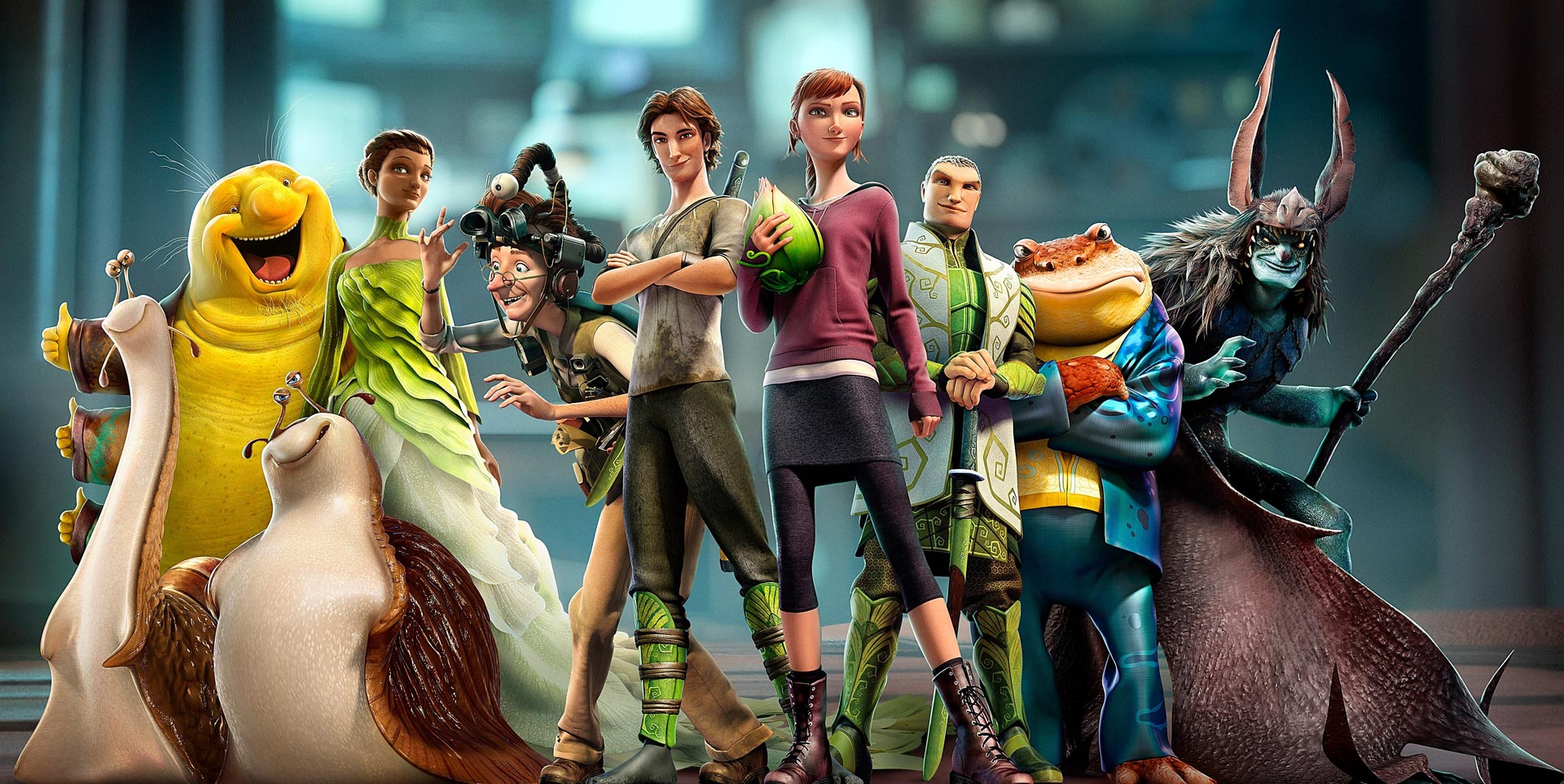
We’re taken down a hallway -littered with caricatures of other artists on the team- to the office nook of Warren Leonhardt, a key story artist on “Epic.” His office is filled with books and DVDs, including “Looney Tunes,” “Justice League” and Mad Magazine. He sits at a computer desk with his Wacom Cintiq drawing tablet, showing us a storyboard sequence from the film where a now-tiny human Mary Katherine (Amanda Seyfried) leads the Leafmen on a tour of her father Professor Bomba’s (Jason Sudeikis) lab.
“If you just look closely enough there’s a whole world right under your nose, but you’ve gotta be willing to see it,” Leonhardt says of the theme underlying the scene. “The sequence was eight pages of script originally, and we all bounce it back and forth until it becomes its own thing.”
Like a sophisticated flipbook, Leonhardt takes us through each roughly sketched black and white drawing, which shows the basic movements as the characters run and leap through all of Bomba’s equipment, articulating it by making sound effects with his mouth.
“It’s kind of like a combination of a tableread, dress rehearsal and rough cut all at once,” he continues. “I usually go lie on the couch and stare at the wall until a movie starts playing in my head, and once it starts I try to draw it as fast as I can, like I’m recording it rather than coming up with it.”
Wedge then leads us through a bank of cubicles where various technicians use proprietary ray tracing software developed specifically at Blue Sky to render out images in their final form with all the lighting and details. Once we reach the design and animation department these work stations become much more elaborate: One has a giant deer head mounted on the wall, another is a full-on tribute to “Family Guy” with a million toys from the show and a Drunken Clam neon sign. This clubhouse atmosphere does nothing to mask how serious all these artists are about what they’re doing.

We meet senior animator David Sloss, whose bookshelf with works by Richard Williams and Ralph Bakshi betrays a deep immersion in traditional 2D animation (he was trained in illustration at New York’s School of Visual Arts) that informs his current work with computers. He shows us the control rigs used to articulate the character of Ronin, a seasoned warrior played by Colin Farrell, with each nodule on the model controlling a different part of the body.
“We have movers that do big global stuff like move the arms around, bend him up and down, move him forwards and backwards, all that good stuff,” says Sloss as he controls Ronin’s eyes and jaw. “In the face we have tons of controls to get him yapping away. These controls allow us to create poses, a key concept in animation. Across the length of a shot we’re creating different poses, then the computer helps us get in-betweens for those poses and that’s how we end up with fluid animated characters.”

That articulation is also fine-tuned in the real world, where various animators will go to the studio’s Acting Room and film themselves acting out each part, often splicing together a rough version of the scene with one person playing all the characters. It’s not all pixels and rigs.
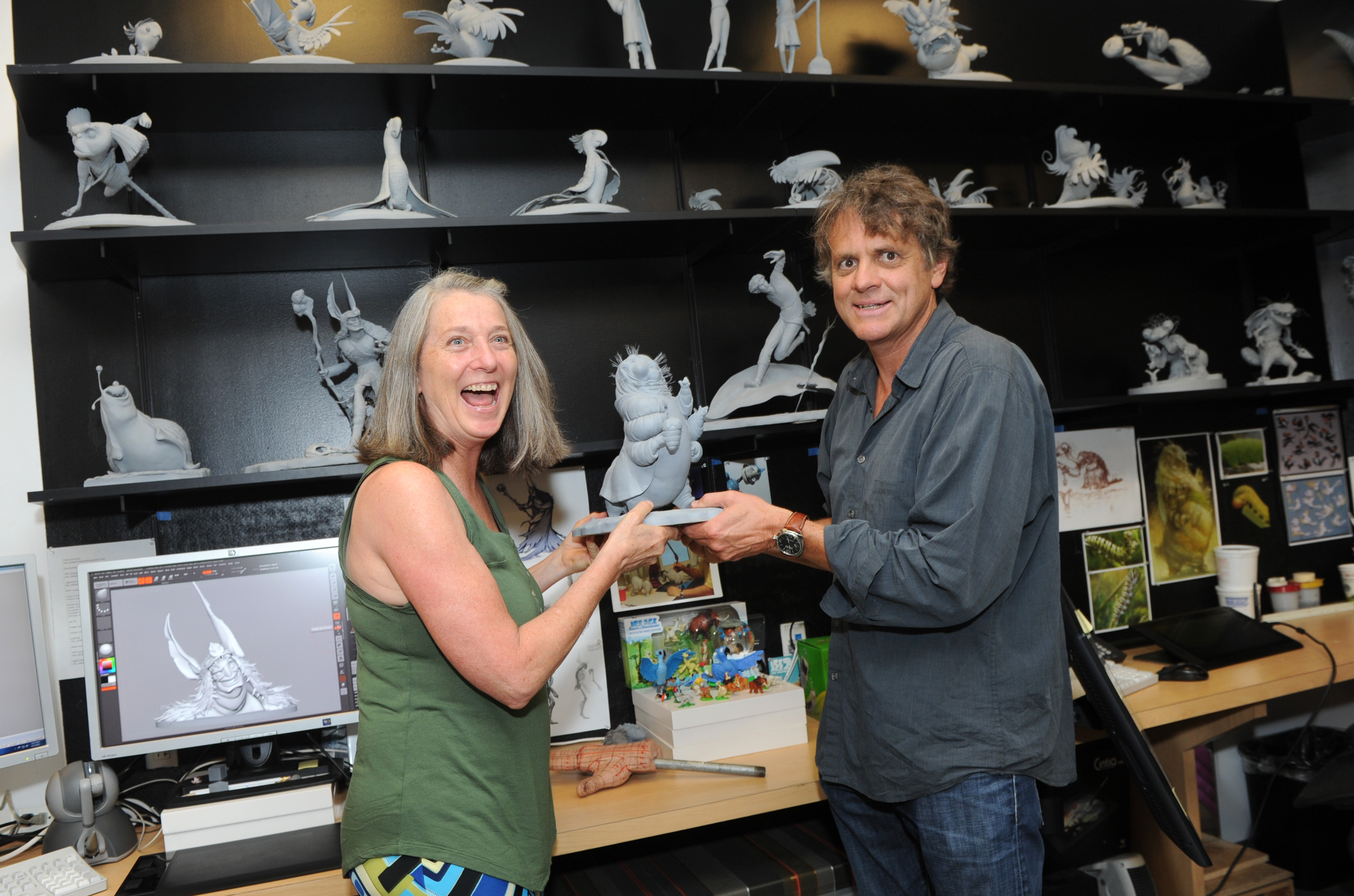
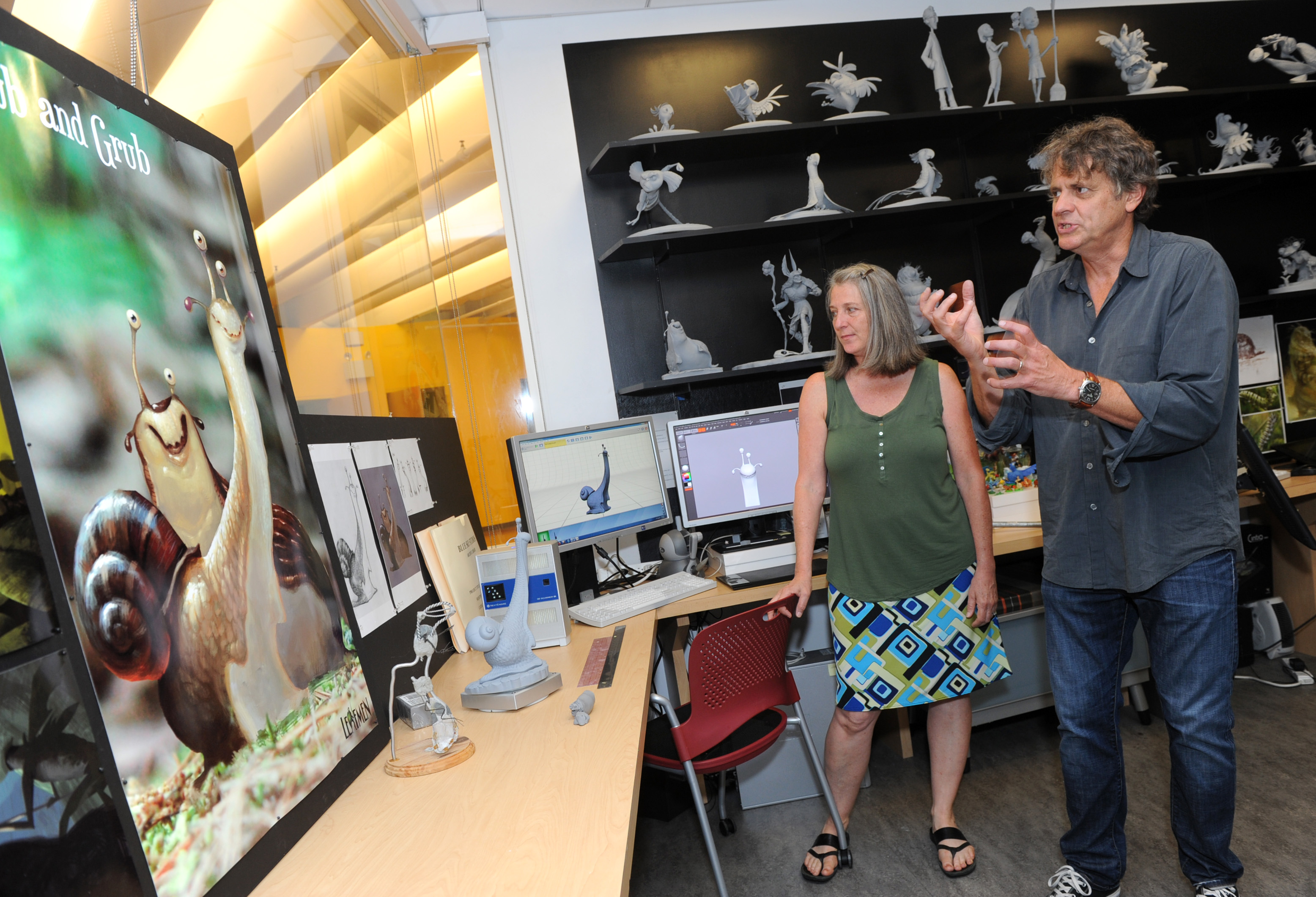
Getting into an even more hands-on aspect of production is sculpting and modeling, where Vicki Saulls works her magic crafting maquettes (little statues) of each character in order to visualize it for both animation and eventual marketing concerns like toys.
“She’ll get a design, but once you get into 3D you realize you were cheating in 2D or it will never look right from this angle or this angle,” Wedge explains. “Vicki’s gotta do a lot of problem solving.”
“We take the drawings and make sure it looks proportional, starting with a wire armature then building it up with Sculpy in clay,” Saulls says while pointing out a finished sculpt of the long-necked snail Grub (voiced by Chris O’Dowd). “You can see with Grub here we furthered along his texture, how you see it on his back and how it transitions to smaller up the neck. Also his neck became a little thinner and the shell got a little smaller for comedy. We add extra information.”

Wedge wanted to give audiences a truly immersive experience with “Epic.” Referring to previous “little people” films like “Honey I Shrunk the Kids” (with its giant plastic blades of grass) as “precious” and “soundstage-ish.” The director was looking to create nature with a sense of scale as well as unparalleled verisimilitude. Whereas other films would emphasize how small the characters are, Wedge wanted the backyard world to feel bigger.
“We looked at a lot of crazy, overcranked nature macrophotography for a lot of this stuff,” says Wedge. “What a newt that’s about an inch-and-a-half long looks like when the light’s coming through him so you can see his veins and his bones. When he moves in slow motion how he can just stand on the water if he wants to. We simulated stop-motion flowers opening up.”
Hopefully like those flowers “Epic” will flourish in its new life on home video, and it’ll be clear skies ahead for Blue Sky.
Trailer