
Christine Turner talks HomegoingsBy Wilson Morales
February 28, 2013

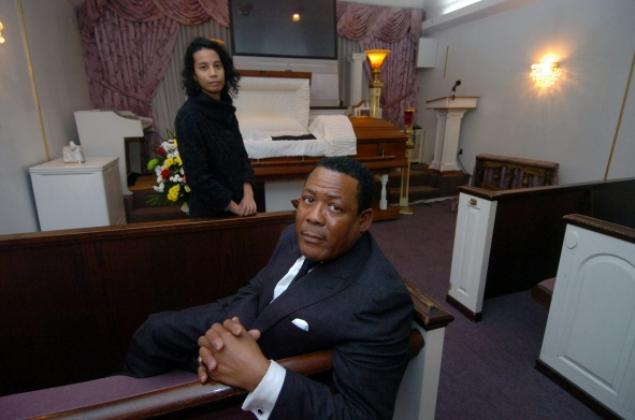
Making its World Premiere tonight at MoMA’s Documentary Fortnight 2013 is HOMEGOINGS, New York filmmaker Christine Turner’s debut feature documentary that honors the traditions of African-American funerals as told through the eyes of Isaiah Owens, one of Harlem’ most renowned funeral directors.
The film is also part of MoMA Selects: POV, an homage to PBS’s longest-running showcase for independent documentary film, with a special selection of films from the series’ past 25 years. Homegoings will make its broadcast premiere on POV later this year.
HOMEGOINGS tells the tale of how we cope with death and sending our loved ones “home.” Filmmaker Christine Turner combines intimate interviews and compelling cinéma vérité to paint an enlightening portrait—that is both heartwarming and haunting—of not only the dearly departed, but also the man who serves them so well.
 The premiere at Documentary Fortnight 2013 will feature a special performance by composer and violinist Daniel Roumain, introduced by Simon Kilmurry, Executive Producer, POV; followed by a discussion with Christine Turner and an appearance by Isaiah Owens.
As the daughter of a Chinese-American mother and an African-American father, Turner experienced two different sets of funeral customs when both of her grandmothers passed away within two weeks of one another. Though just a child at the time, she remained curious about the different ways cultures mourned death. Many years later, when she came across an article about Harlem undertaker Isaiah Owens, who had a reputation for beautifying the dead, she was immediately intrigued.
Blackfilm.com spoke with Turner as she about her debut film and passion project.

What attracted you to focus on Isaiah Owens?
Christine Turner: I was really drawn to Mr. Owens as a person and his passion for undertaking. I was really intrigue by the fact that, in a sense, he had been doing this his entire life. As a small child, he had an interest in this. He was scorned and rejected for this, but eventually took that passion and turned it into what it is today. It’s something that he’s revered and accepted. That particular trajectory was interesting. He found him incredibly warm and funny. It’s not something that one would expect based on our stereotypes of an undertaker. Usually, according to the media, they tend to be portrayed as cold and creepy. He’s the opposite of that.

In addition, the topic of death and the topic of African American funeral was something that was under explored at the time. I have been working on this for four years and there had been a long history in tradition of African American funeral directors. It was one of the first professions that African Americans could enter after slavery. That history interested me as a backdrop and I wanted to know more about it. I saw Isaiah as part of that tradition. What’s also interesting is that he chose this profession as opposed to something that was handed down to him. He sought this out on his own. It speaks to his passion for his work.
What got you involved in this particular subject?
 Christine Turner: I came across an article that mentioned how he had developed a reputation in Harlem for making up the dead. When I read the article, it brought me back to my own memories as a child when I saw the open casket funeral for my grandmother. It was the only open casket funeral I had ever been to at that point. That experience of seeing her made an impression on me. As I came across that article, I was reminded of that. I was intrigued by Mr. Owens and his ability to make the folks at funeral feel comfortable.
When you started this project back in 2009, did you have an idea as to how long you wanted to shoot for?
Christine Turner: Having worked on other documentaries for other filmmakers, I knew that when I started out, and this is my first feature and my directorial debut, that this might take a while. I didn’t know it would take quite as long as it did, but I made it while I was essentially working freelance and generally full time. I made it on weekends and in between my freelance gigs. That’s how the majority of the filming was done. When it came to editing, I was able to focus in on that full time. It may have taken a while but I was able to incorporate the variety of stories in the film.

How many hours of footage did you collect and how long did it take to edit?
Christine Turner: I had a strong sense after spending time on research on the kind of stories I wanted to include. I wanted to reflect diversity within the black community. I wanted to see different types of funeral services. The storytellers themselves were important; from the daughters, the sons, and the grandchildren. We filmed over 100 hours, maybe close to 130, and then we edited it down to an hour.
Was there a challenge to get it sold or attract distributors once the film was completed?
Christine Turner: The film was funded through grants; and through funds from PBS and other individual grant makers, so the film was never sold, sort of speak. They came on board during the process of me filming. I think it’s a challenging topic that many people would want to stay away from, but once people had a clear sense from my proposal, the treatment would be respectful and moving. I feel very fortunate that the people who came on board believed in the project and trusted in me to do the subject justice.
What do you want people to discover after they see this?
Christine Turner: I’m not sure. This will be the first public screening at the Museum of Modern Art. I’m eagerly anticipating what people’s reactions will be.