
Director Dean Hargrove Talks Tap WorldPosted by Wilson Morales
July 6, 2015

Coming out this week in in NY, DC and a few other cities on July 10th is director Dean Hargrove’s Tap World.
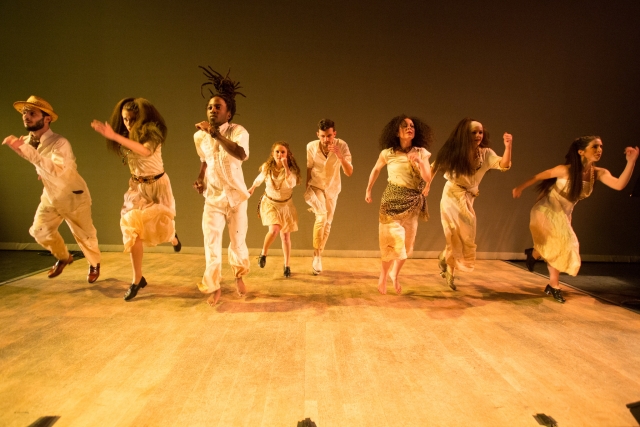
Released by Vitagraph , TAP WORLD is an award-winning feature-length documentary starring the most cutting-edge tap dancers from across the globe. Brought to you by the Executive Producers of the highly acclaimed short film, TAP HEAT, this documentary follows leaders of the art form who are shaping the community around them. Their personal stories of inspiration, struggle, and triumph are keeping this art form alive and thriving internationally.
For the first time, tap dancers of all ages were encouraged to share their individual journey through tap dance to be included in the film. Over 115 submissions were received from more than a dozen countries. The most compelling were chosen and weaved into the film alongside some of the Masters of Tap. The enthusiasm and support for this project clearly exemplifies the global growth appreciation and passion for Tap Dance.
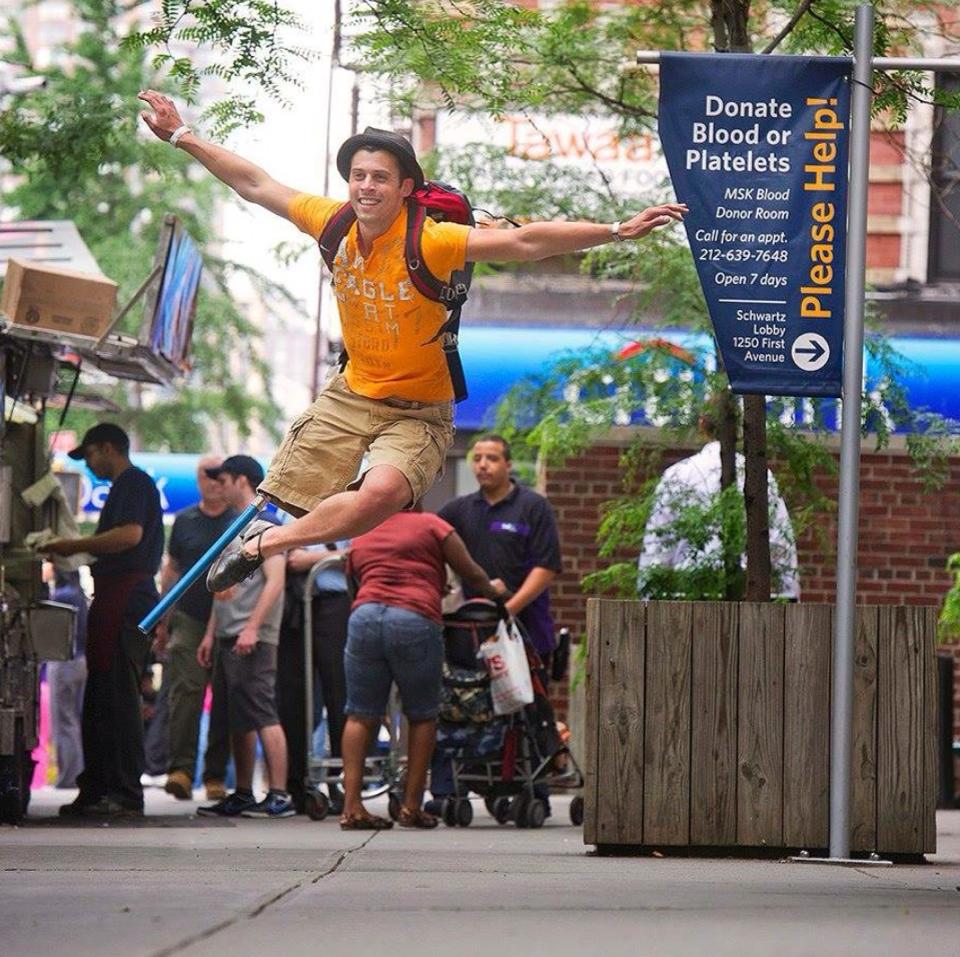
 From South African gumboot dancing to the barefooted Kathak dance of India, we witness some of the world’s best. Included are the acknowledged greats of tap: Baltimore’s own James “Buster” Brown, the pioneering Jimmy Slyde, teacher and Tony Award winner Henry LeTang, and the gone-too-soon Gregory Hines. And then there’s Joshua Johnson, who tapped on subways to earn college tuition, and dancer Evan Ruggiero, who lost a leg to cancer but carries on like his inspiration, Peg Leg Bates. “Rhythm is the music of life,” says one dancer, and Tap World proves the point.
The release coincides with Tap City, a major tap festival held annually in New York. It features dancers from all over the world.
For director Hargrove, who has written and produced numerous TV shows including “The Man From U.N.C.L.E.,” “Columbo,” “Matlock,” “Perry Mason” TV movies, “Diagnosis Murder,” and “Murder 101,” going into the world of tap is something new for the Kansas native.
Blackfilm.com recently spoke with Hargrove about putting this project together from the amount of footage he shot around the world.

What was the inspiration to making this movie?
Dean Hargrove: Twelve years ago, I did a short film, and I had been doing television features all my life, and I had an idea. It just occurred to me that there’s conventional tap, and sort of the new tap, which involves hip hop. I did a short film which contrasted the two styles and put them in a challenge and then in a number. It’s 14 minutes long and we thought it was successful. We liked it and it went to a lot of festivals. Since that time, I became acquainted with the tap community and tap world. I’m not a dancer and so I learned a lot. Once I got into that and started to know the people, I started fooling around with a number of projects and then I realized that we had the resources and the ability to do a much bigger project. Ridley Scott had a film called ‘A Day on Earth,’ which had cameras all over the world showing people do whatever it is they do on this one specific day. I though that maybe there’s a way of showing the globalization of tap. That’s how this began. I recruited Chloe and Maud Arnold, two sisters who are dancers and producers. They produced Tapfest and are internationally known. They’re very high profiled dancers in that community and connected to everybody.

They got on facebook and used their personal contacts. We reached out to every tap dancers that we could get in contact with and invited them to make submissions to us for consideration to be in the documentary. We received about 115 submissions from all over the world and we brought it down to a handful. The film is only 72 minutes long so we had to make some editorial decisions as to what we were going to keep. My feeling was that the dancing was going to be great but it’s going to be the stories that matter. That’s what will keep an audience with this project. I shot a bunch of stuff in New York, LA, South Africa and Tokyo. The other countries that include France and India were submissions which we selected and put through our own editorial process. That’s how we came up with a film.
The goal was not to make money. I funded this through my pension plan just to get it out there. This is such an underserved true American art form. I have very strong feelings for the people in the community and for the form itself. I made this film with the help of a lot of people and submissions from dancers all over the world. Now it’s going to theaters and at some point, we hope for it to be on a prime channel to get it seen. There’s also going to be an education dimension to this. It will be available to schools and other programs.
What stood out from the submissions you chose to include in the film?
DH: The big thing was the similarities in their stories. We looked for stories that were inspirations as much as the obstacles some of these dancers had to overcome. As you see in the film, there’s a young man who had to tap in the subway in order to pay for his education at Penn State; or the young man who lost his leg. We had a number of stories who had the same stories but had a dynamic and we tried to give the film as much variety as possible. There a little girl in Florida and was chosen to take tap dancing to control her autism, which is a touching. We also wanted to say that tap dancing wasn’t going to be a cure as well.
Is there a misconception as to why people tap dance?
DH: I don’t know. That’s a very good question. I think when people think of tap dance, they think of something that is very old and lot of young people, particularly young women, still take tap dancing lessons. I’m always surprised when I talk to people, some say, “Oh yeah, I took tap dancing when I was a kid.” But because there are not a lot of places to tap and you hardly see it in movies or variety shows, and rarely on Broadway, it doesn’t lead to a very good career path; except for those who are totally dedicated to it and do it for the love of it.
Besides the Arnold sisters, were there other well known figures you were looking to add in the film, like a Savion Glover for example?
DH: Savion is probably the best known person in the world of tap. Unfortunately, we couldn’t get him at the time.
After folks finish watching this doc, what do you hope they can walk away with?
DH: I would like for them to walk away feeling good because we want it to be inspirational. True dedication can overcome obstacles. We also want the recognition and appreciation of tap. Jazz and tap are the only true American art form and it’s an underserved medium. There are a lot of young individuals doing contemporary and unique dancing and those are the people we want to celebrate. The tap community is very good at recognizing its roots in terms of those who came before and we try to pay homage. We didn’t want to do archival footage. We felt that would fall into the current misconception that tap is. I don’t think people understand how much is involved and how much it has progressed and that’s what this film is starting to do. To show an appreciation and get people to understand it better.