
Currently playing in select theaters and streaming on Netflix through ARRAY Releasing is the award-winning coming-of-age drama JEZEBEL, directed, written, co-starring and produced by Numa Perrier.
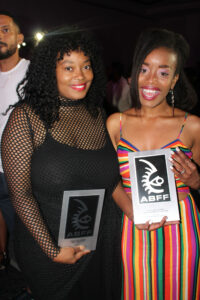
Winner of Best Director and Best Narrative Feature at American Black Film Festival in 2019, the film follows 19-year-old Tiffany (Tiffany Tenille) as she navigates her dying mother’s financial struggles. By working as an internet fetish cam girl in the 90s, the young woman uses her fantasy world as an escape from her real-life circumstances.
The cast includes Tiffany Tenille, Numa Perrier, Stephen Barrington, Bobby Field, Brett Gelman, Rockwelle Dortch, Zoe Tyson, Dennis Jaffee, & Jessa Zarubica.

In the last days of her mother’s life, 19 year old Tiffany (Tiffany Tenille) crashes with five family members in a Las Vegas studio apartment. In order to make ends meet, her older sister, a phone sex operator, introduces her to the world of internet fetish cam girls. Tiffany becomes popular as the only “live black model” at the new adult site and soon becomes too close to one of her frequent callers. Dynamics shift in the sister relationship as each woman explores and exploits their sexuality, using their created fantasy worlds as an escape from the realities of their challenging real life circumstances. This bizarre coming of age story depicts sisterhood in a most unusual way.
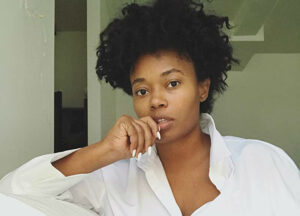
Based on Perrier’s true-life experiences JEZEBEL marks the writer/director’s feature directorial debut, which made its world premiere at SXSW 2019. Perrier also won The Craig Brewer Emerging Filmmaker Award at the 2019 Indie Memphis Film Festival.
Blackfilm.com recently caught up with Perrier as her film gets to be seen in theaters and on Netflix.
How did this story and project come about?

Numa Perrier: It’s my true life story. I lived this life with my sister in Las Vegas. Me, her and her boyfriend. My sister and I were working as phone sex operators so we didn’t have to leave our little studio apartment. It was funny and crazy but also that was a setup for different unusual experience and an unusual way to learn about sexuality for me. So our mother was really sick at the time and when we were going to visit her at the hospital, but we knew that she didn’t have much time left. So we were all trying to figure out what the next step for us would be because living in that apartment wasn’t tenable. My sister suggested that I try out this new thing called internet modeling at a fetish place. I didn’t know what a fetish was and internet was very new. We didn’t have it in our apartment. This was 1999. I didn’t really know what it was.

She described it as a peep show online and said it was no big deal. I would have to talk like she does on the phone. I went to the office and they hired me on the spot. I was the only black girl working there. The movie is about that experience, and how it changed me and how I came of age at that time. I was 19 years old. I was learning what it was to be a woman. It’s about my sister and I and how we had to take care of each other and cope with our grief when our mother passed away and we were basically the breadwinners of our household. That’s what the movie is about.

It came to be because I always knew I was a writer and I’ve been writing since I was seven years old. After a year of doing that job, I finally moved to Los Angeles to pursue my dream of acting and writing and eventually I discovered I’m a filmmaker as well. I’ve been making many films over the years, and many web series. I ran an indie streaming service, one of the first and only for black people called Black and Sexy TV. Through that 10 years of working with other people and making my own short film, I really thought I was ready to make my first feature. I though that this would be the most perfect and personal story to tell.

Now with this story, and obviously as a filmmaker, producer, as a writer, did you take any liberties for cinematic purposes?
Numa Perrier: It’s all my true story. Mostly, every scenario that you see on the screen really happened. I would say 85%. Some of the order is different, and some of the timeline was shifted around. It’s my perception on my memories. I’m going back 15 years to try to reconstruct some things in the way I felt it happened, but a lot of my memories that I had to really dig into are my truths, my backstory.
How did you cast Tiffany Tenille as your lead?
Numa Perrier: I found Tiffany in a a beautiful short film called Rubato directed by Erica Watson. When I was leading the charge at Black and Sexy TV part of my job there was just always be scouting for talent directors, actors, and everybody including cinematographers. I was always watching short films, interviewing people, to grow and expand that collective. That’s what I came across this film and I saw Tiffany in the first scene and immediately felt it in my gut that it was her. This is Jezebel. This is the actress that I had been looking for. She came on the scene with such presence and with an inner and outer beauty and sensuality and playfulness. That’s exactly what this role needed.

So we met and she had been following my work and I had been following her work. It was like, a really nice mutual admiration when we connected. And I told her about my story. And she came on board, and we were off to the races from there. Everyone else that was cast in the film for the most part were people that were either in my acting class, or were actors I had worked with in the digital space. With few exceptions, there are a few people that auditioned and were cast. I was also the casting director for the film.
As the producer, director, writer, actor and casting director, how did you balance each role?

Numa Perrier: I would put my talents in their own category and concentrate on that job at that time, but I also did not do this by myself by any means. We had a team and every team member was doing was doing more than one job. I did the job that I knew I could easily do. I did the production design and the wardrobe and the casting. My other producers were also doing three different jobs. Everyone was in that same independent spirit of just rising to the occasion of what needed to be done and what they’re still committed for. You just pick one thing at a time like okay, right now I’m looking at actors. Okay, so now I have a meeting with my cinematographer. It’s all about the look of the film now. Now I’m going to interview my sister because I’m playing her in the movie. Okay, that’s a totally separate chunk of time that I carved out.
In between the time between this coming out in theaters and when it first played at South by Southwest last year, you’ve directed an episode of Queen sugar. With your relationship with Ava DuVernay, ARRAY picked up this movie. How did that come about?

Numa Perrier: You can go watch on Netflix now as well. But you know the process to distribution is an uncertain terrain. Any indie filmmaker will tell you that. Any black filmmaker will tell you that. We’re kind of insane. We go in and we make the film and we’re like, “What’s gonna happen?” I always knew that Jezebel would find a home. I didn’t know how and when but I felt confident about this being a story that I felt would ignite something in people. The first step when you go to film festivals is a self rep will to reach out to you, or you reach out to. They want to represent your film. They want to be the one to cash in if anything big happens. A lot of reps had reached out to me because there was buzz on the film. But there were also a lot who wouldn’t take on the film because they felt they couldn’t do anything with it. They felt it was too small and there wasn’t enough star talent in it in their opinion. It wasn’t a right fit for them. That was really frustrating. Finally, a really great self agent came along and we’re started going out to different distributors. I said that we really have to go to ARRAY.

I really feel like ARRAY is the place for this movie. I eventually had to send that email myself directly to ARRAY and say, “Hey,” because I’ve been aware of them since they first started. I’ve been aware of Ava since she first started with her first feature film. We’ve been aware of each other from a distance. She supported my GoFundMe campaign. I just felt like the best place for a black film is a black distributor who has reach. That is ARRAY. They got back to me. Tilane Jones, who is now the President told me that the team was reviewing the film and I just waited and a couple of weeks later, my phone rang and it was Ava herself on the phone. She said that they wanted to put the black woman elbow grease together to make the film go as big as they can go. I was so happy because really, at the end of the day, they really were my number one choice and they are the perfect fit and I couldn’t be happier with where Jezebel is at now with that team.


Loading…