

Premiering today during Black History Month on HBO is the incredible new documentary We Are the Dream: The Kids of the Oakland MLK Oratorical Fest. Directed and produced by Amy Schatz and executive produced by Oscar winner Mahershala Ali, this heartwarming hour-long doc follows young students (preK-12) across the Oakland school district as they learn to literally raise their voices and deliver powerful orations during the annual nationwide competition inspired by Martin Luther King Jr.’s life and legacy.
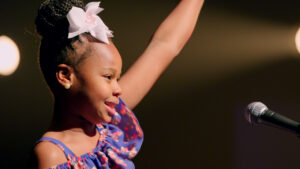
Every year in Oakland, CA, hundreds of pre-K through 12th grade students compete in the Martin Luther King Oratorical Festival, performing a mix of published and original poetry and speeches. This documentary chronicles the months leading up to the 40th annual festival, as schools across the city send their top-placing students to compete. It is a portrait of passionate young people raising their voices about issues they care about – social justice, immigration and more – and of a community that celebrates them.
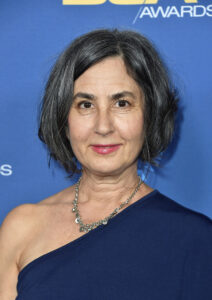
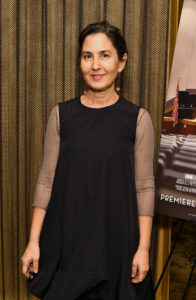
Schatz is a director and producer of documentaries and children’s shows and series such as Song of Parkland (2019), The Number on Great-Grandpa’s Arm (2018) and An Apology to Elephants (2013). In January 2020, Schatz won the Directors Guild of America Award for Children’s Programs for “Song of Parkland”. Schatz has also produced arts programs and documentaries for PBS. Her credits include the Bill Moyers series, Moyers on Addiction, A World of Ideas and What Can We Do About Violence? Her work has earned 8 Emmy Awards, 5 Directors Guild of America Awards,3 Peabody Awards, Parents’ Choice Award, the Gracie Award, 5 Animation Emmy Awards, and others.
How did this project come about for you?
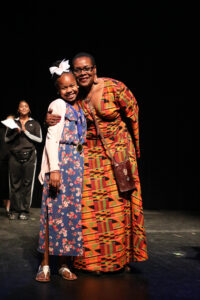
Amy Schatz: Well, I make children shows.That’s my area. I make a lot of programs that feature kids and are for kids and often they talk about some of life’s big issues; kids speaking from the heart about about some things that are on their minds. So this project came to me when HBO had asked me if I would develop a project about oratoricals. We had learned through one of our producers, Julie Anderson, that Martin Luther King at age 15 had participated in an oratorical and that was really interesting to us. We thought, “Well, let’s look into this.” Let’s see what’s out there today. We learned that Martin Luther King inspired oratoricals across the country. So that was a revelation. I had never really known about this phenomenon of speech competitions. That was the genesis. Our producer Diane Kolyer discovered this incredibly robust and creative and dynamic oratorical competition in Oakland, California. It was exciting to us because we just fell in love with it. It was full of poetry and speeches and original work and published work and it became apparent that it wasn’t just the kids going through a competition, but it was this community wide event and that was exciting to us.
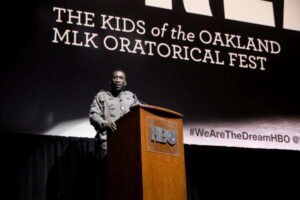
You have Oscar winner Mahershala Ali as one of the executive producers. Was that in the process of choosing Oakland?
Amy Schatz: It felt magical to have him come on board. We were we had already filmed and we’re working in the edit room on the documentary when this magical communication happened where he found out about the film and we showed it to him. He really particularly connected to it as a Bay area native. I think it was exciting and moving to see the voices that are coming out of that area. That was it was wonderful for us.
I’m sure a lot of footage was shot. When you’re editing the film, how do you choose which speech to show which kids to show which story to tell?
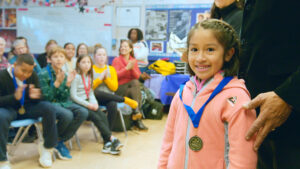
Amy Schatz: You actually hit the nail on the head. That’s the Biggest challenge when you’re working in a documentary. It’s the journey and you never actually know exactly what your story will be. The edit room decisions were difficult. There were so many incredible voices, so many deep thinking, beautiful moments, but the kids that we tried to fit as much as we could in, and one of the things that we thought originally is that this was a film that was about a contest and that, “Oh, well, our structures built in because we will find who the winner is.” Then when we were in the edit room, we really realized that it wasn’t really about the winner. There are many winners. But more was about kids grappling with some big subjects of today like race, social justice, gentrification, immigration, gun violence, being a girl, then ideas about kindness or what it means to do the right thing. The challenge in the edit room was how do we pack all this information into one hour. One of the things that felt so meaningful about it is giving the kids the space and allowing the film to have the space for this content that the kids were working on. Just give you a sense of what the kids are reflecting on in addition to mapping out this competition.
Did you know how you’re going to end it when you know it’s an hour program?
Amy Schatz: The length of it was really that the great thing of working for HBO is that can be any length and it needs to be. You build it from the beginning, right? So we started, and then we just edited our way to the end. We knew that we would end with the finals. But it as I mentioned before, it wasn’t really about the winner and seeing the metal put around the kids’ neck. But it was about giving you a sense of, “What are these kids saying about their world? Can we represent their hopes and their dreams?” The way we ended it really was giving you doing a montage of the various winners, whether they be first place or second place. Then also just hearing a little commentary about reflecting on the kids and them speaking from the heart and the benefit of poetry, the benefit of the word, and the legacy of Martin Luther King. When you’re working in a documentary, you sort of feel your way through. It just felt like let’s not celebrate the winners so much. Let’s leave it in a deep place.
With your history of working with kids, what did you learn in the process of filming this?
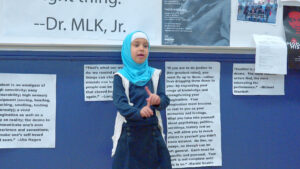
Amy Schatz: I think that the idea of the oratorical as is described by the founder is that there’s this idea of lifting up student voices, and that if we lift up student voices, we help them and we help our world. What I learned is that this whole community, these teachers, these principals, these coaches, families, that giving the kids so much love, and so much support that to me, it just showed what you can do, how you can help kids lives by supporting them and encouraging them to raise their voices. It’s also a love letter to teachers and to schools, showing what you can do when you when you put effort and how teachers encourage our kids above and beyond curriculum. I tend to think always that the kids are are deeply sophisticated and thoughtful and smart. But this project showed me how education and arts education can really help kids be their most extraordinary selves. That was exciting to make.
Some documentaries can be timeless, and this is one that falls in that rain. Is this a film that outside of HBO can be thrown in classes? Will you be taking this anywhere else?
Amy Schatz: The exciting thing is that HBO has is going to be offering this film beyond the paywall. So what that means is that it will be streaming for free on hbo.com, the day after the premiere, so then it will be available to anyone and everyone who has the ability to get on the internet. That’s really exciting. That means that it can be used in classrooms and it can be seen by many more people that would normally see it. They also are working on a curriculum plan for it. So Scholastic is developing that. There are some plans to extend its life beyond the HBO premiere which is very exciting to us.
During production, was there any particular scene or student that you saw and felt that it has to be included in the film?
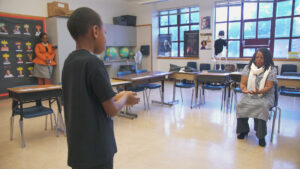
Amy Schatz: So many of them kept being awesome. When I interview kids, I’m moved to tears. That tells me that there’s something incredibly original in the material. There was one moment early on when I interviewed the boy from Sri Lanka. He is a new immigrant to California. His family had just come because he was newly in America, maybe a year and he had heard about the Martin Luther King oratorical contest, and he didn’t know anything about Martin Luther King because he hadn’t been raised in this country. He had this moment where he said, “Who is this Martin Luther King Jr.” I want to know that.” and he basically described his discovery of Martin Luther King Jr. and his astonishment and his incredible admiration and love from Martin Luther King Jr. That was a moment when I saw the legacy of Martin Luther King through this young boy who hadn’t known about him. It was so fresh and so extraordinary really to be talking to this boy who learned everything he could about Martin Luther King and then decided to write a speech about how King’s efforts made him think about the conflict in his native country. So that was exciting.
I think another moment in thinking about what Luther King is a little boy named Gregory, who decided to do a tribute to MLK in reciting some passages from the Mountaintop speech and just hearing his understanding, his emotional connection in the speech, he also brought MLK alive. Those are those are a couple of moments that give you a sense of how history can inform us today and how words are powerful and how the oratorical tradition really has something to offer these these kids today. I love all of kids for their own for their own reason, but those are two examples of moments that really moved me during the filming.


Loading…