
Exclusive: Dee Rees Talks ‘Bessie’ and Queen LatifahPosted by Wilson Morales
May 15, 2015

Premiering this Saturday, May 16 at 8:00 p.m. (ET/PT) on HBO is “Bessie,” the story of legendary blues singer Bessie Smith with Oscar nominee Queen Latifah (“Chicago”) starring in the title role.
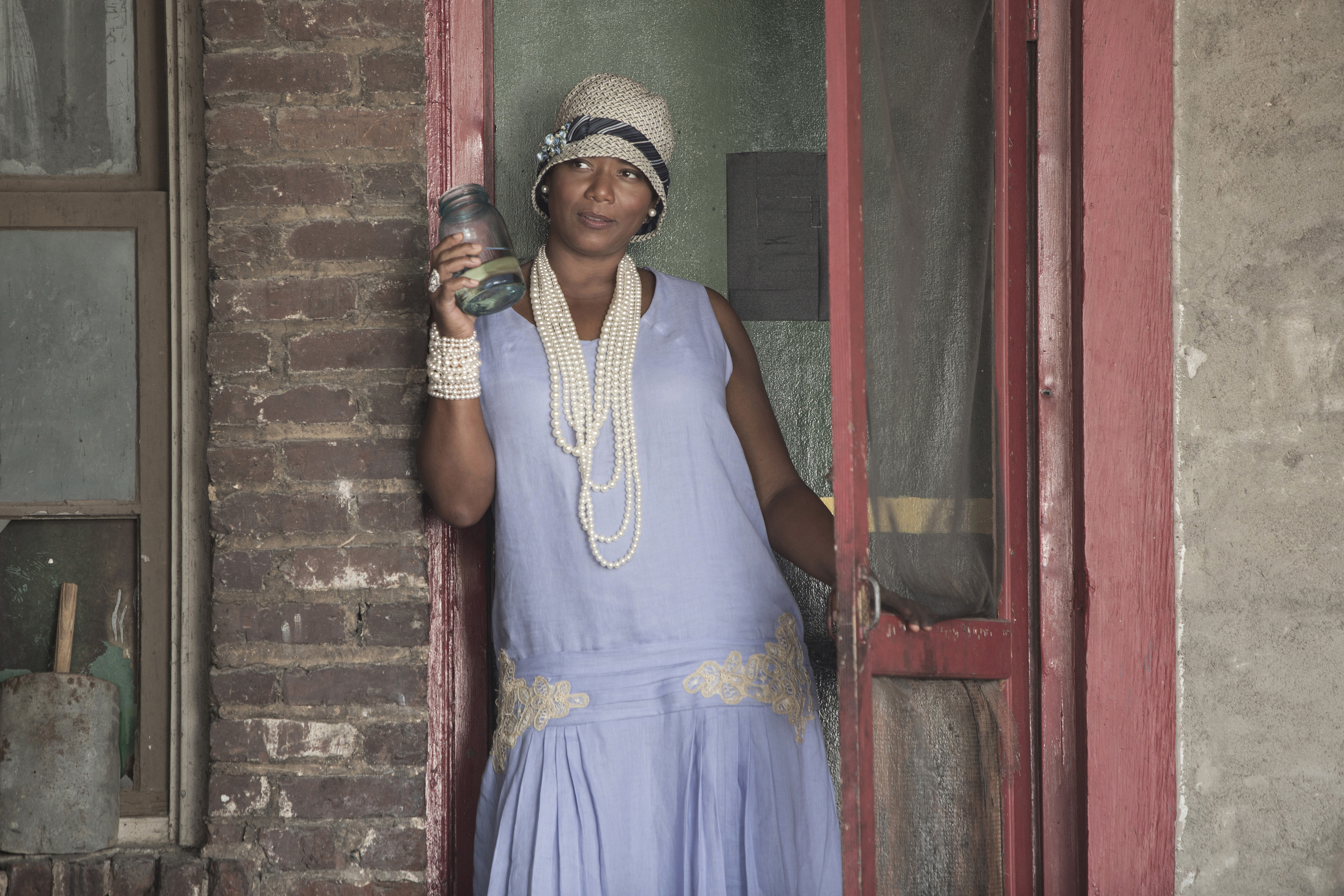
BESSIE focuses on the singer’s transformation from a struggling young singer into “The Empress of the Blues,” one of the most successful recording artists of the 1920s and an enduring icon today.
Directed by Dee Rees from a screenplay by Rees and Christopher Cleveland & Bettina Gilois, with a story by Rees and Horton Foote, the film is loaded with an all-star cast that includes Michael Kenneth Williams as Bessie’s husband, Jack Gee; Khandi Alexander as Bessie’s older sister, Viola; Tory Kittles as Bessie’s older brother, Clarence; Mike Epps as Richard, a bootlegger and romantic interest; Tika Sumpter as Lucille, a performer and romantic interest; Oliver Platt as famed photographer and writer Carl Van Vechten; Bryan Greenberg as renowned record producer and music critic John Hammond; with Charles S. Dutton as Ma Rainey’s husband, William “Pa” Rainey; and Oscar winner Mo’Nique as blues legend Ma Rainey.
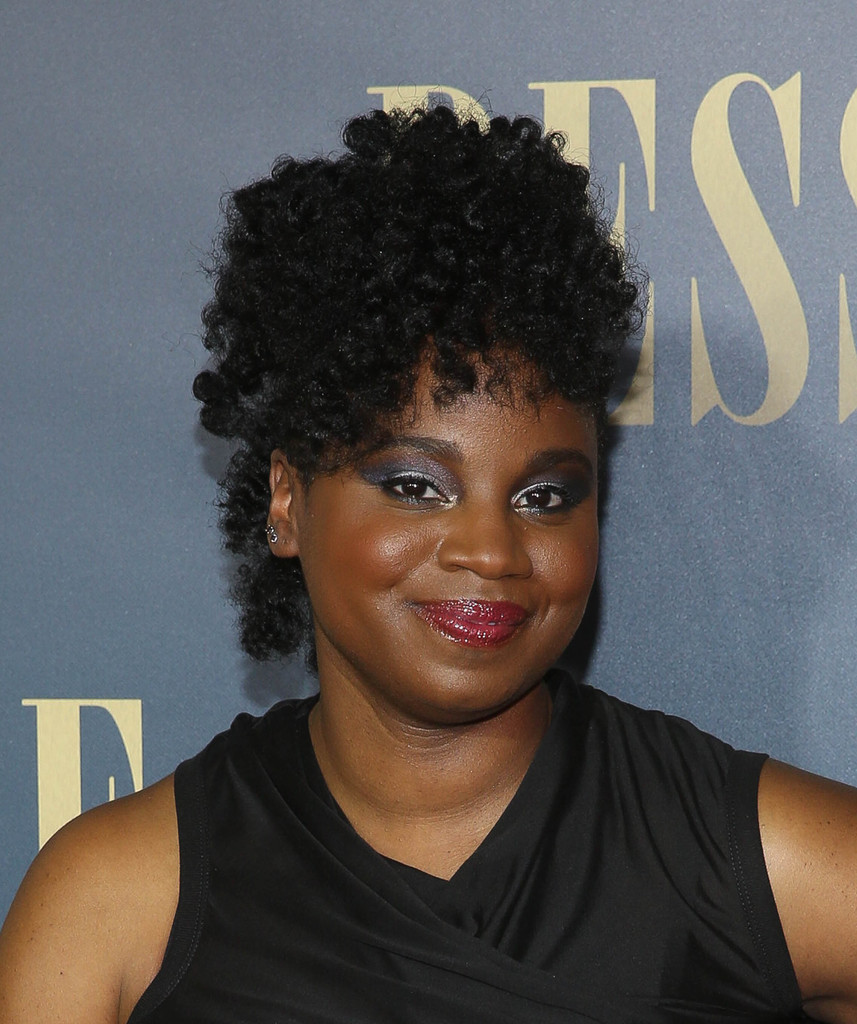
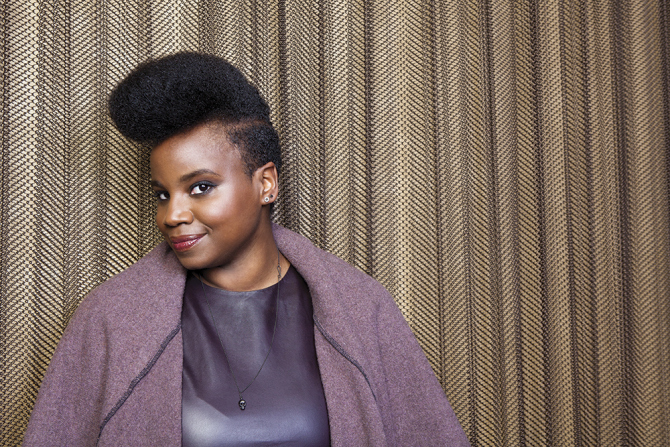
For Rees, this is her first film since directed the critically acclaimed film ‘Pariah,’ which made its debut at the 2011 Sundance Film Festival followed by a theatrical release later that year. Following this film, Rees will be collaborating with Shonda Rhimes and her producing team to adapt Isabel Wilkerson’s The Warmth of Other Suns as a limited series for FX.
Blackfilm.com recently spoke with Rees on working on Bessie from the story, the actors and the music.
What was the attraction to doing this project? With the many projects you wanted to do after your first film, how did this come about for you?
Dee Rees: Well, I started on this in 2012 and I came on as a writer, initially. But my attraction to doing this was talking about a figure that hasn’t been talked about before. So it was an interesting and complicated figure and a chance to bring somebody to life that I had heard about from my grandmother in my childhood. I just really wanted to get behind the anecdotes and get people behind with that they don’t know about Bessie and get inside her vulnerability.
Was there anything that you left out of the film or is it all there?
Dee Rees: Yeah, there’s a lot left out. But with any film a ton gets cut on the editing floor. You’re just trying to tell the story in the most concise way; in a way that the audience gets it. But I think what’s in there conveys my intention and still lets us go on her journey and really understand her relationships and the world she was operating in.
Getting your first film off the ground is a challenge itself. You’re coming onto this with a bigger budget, and a lot of big name talent. What are some of the issues you faced? Or was it easier for you this time around cause you got the first film off your back?
 Dee Rees: I think making this film was easier in some ways because the resources were there. It’s harder to make an independent film, in some ways, than it is a studio films. So with me, there’s just a lot more support from the creative side. There’s a lot more team members. And so everybody has their marching orders. And, yes, it’s like a village of artists. In some ways, this was easier because the resources were there, because the time was there. Yeah, I think my work as a director is the same, no matter the budget level, no matter the film. It’s always about the performances and how to get the performances. So that work with the actors doesn’t change regardless of the scale.
Hearing about ‘Bessie’ and hearing how long it took this project, knowing that Queen Latifah was onboard from get go, why do you think it took so long just to get it off the ground?

Dee Rees: I don’t know. I have no idea. I imagine they were trying to find…it’s kind of interesting. I don’t know. But when I came aboard, I re-did the script and really wanted to take it from the personal perspective and really let it be a Bessie that you don’t know. I think that maybe that’s why this is the version that got green lit and this is why the film is now knowing. But, yeah, I have no idea. You’ll have to talk to the other producers about that.
It’s interesting when you think about the last two films you did. I think of two words — “fear” and “fearless”. In “Pariah” you have a woman who’s fearful about coming out. And in this film you have a woman who is “fearless” and doesn’t care about coming out because people know. Was that something you thought about as you did this movie, comparing to your last film?
 Dee Rees: No. Not ostensibly. But in ‘Bessie’, I just wanted to paint her as a woman who decided things for herself. Actually on the inside, Bessie is a person who hurts, is a person that’s afraid to love. But I think she wears her armor. And so, in that way, the characters are like, she doesn’t allow herself to love or be loved completely. She’s always…even though when she does speak, she says what’s on her mind, there are moments where she’s saying what’s on her mind. There are moments where she feels rejected or she feels alone. I think there are a lot of similarities in the characters in that way.
Then there’s your performances, which I think you brought out the best in everybody. I think we’ve seen what each one can do. But they’ve thrown another octave in their performances here. Can you talk about Latifah and what you wanted her to bring to the table that we hadn’t seen before?

Dee Rees: Yeah. So just in working with Latifah, I just like to work on a personal, one on one, level. I’m not like shouting commands across. I like to go up and talk to people. And before we even get started I just like to lay down the relationship. I’m working with Latifah and Monique getting the marring and everything down. Letting them spitball. And working with Latifah and Michael K. Williams and let them talk about their relationship. And did a ton of truth or lie exercises. And same thing with Latifah and Tika Sumpter, who plays Lucille. I just really try to workshops the relationships one on one so that by the time they get to set that foundation is there, that intimacy is there, that comfort is there. Then we’re just like blocking it…we’re just kind of like playing with it, getting the nuance out of this. Just like talking to her before about the character, about the loneliness, about the vulnerability. Playing the inside of that versus playing the outside.
Was there ever a challenge as far as how to film the musical scenes or what numbers you wanted to draw in there that we haven’t seen already or that we’ve heard already?

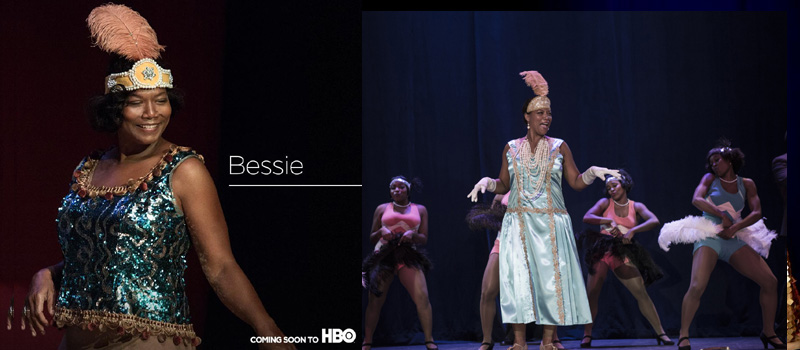
Dee Rees: Yes. I personally chose writing the script that were not her top hits or songs that you might not have heard. I tried to choose songs that really take her on an emotional journey. So you start with ‘Young Woman’s Blues’, which is like this manifesto of self. She tells me who she is. She tells me who she isn’t. Then she goes on throughout the film and contradicts herself in some places and supports herself. And then ‘I’ve Got What It Takes’, that’s the statement of Bessie not being where she wants and feeling like she has the talent. She wants more. She wants more autonomy. Then I used ‘Weeping Woman Blues’ as like a good song for Bessie and Ma Rainey to kind of like be this interesting duo. It was empowering forced women in the audience. ‘Downhearted Blues’ because that was her first song. So and like ‘Preaching the Blues’, for example, she stands down the Klan but it helped contribute to the evangelical atmosphere. I meant to show how the people see Bess as a liberator. It’s not just a song. There’s a woman who’s talking about sexual empowerment. The biggest song ‘Long Old Road’, I recommended for her last journey. That’s a good motif for it’s curiosity about life. It’s just relentless kind of pursuit of what’s next. She’s not giving up. She gets knocked down. Just like the lines of the song, ‘Picked up my bag, baby, and tried it again.’ So I really just tried to choose songs that she, herself, wrote and kind of spoke to her psychology.

There’s a lot that’s packed in this movie. This is a film that could actually have been played in the theatres. Not just Bessie, but at Ma Rainey, and the women of that era and how rare that they’re talked about. Obviously, if you’re in the music business you know who they are. But for the outside world, you hear their name in passing. Is there a chance that you would think, either as a director, or just as a person who loves movies and music, that you think these individuals, Ma Rainey, as well as Ethel Waters could be shown on a big or small screen?
Dee Rees: Yeah, I think there’s room for more films about Ma, more films about Bessie. All the women. Because their stories haven’t been told. And there’s so much to say. Especially, from the personal level. Just kind of getting behind the anecdotes, getting behind the bureaucracy and trying to get to really understand these women who, in a lot of ways, are reflecting each other. Like Ma is the prototype, Bessie’s the production model. Then you have Billie coming along. And even contemporary artists like Nina Simone. Like all these people, the work continues on. The work is echoing the artists that we hear today. We’re influenced by in ways that we may be aware of and may not be. I hope that more stories do continue to come up about these women. That there’s room for more than the single narrative.
Along with this movie, you have a full team in here because this is not just a film, this is a period film, which everything has to be on point, from the music, the clothing, the dialogue and the time setting. Is that something that you concentrated heavy with your team?
Dee Rees: Yeah, well, the dialogue, I did that. And I worked from old song lyrics. I worked from books. I worked from the way they spoke at the time. That came from research. In terms of the costume, there’s a great photographer named Richard Samuel Roberts, who did all this great portrait work. We used his work as a reference point in terms of clothing. Michael T. Boyd was the costume designer. He had these pictures up all over his office. In terms of the choreography, we had Vernel Bagneris who actually did the stage production called ‘One Mo’ Time’ in the ’70s, which was one of my first introductions to the music and the Black vaudeville. We had these collaborators always working together. But in terms of creative reference, we’re all working from the same Bible just the way we had been. Like reference photos and people were pulling things and being inspired and finding new things that had to do with it. I think, yeah, in that way, it was a more expansive search. Everybody was doing research. But it starts with the script and just really getting the language right and getting the era right. And the photographer. Like portraits are from the time was invaluable.
 One of your upcoming projects is working with Shonda Rhimes on a new series. What can you say about that? And are you prepared to work on a full series?
Dee Rees: Yeah. Absolutely. It’s like an epic story. I read the book a couple years ago, actually. It’s exciting to work on. It’s a really epic story that spans multiple time periods. I think it’s going to be very strong. I was drawn to that because of my own path along the great Black creation for movies here in California. It’s going to be a great one to tell. I think we’re going to see a chance for more surprising images and the way to see the past through a different lens. It’s not going to feel like just a history lesson. It’s going to feel like a communication of relationship through characters.
Come this Saturday, for those who don’t know who Bessie is but want to see it because they know who’s in it, what’s a good reason to see the film?
Dee Rees: I think because you take away the idea that the journey isn’t over. It’s like we’re all on different paths. Like self-actualization and exploration. I think if seeing it from Bessie, this woman who reinvents herself time and time again. I think you’re going to be moved by the performances, and by the music.