

Today marks the 20th anniversary of the release date of Malcolm D. Lee‘s feature directorial debut, The Best Man.
Starring in the film were a cast of familiar faces and some who would have breakout roles. The cast included Nia Long, Morris Chestnut, Taye Diggs, Sanaa Lathan, Terrence Howard, Harold Perrineau, Monica Calhoun, and Melissa De Sousa. Making her film debut was Regina Hall and in an uncredited role as a bachelor party and wedding guest was Brian White.
Produced for $9M dollars, the film opened #1 at the box office with $10M. It was the only film from a black director to have the top spot that year and the first since Spike Lee, who also produced this film, had his film He Got Game come #1 back in May 1998.

The soundtrack helped contribute to the success of the film with artists such as Maxwell, Eric Benét, Beyoncé and Marc Nelson, Me’shell Ndegeocello, and Case, Ginuwine, RL and Tyrese (“The Best Man I Can Be”) bringing their vocals to the mix.
But it was the storytelling that sold and sold and sold. Educated and successful black folks going through normal problems like anyone else, but with romance and comedy involved. That resonated with many and word spread about this film. It would be 14 years later before the gang got together again for The Best Man Holiday. With Lee came a new voice to the Hollywood scene and he has succeed since then with nine more films, including his biggest hit Girls Trip.
Just before his best friend’s wedding the life of Chicago writer becomes crazy when his friend guesses that his new book’s story is based on his bride’s fervent past.
Blackfilm.com caught up with Malcolm to discuss the anniversary of the release date and why the film is still watched and loved today and be considered a classic.

As the film’s release date hits 20 years, folks still talk about it as if it was released yesterday. Can you talk about the impact of the film that people consider it a classic.
Malcolm D. Lee: I‘m very grateful and gratified that it is touched people like that. There’s a lot of talk nowadays that representation matters. It has always mattered. That was the reason I made The Best Man in the first place. I didn’t see myself with the people that I was going to school with, that I hung out with, or that I associated with as being characters on screen of the movies that I saw. Especially when it came to educated black people. It’s going to sound presumptuous but at the time I set out to make a classic. I set out to make a movie that would stand the test of time. By the grace of God, by the actors who embodied their roles, by the fans who came out in droves to see it, that’s the case and that’s how people feel about it. It’s a timeless thing. I get a lot of emails or comments on social media from folks who say that they grew up on this. It was a projected way that they saw their lives, how they wanted their lives to be and the kind of friends they want to have. That’s a blessing. That’s a beautiful thing. I’m happy that people still feel that way about it.

A classic can be considered because of a couple of things. Either the story resonated with a lot of people, or members of the cast have gone on to do different and other successful projects that you think about how they all started, or both. That was the case with this film because they’re continuing to work. Was it challenging when you put together a cast that most people weren’t even aware of?

Malcolm D. Lee: They weren’t complete unknowns. There’s certain people who they weren’t aware of. They were aware of Nia, of Morris, who were stars in the black films. Although Morris hadn’t had a breakout movie (since Boyz N the Hood), women loved him. Terrence (Howard) was on the rise. He got a big bounce from The Best Man. Taye (Diggs) was up and coming. No one knew Sanaa at the time or they were unaware of her. Harold Perrineau was known because he had done HBO’s Oz and was in Romeo + Juliet. I wouldn’t say that that there was unknowns. They were all actors who studied their craft and got their start being an actor. Not rapping or being a singer or anything like that. Monica (Calhoun) wasn’t known but got a bounce from The Players’ Club. They had something that they were bringing to the table.

Earlier that year, The Wood had came out and that was Rick Famuyiwa’s first film. With you, it was also your first film with a studio as well. Were you given full control from Universal and leeway with how you wanted your film to be?
Malcolm D. Lee: I would say Spike (Lee) was a big part of that. As the producer of the film, he protected me as the filmmaker. He kept the studio at bay. The good thing about a movie like The Best Man or anything within that budget range, is that studio has bigger fish to fry. Although there were executives on the movie that really cared about it, it was a small investment for them. I didn’t have any horror stories. There were a couple of crazy suggestions as far as casting. There were ideas like, “Can you put Magic Johnson in the movie?” “Can you put Michael Jordan in the movie?” “Can you put Babyface in the movie?” I was like,”What? What are you talking about? That’s not going to happen.”
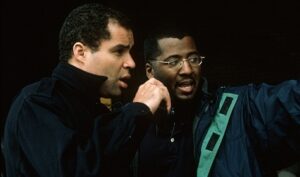
I have to say that having come from Spike’s 40 Acres and a Mule production camp, I had a confidence about me and a vision for the movie that wouldn’t allow for something crazy to happen. The craziest compromise and it wasn’t a huge compromise was that the film was originally supposed to take place in Washington D.C. and but it was cost prohibitive so we had to shoot in New York. First they wanted Chicago, but it was then decided to shoot in New York. That was the biggest compromise that I made. I just rolled with it. Once I demonstrated that I can get a story told from the first few days of dailies, then they were like, “Ok. This guy knows what he’s doing.” That was one less thing that they had to worry about.

I’m sure they were pleased once the film hit #1 at the box office.
Malcolm D. Lee: They were believers before that. This was the tail end of black movie soundtracks doing well. Sony Music had put a boatload of money into the soundtrack. That got a lot of attention. I was having phone calls with Michael Jackson and Prince. I met Prince in person. A lot of artists wanted to be part of the soundtrack. They put a lot of money into the marketing and we got a great bounce from Urbanworld Film Festival. That propelled into a great word of mouth. That led to a #1 ranking at the box office. They were very, very happy with that. It was a genre that had been explored but hadn’t had an effect like the way The Best Man did, especially opening weekend.
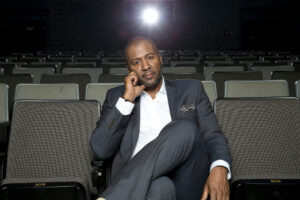
Speaking of The Wood, had we come out first, which Spike wanted us to do. In fact, they (The Wood) were just wrapping production when we were about a week away from shooting. When Spike heard that there was another movie about African Americans and a wedding, he was like, “We got to get out there first!” I did not want to be rushed. I felt that we would be ok. Though I do believe that we would have done better at the box office had we come out before or if The Wood did not exist. I’m sure there were people that thought “same movie, same cast” since both films had Taye and Sanaa. I don’t know if it was fatigue or confusion and it was three to four months apart.
You came back over a decade later with The Best Man Holiday and that also did well at the box office. Will there be a third film?
Malcolm D. Lee: We’re still talking about it. We’re hopeful. I would say to stay tuned. There’s a lot of discussion about it.



Loading…