
Exclusive: Lena Waithe Talks Ready Player One, Playing Aech, & Staying GroundedPosted by Mike Sargent
March 23, 2018
WARNING THIS INTERVIEW HAS MILD SPOILERS)
To be black female and queer is the ultimate game changer in Hollywood in the wake of #Oscarssowhite; and the #metoo movement actress, producer, screenwriter, and Emmy Award winner Lena Waithe has become exactly that. It is only fitting that she should be featured in the ultimate gaming film directed by the ultimate Hollywood game changer himself Steven Spielberg.
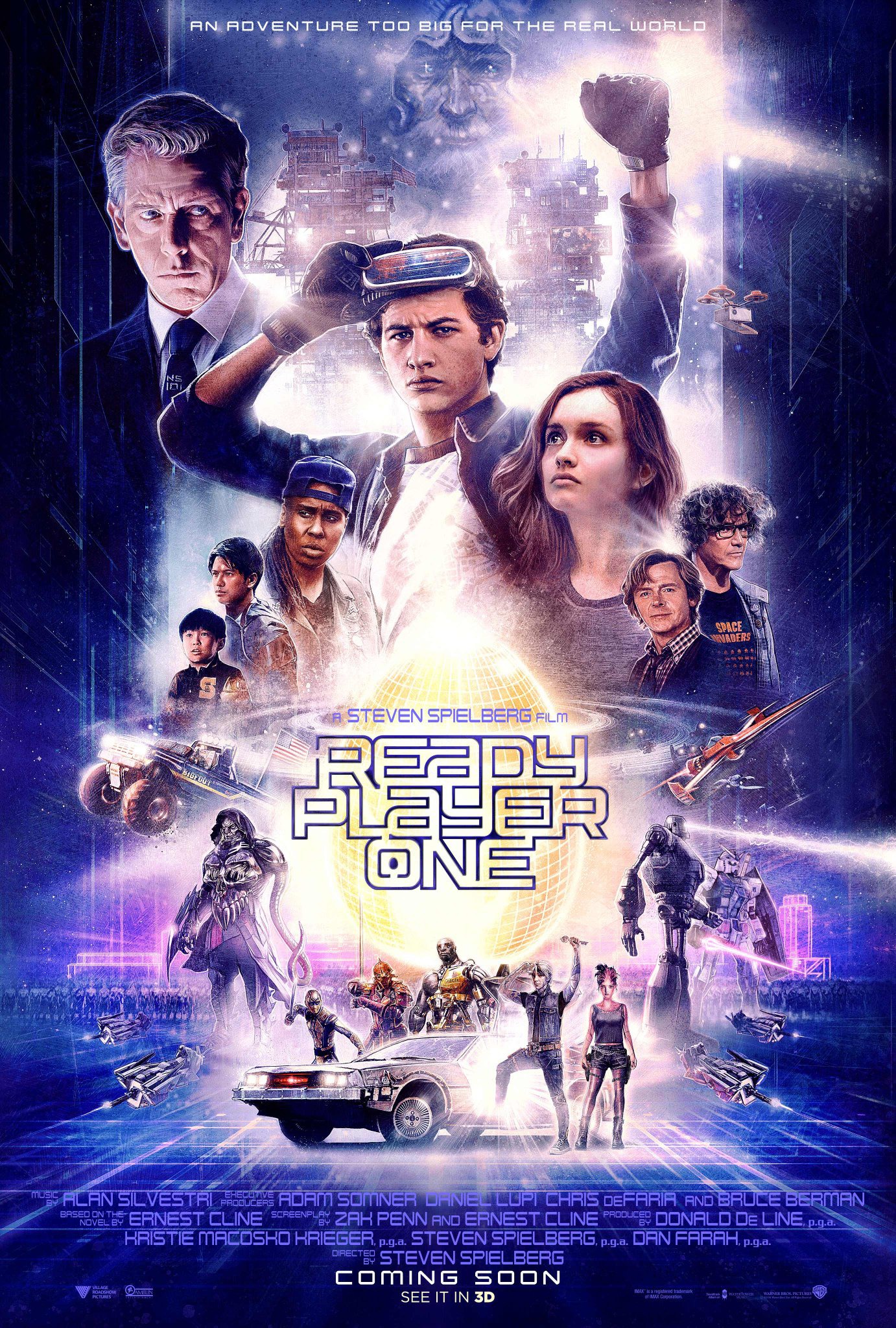
The film is of course Ready Player One, which is based on Ernest Cline’s bestseller of the same name, which has become a worldwide phenomenon. Directed by Spielberg, the film stars along with Waithe; Tye Sheridan, Olivia Cooke, Ben Mendelsohn, T.J. Miller, Simon Pegg, Hannah John-Kamen and Mark Rylance.

The film is set in 2045, with the world on the brink of chaos and collapse. But the people have found salvation in the OASIS, an expansive virtual reality universe created by the brilliant and eccentric James Halliday (Mark Rylance). When Halliday dies, he leaves his immense fortune to the first person to find a digital Easter egg he has hidden somewhere in the OASIS, sparking a contest that grips the entire world. When an unlikely young hero named Wade Watts (Tye Sheridan) decides to join the contest, he is hurled into a breakneck, reality-bending treasure hunt through a fantastical universe of mystery, discovery and danger.
Waite, plays Wade’s best friend in this Virtual Reality universe Aech. Best known for her role as Denise on the 2015 Netflix series Master of None, Waithe made history at the 2017 Emmys when she won an award for Outstanding Writing for a Comedy Series on Master of None, becoming the first black woman to do so. The Chicago native is also the creator of the Showtime drama series The Chi, which was recently renewed for a second season.
Blackfilm.com got a chance to catch up with the extraordinarily busy and prolific Waithe as she’s promoting her film debut as an actress in Ready Player One.

When did you first know you wanted to be a storyteller?
Lena Waithe: I think when I was a kid, watching TV and obsessing over movies and things like that. I don’t know if I knew I could pursue a career in it until I was in high school, but I’ve always been obsessed with movies and television. So maybe I think really early on.
Human beings have been telling stories forever, every culture, from cave drawings to camp fire stories. Why do human beings need stories, what do you think the purpose of story is for humans?
Lena Waithe: I think it’s so that way we can remember we were here. That we existed. So, that way people will always know who we were. I think that’s why I tell stories, they’re a bit of a time capsule almost. And I’m honored my stories maybe considered a time capsule or that I could be a part of movies that could be considered a bit of a time capsule of the time in which we live. So, I think it’s really important that we came to tell stories.
In your estimation, what makes a good story and a story worth telling?
Lena Waithe: One that’s personal. One that you’re afraid to tell. One that makes you nervous to tell it because those are stories I think that need to be told.

I can’t agree more. Tell me about getting the role of Aech and getting the chance to work with Steven Spielberg. Because as an actor, it’s a great privilege but I also have to imagine as a writer, producer, creator of content, a storyteller, you’re working with one of our living masters. How exciting was that for you and what were your thoughts going in?
Lena Waithe: Well, it was exciting. I never would have thought I’d be in a Steven Spielberg movie, but I’m grateful that (casting director) Ellen Lewis saw my picture in the Hollywood Reporter for ten stars to watch or whatever it was and said, “Hey, we should call this girl in.” So I just went in and read. And with her and Leslie Feldman who does the casting for Amblin Entertainment. And they worked with me and then they called me to come in and read again and then I got a call that Steven saw my tape and chose me to play Aech. So that’s really how that came about; really due to really diligent casting directors and obviously Steven seeing something in me when he saw my tape. But I think working with him is something that you never forget, and it’s a phenomenal experience. It’s unlike anything else. I think the big reason is because he’s such a kind, giving, generous human being. He’s also a family man so you feel that vibe when you walk on the set. I’ve had a wonderful, wonderful time making this movie.

Can you talk about playing Aech and knowing that they were going to play with your voice and whatnot and there’s probably, hopefully people out there that don’t know the big reveal. So what was that like for you and what was you thought about playing that character, did you know what you were going to sound like?
Lena Waithe: I didn’t know what I was going to sound like. I think Steven didn’t know what I was going to sound like. He knew he wanted to alter my voice to protect the secret from those that walk in blind. But, I remember sitting through many a ADR session as he tinkered with it and the amazing technicians worked with it. So, that was phenomenal. I think for me what was exciting was the idea of playing two characters. We all sort of do. I ended up playing three ’cause I’m also the Iron Giant. So I have to move ….

Yeah so I worked with a lot of acting coaches to help me with moments and make sure the Iron Giant’s movements were different from Aech and that Aech ‘s movements were different from Helen who I am obviously in the real world. So it was really just a lot of character work. And playing with movement, which also says a lot about who each character is. It was just really exciting to me, I really liked the challenge, I really gave it 120 percent.
You’re someone who clearly represents so many things for so many people, as a writer, as a person of color, as a queer person, all these things. Playing a character like this, not only have we not seen this on screen but, especially in the future. What are your thoughts not just on today’s representation but about how it will be represented in the future. Did it make you think about that and has that influenced anything that you want to do coming up?
Lena Waithe: What do you mean, the technology part?

Well, just the technology part and we’re right on the cusp now of Black Panther and Afro futurism and just how we are seen, all of us are seen in the future.
Lena Waithe: Right, I think it’s important for us to be represented. Not just in front of the screen but behind the screen. And to have a wide variety of representation. Whether it be Black Panther, whether it be my character in Ready Player One or Moonlight or Get Out, I think we should have a variety, I think that’s the mission. That way we don’t feel like we’re only being seen as one thing.
Just to touch upon some of the things that you’ve done, because a lot of people know you from your character in Master of None, and that was something where the character was not written that way.

Lena Waithe: Yeah, the character was there. I think they really were open to would play her. But, the character Denise was always a part of it and they said they always wanted a girl be a part of the crew, but I think they just sort of didn’t know who that girl would be. And I’m grateful that they went with a girl like me. Who was a person of color, who is part of the queer community, who walks in the world the way I do and I think it really sort of added another level of inclusion, I’ll say to that group and that show and it’s made the show even that much more unique. The show was already unique and fresh, but I think having me in the cast really added another layer to it.

Well, I think the same thing in Ready Player One. When you first read the book, I’m imagining you read the book and then the script or, one and then the other.
Lena Waithe: Yeah I read the script first then I read the book. But I love both.
What did you feel you could bring to Aech that maybe was there or wasn’t there on the page?
Lena Waithe: I think a lot was already there on the page. I think for me, I was wanting to play my own swag, my own cadence to it. Which, gratefully, Steven really liked and really wanted me to bring that and then once he saw it he wanted me to bring more of it, which is really wonderful and refreshing.
You’ve been quoted as saying it was one of the most joyous times of your life working on this film; and for you as a storyteller, what were some of the biggest take aways from this experience and have you actually seen the full film yet?
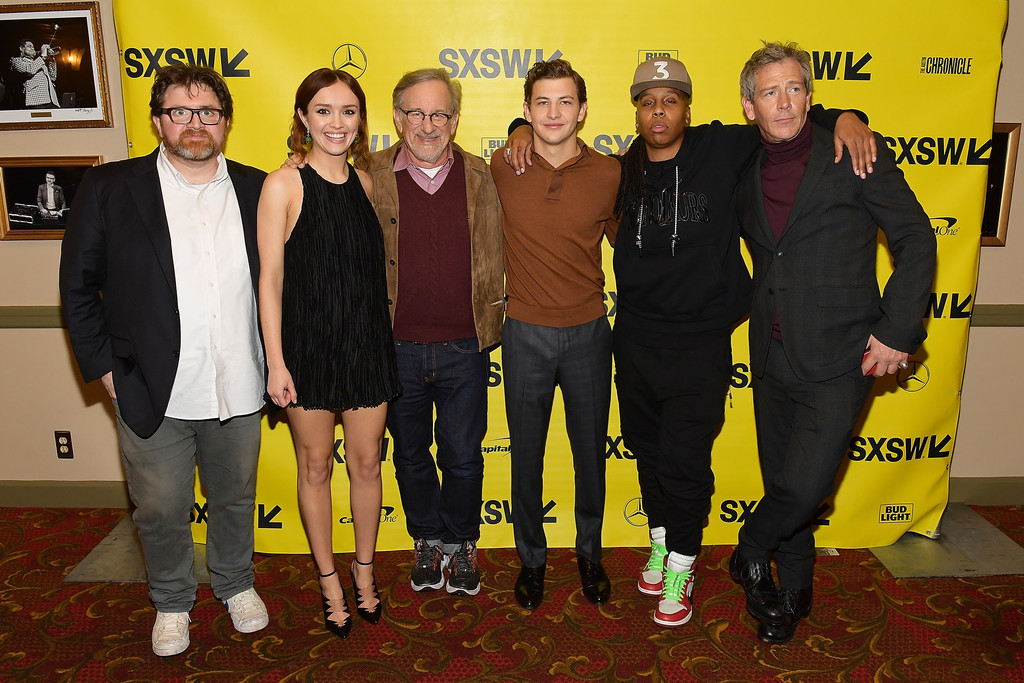
Lena Waithe: Yeah, I’ve seen it twice. I saw it on the Warner Brothers lot with some execs and I saw it obviously at the SXSW surprise premiere. First time I saw it I was blown away, the second time I saw it, I was even more blown away because the audience’s reaction really got me hyped as to how big this movie can actually be. I was just so happy that people loved it, ’cause you never know with stuff, you really don’t. You don’t know what you have until the people tell you. And the people cheered and stood up and clapped and applauded in Austin and we all kind of took one collective big sigh of relief.

What keeps you grounded with all the success you’ve had and all the barriers that you’ve broken and what feeds your soul?
Lena Waithe: Well, what feeds my soul is the desire to tell a bunch of stories and to help other people get their stories told and always trying to find that next dope thing. I think movies like Get Out inspire me, TV shows like Atlanta inspire me. Moonlight inspires me, Dear White People inspires me. I think I’m just always trying to make something great and but I also love when people make something great, ’cause then I get to celebrate it and it makes me want to work harder and do my due diligence even more. And what keeps me grounded really I think is my fiancé Alana Mayo. She never lets me get too big for my britches. Whenever I come home from an awards show, she kind of always says, “Okay, take out the garbage.” I’m reminded that at the end of the day, we’re all made up of the same stuff and I try not to get too caught up in it, ’cause when you do that, you lose your sense of wonder and your joy in it, so I try to always be a fan and a student first.
What are your thoughts on video games?, are they something you ever played, did you ever have any favorites?

Lena Waithe: Yeah, when I was a kid I did. I remember my dad brought home the original Nintendo. My mom was not happy about it because my sister and I didn’t get much done over the next few months, but it was fantastic. And, also then I graduated to Sega Genesis and then I borrowed a friend’s Nintendo 64 so, I really did a lot as a kid but then I just realized, I got way too much shit to do to be spending all this time playing video games. But some people manage to do it, they can work a job, play video games, do what they got to do. I don’t have that personality. I’ll sit in front of the TV for hours if you let me.
Do you have a routine in terms of writing and what you do? Do you do it early, do you do it late, do you make sure you put in X amount of hours a day?

Lena Waithe: To be honest, I don’t have a routine. I wish I did. I think this is more when the muse comes. I try to honor it and go, ’cause sometimes I’ll sit there for hours in front of the computer and nothing will come, but when the muse is there, I just follow it.
Since you’ve done just about everything you can do on a movie or television set but you’ve only done one short film. Are there going to be Lena Waithe films in the future that you plan to direct?
Lena Waithe: Well, I have no plans to direct anything any time soon. I think it’s a unique muscle, a unique gift that I don’t know if I have. But I love directors. I wrote a feature that I hope maybe to get into production this year, which I want Melina Matsoukas to direct. She directed the Thanksgiving episode for Master of None and who’s my sister now. And I’ll work with her, Justin Simien (creator of Dear White People) is going to direct the pilot of ‘Twenties’ so I’m really happy about that. It’ll be the first time he and I worked together since Dear White People so, I hope people get really excited. I want to keep going and I want to continue to work with really dope directors, I think that’s my mission.
I tend to believe as you define your art, your art defines you. Did you learn anything about yourself in the process of making Ready Player One, and just seeing it all come together?
Lena Waithe: There’s so much, what I learned most is from Mr. Spielberg, which is, who you are comes across on the screen and I think for all the joy and excitement and amazing memories we have watching his movies and the memories that will be made when people watch Ready Player One, I think it’s a reflection of me as a human being. And I think for me, I want to make sure that I continue to strive to be a really good human being because that will come across in my work as well.