

“Boyz N The Hood” — Whether you were from any hood USA or living on the peripheral of the urban city landscape — this film impacted your life. I knew a lot of “Ricky’s”. A character John Singleton created in this ground breaking film that shifted the narrative of black culture and changed the trajectory of black storytelling. Ricky (Morris Chestnut) represented the good kids who often get caught in the cross fire, by association. This film, which went on the earn two Academy Award nominations for Best Original Screenplay and Director – first time ever for a young black filmmaker. It was the summer of 1991 when the film was released. The same year of the vicious Rodney King beating at the hands of LAPD. The 1992 LA Riots jumped off after the officers were acquitted, 1 year after the film release. John Singleton was right on time and had hit the pulse of the hip-hop generation. Boyz, was the Los Angeles John Singleton knew, yet he extracted it’s essence and placed it on screen with beautiful imagery of the black experience in America. The hood. The struggle. The trauma. The dysfunction and the love.

Singleton captured the plight of the young black American male and the women who love them. His introspective lens took us into the deep crevices that no one would dare visit. A place we’d yet to see as a culture in black film, and probably, never will. A history maker. His work was exemplary.
With care, compassion and grace — John Singleton brought characters to life that were relatable, honest and authentic; giving the voiceless a sense of agency, while giving outsiders a glimpse of a Los Angeles that would be swept under the rug, if not for N.W.A.

“Straight Outta Compton”, the debut album from N.W.A (1988) unleashed the undercurrent of black life on the streets of LA [and] the battle between young black men and the LAPD. Before social media, viewers were devastated by the brutal beating of Rodney King caught on video, long before #makethisgoviral became the breaking news of social media. John Singleton captured the tension of a city and placed it on film (like N.W.A placed the injustices on wax). John Singleton was the N.W.A of black film.
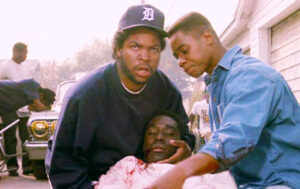
Boyz N The Hood was our “Stand By Me”. Yet, coming-of-age in black reality is the stench of death lingering around the corner, and dead bodies found on train tracks by young black boys who didn’t have playgrounds. Mothers faced with the fear of losing their sons to gun violence daily, now played out in a fictional film. However, Singleton and his cast had already beat the odds — in a world where most black men growing up in the hood are afraid they won’t see 21 — these guys were making a movie defying the limitations of systemic racism and poverty plaguing our communities.
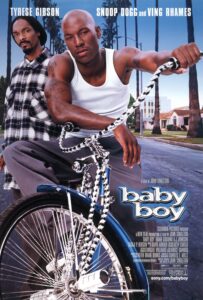
Boyz N The Hood was the precursor to the LA Riots while his follow up film “Poetic Justice” was the smoke settling. Those two films gave birth to “Baby Boy”…a story about a black man (“Jody” portrayed by Tyrese) who never had the opportunity to grow up in the inner city because his youth was snatched away from him. These three films were his trilogy of the hood experience in America. John Singleton knows the story of the young, black male inside/out and he told it from a place of unadulterated truth and with heart. His lens created a pathway through the vicious cycle of systemic racism and how it impacted lives in neighborhoods trying to rise out of the ashes of it’s traumatic past.
“From the cradle to the grave, life ain’t ever been easy…living in the ghetto…” John Singleton’s movies were the soundtrack to our lives in the 90’s.
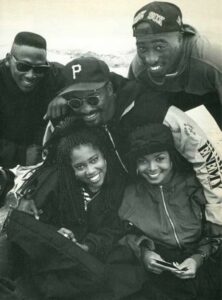
Singleton gave a lot of first time actors their big break: Ice Cube, the late Tupac Shakur, Regina King, Morris Chestnut, Nia Long, Cuba Gooding, Jr., Taraji Henson (and the list goes on). He had an eye for iconic talent and memorable characters. These fresh new faces coming up in the business would go on to become Oscar winners and some of the most prolific vessels of story tellers for our generation.
With any great visionary, comes prophesy, and like Ricky, our beloved Tupac Shakur was tragically taken from us. Too young, too soon. The proliferation of gun violence that effects our communities had hit home. The black community-at-large grieved. Again. A new generation of youth had lost one of their leaders, like our parents and grandparents’ generations before us.
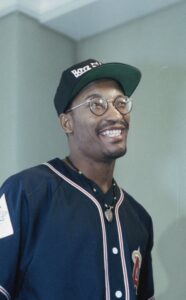
Born in 1968, the year Dr. Martin Luther King, Jr. was assassinated, one may wonder if John Singleton was given the mantel to tell the story of the plight of Black and Latinx males. Of brotherhood. Of the struggle. From “Illegal Tender” to “Four Brothers”, to evolving to produce “Hustle and Flow” and “2 Fast 2 Furious”. Singleton made movies for a new generation and evoked empathy from his audience, no matter the background.
His characters like “Doughboy”, “Lucky” “Tre”, “Franklin” — relatable, young, gifted and black men are just trying to make it by any means necessary; in a country with the deck stacked against them — whether through higher learning or the streets. Some make it out alive, some don’t.

A graphic artist created an image of Boyz N The Hood, which became the sympathy card, offering condolences and reflection for the untimely death of Nipsey Hussle (March 31, 2019). This photo, posted by John Singleton himself on his IG account, dated April 1st with a caption that simply says: “No words…”
“Neighborhood Nip”, the neighborhood superstar, who everyone had high hopes for, snatched from his community. His family; just like the fictional character Ricky. The murder was senseless. Tragic. A thin line between art and life had crossed, and as a community we are still grieving that great loss, and now we must grieve John Singleton. A prolific scribe and visionary. Gone. Too young. Too soon.

How long must the black community mourn untimely deaths? From gun violence to strokes caused by trauma and stress — pain and struggle. According to the CDC “African American men are at greater risk of having a stroke than any other group of men in the United States.” And according to the US Dept. of Health and Human Services, “African American men are twice as likely to have a stroke as their white adult counterparts. Further, black men are 60 percent more likely to die from a stroke than their white adult counterparts.”
At the young age of 51, John Singleton died of a massive stroke. Yet, his death and body of work is in mark step with the current climate we’re in. America’s current reality played out on the streets, in front of cameras, as young black men die at the hands of crooked cops and vigilantes. From Trayvon Martin, Freddie Gray, Tamar Rice, Michael Brown, Eric Garner, Philando Castile and Sandra Bland. The black community is still mourning from past to present.

#ICantBrreathe isn’t just a hash tag. We, as a black community identify with the feeling.
When the news began to spread about John Singleton’s stroke, my heart would skip a beat every time I saw a social media post.
Not today. Not again.
Singleton came into our lives through cinema, and he had us all at: “You got a problem here?”…a turning point in Boyz N The Hood, when Ice Cube’s portrayal of “Doughboy” showed his heart and his protection for his boys — in the hood, and his brother, Ricky.
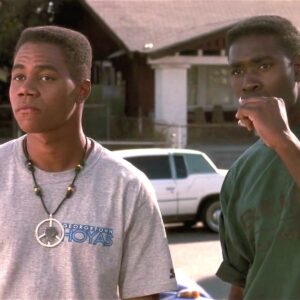
Singleton had our hearts when Ricky and Doughboy’s mother blamed Doughboy for the death of his brother. He had our hearts, the moment “Furious Styles” (Laurence Fishburne) stepped on the scene to educate his son “Tre” and the homeboys about gentrification and the importance of being an upright man. John Singleton pulled our heart strings when he displayed the raw, unhinged portrayal of malicious cops and what our sons, brothers, uncles and fathers experience for just breathing, black.
John Singleton showed us Black Lives Matter long before it was a hashtag and a movement by taking control of his vision and his images. He created a world with his point of view, showing the soul and harsh reality of South Central and beyond, and his stories reverberated from the East to the West Coast.
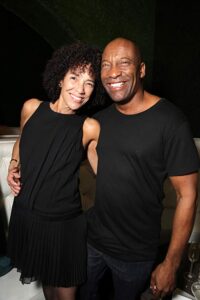
From the moment John Singleton pitched Boyz to Producer Stephanie Allain, it was on! Together, they made a classic that will forever beat in our hearts and etched into the fabric of our cultural landscape. He maintained his vision from the start, and when the studios didn’t want to green light his reality, he put up his own money. He believed in his stories, in new talent and emerging filmmakers.
May we continue to celebrate his memory and say his name. John Singleton was one of the real ones. An “OG”. He is legend. And he left us with a legacy of love letters and moving images for the culture. May we continue to raise him up, like the 20 minute standing ovation he received at the Cannes Film Festival for his inaugural film, for a job well done.
John Singleton is survived by his seven children.
For those of you in New York, there is a 90’s retrospect at BAM Brooklyn: “Black 90’s, A Turning Point in American Cinema” featuring John Singleton’s first two films: Boyz N The Hood and Poetic Justice. May 12 – 15, 2019.



Loading…