
Meryl Streep Visits “August: Osage County”By Max Evry
December 24, 2013
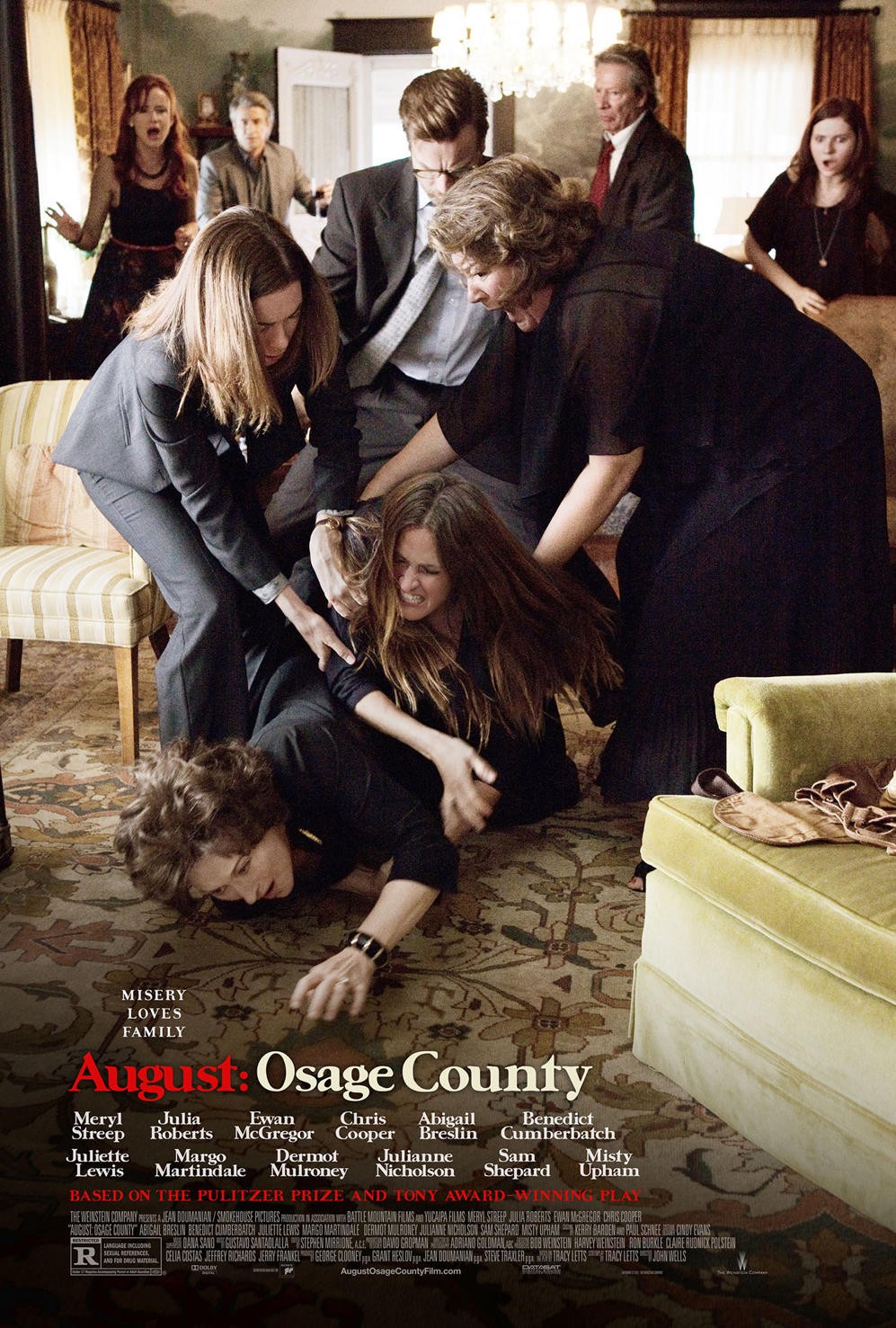 In yet another Oscar-caliber turn, Meryl Streep leads an impressive ensemble for director John Wells‘ adaptation of Tracy Letts‘ Pulitzer Prize-winning play “August: Osage County.” The Oklahoma-set story chronicles a family that comes together around cancer-stricken matriarch Violet Weston (Streep) when her husband Beverly (Sam Shepard) commits suicide, but deep-seated conflicts come to the forefront pretty quickly and escalate to full-on emotional family fireworks.
The star-studded cast includes Julia Roberts, Ewan McGregor, Chris Cooper, Abigail Breslin, Benedict Cumberbatch, Juliette Lewis, Margo Martindale, Dermot Mulroney, and Julianne Nicholson. Streep came to New York to discuss the challenges of sustaining the hard-hitting drama at the core of Letts’ play and screenplay.
There’s so many ways you can read Violet: is she damaged, is she spiteful, is she insecure? Did you have discussions early on with Tracy and John because it’s a character that can be played so many different ways?
MERYL STREEP: John and I e-mailed a little bit in preparation for this, but I would say one of the things that really interested me was where she was at any given point in the cycle of pain and pain relief. Where she was on her painkiller cycle in any given scene, and since we were shooting out of order I sort of had to map that in a way, just so I’d know what level of attention or inattention I could bring to my fellow actors. (laughs) As an actor you’re supposed to want to go into the house of pain over and over and over again but really it’s not something that’s fun. I resisted doing this part initially because of that, I just thought, “Uggggghh.” On so many levels, physically, mentally, spiritually, emotionally Violet is enraged and or in pain or drugged at any given time. That was the main thing.
What was it like working with Chris Cooper again after “Adaptation” but in profoundly different roles?
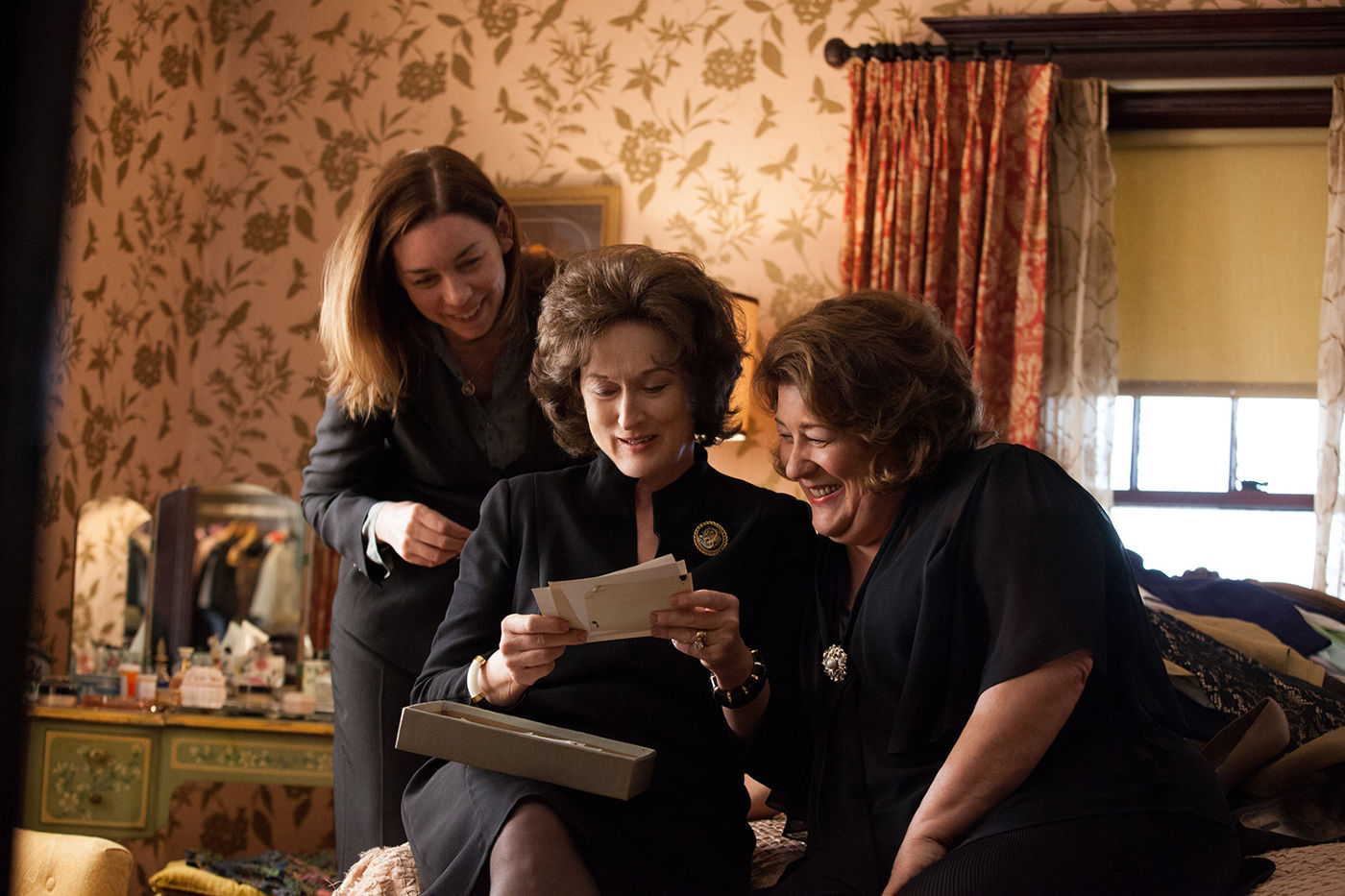 STREEP: I can talk about Chris because we worked together and I also worked with Margo [Martindale] before but never in such a substantial way. The thing about this piece is we were all absolutely integral to this thing working or not. Parts are singled out like… Chris’s character was someone who he would imbue, and he did, with his enormous humanity and compassion, and I knew the audience would love him and I knew that they would hate me in equal measure and that is THE STORY. It’s a balance of all these characters where you’re aware as you’re watching the play that you’re turning your eyes from one to the other but it’s all affected. What you give, you get. What you get, you give. It only works if we’re together and we were so together. When Margo has the speech in the thing about how she has my back I really always always always felt that because she made me feel that way. So I feel like we were very lucky to have each other in making this thing, and that has a lot to do with how John set it up. How do you put a family together? You don’t get a vote for who’s in your family, but John was like God. He put this group of people together and thought, “Oh, this will get messy.” (laughs) That was masterful.
What did you do to get into the strong mother-daughter bond with Julia and how difficult was it to shake off at the end of a very emotional scene or the dinner scenes or very emotional days?
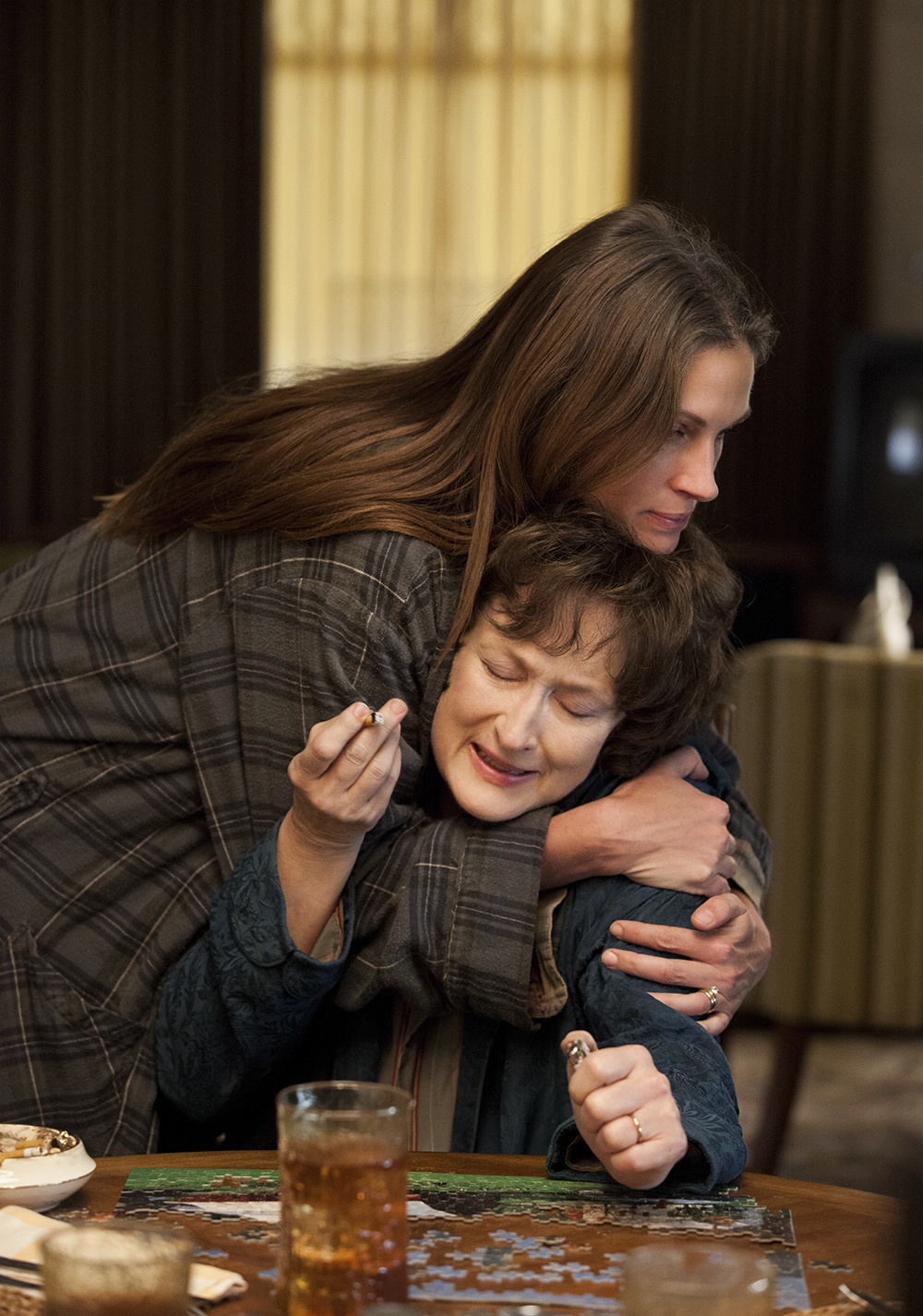 STREEP: We ate a lot. I mean, it wasn’t the most joyous experience from my point of view. It was hard to feel that way about everybody. That was miserable. It was also during the election and television is very odd out there…. I’m not gonna get into that. (laughs) You can feel very disembodied in that world so it was important to make a connection outside the set. Also I was smoking nonstop which really makes you feel shitty.
Was there a particularly poignant emotion in the piece that you latched onto during the shooting of the film?
STREEP: For me one of the most upsetting scenes which we shot very early on was with Sam Shepard who’s a writer I have always admired, and admired as an actor. To look at him close up and see his loathing of me, that was really hard. You get old, you look old, OLD… and you still think that maybe there’s a spark of love from this person who’s gone through everything, and to look in his eyes and realize he’d rather be dead than look at me, ooh, that was brutal. That sort of set the tone for my own dealing with his death and everything afterwards.

Can you talk about utilizing humor to alleviate some of the inherent weightiness of the material?
STREEP: Every character I’ve ever played is about five-six and weighs about the same, in terms of weightiness. (laughs) I was trying to look sicker and thinner than I actually am, but I don’t think about things that way. For me one of the most EXCRUCIATINGLY funny pieces in this is the prayer which is honestly, beautifully, earnestly given to the best of his ability. It reminded me of church when I used to go to church. There was no laughter LIKE the laughter if you could get the whole pew laughing. You talk about the humor borne out of pain, and yes you do want your laughsand every single one of the actors came to the first reading with a copy of the original play in their back pocket with their laughs that have been cut. I spoke to John privately about the ones I didn’t want to lose. You have a sense of what’s gonna buy you the attention of people, otherwise they’d want to kill themselves with this family. It’s like you come together with your friends, and say, “I just had Thanksgiving, I’ve got to tell you what my mother said! Oh my GOD!” You tell the story that was not funny when you were there but in the telling it’s fabulous, and that’s how you transform your life, if you can laugh about this stuff.
“August: Osage County” comes to theaters on Christmas Day.