
PAFF 2014: Director Jahmil X.T. Qubeka talks ‘Of Good Report’By Wilson Morales
February 6, 2014
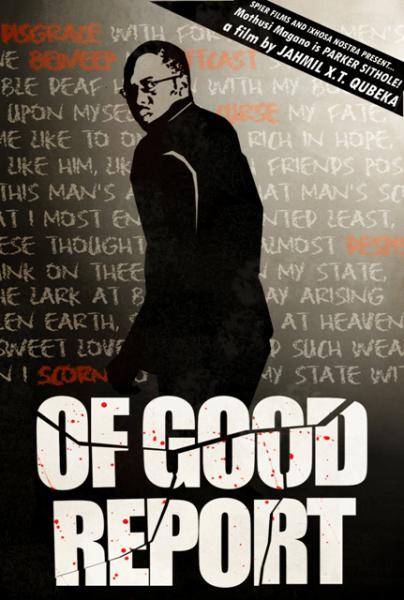 Opening up the 2014 Pan African Film Festival is by Jahmil X.T. Qubeka’s controversial film, ‘Of Good Report,’ starring Mothusi Magano, Petronella Tshuma, Thobi Mkhwanazi, and Nomhlé Nkyonyeni.
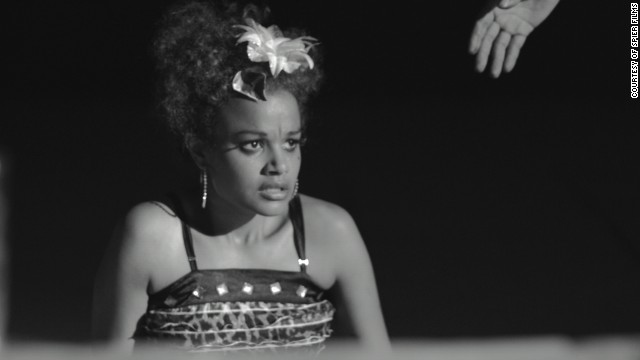
Set as a South African homage to film noir, introverted high school teacher Parker Sithole (Mothusi Magano) starts an obsessive affair with a pupil Nolitha (Petronella Tshuma), with tragic consequences.
The film was initially banned in South Africa at the Durban International Film Festival, but with impressive reviews stemming from the festival where the film has played thus far, the government has ease down a bit, stating that the film can be shown but “ no one under age 16 allowed.”
Quebaka is returning to Pan African where in 2012 he won the Founders’ Award for best feature for “A Small Town Called Descent.”
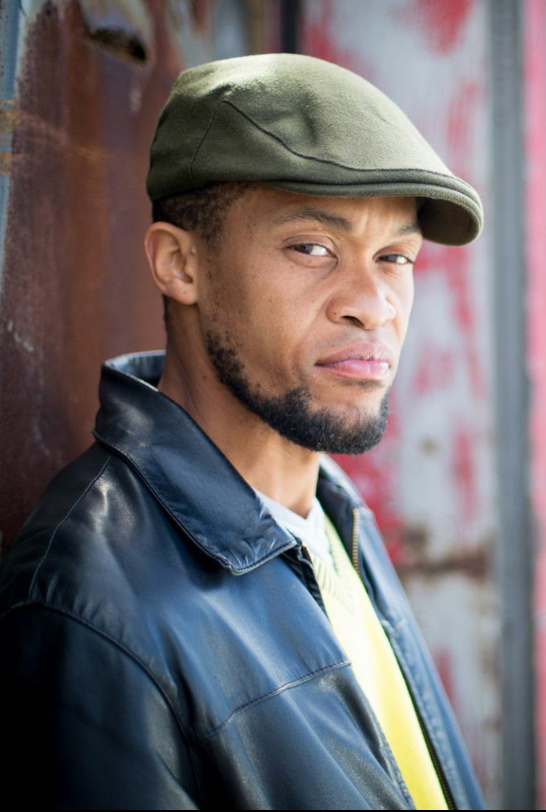 In speaking with Blackfilm.com, Qubeka talks about the challenges his faced in making ‘Of Good Report’ and the issues he faced afterwards.
What inspired you to do this film?
Jahmil X.T. Qubeka: It’s my second feature film. I wasn’t that happy with my first one in terms of my own execution. I wasn’t happy with my script writing. I wasn’t happy with my direction. I wasn’t happy with the film that I made. Making this film was almost a cathartic experience for me. I was exercising demons from my previous film. Since I was a teenager, I was infatuated with the topic of an illicit relationship between adults and minors. Specifically, I was brought to the subject by a novel called ‘Lolita’ After having reading that and then watching Stanley Kubrick’s version, it’s always been a subject matter in the back of my head. In the township where I grew up in South Africa and in regards to the social fabric of it, things were a little skewed. It played out in that you have a lot of relationships between older people and minors and I thought it was a local context that I could relate to.
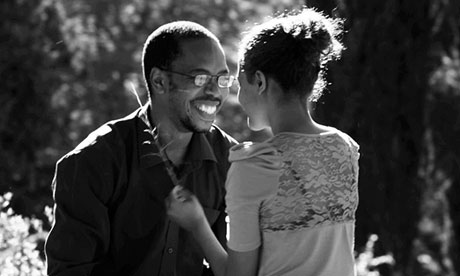 Eventually, when I got the idea to conceptualize ‘Of Good Report,’ I put those elements together. Although there were social issues that I wanted to tackle, I didn’t want to preach, which is something that I did with my first film. I decided to do the film on the themes that I wanted to explore in genre and I decided film noir was the best genre to use because essentially in film noir you tend to have great characters and characters that don’t necessarily need to have any kind of redemption. I didn’t want to make a film that had some sort of pulp ending. I wanted something that resonates something about cinema. Some of the best cinema characters that I gravitated towards are anti-heroes like Travis Bickle from ‘Taxi Driver’ or even Norman Bates from ‘Psycho.’ I was interested in creating my own archetype and the character that would fit that mode.
 While the film has played around the world at different film festivals, did you think you would face any resistance from your own country?
Jahmil X.T. Qubeka: No, not at all. That was quite a surprise for me. I guess some people would consider me to be a bit naïve in that regard. I didn’t it coming, but in retrospect, when I look back, I probably did have it coming. Looking at South African society post-Apartheid and the society and democracy that we have etched out, it wouldn’t necessarily surprise me. Part of the society now is a bit on the conservative side. In retrospect, South Africans haven’t been portrayed in a way that my film portrays them before I guess. Because of that, I can see why some of the backlash was the way that it was. It’s not something that I had coveted or even saw coming.
 Where does ‘Of Good Report’ stand now in South Africa?
Jahmil X.T. Qubeka: Well, after all the noise that happened with it, and on a personal level, even when the ban happened, I always felt that we would be exonerated in the matter. We have an amazing constitution back home. Even now, when we have zealous officials who tried to abuse it, it would always protect us eventually. Basically, because of that, I never felt that my rights were fundamentally infringed upon. We even look at the legal advice to the matter itself. As the ban told us to hand in all the material and destroy it, I never felt that it would really get to that point. It was really about getting to the crux of the matter of what they thought was the issue and contesting it. It was about some zealous officials who failed to articulate themselves and the charge against us was completely ridiculous. In terms of the powers that be in regards to my film and after the ban and the fan has gone on to be featured at some prominent film festivals like the Toronto Film Festival and in competition at the BFI in London; and subsequent to all of that, I would say that my government has changed its tune to a certain degree. When we were making the film, there was no form of financial support, and now they have even given us some support. Sometimes, it has to be a painful birth before people can appreciate it.
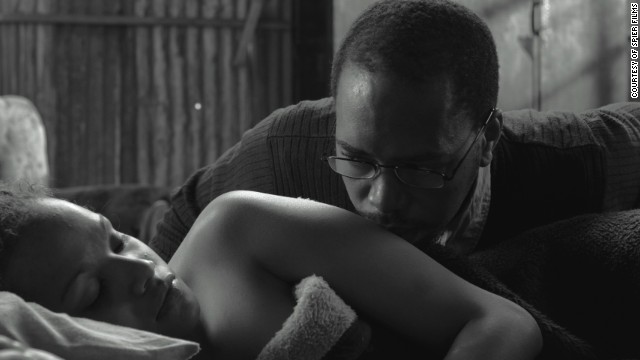 What was the thought process of shooting the film in black and white and not having the lead character speak any dialogue in the film?
Jahmil X.T. Qubeka: I’m essentially interested in what I term to be the meta-language of cinema and what I mean by that is that I’m interested in going back to the fundamental basics what makes cinema work. Without sounding overly critical of other people’s work, I always found one of the things from modern contemporary films that pulled me away when I’m watching is how exposition is handled in the form of sound, sound design, music, and dialogue. I think those tools in filmmaking have been abused. A lot of films these days have been overblown stage plays where everything is not only shown and also told. When I started to grapple with the visual language of the film and the pacing of the film, I was looking at these elements in regards to exposition.
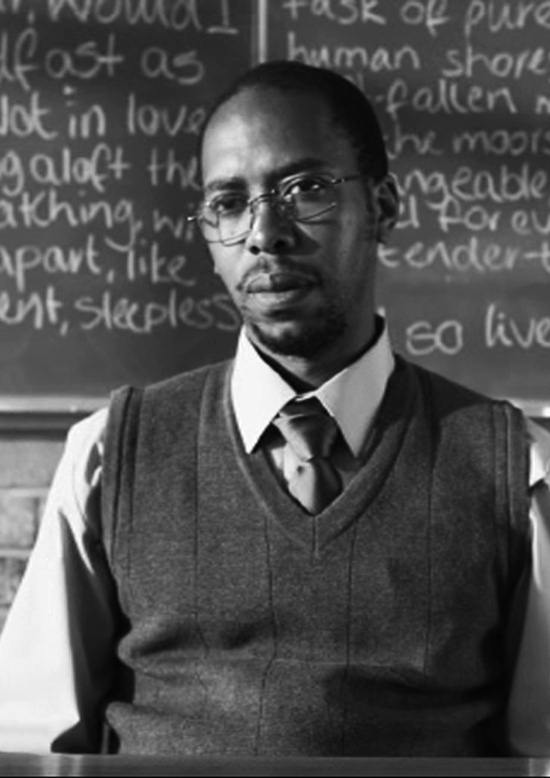 The reason Parker doesn’t speak, I always thought of the role to be a physical performance. In taking away his voice and working with the actor from a physical perspective, it was like paying homage to the likes of Charlie Chaplin. While his films did have some dialogue and subtitles, at least I wanted to go back to that tradition and performance. The writing was also a challenge that I totally embraced. Initially I had him speaking in the twentieth minute of the film when he meets the Nolitha character in the town. Then I felt that it was over-exposition and taking away from the visuals. Then I made the conscious decision that I wasn’t going to make him speak. In restricting myself in that way, I actually found the freedom in my storytelling. I had to be smart about my approach to the narrative. Parker is not a silent, but we chose to engage the action after or before he has spoken. Most of the time we deal with the aftermath of his words and that became an exciting elements for me to explore became again it went back to the meta-language of film. On a political level, the other thing that I wanted to say in regards to gender race violence and violence towards women, in taking away his voice states men have enough to say anyhow. We’re always giving voice to men and taking away his voice, I was saying that in the political context.
ShareTweet