
15 Films With Black Talent Playing at 2013 Toronto Film FestivalPosted by Wilson Morales
September 4, 2013

With the 2013 Toronto Film Festival (September 5 to 15) set to start this week, there will be a number of films vying for Oscar attention as well as films seeking distribution.
As a great number of films will be playing at the festival, here are 15 films of interest that feature Black talent in predominant roles.
Some of these films have already played at other festivals and are still creating buzz such as Steve McQueen’s 12 Years A Slave, and Denis Villeneuve’s Prisoners featuring Terrence Howard and Viola Davis, but films having their World Premieres here include the anticipated Idris Elba film, Mandela: Long Walk to Freedrom and John Ridley’s All Is By My Side starring musician Andre Benjamin as Jimi Hendrix.
Other films of interest include Belle with Gugu Mbatha-Raw in her first starring role, the Ron Howard-Jay Z doc Made in America, and Tommy Oliver‘s 1982 starring Hill Harper and Sharon Leal.
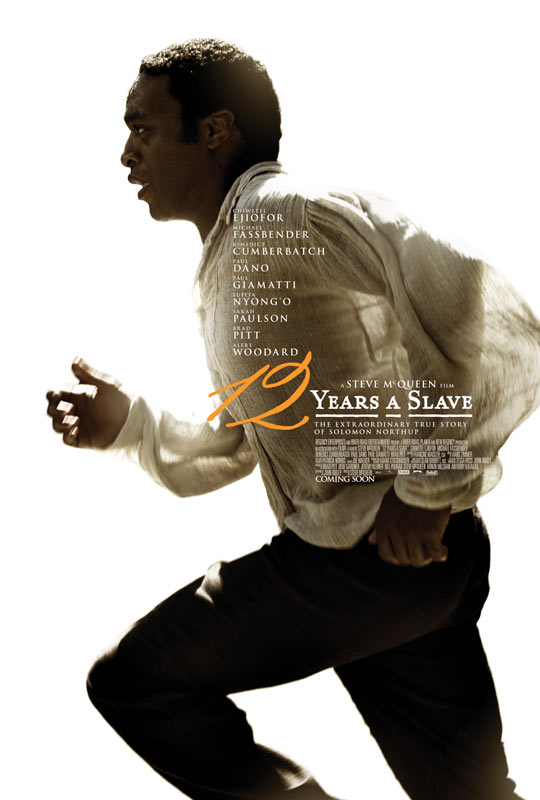
12 Years A Slave
Directed by Steve McQueen, the films stars Chiwetel Ejiofor, Michael Fassbender, Benedict Cumberbatch, Paul Dano, Garret Dillahunt, Paul Giamatti, Scoot McNairy, Lupita Nyong’o, Adepero Oduye, Sarah Paulson, Brad Pitt, Michael Kenneth Williams, Alfre Woodard, Chris Chalk, Taran Killam and Bill Camp
12 YEARS A SLAVE is based on an incredible true story of one man’s fight for survival and freedom. In the pre-Civil War United States, Solomon Northup (CHIWETEL EJIOFOR), a free black man from upstate New York, is abducted and sold into slavery. Facing cruelty (personified by a malevolent slave owner, portrayed by MICHAEL FASSBENDER), as well as unexpected kindnesses, Solomon struggles not only to stay alive, but to retain his dignity. In the twelfth year of his unforgettable odyssey, Solomon’s chance meeting with a Canadian abolitionist (BRAD PITT) will forever alter his life.
The film will be released by Fox Searchlight Pictures on October 18, 2013 in select theaters.

Mandela: Long Walk to Freedom
Distributed by The Weinstein Company and directed by Justin Chadwick, the drama stars Idris Elba as Nelson Mandela and Naomie Harris as Winnie Mandela, Tony Kgoroge, Riaad Moosa, Zolani Mkiva, Jamie Bartlett, Lindiwe Matshikiza, Deon Lotz and Terry Pheto.
Mandela: Long Walk to Freedom is based on South African President Nelson Mandela’s autobiography of the same name, which chronicles his early life, coming of age, education and 27 years in prison before becoming President and working to rebuild the country’s once segregated society.
The film hits theaters on November 29.
All Is By My Side
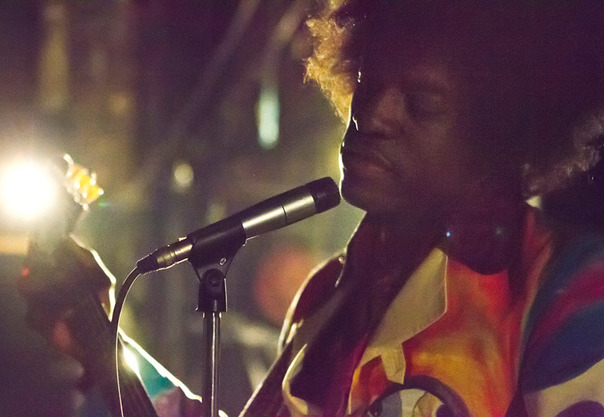 Jimi Hendrix before he was Jimi Hendrix. A portrait of the icon as a young man, John Ridley’s All Is By My Side features charismatic hip-hop star Andre Benjamin (one half of Outkast) as a sensitive, struggling guitarist on the verge of becoming a rock legend.
In 1966, James Hendrix — stage name Jimmy James — is still an unknown backup guitarist playing in New York’s Cheetah club. Hip, stylish Linda Keith (Imogen Poots) happens to catch a set he’s playing and is mesmerized by his talent. She also happens to be girlfriend to the Rolling Stones’ Keith Richards. Encouraging his talent, even buying him a new guitar, Linda brings Jimmy into her circle and, after failed attempts to get him signed, introduces him to Chas Chandler, bassist for The Animals and his future manager.
Listening to the strides being made by mid-sixties British musicians, Jimmy is convinced that London is the gateway to success in America. But once there, he finds himself caught between Linda’s protective grasp and the charms of a new admirer, Kathy Etchingham (Hayley Atwell). Their chemistry, if volatile, is immediately apparent. With Kathy by his side, Jimi, as he is now known, navigates London’s music scene and begins to make his mark in the world of rock ‘n’ roll.
Belle
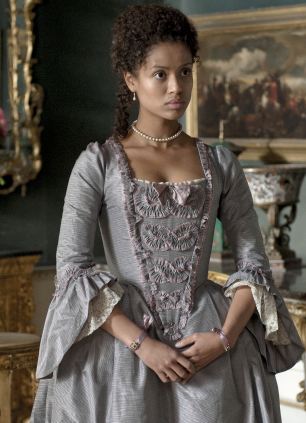 Directed by BAFTA Award winner Amma Asante and written by Misan Sagay, Belle features Gugu Mbatha-Raw in her first starring role along with Tom Wilkinson, Emily Watson, Sarah Gadon, Penelope Wilton, Miranda Richardson, Tom Felton and Matthew Goode.
Belle is inspired by the true story of Dido Elizabeth Belle (Gugu Mbatha-Raw), the illegitimate mixed race daughter of a Royal Navy Admiral. Raised by her aristocratic great-uncle Lord Mansfield (Tom Wilkinson) and his wife (Emily Watson), Belle’s lineage affords her certain privileges, yet the color of her skin prevents her from fully participating in the traditions of her social standing. Left to wonder if she will ever find love, Belle falls for an idealistic young vicar’s son bent on change who, with her help, shapes Lord Mansfield’s role as Lord Chief Justice to end slavery in England.
Fox Searchlight will release the film in Spring 2014.
Made in America
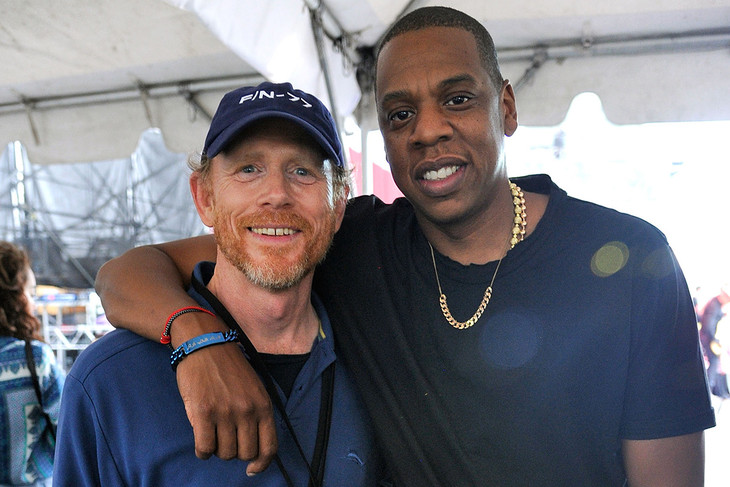 Drawn from an enormous trove of performance footage and backstage interviews, Ron Howard’s Made in America captures the inaugural edition of an exciting new festival created by rapper and impresario Jay Z, which rocked Philadelphia over Labour Day weekend last year. In keeping with his excellent and eclectic taste, Jay Z’s extraordinary hand-picked lineup speaks to his broad and inclusive view of American culture.
Artists whose performances are excerpted in the film include Pearl Jam, Odd Future, Dirty Projectors, Skrillex, Santigold, and Janelle Monáe, not to mention Run-DMC, who, in one of the film’s more moving and entertaining segments, give their first live performance since the death of their DJ Jam Master Jay in 2002.
As seen through Howard’s affectionate gaze, Made in America is a love letter not only to Jay Z and his unique project, but also to the city of Philadelphia. Fascinating interludes include one-on-ones with audience members about what the show means to the Philly community — the responses are both positive and negative. Howard explores the birthplace of American Independence and how it relates to this unprecedented event. He even takes some time to follow a local hip-hop group through its attempt to get added to the prestigious bill.
1982
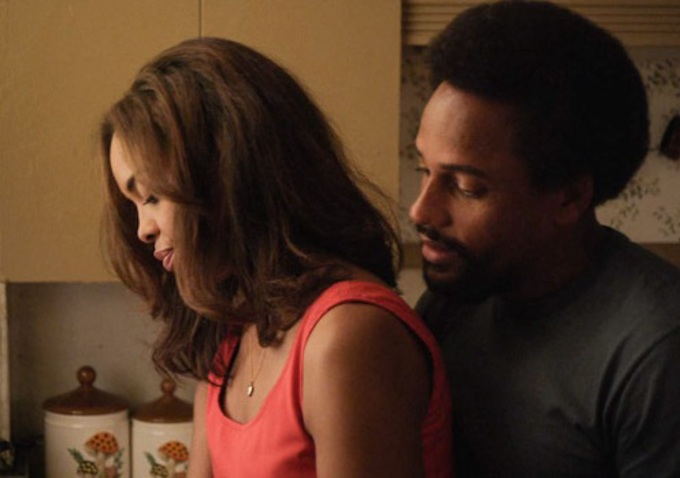 Written and directed by Tommy Oliver, the film stars Hill Harper, Sharon Leal, Ruby Dee, Wayne Brady, Elise Neal, Bokeem Woodbine, Lala Anthony, Quinton Aaron, Omar Miller & Troi Zee
1982 is a film about a black father (Hill Harper), whose wife (Sharon Leal) succumbs to a crack cocaine addiction and him trying to wean his wife off it while shielding their 10 year old daughter (Troi Zee). It takes place in Philly in 1982 at the very onset of the crack epidemic and is ultimately a story of a father doing whatever it takes to save his family.
Of Good Report
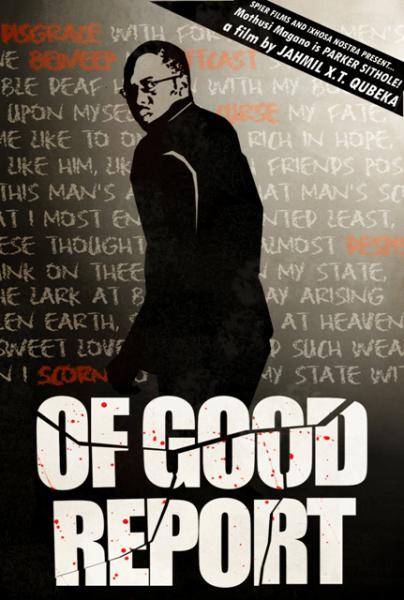 Controversially banned then unbanned by the South African government this year, Jahmil Qubeka‘s second feature is a consummate tribute to classic film noir, albeit an irreverent and thoroughly South African rendition of the genre.
Schoolteacher Parker Sithole (Mothusi Magano) has arrived in a rural South African township with no local connections, but his unassuming disposition inspires trust and sympathy, and he comes “of good report”: with a glowing recommendation from his previous employer. He promptly begins an illicit affair with one of his new pupils, sixteen-year-old Nolitha (Petronella Tshuma). It proves to be a disastrous development for both.
Set in a township that reeks of the economically precarious working poor’s despair, Of Good Report dives into the rarely visited moral worlds of these impoverished black communities, burrowing into their dark recesses and exploring their complex social webs. In a place that the State has turned away from, a place rife with vice, greed, loneliness, and the fear of sinking further into poverty, a man can get away with anything — including a gruesome murder. Sithole, who by official record and outward behaviour embodies the “good” citizen — grandson, educator, potential husband — is in reality a psychopath. The film grants him neither mercy nor salvation, refraining from drawing into psychological analysis to paint him as a victim.
Prisoners
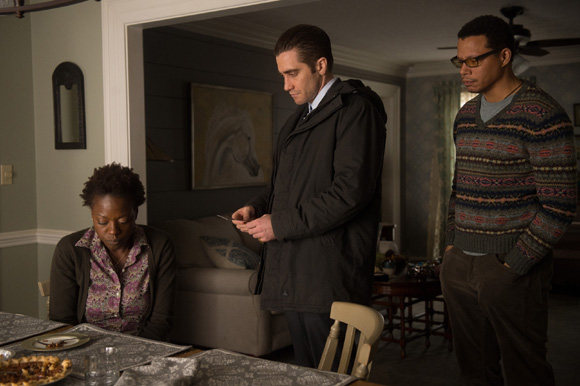 Featuring Viola Davis and Terrence Howard in strong supportive roles, this Denis Villeneuve-directed thriller stars Hugh Jackman, Jake Gyllenhaal, Maria Bello, Melissa Leo and Paul Dano.
Keller Dover is facing every parent’s worst nightmare. His 6-year-old daughter and her young friend are missing, and as minutes turn to hours, panic sets in. The only lead is a dilapidated RV that had been parked on their street. Heading the investigation, Detective Loki arrests its driver, but a lack of evidence forces the only suspect’s release. Knowing his child’s life is at stake, the frantic Dover decides he has no choice but to take matters into his own hands. The desperate father will do whatever it takes to find the girls, but in doing so, may lose himself, begging the question: When do you cross the line between seeking justice and becoming a vigilante?
Prisoners hits theaters on September 20.
Noye’s Fludde
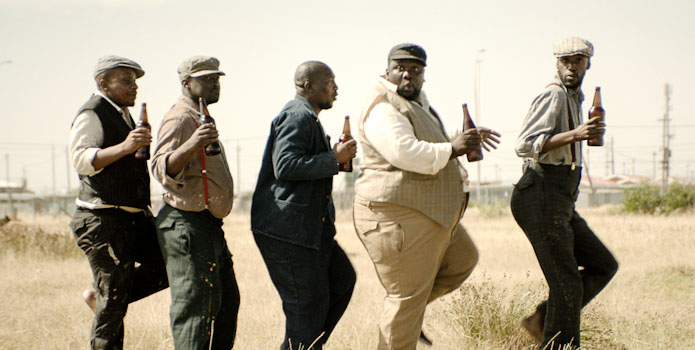 This modern adaptation of a Benjamin Britten one-act opera on the myth of Noah’s flood is sung entirely in Xhosa, with South African opera star Pauline Malefane as Noah, and is a striking metaphor for man’s inhumanity to man. A stunning feat from a troupe whose U-Carmen eKhayelitsha won the Golden Bear at Berlin in 2005.
Cape Town theatre company Isango Ensemble’s new production Unogumbe-Noye’s Fludde is a modern adaptation of a Benjamin Britten one-act opera on the myth of Noah and the flood, from the medieval Chester Mystery Cycle. Sung entirely in Xhosa, casting South African opera star Pauline Malefane as Noah, (a fantastic gender reversal), and set in Khayelitsha, one of South Africa’s largest townships, Unogumbe is a striking metaphor for man’s inhumanity to man. A stunning feat from the troupe whose U-Carmen eKhayelitsha was awarded the Golden Bear at the Berlin Film Festival in 2005.
iNumber Number
 Adroitly written, adeptly directed, and tightly edited by South African filmmaker Donovan Marsh, iNumber Number is an action-packed thriller peopled with oddball gangsters that bring comic relief to the ruthless thuggery. His actors are singularly praiseworthy; Chweneyagae appeared in the hit film Tsotsi, and Israel Makoe, Owen Sejake, Warren Masemola, Hlubi Mboya, Percy Matsemela, and Carlo Radebe are well known to South African television and theatre audiences. Mtshali actually rose to fame after winning a TV talent competition, Class Act. The punch of the actors’ dialogue and acuity of their performances was thoroughly workshopped with the director, and it shows.
Chili (S’dumo Mtshali) and Shoes (Presley Chweneyagae) have been partners in the police force for eight years. After they make a risky arrest, their corrupt superior refuses to give them the reward they are due. Enraged, Chili realizes that virtue does not pay and sets about infiltrating a gang of armoured car thieves. His scheme goes awry when the rest of the gang finds out his true identity. They take Shoes hostage and go through with the heist. Lured by the potential loot, but finding himself in the midst of a killing spree, Chili has to shake off his rage and cynicism to do the right thing.
Something Necessary
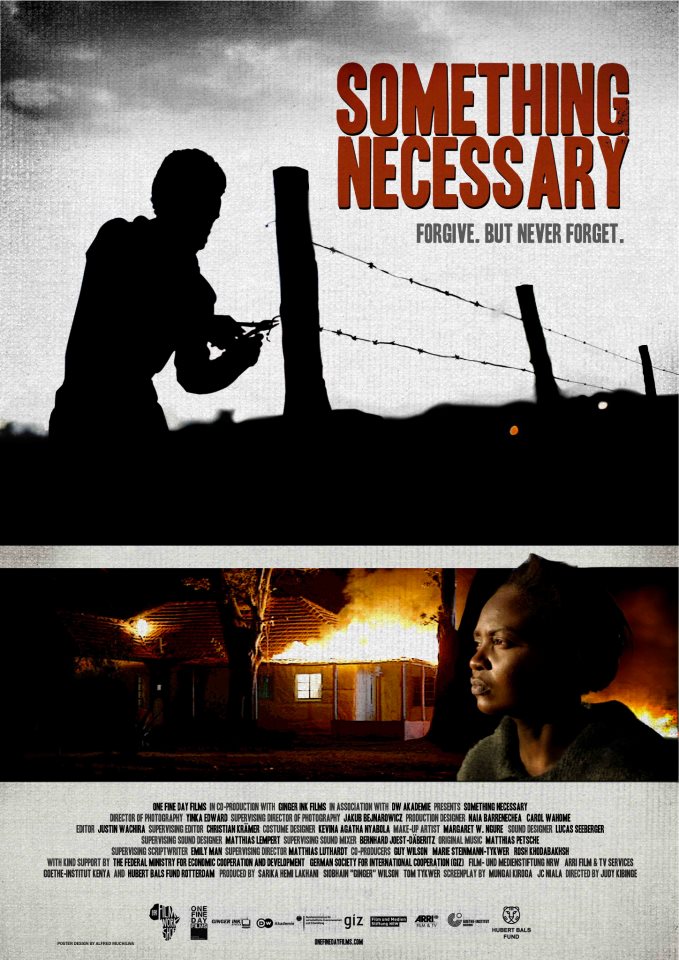 Directed with grace, elegantly filmed, and brimming with convincing performances, Judy Kibinge‘s Something Necessary is an uplifting parable about the need for forgiveness, atonement and solidarity against the sinister schemes engineered by politicians. This is a remarkable collective achievement from a new, energizing production initiative in Kenya.
When Anne (Susan Wanjiru) wakes from a coma in a hospital bed, she finds her husband dead and buried, and her son, Kitur (Benjamin Nyagaka), also in a coma. Her family is one of thousands victimized by the violence that erupted after the 2007 elections in Kenya. Now an unemployed widow, Anne is nonetheless determined to repair The Haven, her ransacked farm, in spite of her family’s insistence that she move to a “safer” area.
Burdened with guilt and shame from his past gang activities, young Joseph (Walter Kipchumba Lagat) is eager to start a new chapter in his life and dissociate himself from the thugs who dragged him into the violence. As the government’s Commission of Inquiry comes to their town, collecting witnesses’ accounts of the violence, neither Anne nor Joseph feel compelled to contribute.
Under the Starry Sky
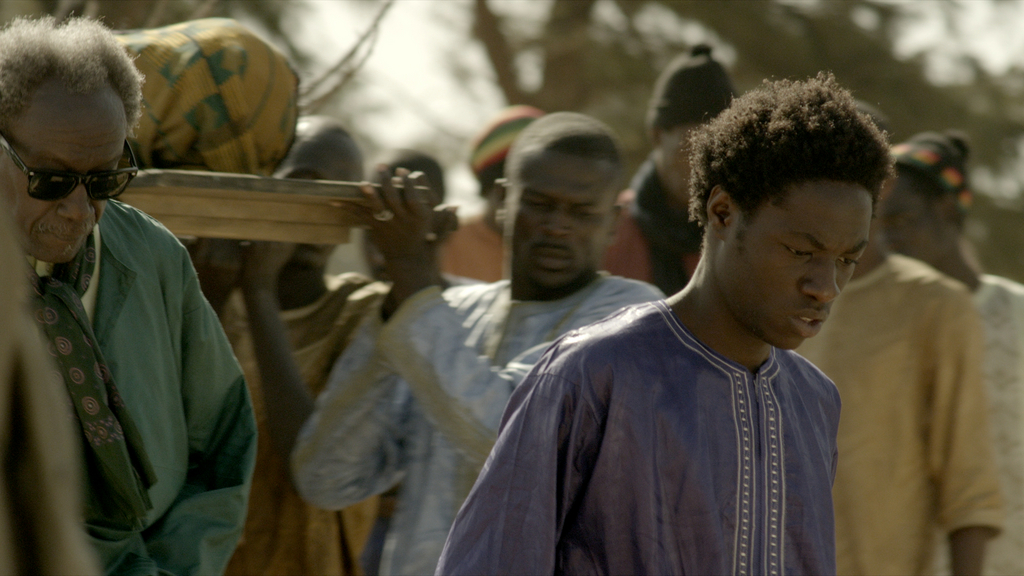 Quietly dramatic, Under the Starry Sky captures with masterful exactitude the anxieties one can suffer while experiencing far-flung geographies and cultures. Accentuating the shadowy world of undocumented travel, the film unravels like a cinematic scroll of the mysterious grand design that draws people together, in empathy and antipathy, as they fight to shape their lives and pursue their aspirations.
Under the skies of three cities — Turin, New York, and Dakar — director Dyana Gaye charts the accidental intersections of characters in transit. Plans are derailed, happenstance meetings change courses, and destinies intertwine. Sophie (Marème Demba Ly), a young Senegalese bride, follows her husband, Abdoulaye (Souleymane Seye N’Diaye), from Dakar to Turin, where he has travelled without papers to look for work. Meanwhile, Abdoulaye has already has left for New York, lured by his cousin, Serigne (Babacar M’Baye Fall), and a promise of better opportunities. Abdoulaye’s one contact in New York, Sophie’s aunt, is en route to Dakar with her son, Thierno (Ralph Amoussou), to bury the husband she left twenty years earlier.
The Battle of Tabatô
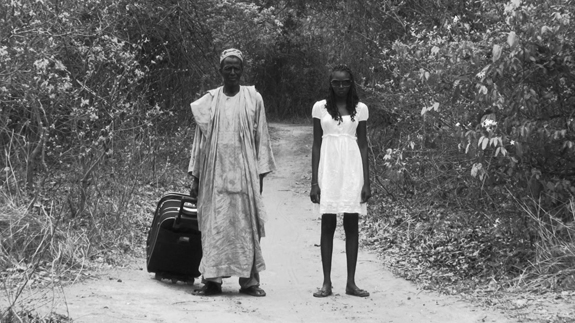 An allegorical meditation on the torments of present-day Guinea-Bissau, The Battle of Tabatô begins with preparations for a wedding ceremony and ends with a battle between the natural and spiritual worlds; the forces of good and evil.
Fatu (Fatu Djebaté) and Idrissa (Mamadu Baio), singer of the Supercamarimba band, are to be married in Tabatô, Idrissa’s native village, which is famous for its griots and its extraordinary music tradition. Fatu’s father, Baio (Mutar Djebaté), a former warrior who left the country after its war of independence, has arrived to give his daughter away and make peace with his past. His return jolts lugubrious memories and resurrects sinister ghosts of violence. Idrissa, personifying hopeful righteousness, has to ward off these ghosts for good.
In this first feature from director João Viana, sound is as thoroughly charged with significance as is image. Viana uses instruments and objects to convey his characters’ psychological states: wooden balafons, metal negalins, pumpkin koras, and goatskin dundunbás accompany Idrissa and his drive to do right; cellphone and radio accompany Fatu and highlight her ability to mediate between characters as well as the traditional and contemporary worlds; RPG and machine-gun rounds are associated with Baio, the violence he has perpetrated, and his antiquated mentality. We follow the parallel journeys of Fatu and Baio from Bolama to Tabatô, and Idrissa’s from Tabatô to Bafatà to give a radio interview. An eerie tension mounts in tandem with Idrissa’s fearless attempt to save his beloved’s father from the abyss of war.
A Spell to Ward Off the Darkness
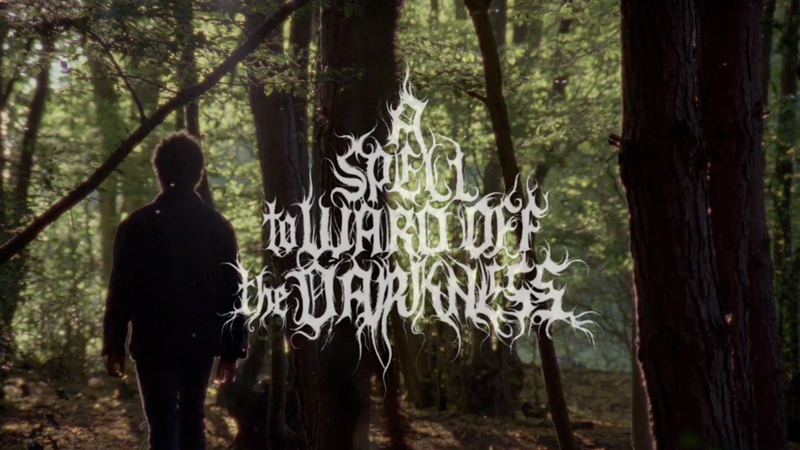 The close collaboration between internationally celebrated artist-filmmakers Ben Rivers (Two Years at Sea) and Ben Russell (Let Each One Go Where He May) has yielded an intriguing ethno-trance aesthetic that finds its stunning summa in their much anticipated co-directed feature A Spell to Ward Off the Darkness. An immersive, at times mesmerizing experience, Spell follows a nameless protagonist — played with Bressonian restraint by musician Robert A.A. Lowe, of Lichens and Om fame — as he explores three markedly different existential options: as a member of a fifteen-person commune on a small Estonian island; living alone in the breathtaking wilds of northern Finland; and as a singer-guitarist for a neopagan black metal band in Norway.
Shot on Super 16mm by Rivers, Russell and Chris Fawcett (the Steadicam operator for Let Each One), Spell is awash in atmosphere, bathed successively in natural, incandescent sunshine, the blues of a perpetual magic hour, and the stroboscopic concert lighting of a dingy bar. Liberated from conventional narrative causality, Robert’s trajectory charts a continuous drift (superbly conveyed by a floating camera) that signals a radical investigation of the self, an enigmatic effort to “ward off the darkness” that is engulfing our increasingly secularized world. Is this a search for fulfillment, mutual understanding, a gesture to quell boredom and unremitting solitude, an affront to utopianism, or simply a natural progression through life?
Half Of A Yellow Sun
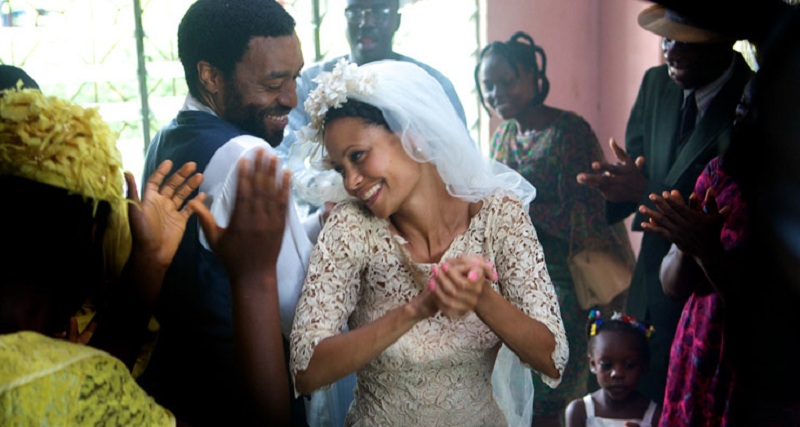 Based on author Chimamanda Ngozi Adichie‘s Orange Prize-winning novel of the same name, the film stars Thandie Newton, John Boyega, Chiwetel Ejiofor, Anika Noni Rose, Joseph Mawle and Genevieve Nnaji.
The film weaves together the lives of four people swept up in the turbulence of war. Olanna (Newton) and Kainene (Rose) are glamorous twins from a wealthy Nigerian family. Returning to a privileged city life in newly independent 1960s Nigeria after their expensive English education, the two women make very different choices. Olanna shocks her family by going to live with her lover, the “revolutionary professor” Odenigbo (Ejiofor) and his devoted houseboy Ugwu (Boyega) in the dusty university town of Nsukka; Kainene turns out to be a fiercely successful businesswoman when she takes over the family interests, and surprises herself when she falls in love with Richard (Mawle) an English writer. Preoccupied by their romantic entanglements, and a betrayal between the sisters, the events of their life loom larger than politics. However, they become caught up in the events of the Nigerian civil war, in which the lgbo people fought an impassioned struggle to establish Biafra an independent republic, ending in chilling violence which shocked the entire country and the world.