SelmaBy Miles Maker
November 12, 2014
1965 or 2014? Ava DuVernay’s SELMA doesn’t lose sight of contemporary relevance
 My movie-going week began with the enviable opportunity to watch 30-minutes of Selma footage to be showcased at the American Film Institute, which has suddenly become a very hot film festival in recent years. I was eager to be among the first to see even as little as a half hour of this highly-anticipated film, until a Twitter exchange between executive producer and co-star Oprah Winfrey and her director Ava DuVernay raised the stakes: Paramount scrapped their 30-minute plans at the 11th hour and elected to show Selma in its entirety, but rather than take my chances in a very long line at the Egyptian Theatre, I received a last-minute invitation to attend a special screening of Selma on the Paramount lot. With awards season in full effect, cinema pundits are speculating whether DuVernay, whose two previous independent microbudget feature films were well-received, could step onto a much larger set and deliver a film worthy of the studio machine. Selma is her triumph! David Oyelowo, who was first cast in the role as Martin Luther King Jr. when Lee Daniels first had the project, carries the picture along with a strong supporting cast that includes Oprah Winfrey, Common, Carmen Ejogo, Tom Wilkenson, Tim Roth, Giovanni Ribisi, Cuba Gooding Jr. and others. Selma has certainly joined the Oscar conversation.
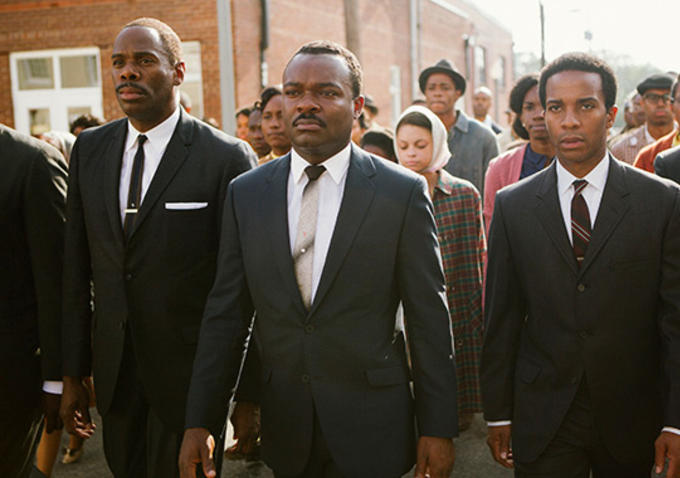
Racism. Abuse of power. Protests. Police brutality. Often the topics of today’s news, Sundance award-winning director Ava Duvernay’s latest film is based on three voting rights marches from Selma to Montgomery Alabama that provoked a landmark achievement in American history. At the forefront of the African-American Civil Rights Movement, Dr. Martin Luther King Jr. led the second and third voting rights marches which culminated with his speech on the steps of the State Capitol Building. To prohibit unfair practices used to prevent blacks from registering to vote, President Lyndon Johnson was forced to present a bill that would later pass and become the Voting Rights Act of 1965. It allowed for a mass enfranchisement of racial minorities throughout the country, especially in the South. According to the U.S. Department of Justice, the Voting Rights Act is considered to be the most effective piece of civil rights legislation ever enacted in this country, but last year the Supreme Court effectively struck down the heart of the Act, freeing nine states, mostly in the South, to change their election laws without advance federal approval. Alabama is one of those states.
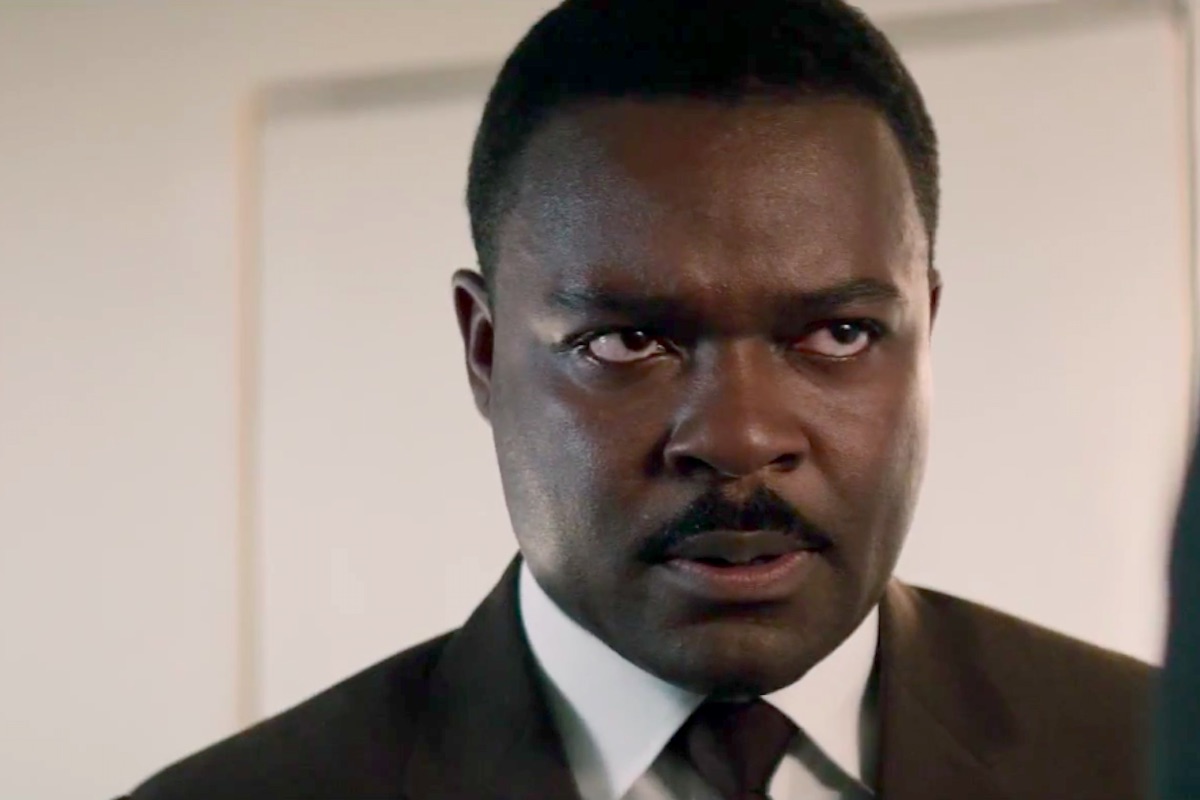
Selma begins with Dr. Martin Luther King Jr. (David Oyelowo) rehearsing his acceptance speech for the 1964 Nobel Peace Prize. The film’s pace and tone is ponderous and dramatic. Early scenes are carefully crafted to introduce the film’s characters and present a tension-laden atmosphere of perpetual fear and intimidation. Even the covert presence of the FBI is felt with wiretap messages displayed on screen during some scenes. Uncertainty and death is in the air, and it isn’t long before innocent lives are lost to racial terrorism. It happens so unexpectedly you’re suddenly stricken with disturbing emotions. Pastor and activist James Orange (Omar J. Dorsey) describes Alabama as ‘a decent place to die’ and we are certain it’s true. Coretta Scott King (Carmen Ejogo) expresses the ‘constant closeness of death’ and we feel it too. The violence in Selma is real. Bloody Sunday is harrowing to watch, and thankfully DuVernay doesn’t shy away from the hateful violence brought upon marchers. As much as history is being rewritten and slavery romanticized, these images remind us where we’ve been and how we accomplished our objectives. Although today’s protests are arguably less-violent, demonstrators must now encounter police forces empowered with military-style equipment–armored vehicles, automatic weapons and military-grade body armor as well as tanks and long range acoustic devices (LRADs). We may never contend with the injustices our parents endured, but our modern day causes are nonetheless important.

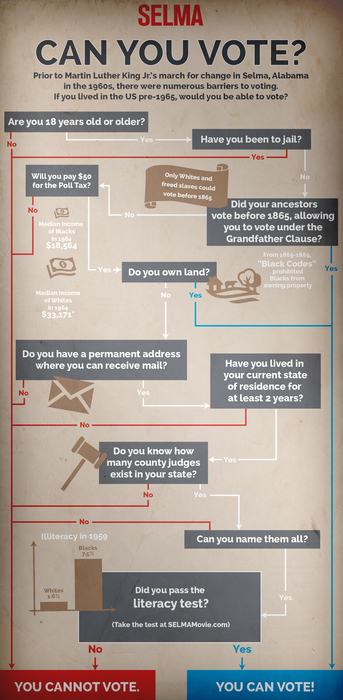
When an impatient and demanding Dr. King visits President Lyndon Johnson (Tom Wilkinson) he is left with no other recourse but to march on Montgomery, or the movement will surely lose momentum. Having already signed the Civil Rights Act, voting rights simply weren’t a priority for the 36th President. The grim reality that progress cannot and will not be made without global attention and sacrifice is apparent, and Dr. King is well-versed in the art of negotiation, demonstration and resistance to appeal to white liberal conscience through peaceful protests, marches, disturbing the peace and jail. Sounds a lot like Missouri, but instead of Ferguson police chief Thomas Jackson to contend with, Selma sheriff Jim Clark was determined to prevent Blacks from voting with the help of state and local officials. Annie Lee Cooper (Oprah Winfrey) fails to name all 67 Alabama County judges with her application before she is defiantly denied her right to vote yet again. In addition to requiring a registered voter to vouch for Black citizens, they were often forced to pay a poll tax they couldn’t afford. Of the 15,000 blacks old enough to vote, only 130 were registered (fewer than 1%). Fifty years ago, Blacks were arrested and beaten and terminated from their jobs for the right to vote, yet today many Blacks simply refuse to exercise their hard-earned right. One of the most sobering quotes from Selma comes from President Lyndon B. Johnson to Alabama Governor George Wallace: “Why don’t you just let the niggers vote?!” This informs us that even while conceding to public outcry, Johnson reveals himself to be a reluctant facilitator for equal voting rights.
Although Oyelowo (pronounced, “oh-yellow-oh”) is a British actor born to Nigerian parents, his preparation for the role of the charismatic Baptist minister and civil-rights activist is evident from the opening scene. Previously known for his role as Louis Gaines in Lee Daniels’ The Butler and Brian in Ava DuVernay’s breakthrough film Middle of Nowhere, Oyewolo not only gained weight–he also touts a convincing regional dialect. Dr. King is defined and remembered by his Southern accent, oration and his pronunciation of words, which are slower and more drawn out, and Oyelowo does not disappoint in his interpretation of Dr. King in this regard. In fact, even Oyelowo’s sigh sounds Georgian, but rather than imitate Dr. King, Oyelowo channels his character; interpreting his inner strength and galvanizing leadership qualities to make them his own. From this opening scene we are satisfied that David Oyelowo is Dr. Martin Luther King; a pleasant revelation audiences will surely appreciate.
 Performances are solid all around, however I would have liked to have seen James Bevel (Common) better utilized. Bevel was a main organizer for the Southern Christian Leadership Conference (SCLC). Although highly visible throughout the film, Common is often lost among an ensemble cast of civil rights leaders. Carmen Ejogo (Coretta Scott King) delivers a strong supporting role with compelling moments with Oyelowo. While Dr. King’s infidelity isn’t given significant screen time, Coretta confronts her husband in a memorable scene that is sure to evoke a few uncomfortable laughs when Dr. King impulsively lies to his wife with a straight face: ‘That wadn’t me.’ Tim Roth (George Wallace) and Tom Wilkinson (Lyndon B. Johnson) are solid in their roles. Actor and rapper Keith Stanfield (Short Term 12) is a standout in his brief appearance as Jimmie Lee Jackson, a civil rights protestor who was shot and killed by an Alabama State Trooper.
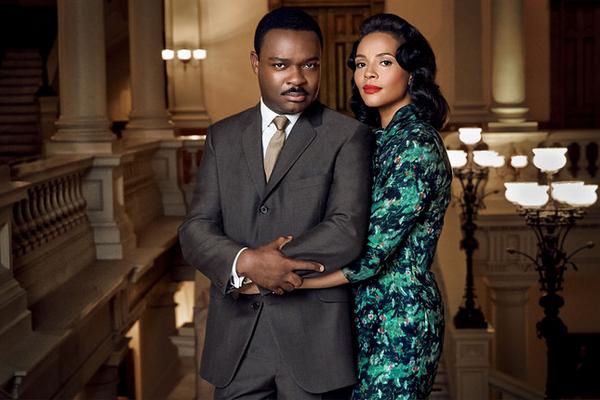 Cinematography is exceptional. Once again, Bradford Young proves his remarkable skill for lighting, shot composition and camera movement. Having worked with Ava DuVernay on Middle of Nowhere, The Door (short film) and the documentary My Mic Sounds Nice: The Truth About Women in Hip Hop, their collaborative familiarity can be seen in every frame, and when it comes to lighting dark-skinned characters, the Howard University alum and two-time Sundance Excellence in Cinematography winner has no equal.
Selma is efficiently scripted, making its runtime a breeze. It is a sociopolitically important and noteworthy film with the promise of a long illustrious shelf life and international appeal. Audiences have long-awaited an MLK movie with truth, authenticity and passion, and Ava DuVernay exceeds our expectations. The victorious third march on Montgomery is undoubtedly Selma’s high point. And as it did one day in 1965, history and fate may possibly meet at the same time in the same place yet again: awards season.
[Miles Maker is a creative producer, screenwriter, PGA Diversity selection, Project Involve Fellow at Film Independent, MFA Screenwriters Showcase judge for the UCLA School of Theater Film and Television, LA Film Festival screener and senior programmer for the One Lens Film Festival]