

On a tour of Disney Animation Studios in preparation for Frozen 2, Blackfilm.com, among other journalists, got a chance to speak with three of the visual effects supervisors for the film. Head of effects animation Marlon West and Dale Mayeda joined effects supervisor Erin Ramos and spoke to us about the process of animating visual effects, making musicals at Disney, and the importance of having people of color behind the scenes of animated films.
Why was Elsa born with magical powers? What truths about the past await Elsa as she ventures into the unknown to the enchanted forests and dark seas beyond Arendelle? The answers are calling her but also threatening her kingdom. Together with Anna, Kristoff, Olaf and Sven, she’ll face a dangerous but remarkable journey. In “Frozen,” Elsa feared her powers were too much for the world. In “Frozen 2,” she must hope they are enough.
Based on the footage we have seen already, the first film is very snow and ice-based while this is taking on a lot of other, different elements. What was it like finding the ways that you were going to play with the effects with the elements here?

DALE MAYEDA: You know, we always start with looking at references to natural phenomena. Like, for the fire we’re studying huge forest fires, and small fires and we even set things on fire for reference. Or like [how] the leaves move. I was [on] vacation in New York one time, and you’re walking around a forest catching all of these natural styles. But then, once we try to achieve that first step, we start making choices and different decisions of how we want to stylize things and put it into the Frozen world. So like the fire you see in the trailer, we don’t want it to be threatening and filled we smoke. We want it to still have clarity. And this kind of like a magical fire, so it was kind of like “what color range can we go to?” We looked at some images of the northern lights and some of the beautiful colors that can be in there, so we were picking the range in there and having the fire like be there. So we always start with references in the real world and move away from there.
How are those visual decisions made, to make the fire look more or less real and such?

MARLON WEST: It’s also the production designer and Chris and Jen’s story-telling. We have this big fire in the forest, but it’s the forest where most of our story takes place in. So we didn’t want to burn it, we didn’t want to fill the scenes with smoke because it’s very important to see in deep space as part of storytelling. So we took the natural look of the fire away, we took the smoke away, and the damage the fire does. But we still needed it to look scary, it wasn’t like an apparition or something they can be afraid of and suddenly own up and walk through it. It’s fire! So we used heat distortion and embers and all of these other cues to let you know that this was a real fire.
So between the three of you, you’ve worked in hand-drawn animation, 2D animation, 3D animation, live-action visual effects… How do different forms of visual effects animations feed into how you make a movie like Frozen 2?

ERIN RAMOS: You know, I was in live-action for a long time, and oftentimes you just try to cover stuff, because the background plate is photoreal. So if you want things to look like they’re part of the environment and blending seamlessly with real life. And I think with animation it’s really cool because you get to really stylize a lot of the things you see, like a lot of the natural phenomena that you see. So even though everything is rooted in natural physics — water still has to move like water, otherwise, people will be like “what is that weird goo?” When something like water looks wrong, your eyes and brain know and it pulls you out of the story. But it looks real enough that you believe in it but it needs to fit the production design of Frozen 2. And that’s where the artistry comes in. And that’s what I love about working with Disney, I truly feel like I’m an artist here. We’re crafting these simulations, and everything is based on something we’ve seen in real life but it’s made fanciful and beautiful and works with the story.
DALE MAYEDA: Before I came here I had also worked in live-action visual effects, and one thing that I really love about working in the VFX department at Disney is that when we’re doing shots with another department, the first thing that we’re talking about is not “oh, what’s the simulation set-up?” The first thing is “oh, is that telling the story of this moment? Is the fire feeling threatening enough, or is it comical at this beat?” So we’re always talking about the emotion of our effects, which I always feel like in live-action you’re trying to make it feel real. And we’re always talking about all of our artists being in support of storytelling. And it’s just always how we talk about stuff in our department.
ERIN RAMOS: Yeah, I remember when I first started here—because I’ve been here for about 5 years—we’re doing dailies and getting notes and they say “it needs to feel more lyrical.” And in my brain, I’m thinking “does that mean 50% slower? Like I need an absolute number. Is that 30% less flashy?” So it took me a little bit to get used to all of that, and to trusting how this shot is making you feel. Is it making you emote the way we need it to? And that’s something you can’t really articulate with numbers.
And Marlon, you’ve worked on 2D animation. How does that inform the way you work?
MARLON WEST: Well you know, I started here in hand-drawn animation. I worked on upwards of a dozen features or something. I know a lot of our directors, including Chris Buck, work on hand-drawn animation. And a lot of our character animators are trained in hand-drawn, whether they’ve done it professionally or not. But there [are] these tenants of hand-drawn animation and a vocabulary that people speak in when they’re talking about storytelling and anticipation and overlap, and we try to bring all of that into our effects storytelling as well. So, Frozen 2 is very designed I think compared to some of our other films, a little bit more naturalistic. We were trying to come with a caricatured version of a place that exists. Arendelle is loosely based on Norway but it doesn’t exist, it’s not a place you can go. Mike Giaimo has a very designed aesthetic, and our effects don’t look simple but they are stylized to play in and to fit the Frozen world.
Talking about Frozen to Frozen 2, there’s an evolution in a lot of visual styles. How have the effects of Frozen changed in the past six years, that we might not notice on the screen exactly?
DALE MAYEDA: I think that there a lot that we’re able to achieve with the level of detail, I think we’ve been able to go further technology-wise we had back then. There’s a lot of richness that we’re able to do. Our renderer makes a lot of the effects we create a lot richer.
ERIN RAMOS: Yeah, just looking at the environments, right? There are just so many more small details that we can add like things just look more full. It’s weird going back to Frozen because it’s like “Oh, wow. I forgot that’s what it looked like!” It looked great, but definitely, the look has progressed in the last six years and how far we’ve come.
I’m curious, what do you see the role of diversity and people of color behind the scenes in animation. How does that change what we see a film like when it gets to the screen?
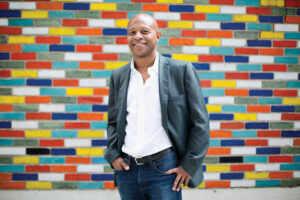
MARLON WEST: I think that… Speaking personally, I never hesitate to do outreach, to go talk to students about representation in films. So I have a mind towards inspiring other people to do what we do and to enter into this industry. Because I don’t think that people in general know of anything called an effects animator, let alone a Philippino female one, or a Japanese one, or a Black one. They just don’t even know this role exists. So I always have a mind for trying to be present, to show up and represent and to kind of inspire other people to get into animation.

Because you get outside of this building, you ask someone “how many animators work on Frozen 2?” And you know, there are eighty “animators” but there are 700 others of us doing other jobs. And I want people to know that there are all of this diversity in jobs, and hopefully diversity in voices creating these images. Do I see something coming out of a character’s mouth as an African American male and I’m like “hmmm, maybe not” or “hmm, that look on so-and-so’s face is not really authentic,” yeah. I, frankly have never felt like I needed to pipe up on this film. But just being present and in the building, trying to make our presence known to the outside world, that’s very important to me.
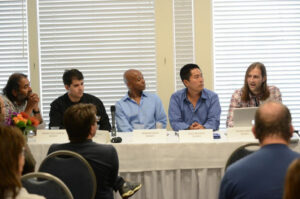
DALE MAYEDA: I think we, luckily, have a pretty diverse group, even within our effects department. I think having that diversity is always good because you can get different points of view and different ways of approaching things. And looking at telling a story or how we have to approach the effects that we create, it’s always good to have that diversity within a group.
Erin, you said something earlier about having a musical quality to animation at Disney. Especially considering Frozen 2 is a musical, how do the music and choreography and characters and singing play into how you design visual effects?
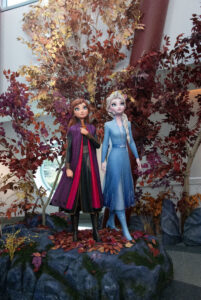
ERIN RAMOS: Oh yeah, definitely. I mean, it’s always been a dream for me to work on a Disney musical, so the idea of me animating to this musical beat… I mean, as a kid I never thought I’d be doing this! So it’s super exciting! [laughter] But first of all, it helps that the songs are really catchy, and just being able to create along to this beautiful song is just really great. And you want to make sure that you think about the beats and the measures and stuff like that, but in “Into the Unknown” you want the flourishes to happen. Like there’s a cymbal crash here, can we just get a burst of something! So yeah, stuff like that.
DALE MAYEDA: I’m a huge musical theater fan, so getting a chance to work on Frozen 2 and Frozen is a dream come true. And yeah, when we’re working on these musical numbers we are constantly like “put the audio a lot louder” because you might miss a little flourish. A spray of something or a burst of fire, but we always try to add the musicality to everything we can add to.
ERIN RAMOS: Yeah, it’s a lot different from, like, doing an effect where you’re like “can you blow up that building?”
MARLON WEST: But to music!

Loading…