
Still Alice Press Conference InterviewsPosted by Wilson Morales
January 19,2015
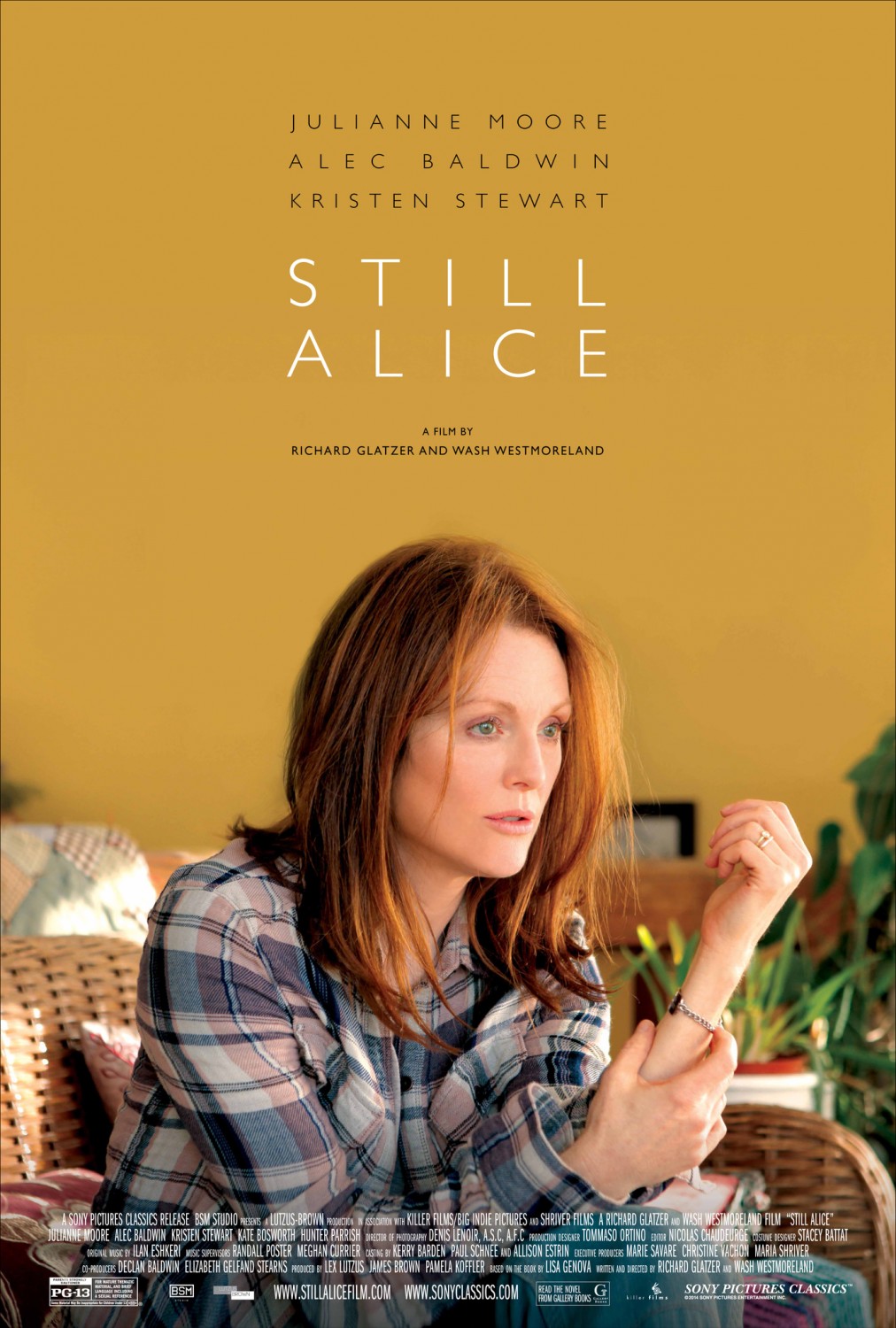
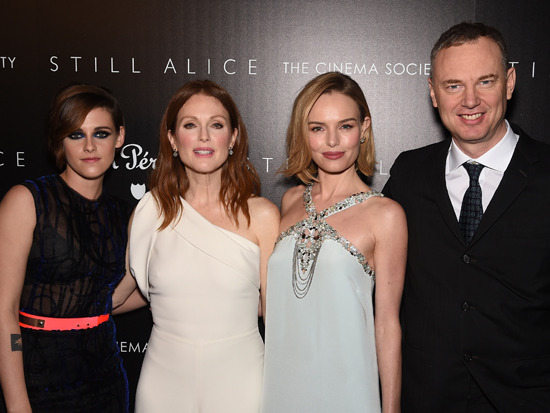
Very recently Blackfilm.com attended the press conference for ‘Still Alice‘ at New York’s Crosby Hotel, where Julianne Moore, Kristen Stewart, Kate Bosworth and co-director Wash Westmoreland participated.
Renowned linguistics professor Dr. Alice Howland (Julianne Moore) knows the truth of Bishop’s poetic insight as well as anyone. Diagnosed with early-onset Alzheimer’s, Alice learns the art of losing every day.
At first, Alzheimer’s means losing her way around the streets of Manhattan, but soon — far too soon for her husband John (Alec Baldwin) and her children (Tom (Hunter Parrish) and Anna (Kate Bosworth) — it’s much more. But even as it puts her marriage to the test, Alice’s new condition does provide the opportunity to reconnect with her youngest daughter, Lydia (Kristen Stewart), with whom she’s never seen eye-to-eye. The fact that Alice is a lifelong student of language and communication proves a powerful resource in her fight against mental decline, but it also means that she has a uniquely troubling understanding of what’s to come.
Here’s the full press conference (audio)

When fleshing out a role, does it help if you’ve played similar characters before?
Julianne Moore: I tend not to work that way. I think sometimes when you look at someone’s career, you look for threads and references, but believe it or not, as actors, we’re freelancers who literally go from job to job so you make a movie and then the next one and the next one. Then, when someone asks me about a movie I made 10 years ago, I barely remember it. Often people remember things in my movies and quote lines, and I’m like, “What’s that?”
Poor Michael Angarano. He’s so great and so cute and funny. We were doing this little comedy called, “The English Teacher,” and we had to kiss in it. He told the story on “Letterman” or something. We kissed and he said, “Was that sexy?” And I went, “Yeah, Michael, that was great. You were terrific.” He said he wanted to die of embarrassment because he was quoting a line from “Boogie Nights.” [Laughs] (Loool)

But, getting back to your question, I think everything you do as a person and everything you do as an actor ends up in your work, but it’s not that direct. It’s all just like life — accumulative.
What was your reaction when you got the script? Were you afraid a movie about Alzheimer’s would make people say “That’s depressing” and not want to see it?
Kristen Stewart: Typically, no. Every experience is different when you’re an actor and doing it for the reasons we do. Yeah, it’s definitely morbid, and it’s not like a walk in the park, but sometimes, it sounds silly, but it can be very important. I knew for a fact as soon as I knew Julianne was playing this part, I knew that she was going to be doing something important. I knew this movie was being made so she could do that and would say something. It was intimating that it was our job to hold her up. There’s a possibly the only reason I felt completely driven and competent walking into was because Wash (Westmoreland) and Rich (Glatzer) hired me. They have more aspect to the story unlike anyone I have ever me. If they thought I could do it, then I could. It’s not like having fun and making people laugh and going to the movies and having a great time, but I think a movie can really say something and I think this movie does.
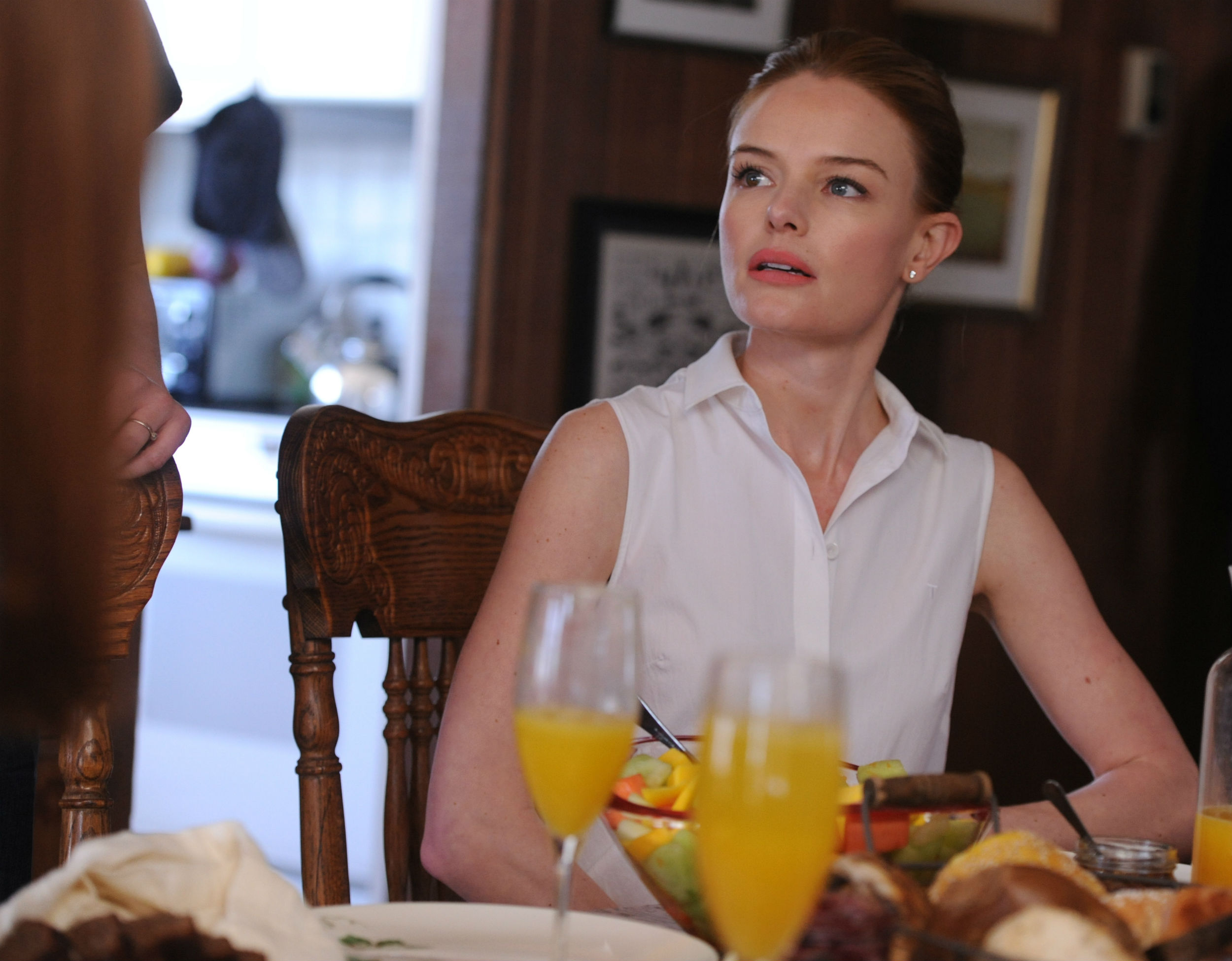
Kate Bosworth: I felt the same way. I’d read the book before the script, and probably everyone in this same room has been effected by Alzheimer’s. When I read the book I see my grandparents, who had Alzheimer’s, and my parents rallied the family to take care of them, and i touched me deeply. I felt like this is an opportunity to shine a light on this disease in a way that hadn’t been done cinematically before. That was the real draw for me and to be able to work with Julie (Moore). I’ve known her for years, but never had the opportunity to work with her and I wanted the opportunity to sit and watch her do what’s she done and it’s really spectacular just to be around her, watch and learn and be part of the process.

JM: I did it for the money. No, sorry, it was just such a great script, a wonderful, wonderful script and such a great book that Lisa [Genova] wrote. What she did that is so remarkable is that she presented the disease completely subjectively. What would it be like? What does it feel like to go through this process? We never get to see that. And, Rich and Wash took that novel and made it cinematic in a very deceptively simple way, I think. It was a thrill to be involved in something like that, and I think that’s what attracted us to it. It’s the human side of the story. You’re watching this family’s journey through this very difficult situation.
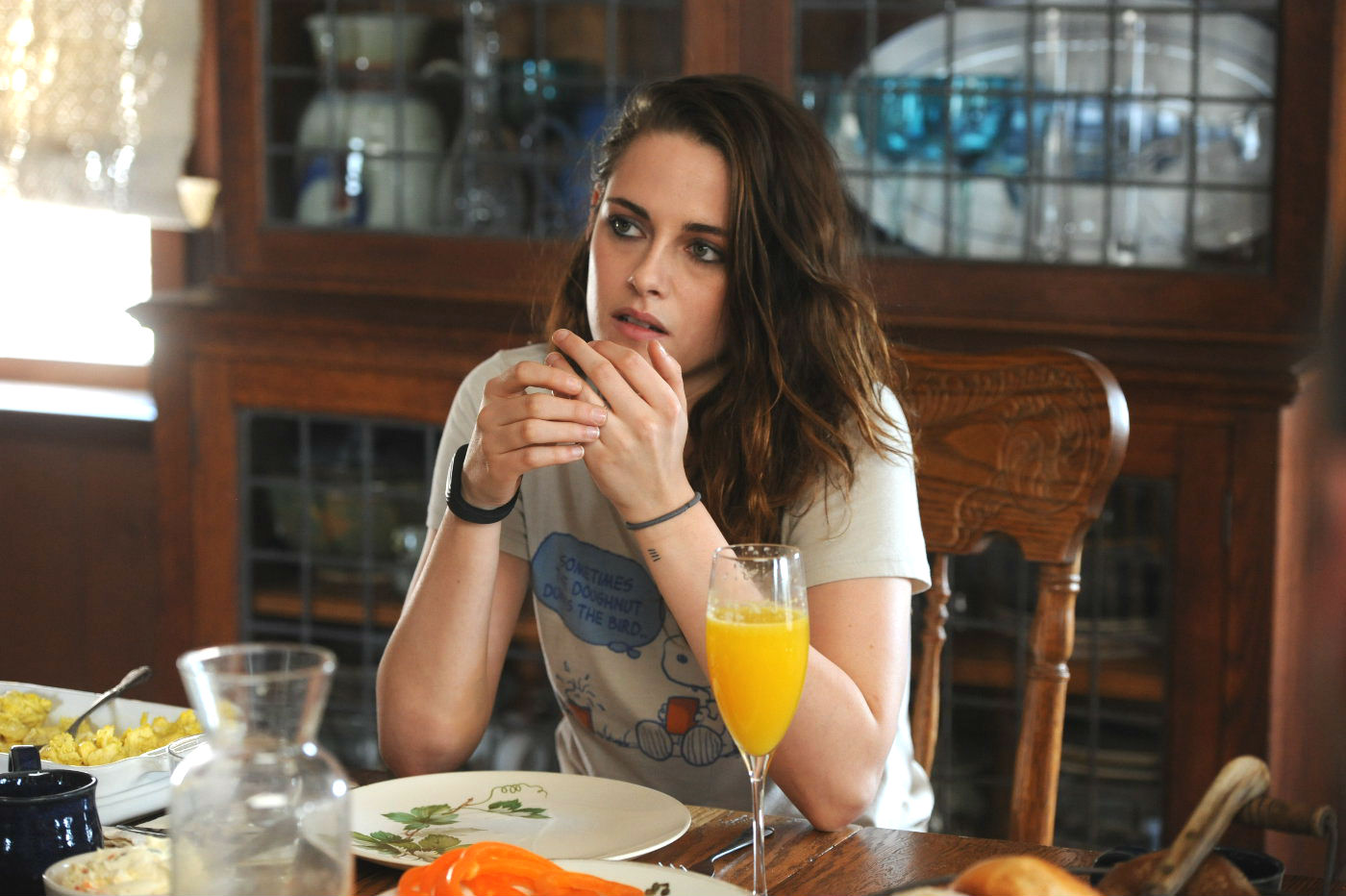
KS: It’s interesting that this is the kind of story where you know if it is done right, everyone is going to talk about it. If it were done badly, well. Do you know what I’m saying? The alternative is so polarized. So I thought, “If we do it right, it’s going to be more important than anything we’ve done in a long time.”
Wash Westmoreland: We didn’t want this to be a depressing movie. We wanted to shine a light on the human element, and the connections people can make during even the most difficult times. We wanted to make a powerful film about what it means to be alive.
KB: I think even through the tragedy, what I love the most about the movie is the comedic moments; those moments are so human. I take care of my grandmother with my parents, and there are some moments that have an edge where you don’t know if they’re tragic or hilarious. I feel like that element was very important to you, Wash, and Richard, specifically putting the humanity in Julianne’s journey, especially with Alec. There are moments that make it very real.
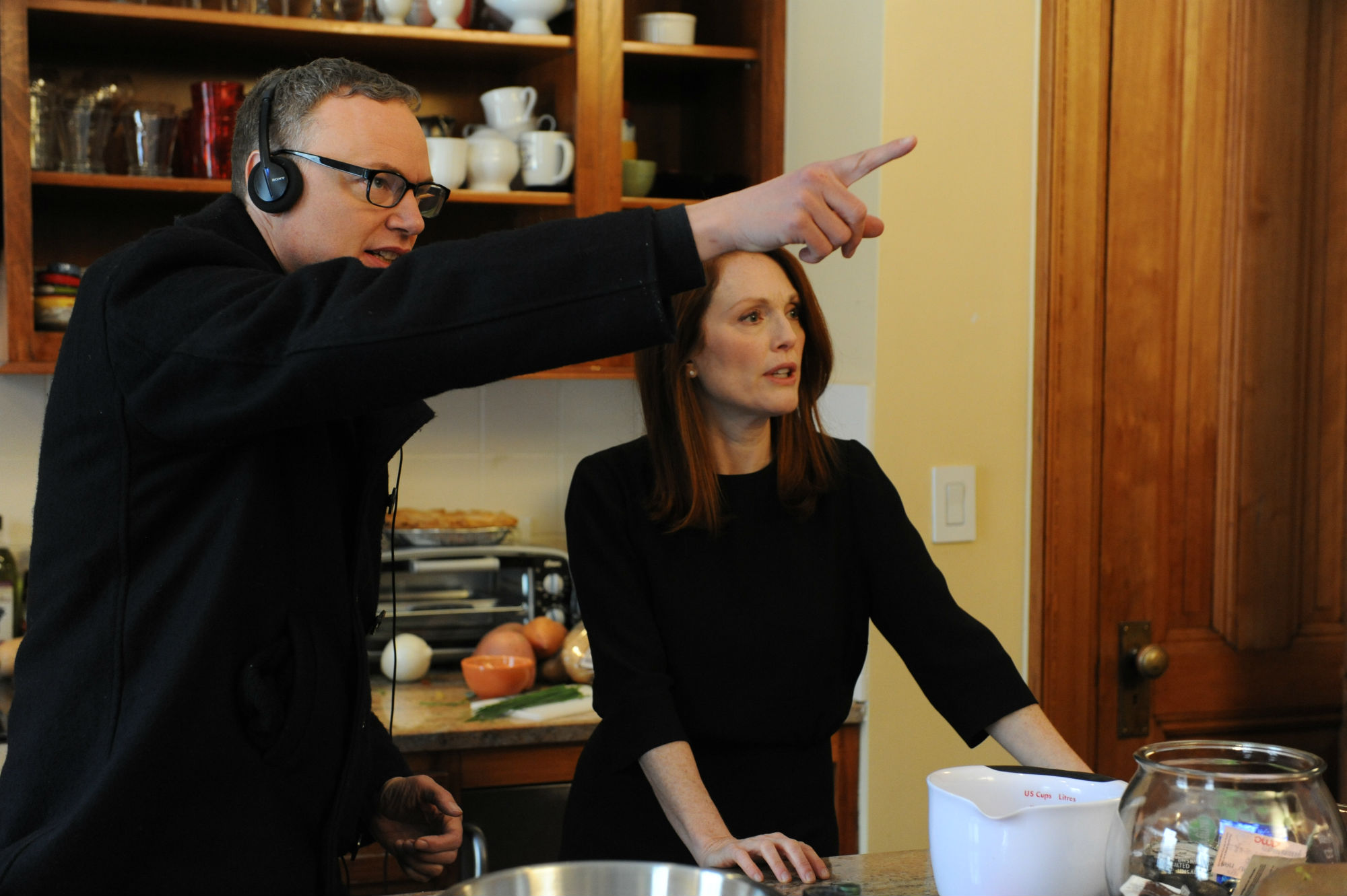
Wash, what was the process of collaborating with Lisa on adapting her book into the film, especially on the set?
WW: Well, often times when you get into a situation where you collaborate, there can be a lot of tension. But Richard and I wrote the first draft of the screenplay before we showed it to Lisa. So we were nervous when we sent it to her. But Lisa’s initial response was incredibly positive.
Lisa was helpful to us while we were filming, as she was able to give us target feedback. She would visit the set, and we had a wonderful time. We very much enjoyed seeing her work not only shine through in the screenplay, but also in these amazing performances. We were very much in tune all the way throughout.

One of the challenges of adapting the book was the fact that the story’s told through Alice’s internal point-of-view. So we had to figure out how to create that tone, so that the audience members can understand the story through her point-of-view. Then they could stay with her through her disappointments and triumphs.
Another challenge for us while making the film was deciding what material we should leave out. Typically, it takes 16-18 hours to read a book, which allows for a lot of time for events to unfold. But when you’re watching a movie, there’s a much shorter span of time for those events to play out. I think some adaptations try to cling onto too much information. So you have to be disciplined to be able to get to the core of the story, and make it a cinematic experience that works.
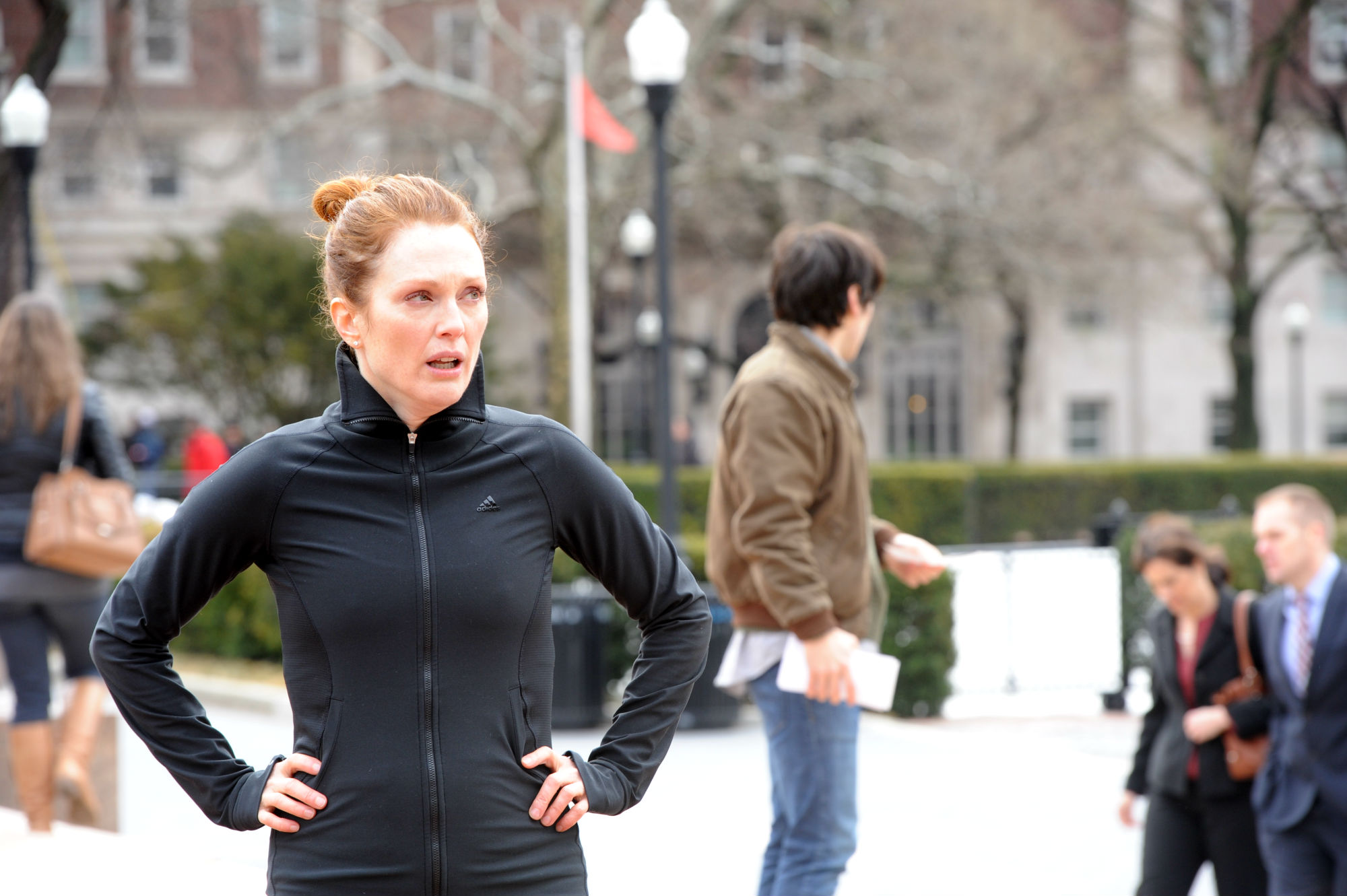
Julianne, did you reach out to any Alzheimer’s organizations while you were preparing for your role? How has the film impacted your thoughts on the disease?
JM: Boy, did I ever! I knew nothing about Alzheimer’s. I’m one of those rare people who hadn’t had any contact with the disease. I didn’t know anyone personally who had it.
So I started working with one of our producers, Elizabeth Gelfand Stearns, who told me about her experiences with her mother and grandmother. The National Alzheimer’s Association also set me up to do Skype calls with women who have been diagnosed with Early Onset Alzheimer’s, and I was able to talk to them about their experiences.
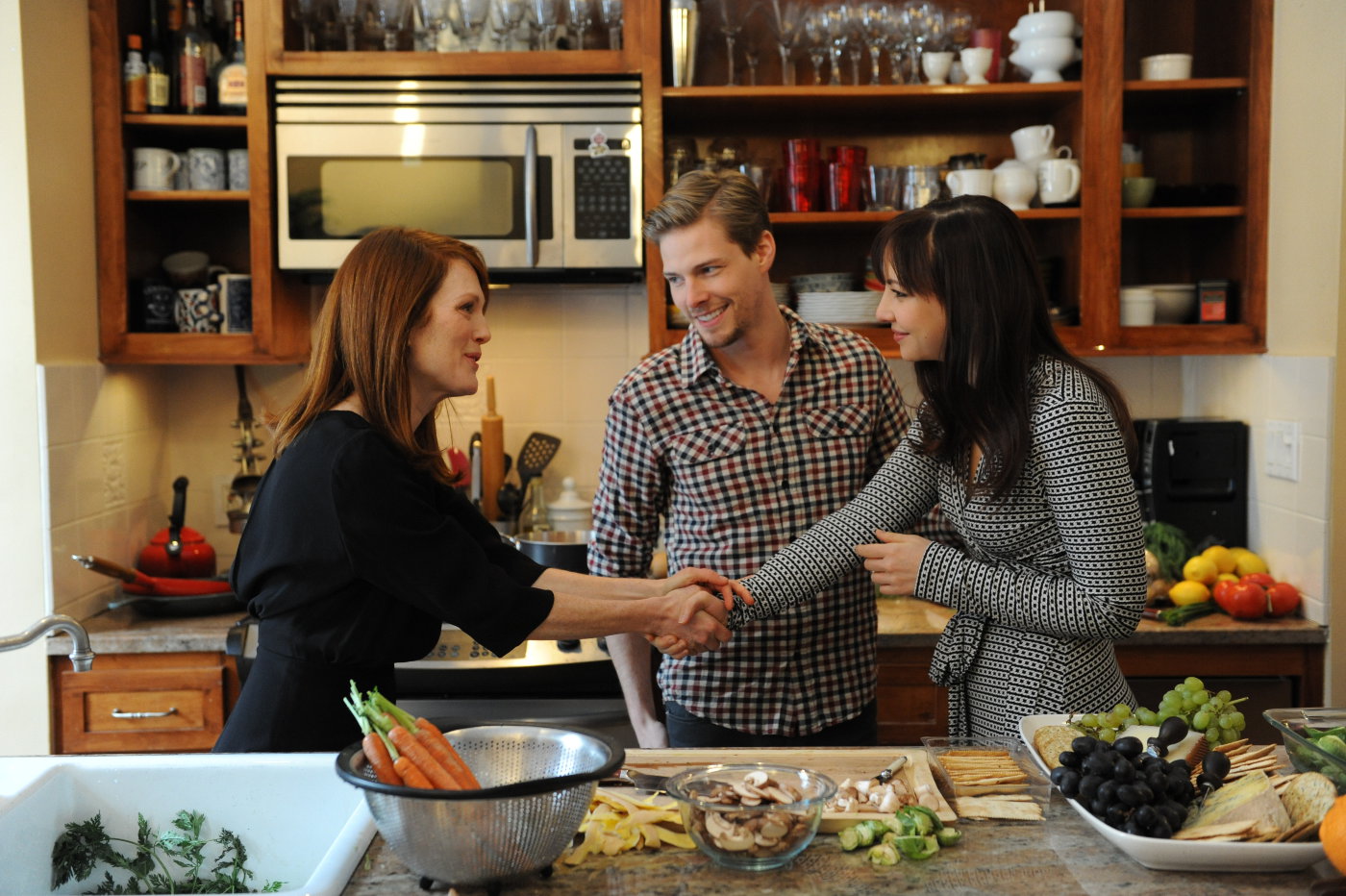
I also attended support groups, which supplied me with a lot of information. From there, I went to a long-term care facility, where I spoke to caregivers and families. I also watched many documentaries on the subject, and immersed myself in the illness.
I told Rich and Wash that I didn’t want to do anything on camera that I hadn’t seen, because I felt like I didn’t have the authority to do so. Whenever I was unclear about something, I would check on the behavior with someone familiar with the illness. I think people were so happy and excited that we wanted to know about the illness, and get it right, so they really extended themselves.
A lot of times, people with Alzheimer’s don’t feel seen, as we often look the other way, since it’s hard to look at. Alzheimer’s patients feel like there’s some kind of shame attached to cognitive decline. There’s one line in the film where Alice says, “I wish I had cancer instead,” because it’s easier to see what’s happening. So it was great to see the experience of the people I spoke to, and I really owe a lot to them.

One of the great aspects of the film is the support Alice receives from her family. So when you spoke to the families of Alzheimer’s patients, how much did you take away from speaking to them?
JM: Well, I saw that every family is different. Some are very supportive and are there with the patient, while others are not, and refuse to even acknowledge the illness. One woman told me that her children refuse to accept that she has Alzheimer’s. Another family talked about how the father wouldn’t talk about it, and then the kids didn’t know what to do. So every family, and even friend, dynamic is completely different. Patients have said they’re surprised about who sticks around, and who disappears.
In the movie, we see the one daughter who you expect to stick around actually not be able to take it, because of her own potential diagnosis when she gets older. Then the other daughter, who you’d expect to not come back home to help her mother, is able to handle it.
The dynamic in the marriage was also so interesting to me. Alec was so incredibly compassionate in his performance. You see how much you love his wife, and he says how much he’s going to be there. But at the end of the day, he can’t handle it-he wants to be with the old version of his wife.

WW: My co-director, Richard, has ALS, and we’ve discovered how some people have become so distant. No one ever said anything mean, but they have re-prioritized. Meanwhile, other friends would come forward, and really be emotionally present. So we wanted to create within the family dynamic, a situation where people’s presence meant as much as people’s absence.
It’s really interesting to see how that works with the family members throughout the film. Lydia is initially the antagonistic one, and is absent from the birthday dinner. But she comes through for her mother in the end. Meanwhile John, who’s in love with his wife, struggles constantly as he’s dealing with the disease.

I also find it fascinating that Kate’s character, Anna, is the child who learns she has the gene that can lead to Alzheimer’s. She then becomes absent for a while after that, as she can’t deal with her mother. When she comes back, she’s still clearly dealing with these problems with her mother. But ultimately when she has her babies, there’s a feeling that a new relationship can start between her and her mother again.
What was the most challenging scenes for you all to film, and then watch later on when the film was completed?
JM: The most challenging scene for me to shoot was actually the family scene, where Alec and I were supposed to give the news to our kids. Alice wasn’t in a place where she began declining yet. She was just diagnosed, so she’s still very present and articulate. So how do you give that news to anyone? She’s worried about her children, their relationships and their potential diagnoses. So I was worried about how that scene started and ended, making that the most difficult day.
WW: It was tough, because it’s like a bomb going off within the family. It was really about how people initially responded emotionally. It was different for each character. It took a lot of working out to get that emotional tone right.
KB: I agree-that scene was difficult for everybody, as we were trying to figure out the tone. I feel like my character, Anna, was Alice’s mirror. They knew each other’s short hand, and were very close. While everyone else was asking if Alice and John were getting divorced, I had the line during the scene where I asked, “Are you sick?”
My character felt the most vulnerable there, and she then closes up during the rest of the film. She isn’t able to handle the fate of having the gene, as she’s watching her mom decline, and begins realizing that’s how she may decline. So she starts to shut off from that relationship quite a bit.
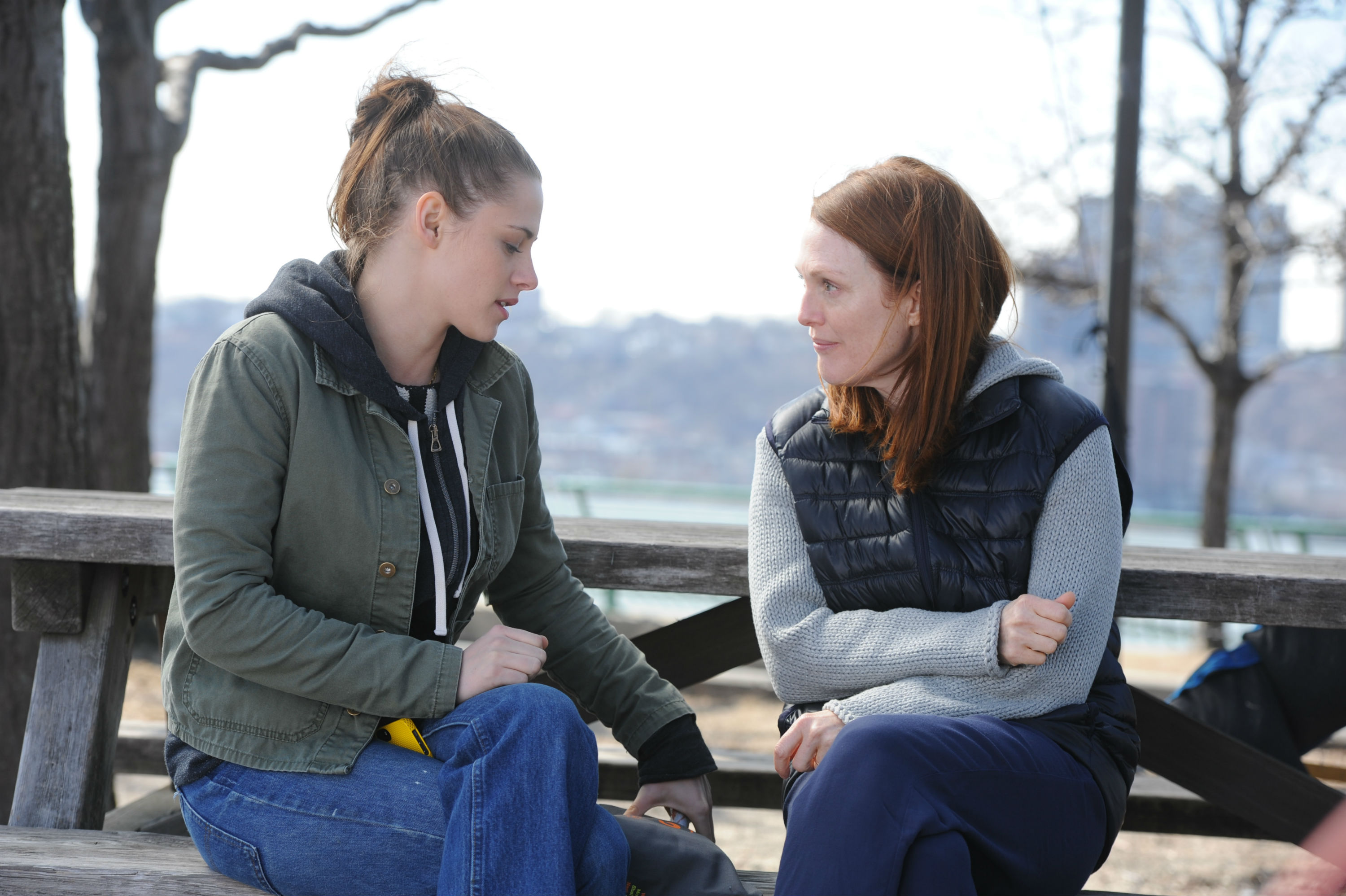
Kristen, was that something you related to, as well?
KS: Personally I did relate to it, as well.
You have two starkly different representations of people. Lydia has so many traits of her mother [Alice] and because of this accelerated period might be able to find that key and reach a level with each other and appreciate each other. But first you have a girl [Lydia] who does not want anything to nail her down. Lydia is not isolated but she is different than her family. She is a very creative person and she wants to live every moment and appreciate it.

One other thing the movie shined the light on is the present moment. Being there and not being ruined by protecting [yourself] too much. It’s funny that Lydia becomes sort of a backbone. It’s counterintuitive. She’s flimsy but then she actually ends up being emotionally the strongest for her mom and she learned a lot.
Kristen, I saw the Assayas film (Clouds of Sils Maria) and you were at the New York Film Festival and so fantastic and I wonder after a big franchise that you had, do you feel if you have to redefine yourself as an actor now?
KS: Gosh, luckily through by my experience and by my gut, I don’t have to do anything (like that). At this point, I’m just doing what inspires me and what I love and it’s falling off the truck the way that you see it.