
The Good Lie Brings Out Truths for Its Sudanese actorsby Brad Balfour
October 1, 2014
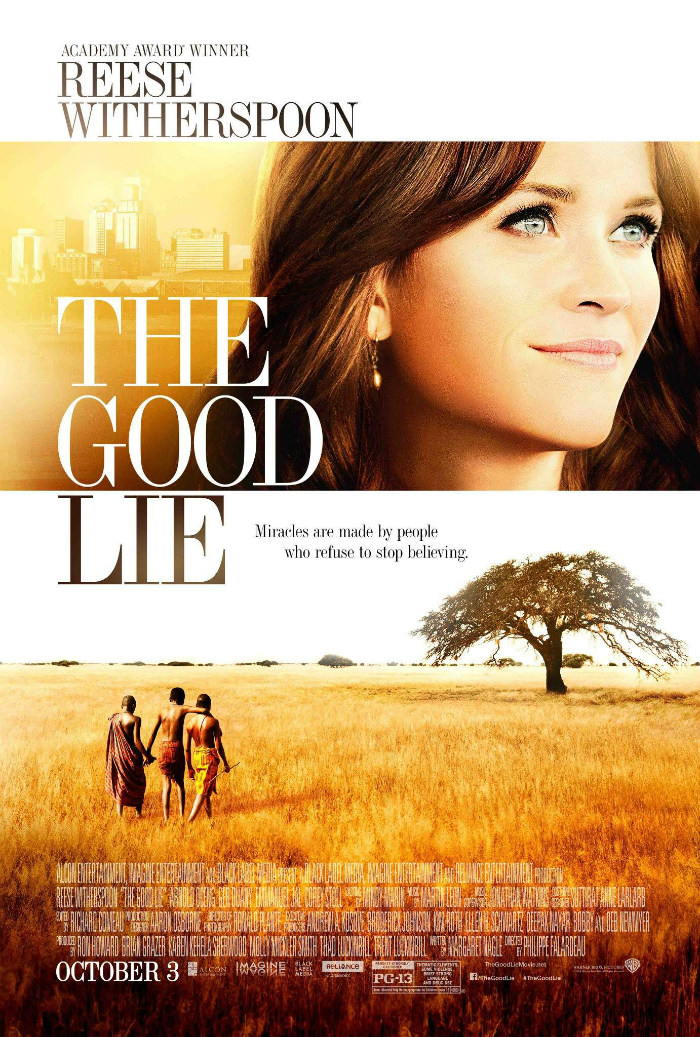
The new film, The Good Lie merges the real life experiences of actual Lost Boys [and girls] of Sudan into a composite tale of four young survivors of a village slaughtered by Sudanese rebels. Mostly pre teens, they were among a group who make the arduous trek from south Sudan to Ethiopia and then to a huge refugee camp in Kenya.
Over 20,000 young members of the Nuer and Dinka ethnic groups were displaced and/or orphaned during the Second Sudanese Civil War (1983–2005) while about 2.5 million were killed and millions more were displaced. The “Lost Boys of Sudan” name became colloquially used by aid workers for those in the camps.
Besides showing this long walk and life in the camp, the film illustrates the remarkable struggle this quartet endured both in making to America through a lottery set up by groups dedicated to giving them a new life and to adjusting to the very different world of northern U.S. cites such as Minneapolis.

The film follows the narrative of these four surviving and eventually thriving in Minnesota while bemoaning those left behind in African camps. Their erstwhile leader Mamere (played by Arnold Oceng) particularly struggles to find his older brother who was captured in his place by rebels.
Three of the four actors who play lead characters in this film had similar experiences to those depicted in the film. One, Emmanuel Jal, who plays Paul, not only was a real child soldier but became a hip hop star who had a documentary made of his life, Warchild, released in 2008.
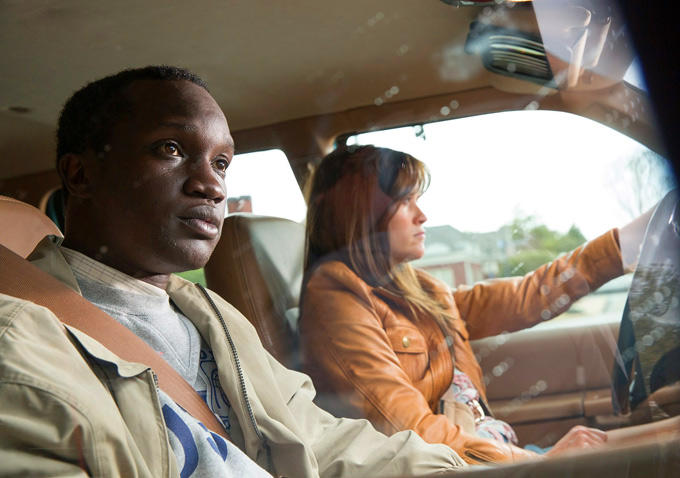
Of the three actors who were interviewed about the film, the Ugandan-born Englishman Oceng has been the most visible having been in film since he was six including an acclaimed British indie, My Brother The Devil. The tall Ger Duany (Jeremiah) made his acting debut playing a refugee in the 2004 comedy I Heart Huckabees. He was picked for the role over some 200 others because producer/director David O. Russell wanted someone who had the real life experience of being a refugee.
The lone woman featured, Kuoth Wiel, actually grew up in Minnesota, the child of Sudanese refugees. While attending college, she landed this, her first movie role in which she plays a lost girl Abital Deng.
How did you get the role?
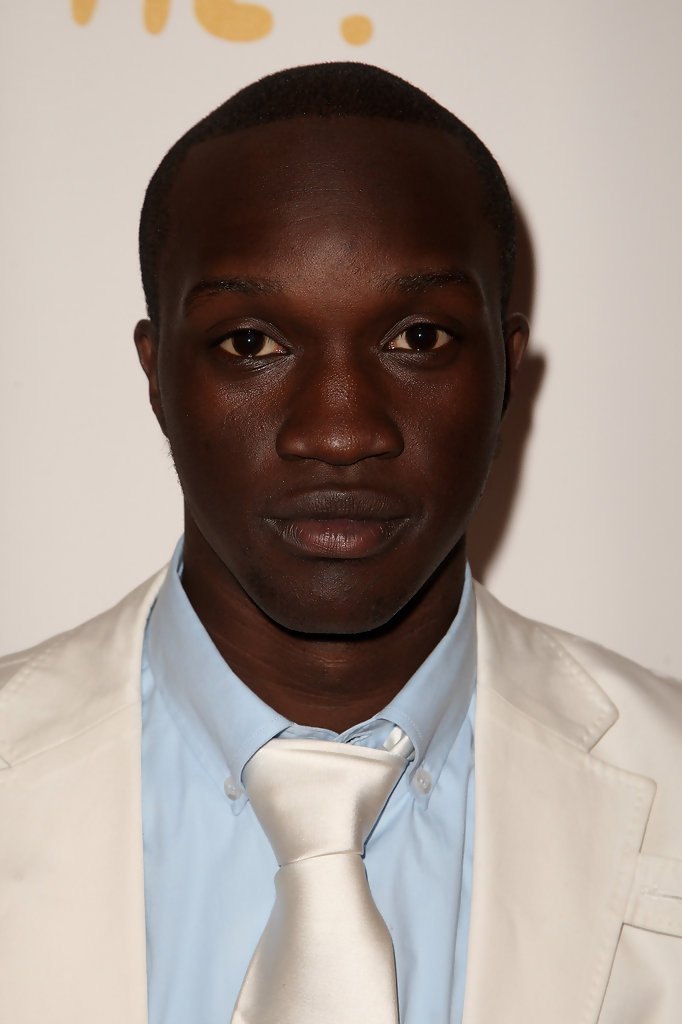
Arnold Oceng (Mamere): I was cast from London. My agent saw the breakdown of the script, and then sent my picture to the casting directors and I got turned down. I wasn’t even allowed to audition for it because they said I was too short. Standing next to him, you can see why. So I didn’t pay any mind. A month later, they contacted my agent and said they could see me now. So I went up for the casting, I put myself on tape and they sent it to LA. I didn’t hear back from them for about maybe a month and a half. Then my agent called me and said that my tape was the only tape they liked in Europe. My agent asked me, “Are you available to fly to LA?” And I was like, “Dude, even if I’m not available, are you crazy, I’m flyin’ over!” Then I came over and had more castings over here and that’s when I got to meet Reese. When we found out we’d be working with Reese — can’t get bigger than Reese, you know? I was nervous. We were all nervous to be on the same screen as her. But to be honest, we weren’t ready for the humbleness and the strength and how great [she was] with us. We thank [her] because [she] made the experience so much easier. It was a hard journey for all of us, but just knowing [she was] there to support and to help us through, we really appreciate that. I think I was one of the first people that was told I got the part of [one of] the men, and I met the other two guys, Emmanuel and Ger [Duany] in the final LA castings. So then I was sent straight away to be prepped.

Ger Duany (Jeremiah): I came across this story 10 years [ago] through a man that I met, Bob Newmyer. He told me he wanted to make a movie about [this] story. I was among the kids that really fled the country in 1987 by foot to Ethiopia and then back again to South Sudan and back to Ethiopia again. So much gambling with my life, I don’t know why I’m here. But I get to talk to you. When I heard that Bob had died in 2005, I thought the story would die with Bobby. I thought the story remained with him because that was the only person that I met at the time, so when he died I thought I had to go forward to the next things. In 2013 I came across the script that was written by Margaret [Nagle], and I read it and I was blown away. I made sure I sent an email with my headshot to the casting director Mindy Marin. She sent me a part that I had to audition for, and I taped myself with my own camera and I sent it.

Kuoth Wiel (Abital): The story had actually somehow made its way to me through social media. A friend of mine told me about the audition on Facebook. At first I was a little taken aback by it, because I had never seen a script that was specifically looking for South Sudanese people or South Sudanese actors. So I saw it as something special because this is something that is so not regular. At that time, I was doing university at Oxford College. I knew that doing this movie was going to be a sacrifice for me because I had to give up getting my degree at that time. Mindy Marin made a point to me, “Well, we like you, but if you choose to do this movie, you’re gonna have to give up your life and leave school.” And so I made that sacrifice to leave school and go do this movie because it’s my history. This is a story of my country, so I felt that it was a valid sacrifice for me. Eventually I got to graduate.
You were the odd man out, in a sense that you didn’t have this experience. What did they teach you, or how did they make you feel a part of it all?
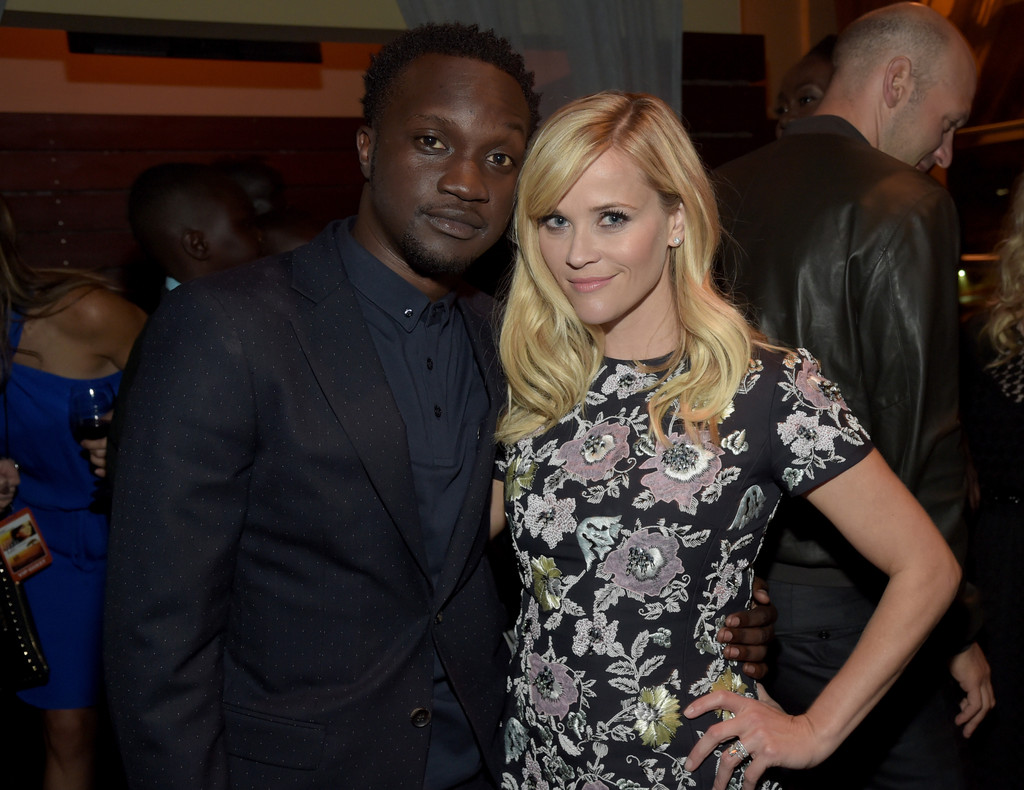
AO: While we were there, Emanuel and Ger came over and we had a month before filming, us three, to bond and keep it honest— a month to bond, and rehearsals as well. It was a bit frustrating at first. Emanuel and Ger knew each other, so there would be times when it was just me and them in the room, and those two were just talking their accent and talking their language. They would do it for hours, the whole day. I’m just sitting there and nobody’s talking to me. They’s go to lunch together, but wouldn’t invite me. They meet up in their hotels and they talk and they wouldn’t invite me. But then as we did more workshops, we got closer. But that’s the thing, because I knew how difficult it was for them to speak about what happened. So I never asked them. I never said, “Tell me about this” because I felt like I’d be [prying]. As they got more relaxed with me, we became friends, and then they opened up and told me stuff. I was a sponge. I soaked up information from them, because no amount of research or whatever could beat what I had in front of me. These guys showed me how to walk, Sudanese mannerisms, cultural differences that I needed to make sure I do. It was a blessing working with them. Philippe [Falardeau] knew how hard it would be for me, although I do have ties because my father is from Sudan, but my mum’s Ugandan.
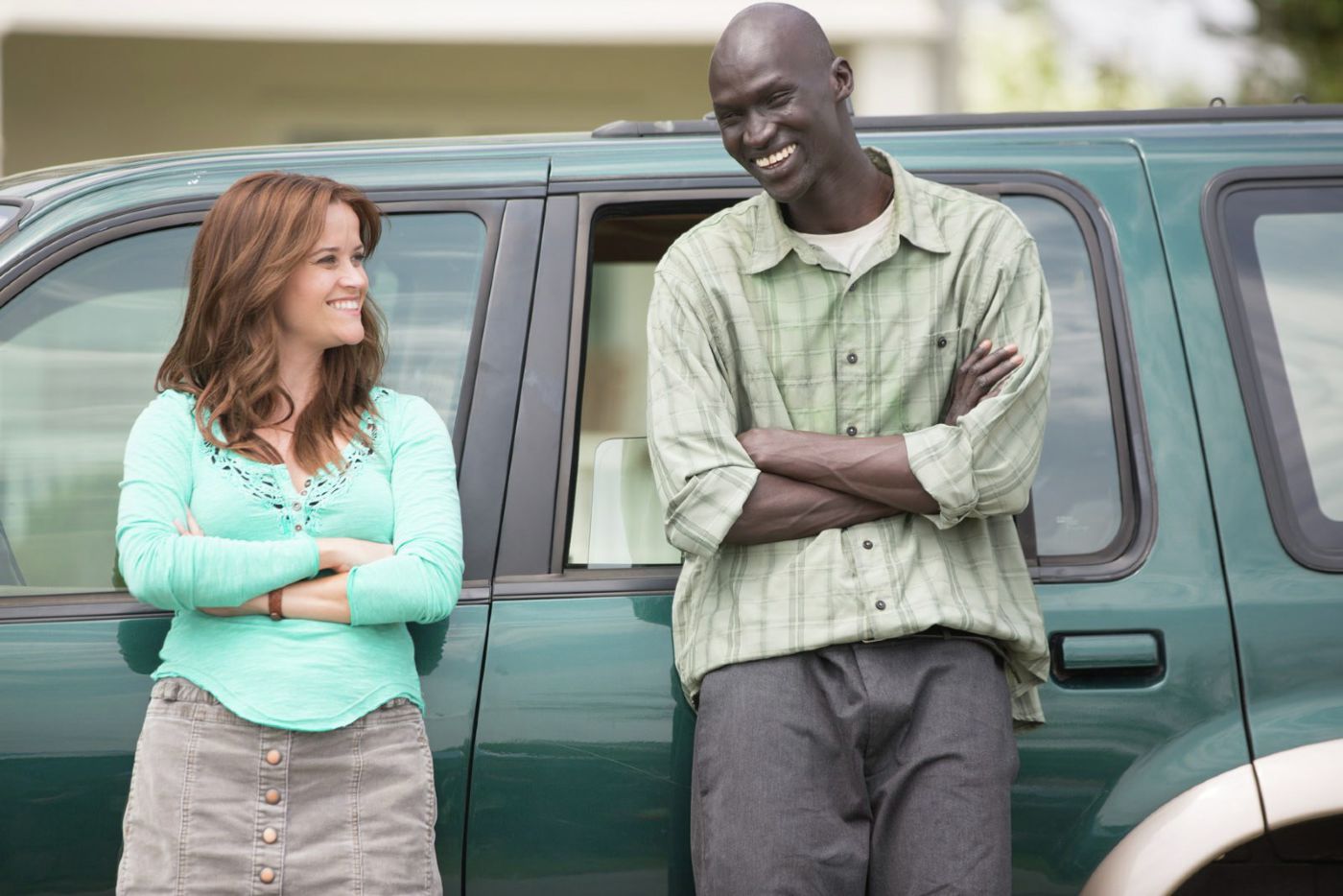
Had you ever heard of Reese Witherspoon?
GD: When Mindy Marin called me, she told me, “Hey Ger, there’s a lady named Reese, she’s gonna be in the movie with you!” I said, “Who is Reese?” She sent me a link and I was like, “Yes, of course, I know this lady. I watched all her movies since I came to America.” I learned English through watching movies, so when I knew that it was Reese that I was watching for many years, I was excited. What was incredible with Reese, she could turn things into something that brought all of us together. And you couldn’t find another person that would tell the story of South Sudanese people who’d been suffering for decades. Reese was the perfect person, it really helped to tell the story with you.
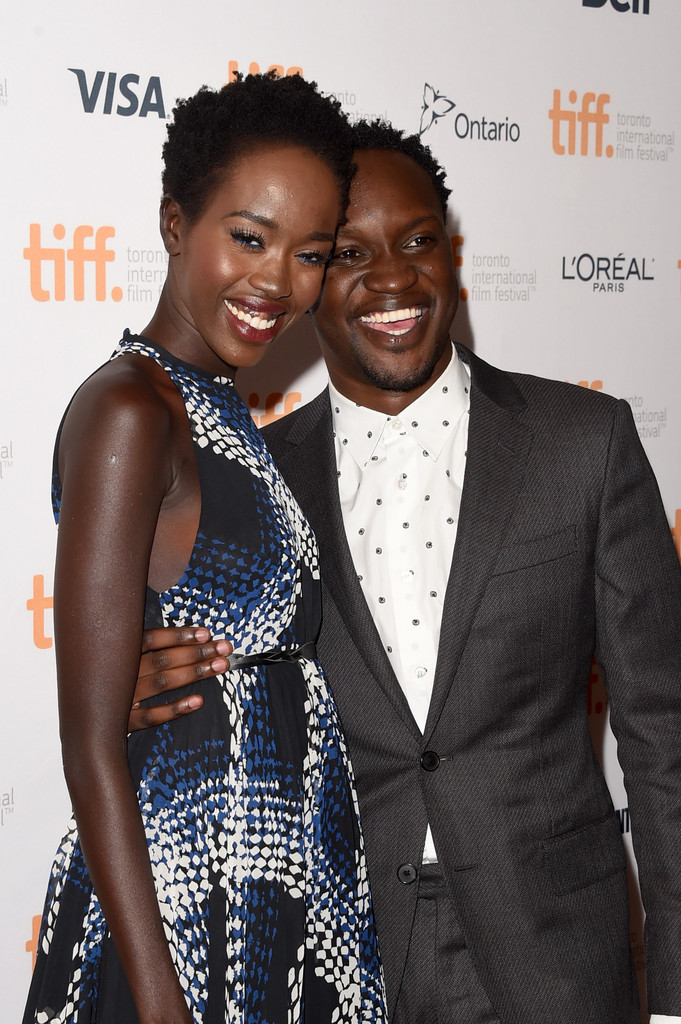 You guys gave Arnold a hard time about getting his accent down. Did he get his accent right?
KW: I had to get an accent myself, so it was hard. He did a great job, though. He is very articulate, and having the right accent and the Sudanese accent is not necessarily so easy, because there are British undertones to it, which he already has. But there is also the authenticity of having an African voice.
Did you get the accent, or did they really have to bust your chops?
AO: I had to work harder on the accent because it’s an East African accent. A West African accent — Nigeria and Ghana, which you meet more often, and then maybe a Sudanese or Ugandan — is very strong. The East African is very soft, it’s very soft-toned, and it was hard to get. In America when I speak to people, I have to be a chameleon again. And I have so many Americans say to me, “What are you saying? Speak English.” [laughter] I’m going, “What do you mean? I am an Englishman and I speak English.” And then sometimes you have to alter the way you speak just so that someone else understands. So like my name — as a British guy, I would say, “Oh, nice to meet you, I’m Arnold” — “Ah-nold,” yeah? AH-nold.
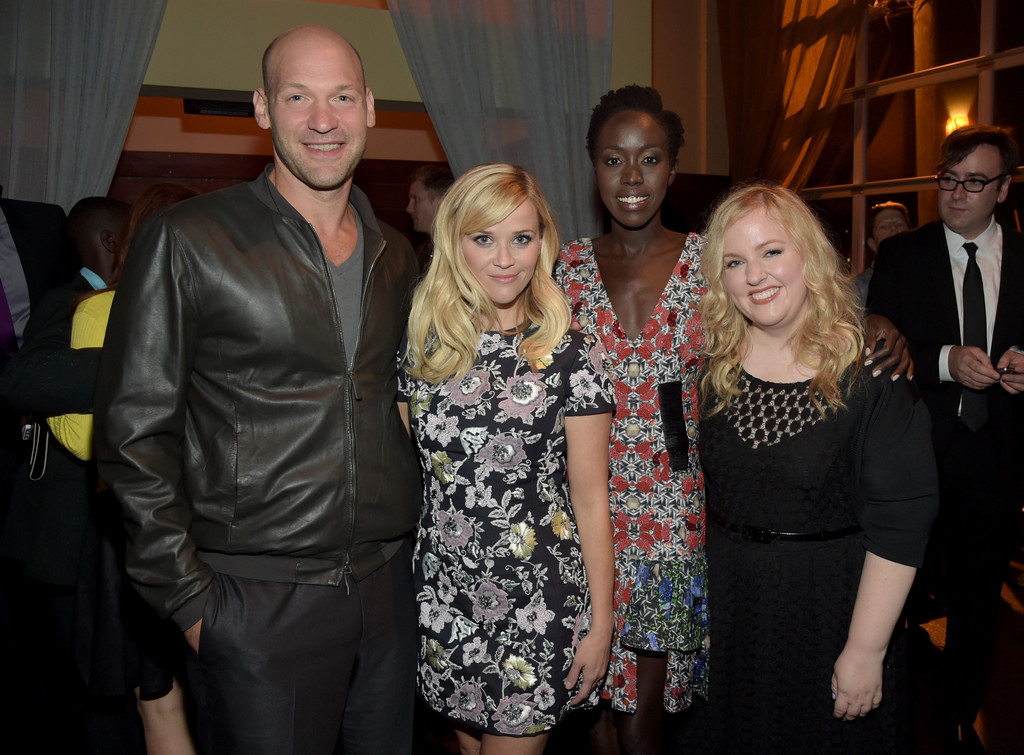
Arnold comes from a British perspective, having no experience in the United States, and you came from Africa to the US having no British experience.
KW: For me, having an accent wasn’t hard because I knew women who had this kind of an accent. So what I did was basically watch a bunch of YouTube videos, speak with people in my family. But I sometimes feel like if I’m speaking with someone who speaks my native tongue, Noer, I totally change everything. But then when I speak English . . .
Without your own experiences, this film wouldn’t feel as authentic.

GD: I’m glad you got to see the movie. Our life is really set on the backdrop of a large civil war in Sudan and in the middle of it is our life experiences. The country’s really plunged into a terrible civil war that we have never seen before. I’m sure even the president of the country of South Sudan did not see how much the people are really struggling outside the country. So I’ve seen a lot of suffering and here I am, talking about The Good Lie, but the same people that survived the previous civil war are dying now. Two weeks ago, I just came back from South Sudan. I went to the border of South Sudan and Ethiopia, where the refugees are. I went to find my family that I found in 2010 for the first time in 18 years. I went to Ethiopia trying to collect my direct siblings.
Were you able to find those siblings?
GD: I have, and maybe next year we’ll find some more.
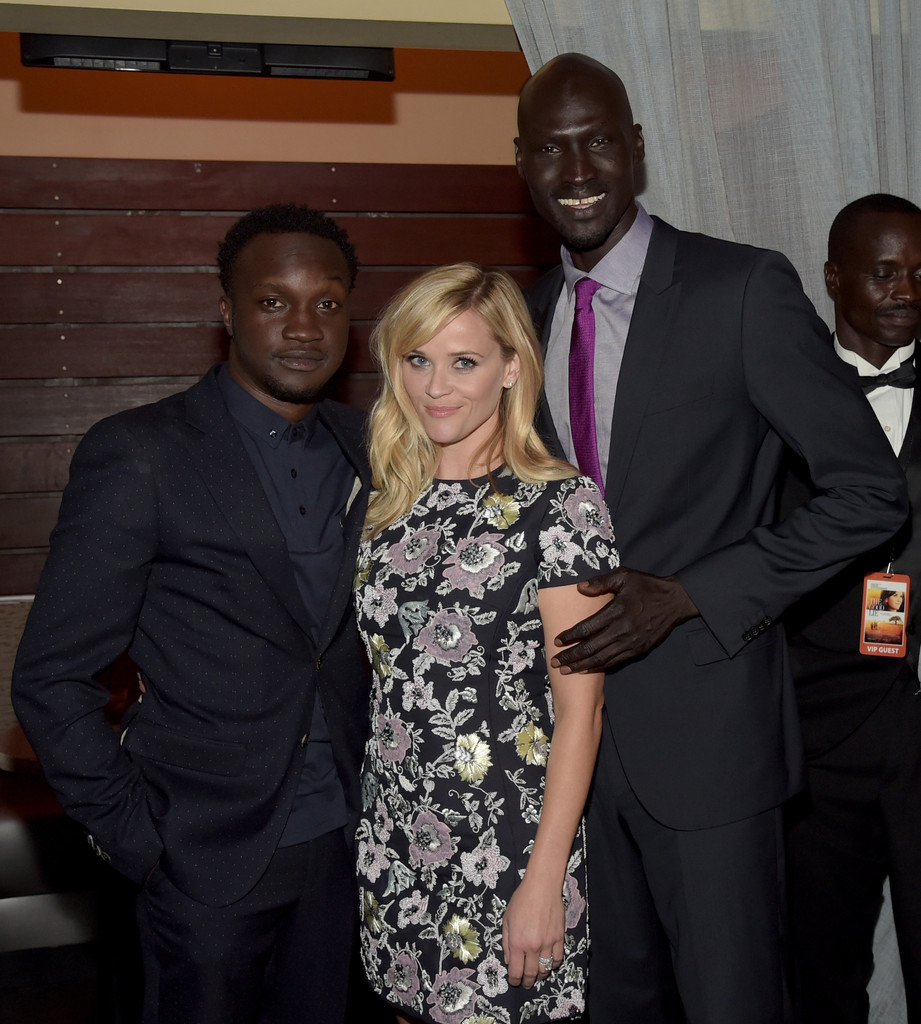
Your parents’ heritage offers an interesting contrast.
AO: Yeah, and it is a personal journey for myself. I had a totally different upbringing from them. They came up through the refugee camp, Emmanuel was a child soldier, and I just grew up from one year old in London with my mother. The connection of us is that we’re all refugees, we come from refugees, and war affects us all in one shape or form, directly or indirectly. It was very hard to do the role. There was a lot of pressure. I wanted to make sure I brought justice to the character, justice to the film and justice to the history of the people of south Sudan. You’ve basically got a whole country on your back, and you want to make sure you portray the characters in the right way, and hopefully, I’ve done that.
What did you learn from working with veteran director French Canadian Falardeau?
AO: Essentially, he’s articulate, he’s always a crazy guy. He’s got his views, he’s stubborn, he knows what he wants and he knows how to execute it as well. He knows how to get the right performances from his actors.
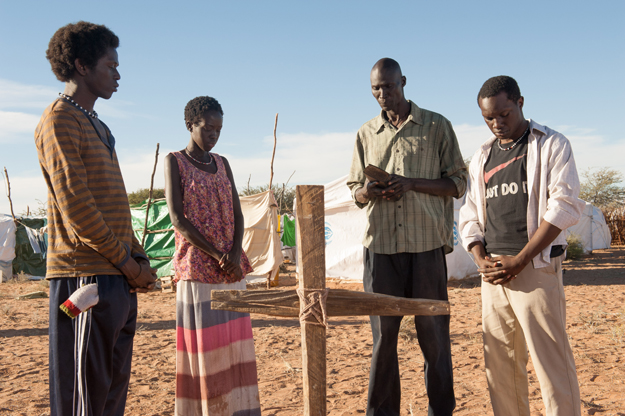
KW: I think we were very fortunate to work with a director that is so hands-on. I learned so much, and I know how fortunate I am to be in this situation at this early time.
In various ways, everyone here is an odd “man” out. You have a French Canadian director, three Sudanese, you’re shooting in the United States in cities like Atlanta that have no real connection to the story. You’re dealing with experiences alien to other elements. How did that feel?
AO: The whole thing was surreal, really. We went to Kenya to film; I was filming in South Africa, as well. I haven’t been back to Africa since I was one. So it was a personal journey for myself to see the beauty of South Africa. It’s beautiful. Kenya is beautiful. It’s a pity we didn’t get to film in Sudan because it wasn’t really safe for us to go there. Yeah, it was surreal filming in all these places, especially Atlanta. I had never been to Atlanta. It was a great experience.
 KW: Oh my gosh… There’s definitely a hard separation because it’s your culture, it’s something that you don’t want to lose. But because you’re in a different world now, it’s almost like a problem assimilating or keeping what you have to. So I think it’s learning how to balance that, and as a child, I had the hardest time with it. But I think now that I am grown up, I am accepting it.
What would you like as a permanent keepsake about the film?
GD: With this movie, we want to reach out to the world. We’re not dealing with the government of South Sudan. This is humanity’s story, so we need help, to help those who are still in the refugee camps.
The most eye-opening aspect of the movie was the dynamic of the relationship between you and them as brothers — then, of course, for you as a woman. There are two roles you played: as a woman trying to readjust in that reality, and then the reality of a woman in the film business today.
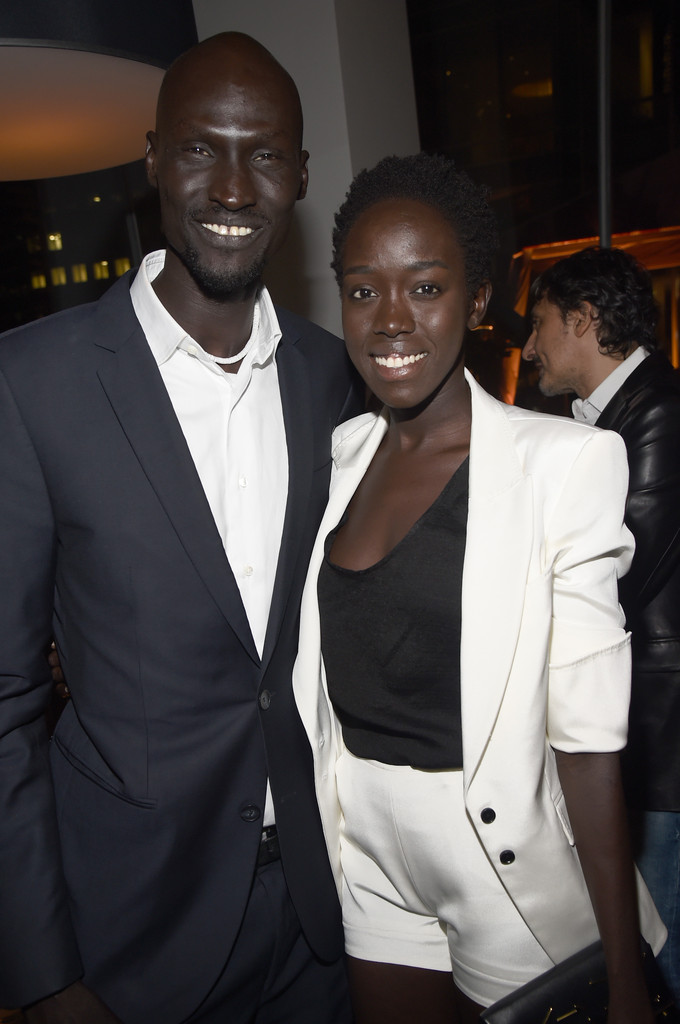
KW: It is great that Margaret [Nagle] was able to write a woman character into this, because a lot of people forget that there were women in the Lost Boys story, or even girls. Now I speak to girls who were Lost Girls in that sense. But I think, I’m just a person. I want my life to be simple, I don’t like complexities. As I say, if people don’t like working with you because you are a woman, then maybe you shouldn’t be working with them in the first place. Maybe it’s a good sign for you. That way you avoid the BS before you even get into it.
Films like this are just a shot in the dark. Will they find an audience? And yet it puts a burden on you to get out there and make something happen whether you go out and talk to audiences or talk to kids.
AO: I think this film is a word-of-mouth film, because it’s not your major, big-budget ones where there is action. This is a heartfelt film. It’s one of those films that you have to see. I’ve heard so many people today say, “I went to watch it thinking it would something else” and they came out saying how amazing it was. So I think we need people like that who come out and realize how great the film is and they’re going to tell everyone. And the news is going to spread.
The Good Lie hits theaters on October 3.