

Yesterday during the 2019 Tribeca Film Festival, as part of the Tribeca Talks session at Spring Studio in New York City, and in conversation with Dee Rees, Queen Latifah introduced the winners of The Queen Collective short documentaries (Ballet After Dark and If There Is Light).
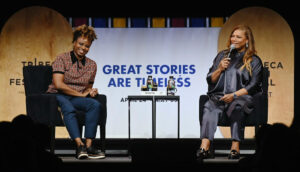
The Queen Collective is a program developed in partnership with Procter & Gamble and Queen Latifah with Flavor Unit Entertainment, aimed at accelerating gender and racial equality behind the camera. Created by diverse young women – these short films inspire positive social change and embody Procter and Gamble’s commitment to supporting gender and racial equity, on-screen and behind the scenes.

During the talkback, she introduced directors Haley Elizabeth Anderson‘s If There Is Light and Brittany “B.Monét” Fennell ‘s Ballet After Dark.
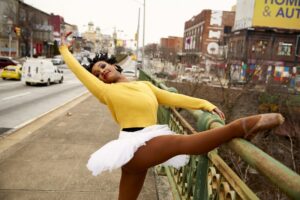
Ballet After Dark tells the story a young woman who found the strength to survive after an attack. She created an organization that is helping sexual abuse and domestic violent survivors find healing after trauma through dance therapy.
If There Is Light – Fourteen year-old Janiyah Blackmon wrestles with her new life in New York City as her mom tries to move her family out of the shelter system and into a stable home.
The films are now available on Hulu.
Blackfilm.com caught up with both filmmakers and Tyde-Courtney Edwards, whose story is the inspiration for Ballet After Dark, as they talked about being part of the Queen Collective Shorts.
What’s it like being part of the Queen Collective?

Tyde-Courtney Edwards: It’s amazing. It’s outstanding. This initiative was created for women and women of color right now to shine and to have our stories told and to have lanes and opportunities created for us.
B. Monét: I think it’s pretty incredible that Queen Latifah and Proctor and Gamble with the Tribeca Film Festival created this to support women of color not only with our ideas but making sure that there was finance and resources so that we can make our films. That rarely happens in today’s culture. A lot of people talk about diversity and inclusion but they actually created this amazing program. I’m very happy to be one of the winners.
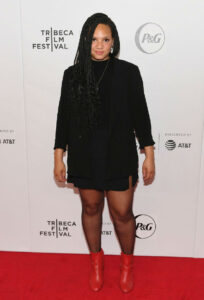
Haley Elizabeth Anderson: It’s amazing. It changed my life actually. It sounds superfluous. Six months ago when I was thinking about doing a documentary about homeless, I didn’t have an outlet to do so and this gave me everything. They funded the project. They took care of distribution and they opened the doors for other opportunities. It’s something that I was praying for and I didn’t know how it was going to happen; but then I was contacted to apply. Queen Latifah talks a lot about spirituality and I very much believe in that. I was at the right place at the right time. It’s amazing and overwhelming at the same time.
What was the inspiration behind your story?
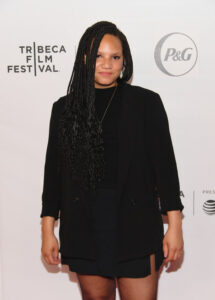
Haley Elizabeth Anderson: When I was little, I grew up homeless, here and there. I lived in motels and in and out of cars sometimes. Up until undergrad I did and I kept it a secret and it’s something I don’t talk about, even when I was in film school; but in the last two years I felt very free to talk about it. I was shooting a film based on one of my summer experiences at a motel and I met a girl who was living at a motel and it reminded me so much of myself and vowed to go back and make a documentary about her. When I got the opportunity to pitch this project, I did it with this girl in mind. When the project along, the girl and her name is Annie had moved on. She found a house and is now in Penn State, which I’m very happy about, but they told me to find a new family and I did. I found the Blackmon family and pitched it to the Queen Collective and they gave me the green light.

Tyde-Courtney Edwards: Well, surviving my own sexual assault and just wanting to be better that I was.
B. Monét: For me, I wanted to show Tyde-Courtney as a victor, not as a victim because even though this horrible thing happened to her, the fact that she’s toughing so many lives, that’s what I wanted people to walk away knowing that Tyde is this pillar of community and ultimately changing people’s perspective in Baltimore. I’m so thankful that she let me tell her story.
Can this be turned into a feature film?

B. Monét: We shot over 20 days and we actually have enough footage to make a feature film so maybe. I hope that this film gives exposure to her and her organization because I think she’s doing an amazing work. That was the driving force to me behind also making sure that people knew about Ballet After Dark. Baltimore is like a forgotten city and Black women are forgotten about so why not talk about someone who is doing great stuff in a city that still needs a lot of love. I’m so glad that I did this with her.
What did you get out from meeting Queen Latifah?

Tyde-Courtney Edwards: Hope. Inspiration. Encouragement. Appreciation for what I created and feeling that she may be a fan of mine now. I just feel great. The recognition and being given the opportunity to actively work towards to changing the face of shame as it relates to sexual assault.
Haley Elizabeth Anderson: In a few words she gave me a lot of confidence. It’s very cliche and everyone is interviewing us, but I really mean this. She gave me all the confidence that I needed to be very assertive in my life as a filmmaker, as an artist, as a woman. It’s been amazing to have her behind us.
Where can folks see the short?
B. Monét: On Hulu Saturday April 27. Make sure you check it.
Haley Elizabeth Anderson: My film is called If There Is Light and B’s is Ballet After Dark.



Loading…