
I have to be honest with you this is my first article for Blackfilm.com. I’ve been interviewing talent for blackfilm.com since Covid, and I was lucky enough to work the Oscars for the past three years. But “working the Oscars” and going to the Oscars are two very different things. For three years I was in the press room — badge around my neck, doing the work I love — watching the ceremony on a monitor like everybody else at home. Close enough to feel the electricity of Hollywood’s biggest night, but not quite inside the room where it all happens.
This past Sunday, that finally changed. For the first time, I sat in the Dolby Theatre at Ovation Hollywood for the 98th Academy Awards. And I want to tell you about it — all of it — because what happened Sunday night was complicated, moving, historic, and profound all at once.
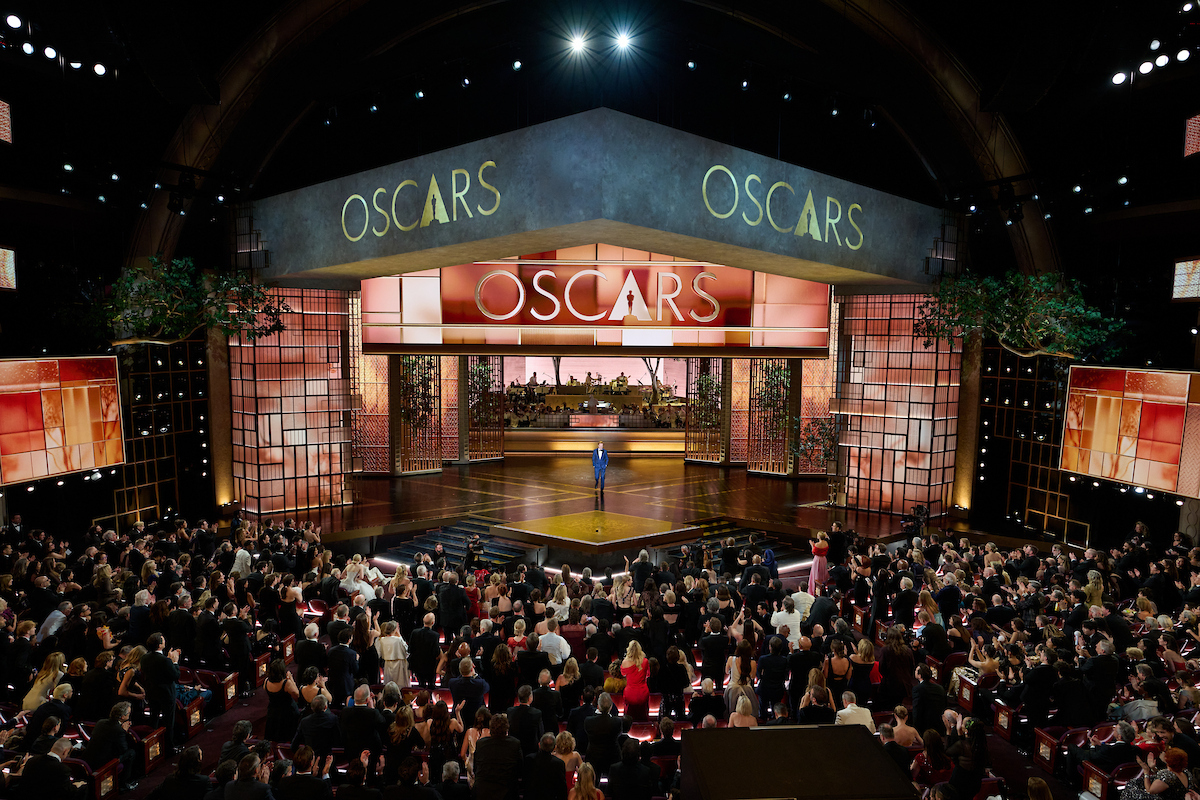
But first, the context I carried into that room, because it mattered to everything, I felt watching the night unfold.
This year marked the 10th anniversary of #OscarsSoWhite. In January 2015, just seconds after the nominations were announced, writer and activist April Reign tweeted “#OscarsSoWhite they asked to touch my hair” — a response to all 20 acting nominations going to white actors for the first of two consecutive years. That one tweet cracked something open. When Reign created the hashtag, the Academy membership was 92% white and 75% male. The movement forced the Academy to diversify its membership, add inclusion standards, and at least look in the mirror. And yet as Reign reflected on the decade, she noted that the Academy is bumping up against 100 years, and we still shouldn’t be talking about the first or second person of color to win. She’s right. We should be way past firsts. And yet here we still were on Sunday night, holding our breath over firsts.
Because here’s the part that doesn’t get said enough. The Black community didn’t just fight for Black people when we fought for representation in Hollywood. We fought for everyone who looked different, sounded different, loved differently, came from somewhere else. We marched, we hashtagged, we boycotted, we held the door — and then we watched others walk through it and act like the door was always open. Suddenly racism in Hollywood is considered solved because there are more faces at the table. We didn’t say we wanted more faces. We said we wanted structural change. Those are not the same thing. Sunday night was a reminder of both how far we’ve come and how much further we still have to go.
Sinners came into the 98th Academy Awards as the most nominated film in Oscar history — 16 nominations, shattering the record held by Titanic, La La Land, and All About Eve at 14. Ten of those nominations went to Black artists, tying the all-time record for most Black individuals nominated for a single film. It left Sunday night with four wins — and two of them were genuinely historic.
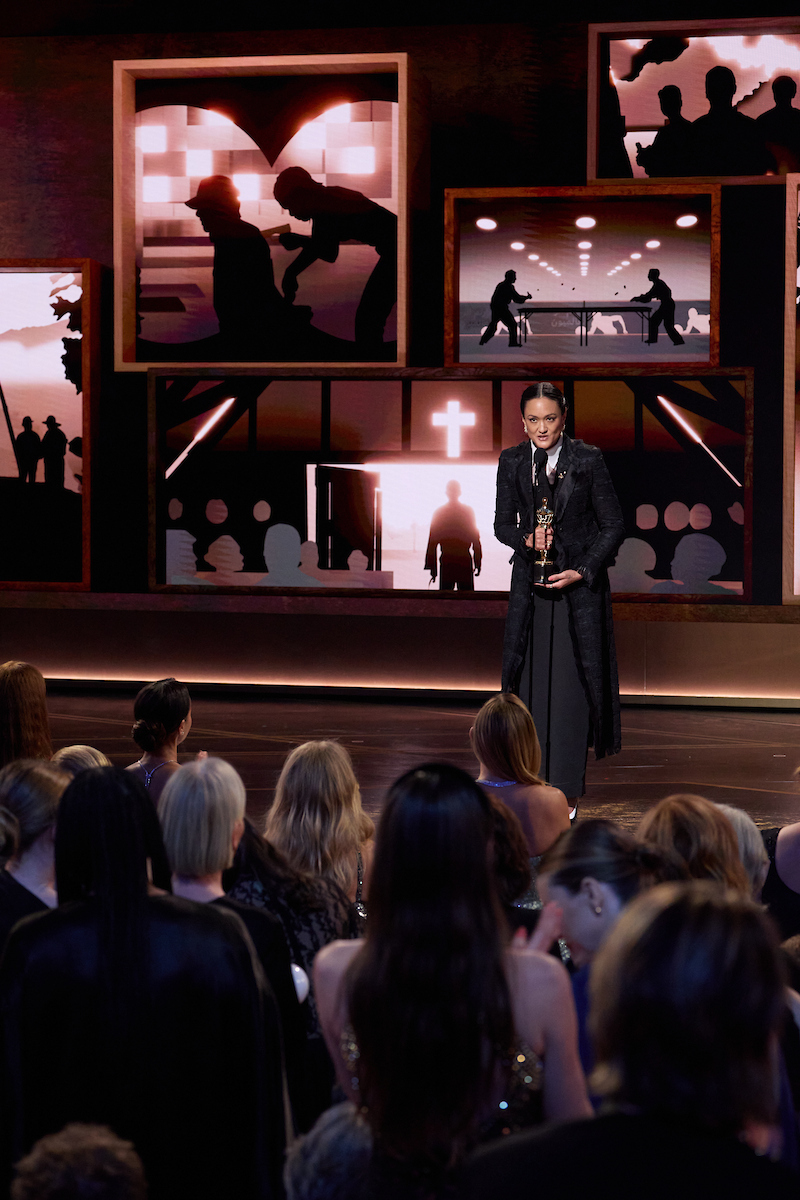
Autumn Durald Arkapaw became the first woman and the first woman of color ever to win the Oscar for Best Cinematography for her magnificent work on Sinners. When her name was called she asked every woman in the room to stand up. “Because I feel like I don’t get here without you guys,” she said, to a roar of applause that shook the building.
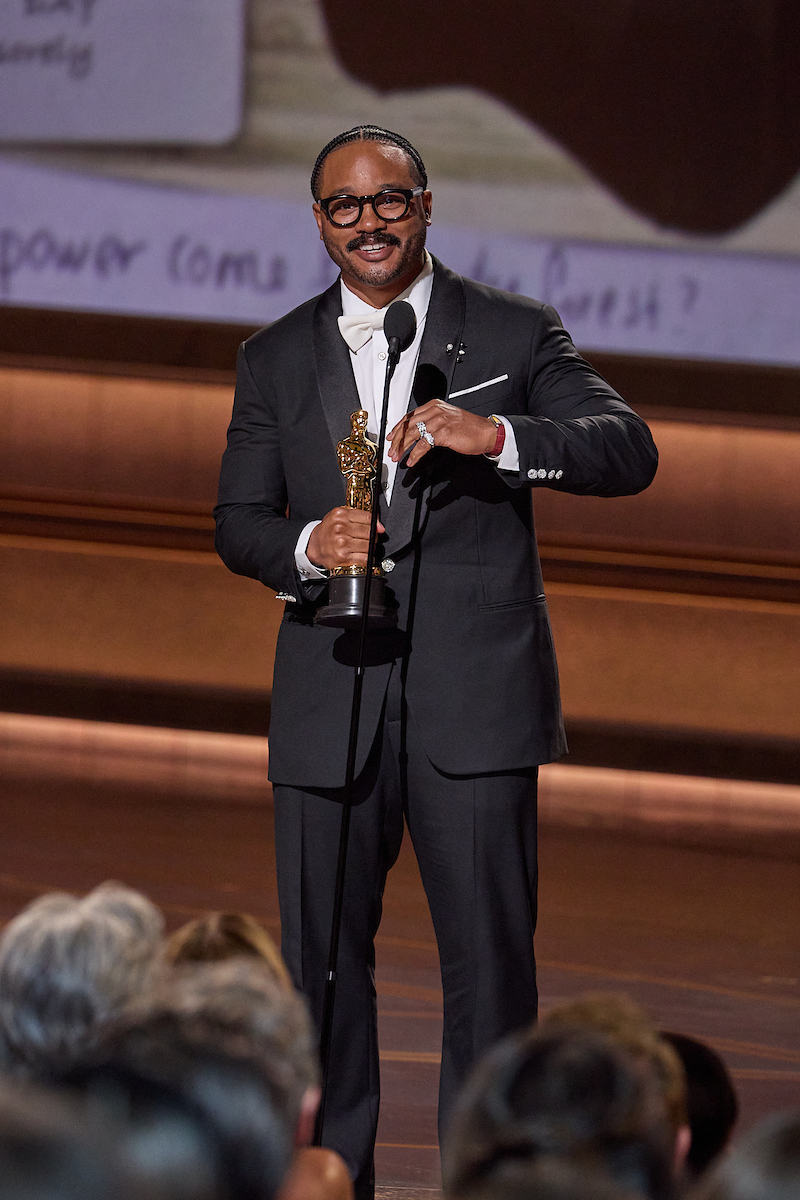
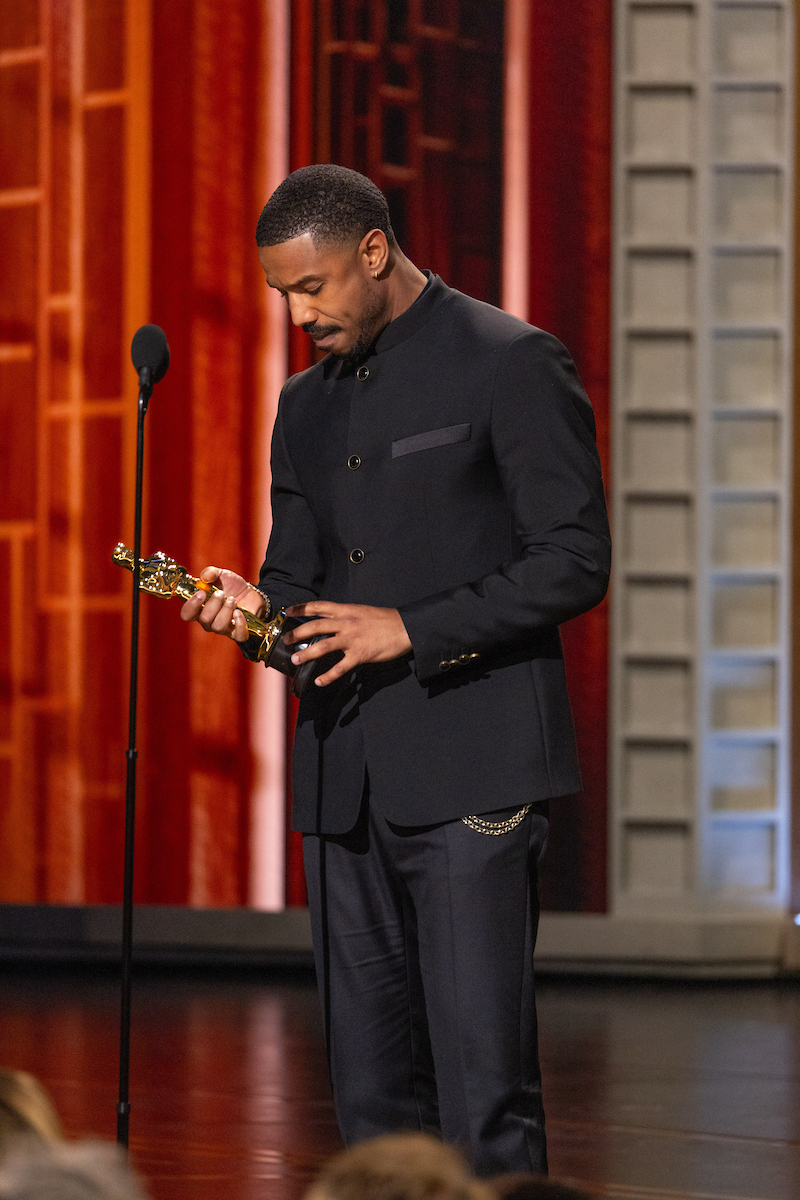
Ryan Coogler won Best Original Screenplay — his first Oscar ever, for a film that broke every nomination record in the ceremony’s history. And Michael B. Jordan — a first-time nominee — took home Best Actor. “God is good,” an emotional Jordan said, before thanking Coogler: “You gave me the opportunity and space for me to be seen.” In his acceptance speech, he named Sidney Poitier, Denzel Washington and Halle Berry — the Black actors who came before him — before accepting his own place in that lineage.
This season had already given us a painful preview of exactly what was at stake. Three weeks ago at the BAFTAs in London, Michael B. Jordan and Delroy Lindo were on stage presenting the first award of the evening when a racial slur was shouted from the audience. Both men paused, kept their composure, and kept going. Lindo later described it simply: “I processed in the way that I process, in a nanosecond. Mike did similarly, and we went on and did our jobs.” BAFTA apologized unreservedly to both men. Then the NAACP Image Awards gave them a standing ovation before they even said a word. Sinners won 13 awards that night, and Michael B. Jordan dedicated his Best Actor trophy to Chadwick Boseman, telling the room: “I love being Black. I love y’all.” The community always shows up. The question is whether the institutions will too.
The most entertaining moments of the night that made you forget everything complicated and just feel something were the two musical performances. The only songs performed on the Oscars stage this year were “I Lied to You” from Sinners and “Golden” from KPop Demon Hunters — and both were absolutely worth the price of admission.
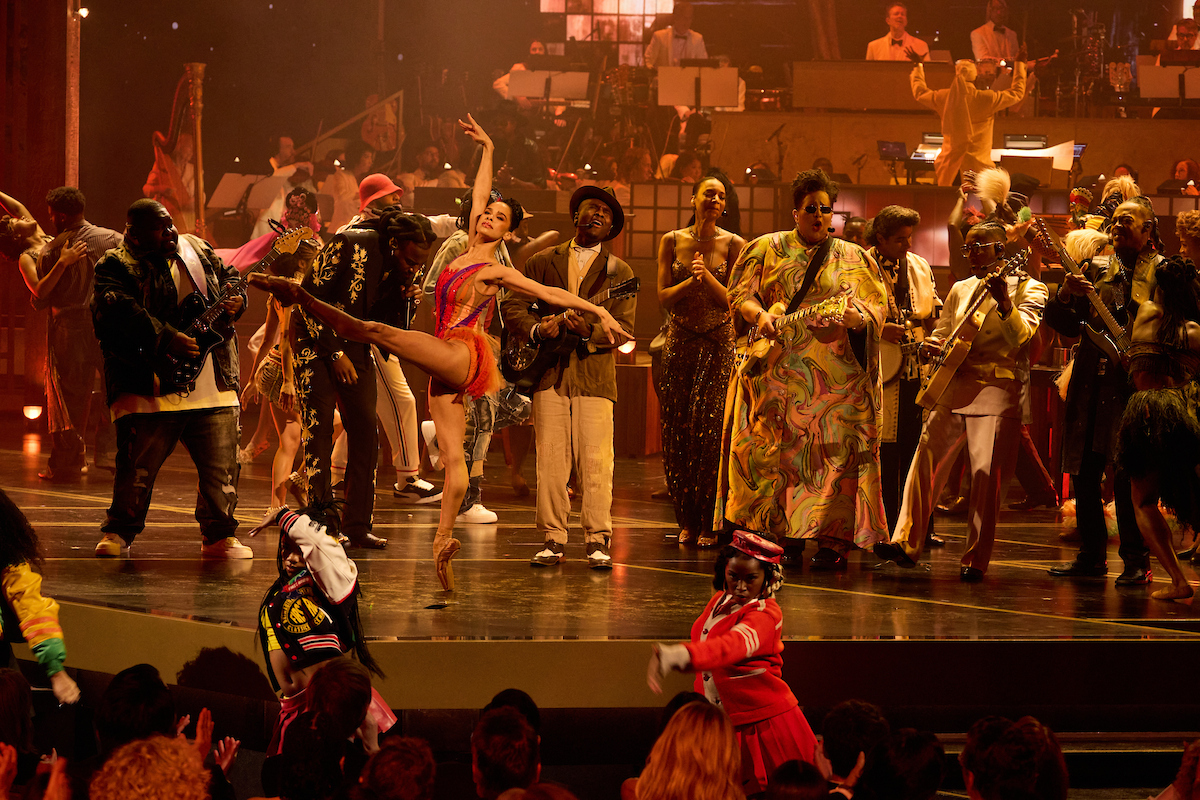
The Sinners performance recreated the film’s legendary juke joint scene right there on the Dolby Theatre stage, with Miles Caton singing and playing guitar while Jayme Lawson and Li Jun Li danced beside him, the camera weaving through a mass of bodies that looked like they had stepped straight off the set — complete with African dancers, hip-hop dancers, breakdancers, traditional Chinese dancers, and trailblazing Black ballet dancer Misty Copeland. Raphael Saadiq opened by strumming guitar before passing it to Caton, who carried the first verse, with Shaboozey joining on vocals, and then the full all-star ensemble swept in — Brittany Howard on guitar, Alice Smith singing, blues legends Buddy Guy and Bobby Rush on stage, and Eric Gales and Christone “Kingfish” Ingram representing the lineage of the instrument the whole film was built around. Even the film’s vampires — Jack O’Connell, Lola Kirke, and Peter Dreimanis — showed up in fangs asking to be let on stage. The room was on its feet. Ryan Coogler and Michael B. Jordan were shown in the audience reacting like they were watching it for the first time. And then Misty Copeland danced her way to the front of the stage — and here’s the detail that made it perfect: Timothée Chalamet, the man who’d been roasted all night for saying nobody cares about ballet anymore, gave her a standing ovation. The Dolby Theatre laughed, cheered, and then went quiet with something that felt like gratitude.
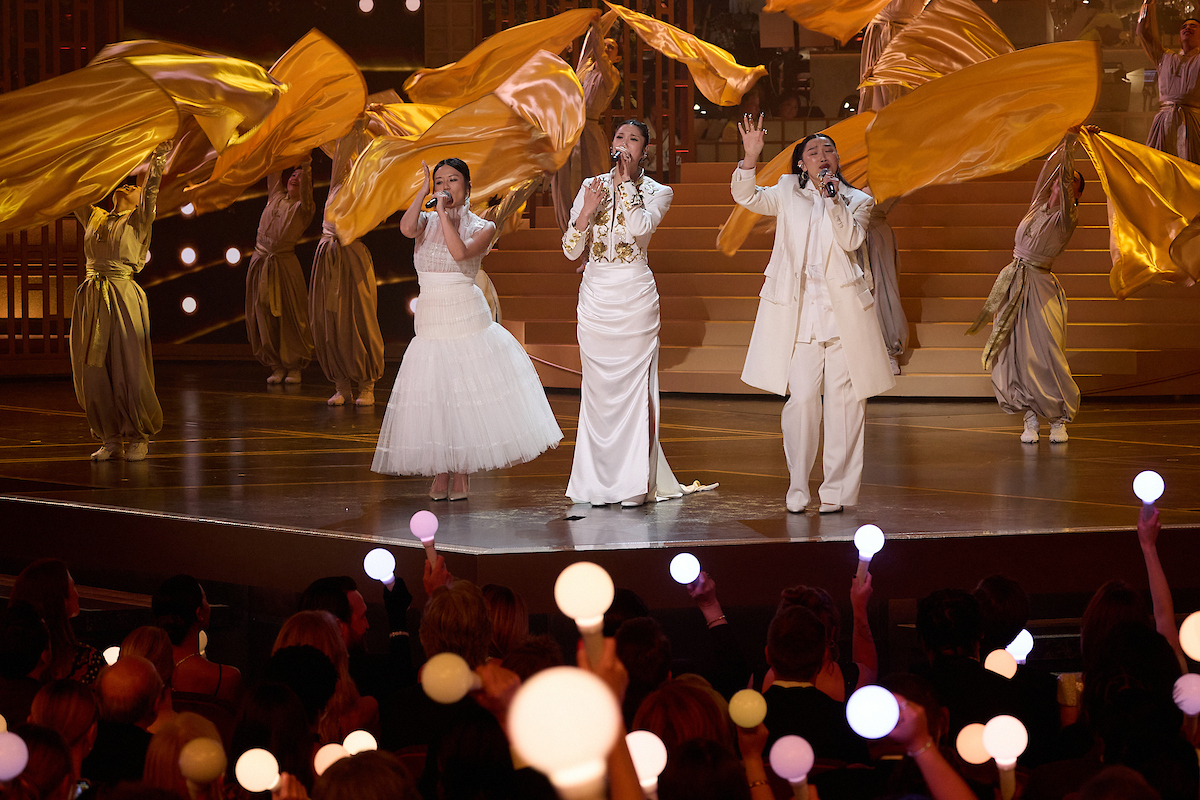
Then came “Golden.” In true K-pop fashion, every audience member had been given a glowing light stick — and when EJAE, Audrey Nuna and Rei Ami took the stage dressed in white, with dancers twirling golden flags behind them, the entire theater lit up like a concert. The performance opened with traditional Korean hanbok dancers setting the scene before the trio stepped forward and what followed was genuinely electric — a full production that felt less like an Oscars performance and more like a stadium show that had somehow landed in Hollywood. It made history as the first all-Asian musical act ever to perform on the Oscars stage, and when “Golden” subsequently won Best Original Song — becoming the first K-pop song ever to win an Oscar, EJAE stepped to the mic and said through tears: “Growing up people made fun of me for liking K-pop. But now everyone is singing our song, and all the Korean lyrics.”
Two performances. Two communities. Two histories. Both on that stage on the same night. That is what the Oscars can be when it gets out of its own way.
But I also have to be honest about what Sunday didn’t give us. In nearly 100 years of Oscar history, a Black filmmaker has never won Best Director and Ryan Coogler, who made the most nominated film in the history of the awards, was not the exception the Academy chose to make on Sunday. Best Director went to Paul Thomas Anderson for One Battle After Another, which took home six awards including Best Picture. And Delroy Lindo — 73 years old, receiving his first Oscar nomination after decades of extraordinary work — left the Dolby Theatre without a win. That one landed hard. Only 2% of Oscar winners across the Academy’s history have been Black. A partial night is still progress. But it’s the kind of progress that asks you to be grateful for crumbs when you brought the whole loaf to the table.
And then came the end of the night. When Best Picture was called, it went to One Battle After Another — Paul Thomas Anderson’s film trading wins with Sinners all the way to the final envelope. Anderson took the stage and in his acceptance speech quoted film history, noting that in 1975 the Best Picture nominees included Dog Day Afternoon, One Flew Over the Cuckoo’s Nest, Jaws, Nashville and Barry Lyndon — “There is no best among them,” he said. Then he looked out at the room and added simply: “Let’s have a martini. This is pretty amazing.” The room laughed, the lights came up, and just like that — the 98th Academy Awards were over.
I stood there for a moment before heading out, trying to absorb all of it. I had just sat in that theater for the first time after three years standing outside it, on a night when Ryan Coogler won his first Oscar® ever. When Michael B. Jordan stood at that microphone and named the Black actors who came before him before accepting his own place in that lineage. When Autumn Durald Arkapaw became the first woman and first woman of color to win Best Cinematography and asked every woman in the room to stand up. When a juke joint came to life on the Dolby Theatre stage and the whole building felt it. When the Dolby lit up gold with a thousand glowing light sticks for a K-pop girl group that made history as the first all-Asian act ever to perform on that stage. I witnessed all of that. From the inside.
After we filed out into the Hollywood night, my team and I grabbed cocktails and did what film people do — we talked. We debated. Was it Sinners‘ night or wasn’t it? Was four wins with 16 nominations enough, or did the math feel like a disappointment? Was it significant that both Ryan Coogler and Paul Thomas Anderson won their first Oscars on the same night, in the same room, for films released by the same studio? Was Anderson’s Best Picture win a recognition of great filmmaking, or another reminder that the Academy — even a more diverse one — still has a type? We didn’t agree on everything. We never do. But we agreed on this: the 98th Academy Awards, ten years after #OscarsSoWhite cracked this industry open, was a night that meant something. Not everything we needed it to mean. But something real.
The door is still a door you have to fight to walk through. But Sunday night, more people got through it than ever before. And I was finally in the room to see it happen.



Loading…