
Currently playing on the Quibi app as part of their Daily Essentials programming is The Nod With Brittany & Eric.
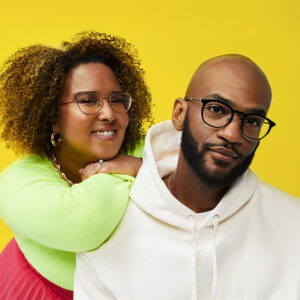
The popular and critically-acclaimed podcast, The Nod, is now a daily show on Quibi. Five days a week, hosts Brittany Luse and Eric Eddings dig into the biggest moments and most under-explored corners of Black culture, as told by the actors, musicians, writers, thinkers, chefs, activists, artists, and everyday people who live it. The Nod tells the stories about Black life you won’t see any.
Blackfilm.com recently caught up with Luse and Eddings as they discuss how they put the show together and the topics they cover.
Can you talk about the transition from doing the podcast to Quibi and shortening the segments that you’re doing?
Eric Eddings: I think we’ve always been playing around with “What makes a good podcast episode? What’s the right size idea?” And that has been a big question that we often have to consider. With a topic like black culture, which is so expansive, there’s so many things you could talk about. There’s so many things you could explore an episode, but a lot of it just comes down to “I’m really interested in x.” For example, we’re really interested in Beyonce. There are a million things you can talk about with Beyonce. But what can we really dig into in six minutes? It’s been a fun exploration to get that down. I think we’re doing it or really starting to.
Brittany Luse: It’s been a lot of figuring out what’s the most essential part of the story. I would say a lot of our episodes that were reported on the podcast and during the podcast could have as many as 15-16 interviews that are each at least an hour long, so we already had experience taking really big ideas and long conversations, and whittling them down to smaller stories. For now, it’s been a really fun and interesting challenge to go even shorter and figure out what’s the right amount of stories that feel satisfying in five to seven minutes, but also give ourselves room to play around? I think that’s the fun part of what’s the most that we can get away with?
When you’re are doing your episodes, are you editing it afterwards to crunch it down to the amount of minutes you’re going to put on?

Brittany Luse: We have a wonderful team of editors in LA, who we send our pieces to and they whittle them down to the five to seven minutes that you see when you watch it on the Quibi app. We do try to keep our interviews as brief as possible. I suppose not to overwhelm them, but just to focus our conversations and give the audience the tightest possible story that they can get. But yes, what you see on the app has been edited, but we’re definitely running our recordings a lot shorter.
Also, the difference between audio and video is we definitely spend a lot of time in audio explaining something that you could just show. So it’s really exciting. It’s really fun working in video format, because you can actually find archival, and you can use personal photos from the person that you’re interviewing. You can throw in a clip from a movie, and really build out the story that you’re telling and go even deeper ways that we couldn’t do on the podcast. We have 30 minutes.
Now that you’re being seen as opposed to just being heard, does that change your way of telling the story?

Brittany Luse: I think it’s allowed us to do is expand some of the stories that we’ve been able to tell. I’m so proud and so grateful. I’m so proud of the opportunity we had telling stories on the podcast and so grateful that we got to do that. There’s so much fun with it. We did food reporting on the podcast, or even talking about films and television. It’s so much different, but you can talk about art now. It’s really difficult to explain what a painting looks like. It just allowed us to be able to expand. I think the topics that we can cover and also more deeply contextualize the things that we were already covering in audio. It’s been really fun to figure out what the show looks like not even just with film clips and photos, but graphics, and also people seeing us. Now that we’re shooting at home, people seeing us each in our most intimate face allows for like a totally different dimension of what it is.
Eric Eddings: Keep in mind, this is a massive opportunity for us. We’re excited every day to get to do it. So to actually be able to have more tools to approach this massive project of trying to highlight the best, brightest and undercover things in this space. Yeah, it’s like, I wake up and I’m like, “I have to iron this shirt,” but that’s a small price to pay when I’m talking to Glynn Turman today.
How long does it take before you come up with the next story before we see it?

Eric Eddings: That’s a great question. Honestly, it varies. Because we heavily edit the show, we do have a little bit more time, in terms of what it takes to get an episode that we record to air. But it’s one of the things we try to plan it out. We’ve always taken a left approach to coming into any given topic. We try to find what’s the piece of this conversation that’s developing that seems like it’s going to be around for a while? So that allows us to plan as things start to bubble on Twitter on social. We can go plan that out and create an episode and by the time it comes out, it still feels relevant. It still feels topical. So I think that’s really how we try to approach it, but then they’re things that pop up and you’re like, “We got to play in this conversation.” We have to figure out a way to flesh this out because the conversation is moving so fast. And in those situations, we speed up the timeline a little bit. So typically, it takes about like two weeks to get one episode out. But sometimes we slow that down to as much as a week. And we know we’re playing around with how to get it out even faster.

Brittany Luse: We’re really fortunate that Eric and I are the people that you see on screen. But we have a fantastic team of producers. We have a close team in Los Angeles. Everything that we put out is well thought out is and carefully edited. We take our work really seriously telling black folks we feel privileged that we get to do this every single day. We want make sure that what you see is something that is made by two black people who aren’t speaking for all black people, but who are trying to get as many different facets of the black experience out there to an audience every single day.
For topics, do you come up with a theme?
Brittany Luse: Honestly, sometimes we will have certain things that stick to certain days. Recently there was an episode about Stevie Wonder’s birthday where we discussed our favorite songs from Songs in the Key of Life. There was another episode where Eric interviewed Aja Naomi King from How to Get Away with Murder about the series finale, which just came out last week. We also did an episode about the MOVE bombing, which unfortunately happened on May 13 in the 80s in Philadelphia, where the Philadelphia Police Department dropped the bomb on a residential neighborhood. It’s something that hasn’t really been discussed as much as it really should be.
Finally, we talk about things that closer to a specific topic or specific date. But even those three things that I just mentioned to you are totally different topics. Black folks aren’t all one thing. We still have to stay responsive to what’s going on in the world. So for us, we like the idea of that you can have five different episodes in The Nod in the week and you will get five different aspects of black life. We like to find ways to stay topical and to make sure that what we’re talking about is relevant. But we try to leave as much room as we can or find a nice surprise and just mixing it up because, honestly, I think people realize this now more than ever, within a single span of a day or a week you can have a million different moods and i think that there’s an asset of The Nod. Hopefully, our goal is to have another episode of The Nod that appeals to as many different interests as black folks can have.
Eric Eddings: They’re big things that pop up where we’re definitely play around in a given topic a little more than just one. We’re all living through this pandemic right now. A lot of episodes of the show explore aspects of how black people are adapting to what it means to live in this moment. In addition, Black Music Month is coming up. So, we’ll definitely have a lot of music theme episodes. In addition, we’re coming into a political moment that is unprecedented. We’re playing around with that as well. So there’ll be a few episodes on that.



Loading…