

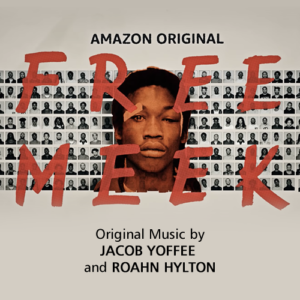
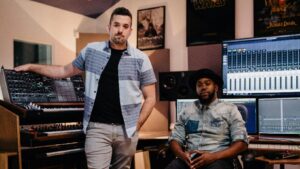
Amazon’s five episode documentary series ‘Free Meek Mill’ about Meek Mill and his 2007 drug and gun case is now available for audiences. The dramatic docuseries about Meek Mill’s arrest as a 19 year-old teenager on a gun charge is Executive Produced by Jay-Z. Showrunner Michael John Warren enlisted musicians Jacob Yoffee and Roahn Hylton to compose the sweeping score for each episode. Viewers see the 32-year-old rapper as he undergoes an eleven-year ordeal challenging his probation, while fighting for criminal justice reform. Meek Mill whose real name is Robert Rihmeek Williams became an outspoken activist for criminal justice reform after he was sent to prison for probation violations. A Pennsylvania appeals court recently overturned his 2008 conviction and removed Judge Genece Brinkley from the case after he was granted a new trial. He has released several hit albums including “Dreams & Nightmares”, “Dreams Worth More Than Money” and “Championships”.
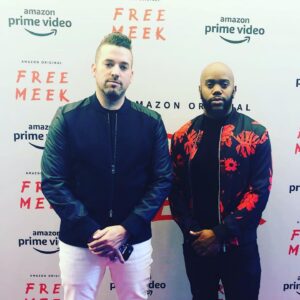
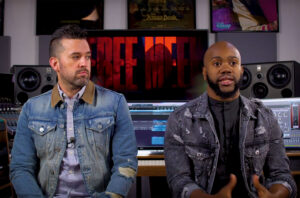
“Free Meek Mill” is the fourth time that the musical duo has collaborated together on a project. The two musicians have different backgrounds in various genres including classical music, pop, hip-hop and jazz. Roahn produced Nicki Minaj’s 8X Platinum hit “Super Bass.” Rapper Nicki Minaj is Meek Mill’s former girlfriend who is featured in two episodes of the docuseries. Showrunner Michael John Warren provided guidance to the composers by using the words “trauma”, “visceral” and “primal” to highlight Meek Mill’s legal woes and emotional journey. Free Meek includes interviews with high profile activists and artists including Shawn “Jay-Z” Carter, Tamika Mallory, Van Jones and investigative journalist Paul Solotaroff. Black Film spoke to Jacob Yoffee and Roahn Hylton about the process of creating a score to showcase victims of the criminal justice system.
BlackFilm: Can you talk about how you both were able to come together to collaborate? What kinds of conversations did you have with the showrunner about contributing to the project?
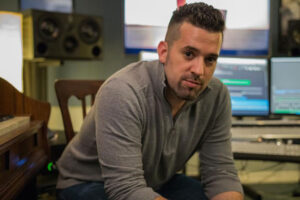
Jacob Yoffee: This is the third of fourth series that Roahn and I worked on together. It was the second series that we worked with Michael John Warren, the showrunner/director. It was at the premiere of Lebron James show Best Shot last summer. He kind of just, while we were talking on the side. He said. I’ve got this new project coming up, you guys would be a great fit for it. Let’s talk. We had an initial conference call. He kind of described everything that was going on and what he was looking for. We went and created 30 pieces of music using different kinds of instrumentation that he asked for and the different vibes. That’s when we actually came up with the track called “perseverance,” which became the theme for the series. All just based on conversations with Michael and listening to Meek’s music. It just kind of not only got us going working with the picture editors. But just starting the conversation musically just to get the ball rolling.
BlackFilm: You both have very different musical backgrounds. How did that help with your conversations regarding working with the different types of music especially involved in this project? I noticed from watching the series. There are some re-enactments and a large portion of the series where you have music included. You use synth beats, there is a fusion of hip-hop. You both have somewhat different backgrounds in terms of music and the industry. Can you talk more about that and the collaboration process?
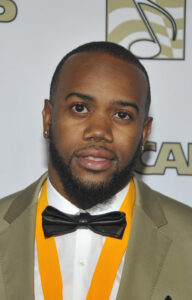
Roahn Hylton: The cool thing about the projects that we have been able to do this far is…we’ve been able to seamlessly meld Jacob’s classical background and my hip hop/pop background. The most exciting part about this is our process is one of the things that we talk about, though we have different styles naturally musically. What we do is we come together musically, side by side and just generally see what the project needs. Each project is kind of like a world in it’s own. So for this particular process, like Jacob spoke about we talked to Michael first we got a general concept of the palate. That we needed to use we got together, asked each other questions and kind of collaborated from there. The good thing about having two of us even though our styles and our processes are different. We’re both just open to trying new things. So it’s a lot more seamless that people might think of going in but the perfect thing was Meek provided a great canvas for what we do naturally to seamlessly work together.
BlackFilm: You mentioned about your background in hip-hop and pop. You’ve also worked with Nicki Minaj. You created hits for lots of artists, including one of Nicki’s biggest hits. What was it like for you to work on those types of projects? Where it is a mainstream hip-hop project in comparison to this project.
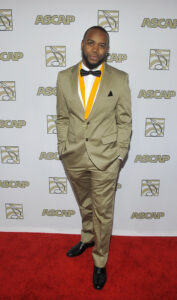
Roahn Hylton: It’s interesting. I usually say when you are working on a song for the radio. You are responsible for three minutes and thirty seconds— that’s it. So you can spend months, maybe even years working on perfecting that one three minutes and thirty second piece. I can focus on the snare. I can focus on the drum sound. I can focus on the specific melody. When composing for film you are responsible for hundreds of minutes a piece. You can’t be as married to one individual sound. It’s impossible. The second thing is that what is on screen is most important. So slaving over a kick drum sound is not as important as making room for the story that my fellow storytellers are trying to tell. Honestly, I like this a lot better because when you get to tell stories your not married to one single concept of how to tell them. Here it’s we’re 40 seconds here now I have to have a hook. Do you know what I mean? That makes it different and it also makes it believe or not more freeing. There’s a lot less constraint.
BlackFilm: When you were crafting a hit for Nicki Minaj. What types of conversations did you have with her? When you are approaching this project Nicki is featured as part of Meek’s story. You had to create certain themes for their relationship in relation to Meek’s story in the series. Can you talk about both of those processes?
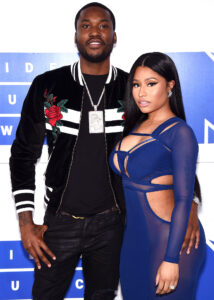
Roah Hylton: I would say it also is a lot different. At the time, I think it was 2010 Nicki was new on the scene. Working with any debut artist whether it’s a rapper, a female rapper, a pop artist you just want to give them something that stands out. That’s not like what is currently on the radio. At that time I know Katy Perry was having a huge run. We weren’t necessarily looking to the radio for inspiration. We just wanted to get together and give Nicki something that would be memorable. The story about how “Superbass” came to be is a unique story of it’s own. We didn’t set out going to make that specific type of sound. It just kind of happened. Through experimentation we wanted to make that the best that it could possibly be. For Meek when Nicki’s on screen it’s another interesting process, because at the time of Meeks life— Meek was going through a lot. So when Nicki is on screen we want to make sure it is bright and bringing a lot of energy. But we also want to be paying respect to what is going on in Meek’s life with the turmoil that he is experiencing with the criminal justice system. So both processes were different and how we approached them were different. I’m very happy with the results we got.
BlackFilm: Have either of you met Meek Mill or Jay-Z who is producing the documentary? If you have, what types of conversations did you have with them regarding the project?
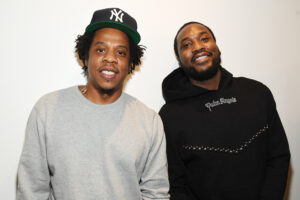
Jacob Yoffee: We actually didn’t meet Meek until the premiere last week. As with a lot of television and film productions, alot of times the on camera talent so to speak. They are there for the filming of the production, but they are not that involved with post. Mainly our connection as working on the music for these things is dealing with the directors and producers. The decision makers on these types of projects. They end up showing and sharing these things with Meek and Jay-Z just to get some feedback. We were waiting with baited breath to see if Meek liked it. We were told at the premiere by several people close to him—that he liked it. That makes us very happy. We definitely wanted to pay respect to his story and his music. The message that the show is trying to display and shine a spotlight on the injustices that have taken place.
BlackFilm: With each episode there is a particular theme and within each episode there is a structure to show re-enactments of what happened to Meek —when he was initially arrested and charged by the police. He had to go before the judge and then there are also transcripts that are re-enacted and included in the series. Can you talk step by step about how you approached the different types of themes you had in the series from one episode to the next? There are five episodes in total in the series.

Jacob Yoffee: The series changed dramatically from when we started. We began last August and the episode structure was different at first and the approach was very different. I think starting out they wanted episode one was going to demonstrate using the recreation what Meek experienced. And as he is telling the story you would see what happened from his point of view. Then the next episode would show from the cops point of view. What they say happened and the next one would be a third party. And at the same time talking about the time line of how everything came to pass. But it ended up being too slow and just too much information. So a lot of the music that we wrote we might of started writing it thematically saying this is the cop’s or Reggie Graham’s story.
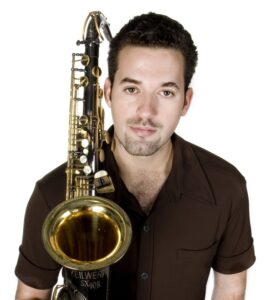
But then as that episode completely changed or maybe even had been removed that music, the editor was saying. “Hey you might have written this for this, but it works really good for this new sequence we created. What do you think?” Then they would give it to us and we would watch it and say. “Okay, I see what they are going for.” And we would start from scratch. We would revise and adapt the music to work. So a lot of the music we started for a different reason, for a different thematic purpose. But the way we in general thought of it was we have a lot of acoustic instruments that would represent Meek and his family. We had trumpets, saxophone, horns and strings. We had female vocals. That kind of represented Meek’s mother, grandmother and family. We even used some church music. Especially during the moments his grandmother is talking. When it is all about the conspiracy and sort of the dirty cops—backroom bribes and all that. That becomes a lot more synthetic. You mentioned earlier, synth drums and harps and stuff. That was all by design. When we got into those courtroom scenes. Things just felt very sort of fake and deceptive. So we thought lets just move away from real instruments. And let the audience in subconsciously that this stuff; there’s more than meets the eye. So when we are talking to Meek and when you meet the people. That is when you are feeling like, Civil Rights era jazz, hip-hop, and gospel music stuff like that—that feels very human.
BlackFilm: At any point when you were first having conversations with the showrunner. What types of words did he use to have you elicit the emotions that he wanted you to tap into with the series? Did he give you a reference temp track? Did he say I want this to be similar to this? Or did he give you both the freedom to collaborate off the bat on the project?
Roahn Hylton: One of the very first things that he told us was that Meek’s been traumatized. So a lot of “trauma” and that was a word that kind of resonated for both of us. He has a song in his own catalogue called traumatized. Visceral was another word. What we try to do is fill in the gaps emotionally where Meek’s music left us room. If you’ve ever heard any of Meek’s songs you are familiar that he is very passionate. Specifically when talking about what he has been through, you can see where it comes from. What we wanted to do was maintain a through line of that energy he has been through. But at the same time leaving room for emotions where he is with his family. When he is anticipating either getting out of jail or going back to jail—like you asked earlier about the Nicki stuff. His relationships outside of music and inside of music. So I would say the question is both. Michael gave us a loose outline. Because we have collaborated with him before he knew just the right things to say to get us inspired. He sent us off working by asking us the right questions. I’m very thankful for that part of the process as well. If you get too specific, we can get a little too specialized. Whereas if we are allowed the room to kind of breathe and create we will feel out the energy through out what we see in the picture and give the scenes what they need.
BlackFilm: What are your thoughts on the updates in the Meek Mill case? Even before the series has aired there have been a lot of updates regarding the status of his probation. The series provides a means for people to see that Meek should be exonerated from the initial crime that he was charged with. What are both of your thoughts regarding the series?

Roahn Hylton: We’ve been saying this literally in the last couple of weeks, since the show has aired. We are happy to be part of a project— to be a part of art that matters. I think right after we finished and turned in the last sessions Meek was released from his probation and his judge. Justice Brinkley was taken off the case. For us we had been working on this project for 8-10 months. It had been kind of static for us. His situation— we said this to Meek and his family. “It’s 11 years for you guys, but it’s only been 11 months for us.”

To see at the conclusion of all this hard work we have done musically. Just to see positive change in his case, since he has been working so hard to fight against it. It’s very inspiring. I was super inspired by Meek as an individual. That he was able to overcome, not only with how hard it was for him to get into the music business. But to maintain his ascent to the top of the music business, while fighting this huge criminal justice battle. Now he has taken it upon himself to start an organization that is going to facilitate other people who are in his same situation find justice. So, it’s been very inspiring. Apparently there is another hearing today. I’m not sure what the results are…

Jacob Yoffee: He’s still. I read this morning that he’s not free yet. August 27th is the next hearing. But today just prolonged… The show is definitely important because he still needs all the help he can get. It seems like if he didn’t have all the friends, Jay-Z, Van Jones, Michael Ruben, Robert Kraft and all these people in his corner. I shudder to think where he would be without all that. We’ve been following it and realizing how important the show is and how much bigger it is than any of the people who work on it. It really is shining a spotlight on this huge problem that has gone overlooked. By really everybody, because the probation system is not that you think would be a problem. We are following everything because it seems to be making a positive change for Meek’s life and hopefully for millions of other people.
BlackFilm: What do you hope for the audience to take away from the series after they watch it?
Jacob Yoffee: I feel like the greatest thing that people can take away from it is. I’ve been saying this from the beginning—is layers. This story cannot be captured in a headline. So many times in our daily lives everyone, we don’t have time to dig deeper. Things are just relegated to a twitter post or something really short. But I think most people would have seen. Oh, its Meek Mill another rapper who is in trouble with the law. But this is so much more layered and complex. When Paul Solotaroff started digging with the Rolling Stone expose and uncovered this massive conspiracy—of dirty cops going in and targeting poor communities. There are corrupt judges and it is so deep that there is no way a headline can ever reveal all that is happening. I think the show “Free Meek” and his situation. This is not uncommon. I think it should really open people’s eyes that there is a lot in life right now. That we relegate to a headline. And it really shouldn’t be.
Roahn Hylton: I’ve been saying this for a while as well. It’s easy to make this into 140 characters on an Instagram post. But what this series does it not only shows Meek and what he is going through. It also shows the backlash and fallout for his family. His immediate family and his young son and when you see his son on camera. He is like…“Dad when are you coming home?” It really puts it in perspective for you. When it is all said and done we want the audience to get the human side of the story. The human element out of everything that has transpired.
BlackFilm: What other projects do you both have that are coming out? You have collaborated together before on the Lebron James project. What other projects can we look out for?
Jacob Yoffee: Right now we are working on two series. One of them hasn’t been announced officially. So we can’t say it. But the other is a show about Artificial Intelligence that’s produced by Robert Downey Jr. That one has been really exciting because it’s trying to demonstrate what many scientists around the world are using AI for positive change. The attempt of the series is to dispel the fear and sort of frenzy of danger vibes surrounding Artificial Intelligence. Not everything is going to be Terminators coming after us. It’s been really cool. It’s great to work on the show because we are seeing all these scientists around the world doing such cool things with the technology.
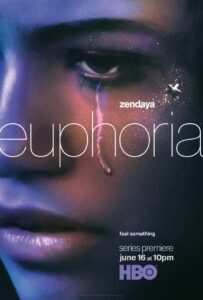
BlackFilm: HBO has a series called Euphoria where Labrinth who is a pop artist has crossed over into scoring. He scores the show. A lot of people have been talking about his foray into scoring. I don’t know if you’ve seen the show or heard any of the music. On the series finale, Zendaya sang a song that was called “All For Us”. She did vocals with Labrinth on it. I didn’t know if you had any thoughts about that type of score. And what are your thoughts about the music industry, including the pop industry using live instrumentation in their works. There has been some criticism of the commercial industry. Especially with hip-hop using repurposed tracks and not using live instrumentation. Groups like The Roots are lauded in the hip hop industry for being musicians and incorporating live instrumentation into their music. I’d like to hear both of your thoughts on those issues.
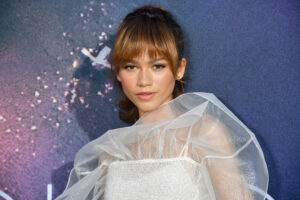
Roahn Hylton: I feel uniquely suited to answer that question. I’ll start with Euphoria. Man, I love that show. It’s one of my favorite shows. It just concluded this Sunday. And like you said they did what was basically a music video at the end of the series. I’m not going to ruin it for anybody who hasn’t seen it yet. I thought it was interesting how they incorporated both score and pop music. I’ve worked with Zendaya before. I’ve known of Labrinth. I haven’t gotten to work with him yet. But Zendaya, she is such an accomplished actress that people forget. She was on her way to becoming a huge popstar. I think she had a couple of really big movies, so she didn’t put out a lot of album or musical content. I’m sure we will see her as her career evolves. But I think it was a very perfect use of her star power to emphasize the score. And to draw attention to what was going on. One of the things that Jacob and I always talk about is how we are in a content business. We all know that, but what it does is when you have popstars. Who can also act and musicians who can also score and produce songs. You create multiple layers of content. So people are now not only enjoying the television show. But they are enjoying the score and a song that they can hear on the radio. I think we are going to see a lot more of this.
Jacob and I did an animated series where we featured a lot of pop music. Lots of pop songs that we also turned into a soundtrack album. We also incorporated them into the score. This is something that we have had our eye on in the industry and going in that direction. As for the live aspect of music that project we are working on now we recorded from live musicians. We had a live session. We got to record a whole band. It was a very rewarding experience. One of the things I will say is that Jacob and I both come from live music backgrounds. This specific project we were excited because it was a very rare time we get to record whole bands together. And do it like this. I call them music snobs who say only record live music—only do this. There are lots of projects that afford that opportunity, but then there is a time factor. Sometimes you just don’t have the time for everybody to be in the room together… It’s always going to be a hybrid. You’re going to want to record live music as much as you can.
Free Meek Mill is now available and streaming on Amazon Prime Video.



Loading…