

Now available exclusively on DIRECTV since December 6 by Vertical Entertainment is the WWII drama Where Hands Touch, written and directed by Amma Asante (Belle, A United Kingdom).
Released in theaters on September 14, the film stars Amandla Stenberg, George MacKay, Abbie Cornish and Christopher Eccleston.
Where Hands Touch is Asante’s fourth film after A Way of Life (2004), Belle (2013) and A United Kingdom (2016).
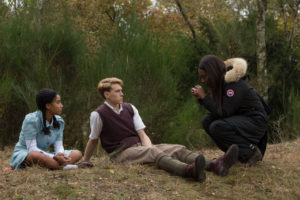
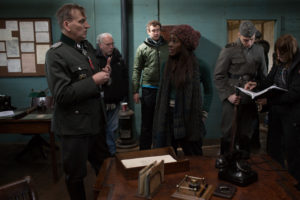
The coming-of-age film is set in 1944 Germany. Leyna (Stenberg), the 15-year old daughter of a white German mother (Cornish) and a black African father, meets Lutz (MacKay), a compassionate member of the Hitler Youth whose father (Eccleston) is a prominent Nazi solider. The pair form an unlikely connection as Leyna’s mother strives to protect her from the horrors she could face as a mixed-race German citizen. Can Leyna find an ally in Lutz, himself battling a fate laid out before him that he is hesitant to embrace?
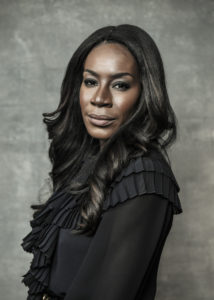
During the making of the film there was some criticism from folks who had yet to see the film, and Blackfilm.com spoke with Asante recently on why they should watch it now if there weren’t able to see it in theaters.
What are you hoping people will get from seeing the film now that it’s on DIRECTV?
Amma Asante: I’m hoping for lots of things really. A) I’m hoping for lots of people who have not seen the film, as you say, to get the chance to see it for themselves, and form their own opinion of it. You know, rather than just reading about what others think, people think it might be based on not having seen it. I always believe film doesn’t become a film until it meets its audience, and so, that’s one thing.

I hope to have the opportunity to shine a light on an area of history that hasn’t really had much attention certainly in terms of drama and the movie theater and story-telling, you know, placed on it. I think what’s key to me, and I keep saying it, is that as people of color, we’ve been present doing really fundamental times in history. But we’ve been erased from those periods. And the reality is we’ve been there during important times, and we’ve been there during not-so important times, but neither of those stories get told really.
And so, I really hope people get to forge an interest in another area of history that isn’t often looked at. I hope that some of the complexities that the film throws up, which I think relates very much to today, can kind of contribute to the conversation in many ways that we really need to be having about who we are as a set of communities and cultures and societies that live together and alongside each other.
Let’s go back to why you wanted to make this. You’re a director who seems to be making, in the last few years, films of mixed races from “Belle” to “United Kingdom” and with this film. What was the inception to doing this movie?

Amma Asante: Well, it’s really interesting because Belle came to me because I had written the screenplay of “Where Hands Touch.” a long time before, so “Where Hands Touch” was really supposed to be my second film, and it was supposed to be a follow-up to the first “Belle”, which very much looked at a place where we seemed to be walking towards, in terms of society, in which intolerance was becoming, not just more prevalent, but kind of more acceptable. And I worried about where that place was gonna eventually lead up to through my first film.

And while I was making that first film in South Wales, I really discovered that I was in an environment in an area that had some of the oldest black communities in Europe. And it really struck me that I didn’t really know much about these communities despite the fact that I am a person of color born in Europe. I didn’t really know much about other people like me, who had existed in history.

I started to explore that, and through exploring that, I came across these children, mixed raced children, who were born of one white parent and one African parent in Europe during between the wars and coming of age, if you like, as Hitler doing his worst in Nazi Germany. It struck me that I’d never learned this story of our existence; I’d never learned the story that featured people of color really during the period of the Holocaust. It became a real passion of mine to want to tell it, and in fact, it probably would have been the only story that had a bit of mixed identity or mixed race theme in it. But I guess it was deemed too big for me after my first film, and my first film was of a lower budget. It was a smaller sized film although it had a big impact in that it managed to win me several awards, several Critic’s Awards. But this film was going to be something that was big and expensive and complicated in many ways.

When that script went ’round, and so lots of people said it’s a great, great script, but it’s a big, big project. Eventually, I think, having had that script passed ’round, the producer of “Belle”, you know, who knew about my work, was bit of encouraged to come to me with “Belle” because he knew I’d already written a story about a biracial, young woman in history, and if I’d done it once, then maybe I could do it again.
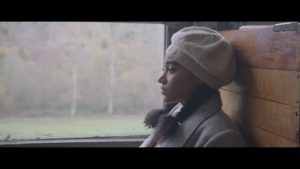
“Belle” was about proving why I had what it took to make the film I really wanted to make, which is “Where Hands Touch”. When we finished “Belle”, I probably was about 50% financed for “Where Hands Touch”, but I needed more. I needed more money to be able to get this World War II piece done. I knew I was gonna have to do at least one more film. It was a question of whether I should do a studio movie or whether I should just do a much bigger independent movie.
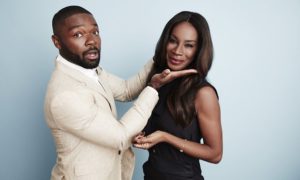
David Oyelowo, my friend of 20 years, at the time who I had first employed on my TV series in the UK, “Brothers and Sisters” when he had come straight out of drama school, was now in a great position where he had this book, “A United Kingdom” that he wanted to turn into a film. And he came to me, and said, “You know, would you come on board and help us to get this film made?” It seemed like it was the right scale of film to make to prove to those who would be financing “Where Hands Touch”. Of course I could take a bigger movie on board. And so that became the third movie.

Finally, “Where Hands Touch” was able to be financed, and I went straight out to, I think it was The London Film Festival opening with “A United Kingdom” straight to Belgium and started shooting “Where Hands Touch”. So, yeah, definitely I could see that thematically there is the element of mixed identity or mixed marriages or children who are the products of mixed marriages in my stories. And there’s a reason for that, obviously. I was always work towards “Where Hands Touch”.
But there were also other themes, I think, all of the movies have in common, which is, what it is to be Black in Europe. What it is to Black and isolated in Europe. What it is to be Black in Europe and to have to find an identity within the context of that isolation, quite often, and to exert agency within all of that. These are all elements that I feel really pertain to me as someone who has been raised in Europe and is of color.
There were comments before the movie was coming out and while you were making it, how do you challenge that?
Amma Asante: I think first and foremost, is, as a filmmaker, is to remember why you came into it and why you’re doing it. There’s a great, social media, first of all is used for really, really great things and really, really important things. One of the elements that I love social media for is that it connects me to an audience. There’s a flip-side of every single coin, right, and you just talked about some of the other sides, some of the other elements involved in a flip-side of this coin.
There’s often a phrase, if you do social media, who asked for this, and I always, I love hearing that phrase, particularly as it pertains to my work, if you like, because it reminds me of why I came in to filmmaking and why I wanted to tell stories. It isn’t about bringing you what you asked for. If you asked for it, and I delivered it, then I’m probably not doing my job as an artist. My job is really to find stories and try and explore worlds that haven’t yet been allowed to be explored, and find how they relate to the day. And how we can have conversations about how they relate to the day.
For me, it’s really important first and foremost, to remember why I came into it. Secondly, it’s really important to, I think, to grow with every project. And with “Belle” for instance, social media was a great support in me finding an audience for that film. Massive, massive support.
What I learned through “Where Hands Touch” is that some of the very, very propaganda that was used, or propaganda tactics that were used, were often used to marginalize people. Are often used to create stories about people and to create power being those stories, and to create unreal truths, if there’s such a term.

Some of those tactics are also used in social media as well. I’ve seen whole articles that have purported to have such a certainty about what this film is about without having ever seen it. But I understood that the irony would be that others would be able to see that the same propaganda techniques that were being used to start a campaign against this film were partly some of the techniques that I was exploring, but in the context of the film, within the context of how society turns in on itself. Within the context of how society decides to take a group of people, or a person, or a type of person, and chooses to marginalize them through stories, and through non-truths, and though speculation, and all of those things.
I honestly think that was the universe showing me how to grow, which is something I choose to do with each project. And how to learn, and how to understand. How societies can work, that’s what my films do, they look at how societies can work or not work for individuals that live within them. I think what happened on social media was a really good example of that.
What’s next for you now?

Amma Asante: Well, it’s going to be interesting, particularly with things people have chosen to pick up on in the films I’ve done so far. I’m doing something next called “Billion Dollar Spy”, which also picks up on many of the themes that I’ve chosen to pick up on in previous films, but not necessarily the ones others have chosen to highlight.
This is set during the Cold War. There’s the story of two men, and one is a CIA agent, and the other one is a Russian engineer, who becomes a spy in Russia for the CIA, for America. It really looks at how you can, it explores the idea of what it feels like, perhaps, to be utterly committed to your country. Absolutely in love with your country, but not to be in love with those who are running it. Not to be in love with the policies and the processes of those who are running your country.

In “A United Kingdom”, for instance, I looked at what happened when outsiders come in and choose to run your country, and certainly, are running in a way that you don’t agree with. And in “Billion Dollar Spy”, we look at what happens when insiders are doing the same. And what I like about it is it sort of pops the idea of the American Dream, the idea that everyone is willing to leave their country. The idea that everyone wants to rush to America for the idea of the American Dream. It explores what love of country means outside of America. What love of country means in a world in which, perhaps, everything isn’t perfect, but your identity, your soul, the space you feel you belong to is still the place where you were, despite the fact it isn’t necessarily being run by those who would are running it the way you would want them to.

It’s a brohood movie in many ways, so it’s exploring male identity, as well as what it is to be an underdog in your own country. And find agency within that context. Also, this the film is based on the book by David E. Hoffman called “The Billion Dollar Spy”. David Hoffman is a Pulitzer Prize-winning journalist and author. The book is amazing. I love the book. It’s dense, like all of the books I love. It’s one of those I remember saying with “A United Kingdom” I could only read 18 pages a day when I was looking at it to adapt it because it was so dense. And this is another one of those dense, but really informative and really, really compelling books. That’s mainly what I’m using as my basis, and then, of course, the real history around the story.
What more can you say about Where Hands Touch?

Amma Asante: It’s available for pre-order on iTunes at the moment. It’s exclusively available right now for on demand on DIRECTV. I guess the DVD will follow. I mean, we do have one more outlet to come later on at the beginning of next year on demand, and then eventually it will come out on DVD. Plenty of ways to watch it now. Plenty of ways for people to form their own opinions, their own thoughts. I have to say, also, to listen to, apart from seeing Amanla Stenberg’s amazing performance, Abbie Cornish’s amazing performance, George MacKay’s amazing performance, Chris Eccleston’s amazing performance. But also Anne Chmelewsky’s really, really extraordinary score. It’s just beautiful. And now there’s the opportunity for people to really see it on demand, when they want to.
Clip 1



Loading…